

How to Choose a Hair Extension Stylist?
A hair extension stylist can transform thin, short, or uneven hair into fuller, longer hair, but the wrong choice can create stress, shedding, tangling, or even hair loss. I have seen clients focus only on price and regret it later. The better solution is to evaluate skill, consultation quality, products, and professionalism before booking.
To choose a hair extension stylist, check their extension experience, request a consultation, review real before-and-after photos, ask what hair they use, and confirm their workspace is professional. A good stylist should explain suitable methods, maintenance, expected lifespan, and risks clearly before applying any extensions.

Choosing someone for extensions is not the same as booking a basic haircut. Extensions involve attachment method, scalp condition, hair weight, product quality, color matching, and long-term care[^1]. I always suggest slowing down before booking, because one careful decision can protect both your natural hair and your budget.
How do I verify a hair extension stylist’s experience?
Many people assume that any stylist can install extensions, but this is not true. Hair extensions need different training, tools, and judgment. If a stylist lacks experience, poor placement or excessive tension can damage natural hair[^2]. I always start by checking whether the stylist has real, repeatable extension experience.
A qualified hair extension stylist should be able to explain how long they have worked with extensions, which methods they offer, and how they manage different hair types. You can also ask whether they personally wear extensions, because first-hand use often helps them understand comfort, maintenance, and common client concerns.
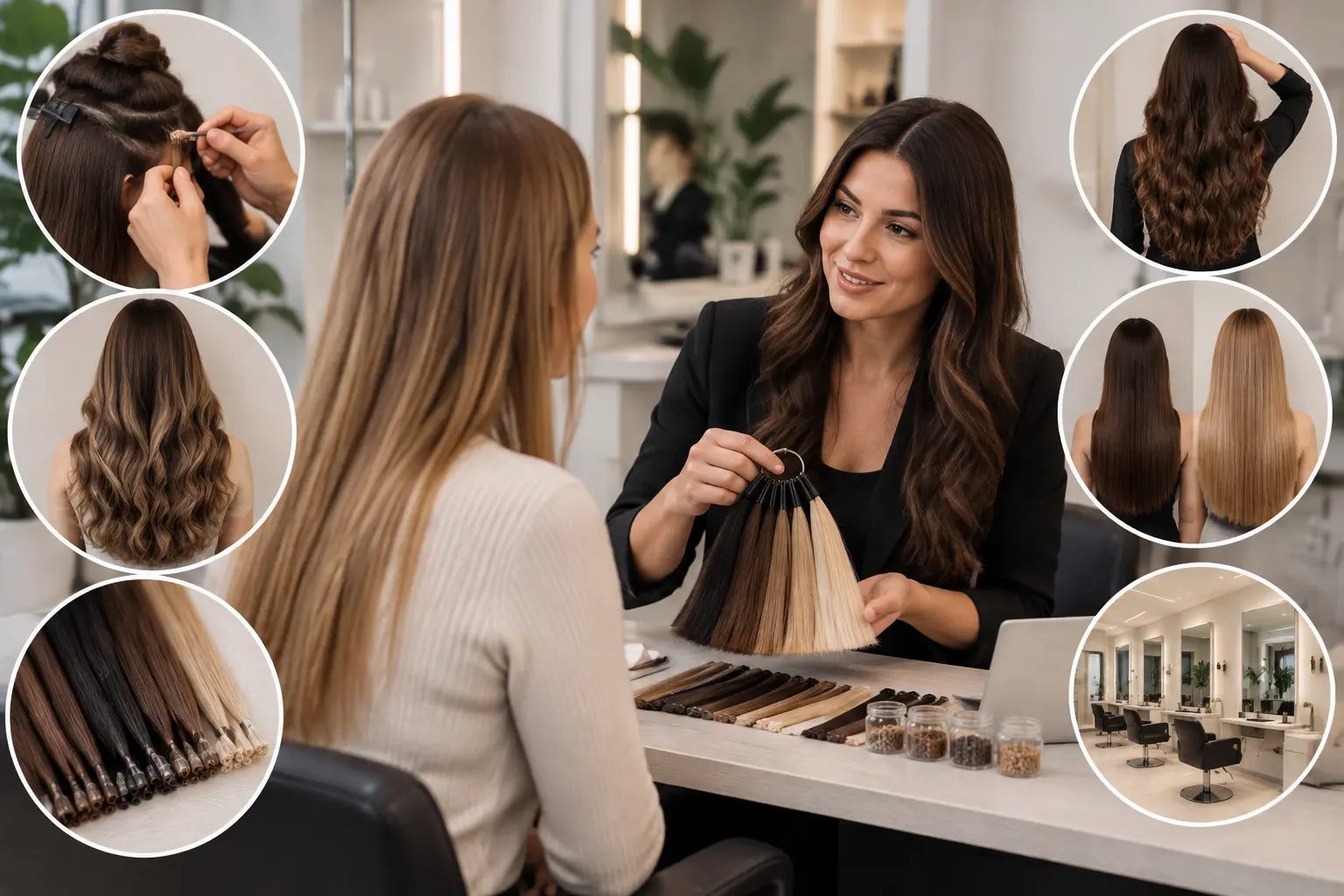
Ask about their extension background
I would never be shy about asking direct questions. A serious stylist should welcome them. Extensions are a technical beauty service, so clear answers matter.
You can ask:
- How many years have you offered hair extensions?
- Which methods do you install most often?
- Do you work with weft, tape-in, keratin, clip-in, or other systems?
- Do you wear extensions yourself?
- How do you handle fine hair, damaged hair, or short layers?
- What aftercare do you recommend?
If a stylist also wears extensions, that can be a useful sign. It does not guarantee skill, but it usually means they understand the daily reality of extensions. They know how hair feels after sleeping, washing, brushing, and styling. They also know which problems clients may face after two weeks, six weeks, or three months.
Compare extension methods
Different clients need different methods. A good hair extension stylist should not push one method on everyone. They should consider your density, scalp sensitivity, lifestyle, budget, and styling habits.
| Extension Method | Best For | Main Concern to Discuss |
|---|---|---|
| Weft extensions | Fuller volume and longer wear | Weight, row placement, maintenance |
| Tape-in extensions | Flat, natural finish | Adhesive care and oil exposure |
| Keratin/prebonded extensions | Flexible strand-by-strand movement | Heat application and removal |
| Clip-in extensions | Temporary looks | Daily installation and tension |
| Halo extensions | Low-commitment length | Fit, comfort, and blending |
I once spoke with a salon buyer who said most complaints came from mismatched method selection, not the hair itself[^3]. That point stayed with me. A great product can still fail if the stylist chooses the wrong application method.
Look for confident but balanced answers
I trust stylists who explain both benefits and limits. For example, they may say, “Your hair can support this amount of weight, but I would not recommend going too long in the first installation.” That kind of answer shows judgment.
Be careful if a stylist promises:
- “No damage ever.”
- “Any hair type can wear any method.”
- “You do not need maintenance.”
- “Cheap hair works the same as premium hair.”
- “I can install everything in one hour.”
A professional hair extension stylist protects your natural hair first. The best result is not only beautiful on day one. It should also remain manageable after washing, brushing, sleeping, and regular maintenance.
Does a hair extension stylist need to offer a consultation?
It is tempting to book an appointment quickly, especially when you see a beautiful photo online. But extensions are personal. Your hair history, scalp condition, color, density, and goals all affect the result. Without a consultation, a stylist may miss key details that influence comfort and safety.
A professional hair extension stylist should offer a consultation before installation, either in person or through a detailed online discussion. The consultation should cover your natural hair condition, desired length, color match, method options, maintenance plan, budget, and any previous extension problems.
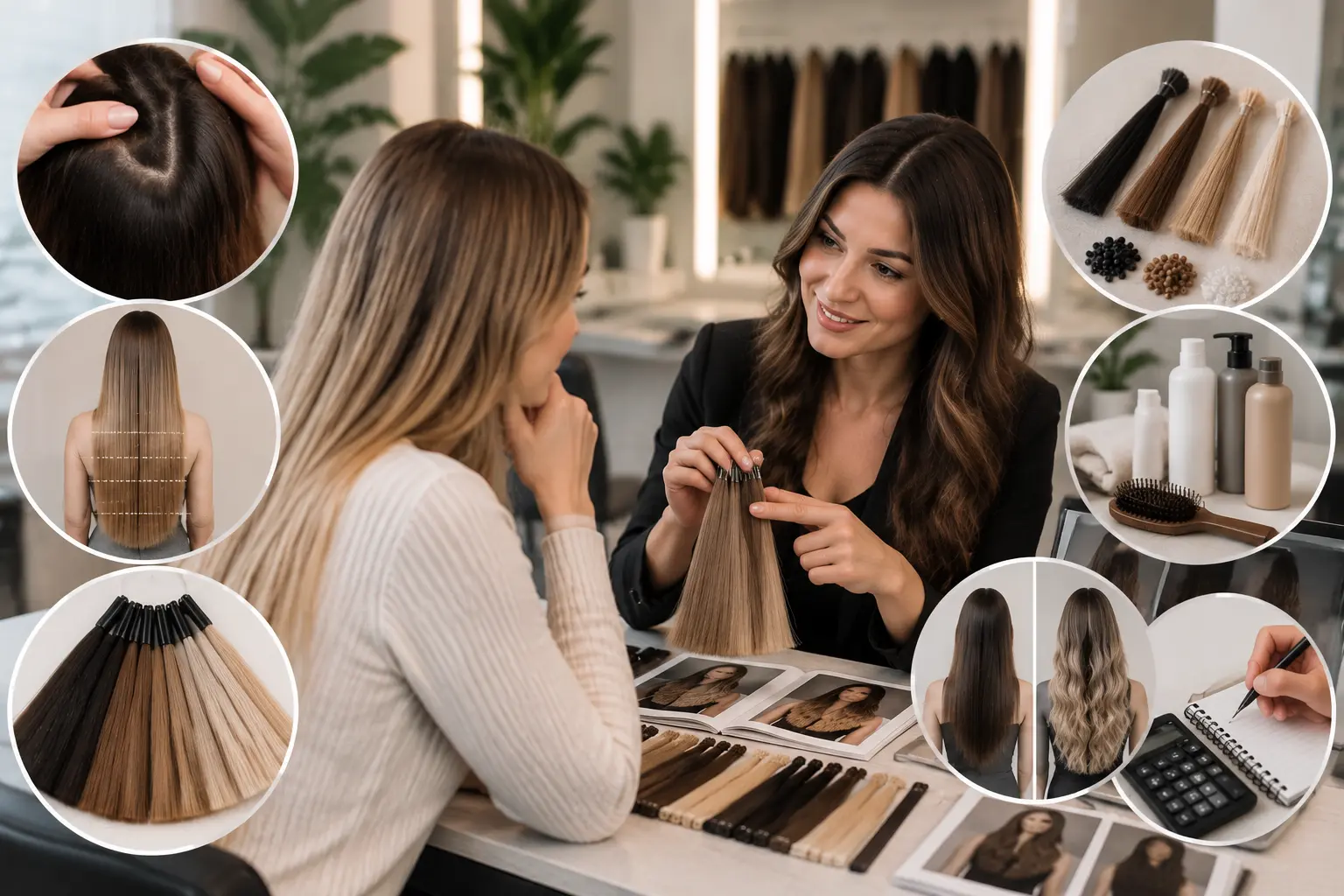
What a consultation should include
A good consultation is not just a sales conversation. It is a technical evaluation. I like to think of it as the planning stage before any beautiful result.
The stylist should check:
-
Natural hair density
Fine hair may not support heavy extensions[^4]. Thick hair may need more grams for blending. -
Scalp health
Sensitive, irritated, or thinning areas need careful evaluation. -
Current length and layers
Short blunt cuts can be harder to blend than long layered hair. -
Color and tone
Extensions should match depth, highlights, lowlights, and undertone. -
Lifestyle
Gym routines, swimming, heat styling, and frequent washing all matter. -
Maintenance commitment
Some methods need move-ups every 6–8 weeks[^5]. Others need removal and reinstallation.
Consultation questions I would ask
Before I commit to a hair extension stylist, I would ask questions like:
- “Which method is safest for my natural hair?”
- “How much hair do I need for a natural blend?”
- “How long will the appointment take?”
- “How often will I need maintenance?”
- “What will removal cost?”
- “What products should I avoid?”
- “What happens if the extensions slip, tangle, or feel uncomfortable?”
These questions reveal whether the stylist has a process. If they answer clearly, I feel more confident. If they avoid details, I take that as a warning sign.
Why free consultations are valuable
Many skilled stylists offer free or low-cost consultations because they know the final result depends on preparation. If travel or time makes an in-person meeting difficult, a strong stylist should still ask for photos and details.
They may request:
- Photos of your hair in natural light
- Photos of the back, sides, and top
- Your current hair length
- Your color history
- Your goal photo
- Your preferred extension method
- Any past extension experience
I believe this step saves money in the long run. A poor match can lead to extra color correction, uncomfortable wear, early removal, or replacement hair. A thoughtful consultation reduces these risks.
Should I choose a hair extension stylist based on recommendations and portfolio?
Online listings can look impressive, but personal recommendations and real work samples often tell a clearer story. I trust proof more than promises. If a friend, stylist, or salon client recommends someone, you can often see the finished result in real life before you book.
You should choose a hair extension stylist with strong recommendations, realistic before-and-after photos, and examples that match your hair type. Look for consistent blending, natural color matching, clean sectioning, and results shown from several angles, not only styled front-facing photos.
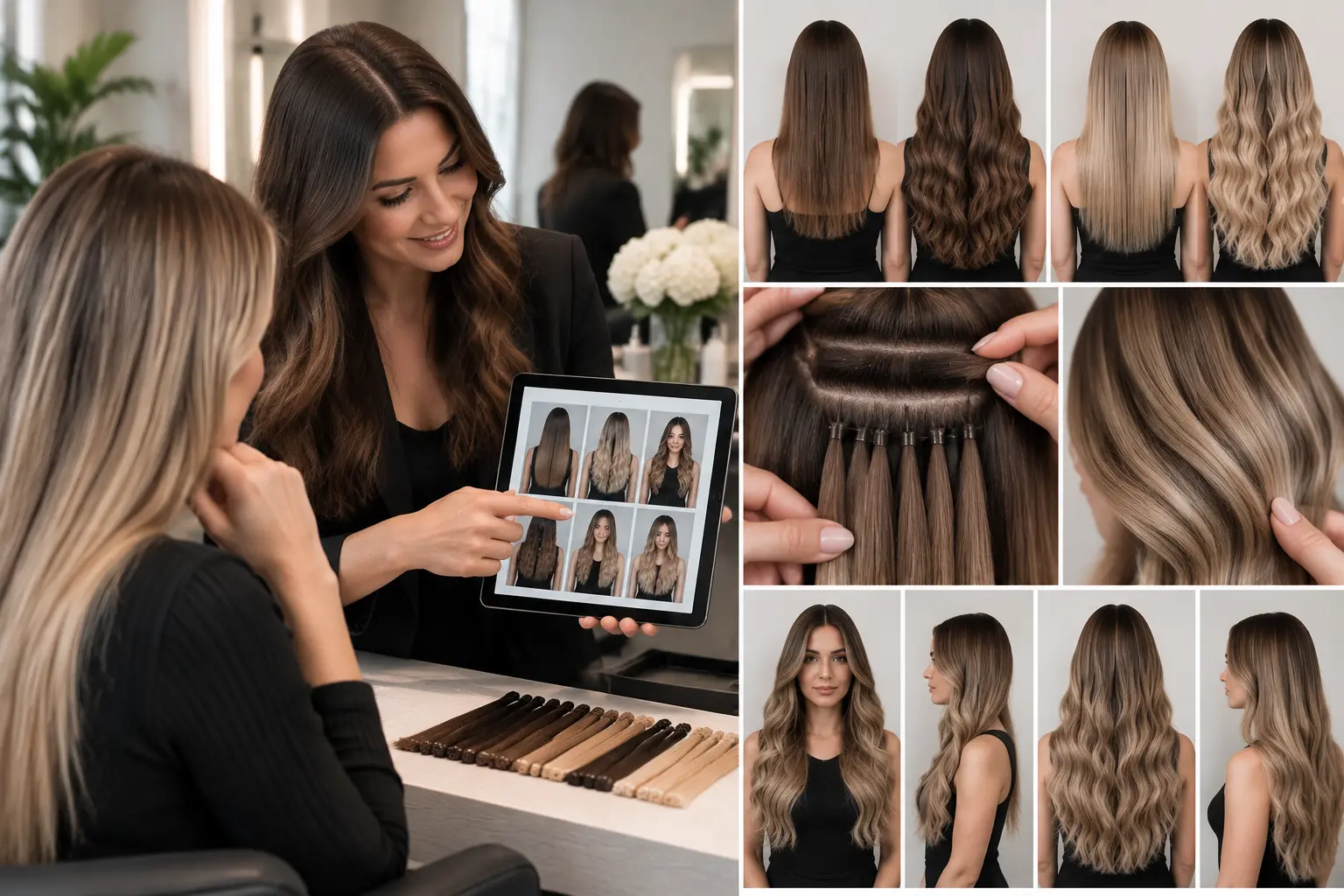
Why recommendations matter
People usually recommend beauty services only when they are genuinely happy. If a friend or coworker suggests a stylist, I would ask them about the full experience, not just the first-day look.
Useful questions include:
- “Did the extensions feel comfortable?”
- “Did the stylist explain aftercare?”
- “How did the hair look after washing?”
- “Did anything slip or tangle?”
- “Was maintenance easy to schedule?”
- “Would you book again?”
A recommendation gives you something online reviews cannot always provide: context. You may be able to touch the hair, see how it moves, and inspect the blend under normal lighting.
How to review a portfolio
A good portfolio should show more than glamorous curls. Curls can hide uneven blending. I like to see straight or lightly waved hair too, because that makes the installation easier to judge.
Look for:
- Before-and-after photos
- Side and back views
- Photos of similar hair density
- Photos of similar starting length
- Natural daylight images
- Different extension methods
- Different colors and textures
If your natural hair is shoulder-length and fine, do not only judge results on clients who started with thick mid-back hair. You need examples close to your own situation.
Website and social media quality
A stylist’s website or social page can show how seriously they treat the service. A professional website does not automatically mean technical skill, but it can show organization and transparency.
A helpful website may include:
| Website Feature | Why It Matters |
|---|---|
| Service descriptions | Shows the stylist understands different methods |
| Before-and-after gallery | Helps you evaluate real results |
| FAQ section | Answers common concerns before booking |
| Pricing guide | Reduces surprise costs |
| Maintenance information | Shows long-term thinking |
| Product details | Helps you verify hair quality |
I would be cautious if a stylist has no visible work, no clear service information, and no client examples. Some excellent stylists may rely on word of mouth, but they should still be able to show photos privately during consultation.
Watch for overly edited images
Some photos are filtered, overexposed, or taken only from flattering angles. Extensions should look good in real life, not only under salon lighting. Ask for unfiltered photos if you are unsure.
A reliable hair extension stylist should feel comfortable showing realistic results. They should also explain what is possible for your hair, instead of promising that your result will look exactly like someone else’s.
Why do products and hair quality matter when choosing a hair extension stylist?
A skilled stylist can only do so much with poor hair. Low-quality extensions may look shiny at first, then become dry, tangled, or matted after a few washes. I have seen this happen when buyers focus only on the installation price and never ask what hair is being used.
Products matter because extension quality affects softness, lifespan, tangling, color stability, and client satisfaction. A good hair extension stylist should identify the hair brand, explain whether it is Remy or cuticle-intact hair, and give realistic wear-time expectations based on method and care.
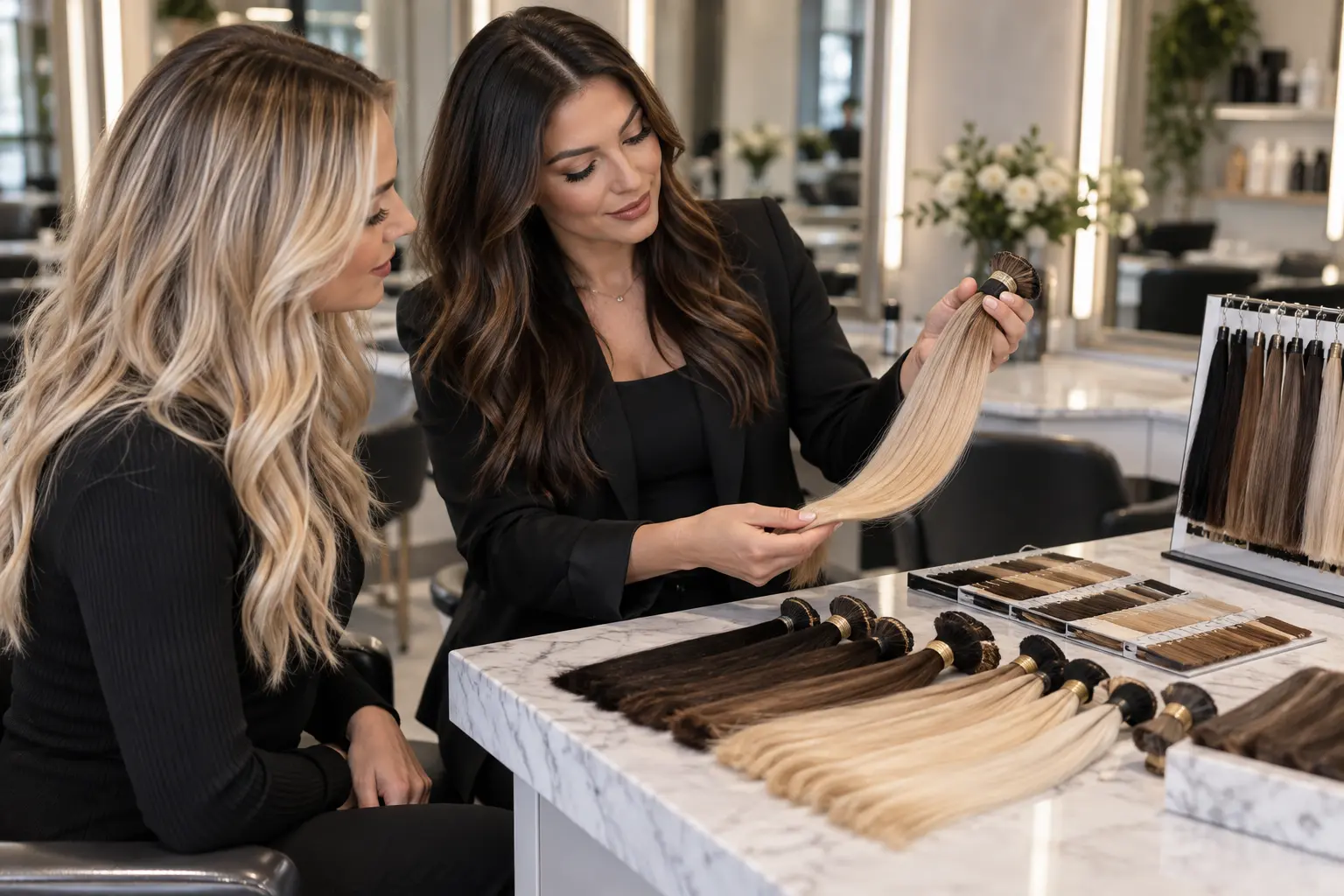
Ask what hair the stylist uses
You should be able to research the hair brand or supplier. If the stylist uses an unnamed product and cannot explain its quality, I would be careful. Not all human hair extensions are equal.
Common quality terms include:
- 100% human hair: Hair made from human fibers, but quality can vary widely.
- Remy hair: Hair with cuticles generally aligned in the same direction.
- Cuticle-intact hair: Hair where the cuticle layer is preserved more fully.
- Virgin hair: Hair that has not been chemically processed, though buyers should verify claims.
- European hair: Often used as a premium term, but origin claims should be checked carefully.
As a manufacturer, I always remind buyers that labels should be supported by inspection and supplier transparency. A certificate, label, or marketing claim is useful only when you can verify what it means.
Hair lifespan expectations
A stylist should give realistic guidance. Hair lifespan depends on quality, processing, color, care routine, heat use, and installation method.
| Hair Quality Level | Typical Wear Expectation | Common Risk |
|---|---|---|
| Low-cost processed hair | 1–8 weeks | Tangling, dryness, shedding |
| Better Remy human hair | 3–5 months | Needs proper care |
| Premium cuticle-intact hair | 6–12+ months | Higher upfront cost |
| Highly lightened blonde hair | Varies | More dryness due to processing |
These numbers are general. Your actual result depends on aftercare and professional assessment. Still, if a stylist promises one year of wear from very cheap hair, I would question that claim.
Cuticle quality and tangling
The cuticle is the outer protective layer of the hair shaft[^6]. When cuticles are aligned and preserved, hair usually feels smoother and tangles less. When cuticles are stripped or mixed in opposite directions, friction increases.
Poor cuticle quality may lead to:
- Matting near the nape
- Dry ends
- Rough texture after washing
- Excessive shedding
- Short usable lifespan
- Heavy silicone coating that fades after a few shampoos
Some low-cost hair looks beautiful at first because it is coated. After washing, the coating wears away[^7]. Then the real quality appears. That is why I recommend asking about care tests, wash performance, and return policies.
Product questions to ask your stylist
Before booking, ask:
- What brand or supplier do you use?
- Is the hair Remy or cuticle-intact?
- How long should this hair last with proper care?
- Can the hair be toned or colored?
- What shampoo and conditioner do you recommend?
- What causes tangling or shedding?
- Do you guarantee the installation, the hair, or both?
A knowledgeable hair extension stylist should not be offended by these questions. They should see them as part of responsible decision-making.
Is salon professionalism important when choosing a hair extension stylist?
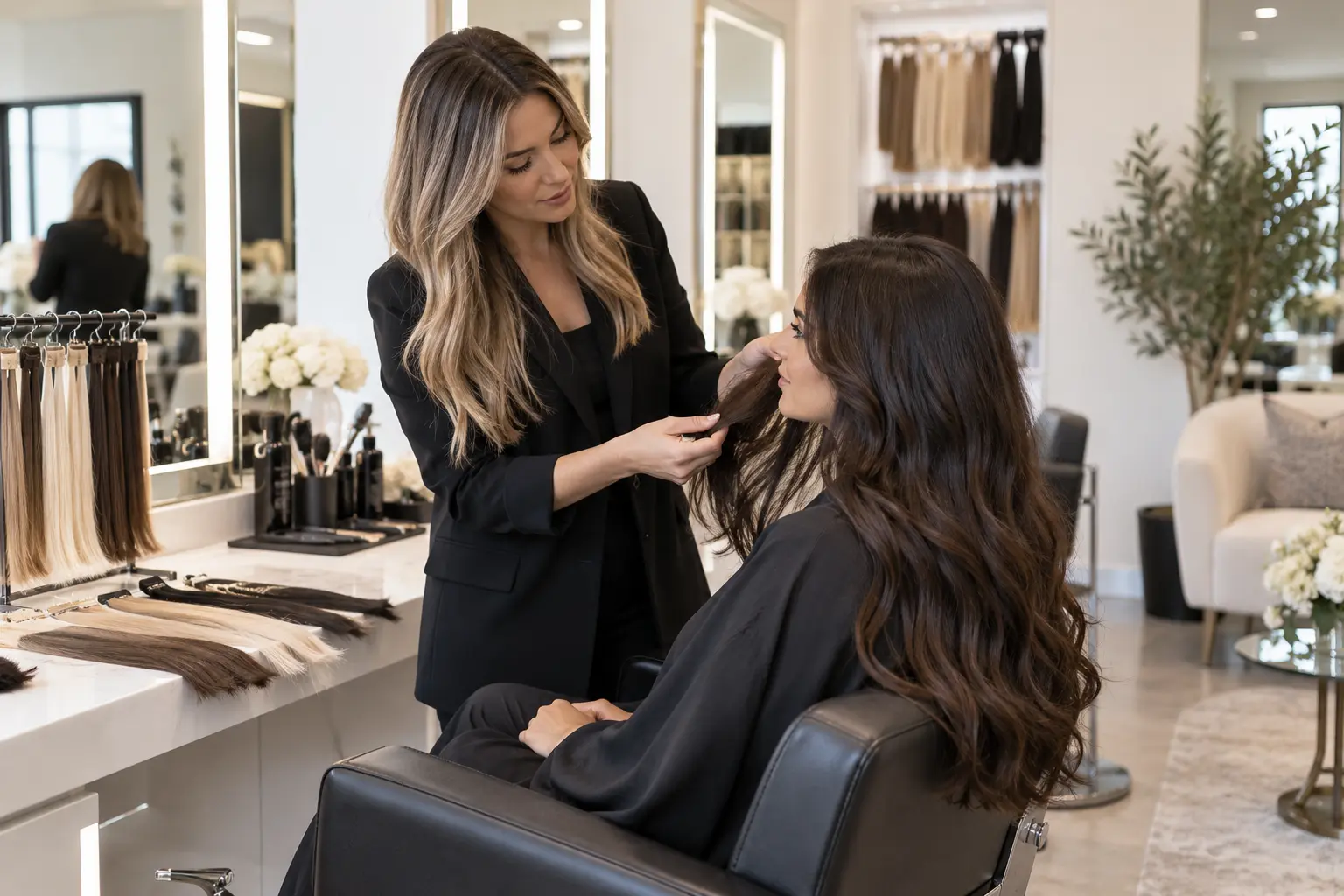
A beautiful Instagram page is not enough. The service environment also matters. Extensions require clean sectioning, organized tools, proper seating, lighting, sanitation, and enough time. I would feel uneasy if a stylist seemed rushed, disorganized, or hard to contact.
Salon professionalism matters because it affects hygiene, comfort, accountability, and service quality. A good hair extension stylist should work in a clean, organized space, use proper tools, explain pricing clearly, and provide follow-up support if you have discomfort, slipping, or maintenance concerns.
Fixed location versus mobile service
Some stylists offer mobile or at-home services. This can be convenient, especially for clients without transportation. However, I would evaluate it carefully.
Mobile service is not automatically bad. Some mobile stylists are skilled and professional. But you should ask:
- Do they have a business license where required?
- Do they bring proper tools and lighting?
- Do they charge travel fees transparently?
- Do they have client policies in writing?
- How do they handle follow-up issues?
- Where will maintenance or removal happen?
A fixed salon or studio can make accountability easier. If a problem occurs, you know where to return. A professional space also usually has better chairs, mirrors, storage, and sanitation procedures.
Signs of a professional workspace
When I visit a salon or studio, I notice small details. These details often show how much care the stylist gives to their craft.
Good signs include:
- Clean tools and brushes
- Organized extension hair storage
- Proper sectioning clips
- Professional chair and mirror
- Clear color ring or swatches
- Good lighting
- Written aftercare instructions
- Clean wash station
- Transparent price menu
Warning signs include:
- Messy tools
- No clear appointment schedule
- Poor communication
- Pressure to book immediately
- No maintenance plan
- No discussion of risks
- Very low price with no explanation
- No visible product information
Pricing should make sense
Extensions are not just hair. You are paying for consultation, color matching, preparation, installation, cutting/blending, styling, and aftercare guidance. If the price seems extremely low, you should understand why.
Common pricing factors include:
| Pricing Factor | Why It Changes Cost |
|---|---|
| Hair length | Longer hair costs more |
| Hair weight | More grams increase product cost |
| Method | Some methods require more time |
| Color work | Custom blending adds labor |
| Stylist experience | Advanced skill often costs more |
| Maintenance | Move-ups and removal add ongoing cost |
I do not believe the most expensive stylist is always the best. But I do believe suspiciously cheap services deserve extra questions.
Follow-up support matters
A strong hair extension stylist should explain what is normal after installation and what is not. Mild tightness for a short period may happen, but pain, pulling, sores, severe headaches, or sudden shedding should not be ignored.
Ask how they handle:
- Slipping extensions
- Color mismatch
- Discomfort
- Tangling
- Removal
- Reinstallation
- Maintenance timing
A responsible stylist wants you to contact them early if something feels wrong. They should not disappear after payment.
Frequently Asked Questions
How much experience should a hair extension stylist have?
I would look for a stylist with specific extension training and regular hands-on experience, not just general haircut or color experience. Years matter, but consistency matters more. Ask how often they install extensions, which methods they specialize in, and whether they have photos of clients with hair similar to yours.
Should I choose tape-in, weft, or keratin extensions?
The best method depends on your natural hair, scalp sensitivity, lifestyle, and maintenance routine. Tape-ins can be flat and quick, wefts can add strong volume, and keratin bonds offer flexible movement. A qualified stylist should examine your hair before recommending one method.
How can I tell if extension hair is good quality?
Good extension hair should feel smooth, move naturally, and remain manageable after washing. Ask whether it is Remy, cuticle-intact, or heavily processed. You should also ask about expected lifespan, care instructions, and whether the brand or supplier can be verified.
Is it risky to use a stylist who works from home?
It depends on the stylist’s professionalism. A home-based stylist can be skilled, but you should check cleanliness, tools, policies, product quality, and follow-up support. Be more cautious if they have no portfolio, no clear pricing, and no stable way to contact them after service.
What should I do before my first extension appointment?
I would prepare photos of your current hair, goal hair, color history, and any past extension experience. You should also ask for a full quote, maintenance schedule, aftercare instructions, and product details before installation. Clear expectations help prevent disappointment.
Conclusion
Choosing a hair extension stylist is easier when you evaluate experience, consultation quality, recommendations, portfolio, product transparency, and salon professionalism. I would never choose based on price alone, because extensions affect both your look and your natural hair health. Ask direct questions, verify the hair quality, and choose someone who explains the process clearly. If you are a brand, salon, or distributor looking for reliable human hair extensions, I invite you to contact RENAI HAIR for product options, quality details, and wholesale support.
[^1]: "Board for Barbers and Cosmetology - DPOR - Virginia.gov", http://www.dpor.virginia.gov/Boards/BarberCosmo. Professional cosmetology bodies and extension training organizations recognize hair extension application as a distinct technical discipline requiring specialized instruction in attachment methods, scalp assessment, and client consultation, separate from general hairdressing curricula. Evidence role: expert_consensus; source type: institution. Supports: That hair extension application is recognized within the professional cosmetology field as a specialized technical service requiring training beyond standard hairdressing. Scope note: Licensing and training requirements for hair extension specialists vary significantly by jurisdiction; no single international standard governs the specialty. [^2]: "Traction Alopecia: Causes, Symptoms, and How to Treat It Early", https://dermatrials.medicine.iu.edu/blogs/understanding-traction-alopecia. Dermatological literature documents traction alopecia as a recognized consequence of sustained mechanical tension on hair follicles, a risk associated with improperly applied hair extensions and tight hairstyles. Evidence role: mechanism; source type: research. Supports: That excessive tension from hair extensions can damage hair follicles and cause traction alopecia. Scope note: Most clinical literature addresses traction alopecia broadly from tight hairstyles; studies specific to extension installation technique are less common. [^3]: "New study finds over 90% of hair extensions tested contain ...", https://fletcher.house.gov/news/documentsingle.aspx?DocumentID=7253. Professional cosmetology associations and extension training bodies have noted that client dissatisfaction frequently stems from method-to-hair-type mismatch rather than product defects alone, underscoring the importance of individualized consultation. Evidence role: general_support; source type: institution. Supports: That improper method selection is a leading cause of hair extension complaints and adverse outcomes. Scope note: Systematic published data on the relative frequency of extension complaint causes are limited; this claim is primarily supported by practitioner consensus rather than controlled study. [^4]: "Effect of Oil Application, Age, Diet, and Pigmentation on the ...", https://pmc.ncbi.nlm.nih.gov/articles/PMC5387873/. Trichological research on hair fiber mechanics indicates that hair diameter and density directly influence tensile strength and load tolerance, with finer hair exhibiting lower resistance to mechanical stress, which has implications for the safe application of weighted extension systems. Evidence role: mechanism; source type: research. Supports: That fine or low-density hair has reduced structural capacity to bear the additional weight of hair extensions without risk of breakage or follicular stress. Scope note: Research on hair tensile properties is generally conducted in materials science contexts; direct clinical studies on extension weight thresholds for fine hair are limited. [^5]: "Extension Maintenance: Haircut Frequency Schedule Guide", https://www.kabellysalon.com/blog/how-often-should-you-get-your-extensions-moved-up-or-replaced/. Professional extension training programs and manufacturer guidelines commonly recommend maintenance intervals of six to eight weeks for methods such as tape-in and bonded extensions, reflecting the rate of natural hair growth and attachment integrity. Evidence role: general_support; source type: institution. Supports: That certain hair extension methods, particularly bonded and weft types, are professionally recommended for maintenance appointments at approximately 6–8 week intervals. Scope note: Recommended intervals vary by method, individual hair growth rate, and manufacturer; the 6–8 week figure represents a general industry guideline rather than a universal standard. [^6]: "The structure of people's hair - PMC - NIH", https://pmc.ncbi.nlm.nih.gov/articles/PMC4201279/. In hair biology, the cuticle refers to the outermost layer of the hair shaft, consisting of overlapping flattened cells that protect the inner cortex and influence surface texture, shine, and resistance to mechanical damage. Evidence role: definition; source type: encyclopedia. Supports: That the cuticle is the outermost structural layer of the hair shaft, composed of overlapping scale-like cells. [^7]: "Silicone Hair Extensions: The Truth Every Stylist and ...", https://prolongedhair.com/blogs/hair-prolonged/what-you-should-know-about-silicone-coated-hair-extensions?srsltid=AU7gw4W25_DR2n7GPAh4ZRokrAKkC-GUejwZjgbdVJBRd7YqmDDuF-Ut. Industry and consumer testing sources note that lower-grade hair extensions are frequently treated with silicone-based coatings to simulate smoothness, which diminish with repeated shampooing and expose the underlying fiber quality. Evidence role: mechanism; source type: research. Supports: That silicone or similar coatings applied to lower-quality hair extensions degrade with repeated washing, altering texture and performance. Scope note: Peer-reviewed studies specifically on silicone coating degradation in hair extensions are limited; most evidence comes from trade and consumer reporting.