how can you do to strengthen your hair and make it grow faster ?
Struggling with slow-growing, weak hair is frustrating — especially when every product promises results but delivers little. Thin, brittle strands break before they reach your goal length, and the cycle repeats. Learning how to strengthen your hair and make it grow faster requires a combination of nutrition, smart habits, and the right temporary solutions.
To strengthen your hair and make it grow faster, focus on protein-rich nutrition, proper hydration, gentle hair care routines, scalp massage, and UV protection. These habits support healthy follicle function and reduce breakage. For immediate length or volume while your natural hair recovers, high-quality human hair extensions offer a safe, non-damaging bridge solution.
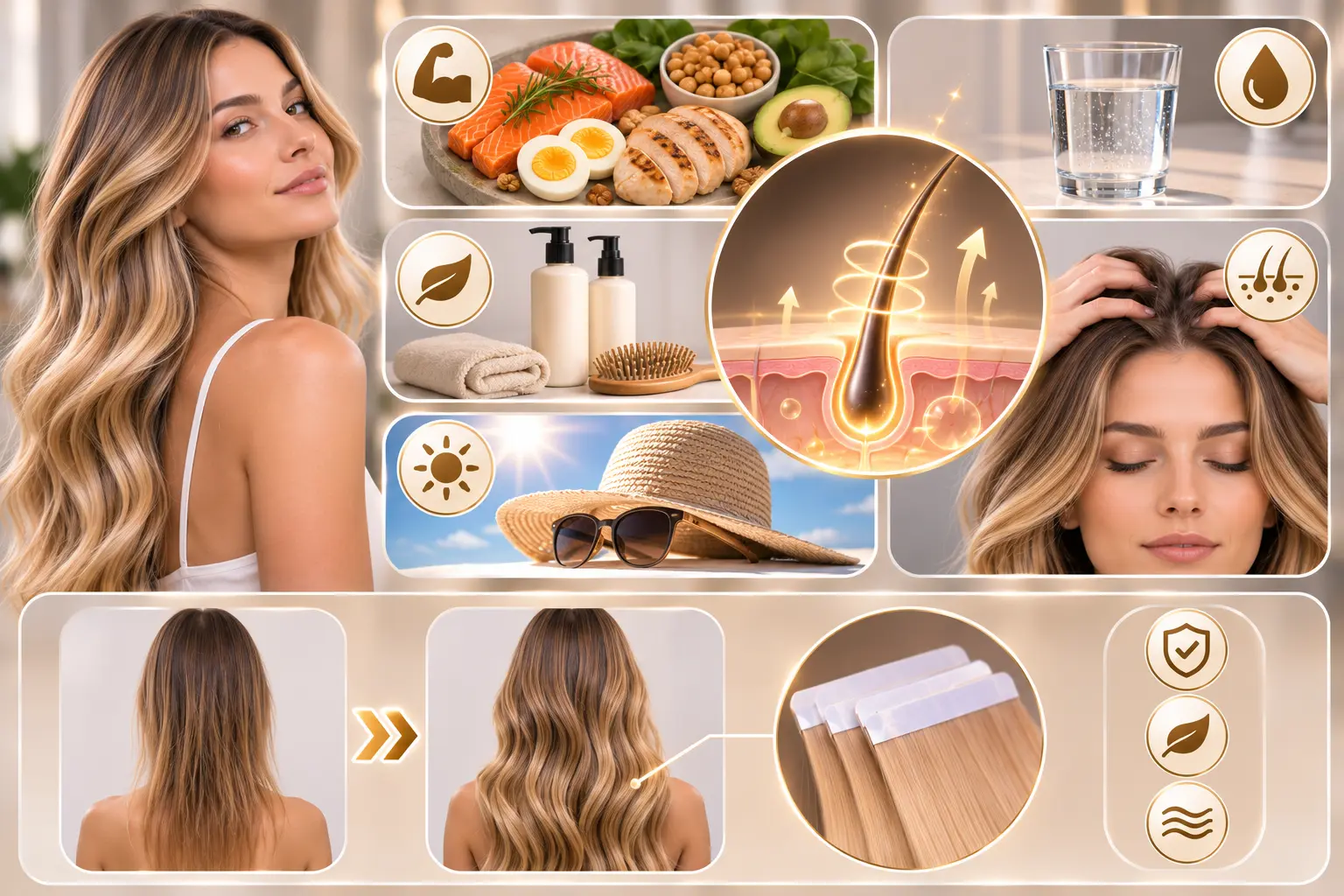
Understanding the why behind hair weakness matters as much as knowing the what. Each section below breaks down a specific pillar of hair health — so you can build a strategy that actually sticks, and know exactly when extensions make sense.
Does your diet really affect how fast your hair grows?
Most people try topical products first and wonder why nothing changes. The real problem often starts at the dinner table. Without the right building blocks, no shampoo or serum can compensate for nutrient deficiencies that silently starve your follicles.
Hair is made primarily of keratin — a structural protein. Your body cannot produce strong hair strands without adequate protein, B vitamins, iron, and zinc. When these nutrients are consistently low, hair growth slows and existing strands weaken from the inside out.
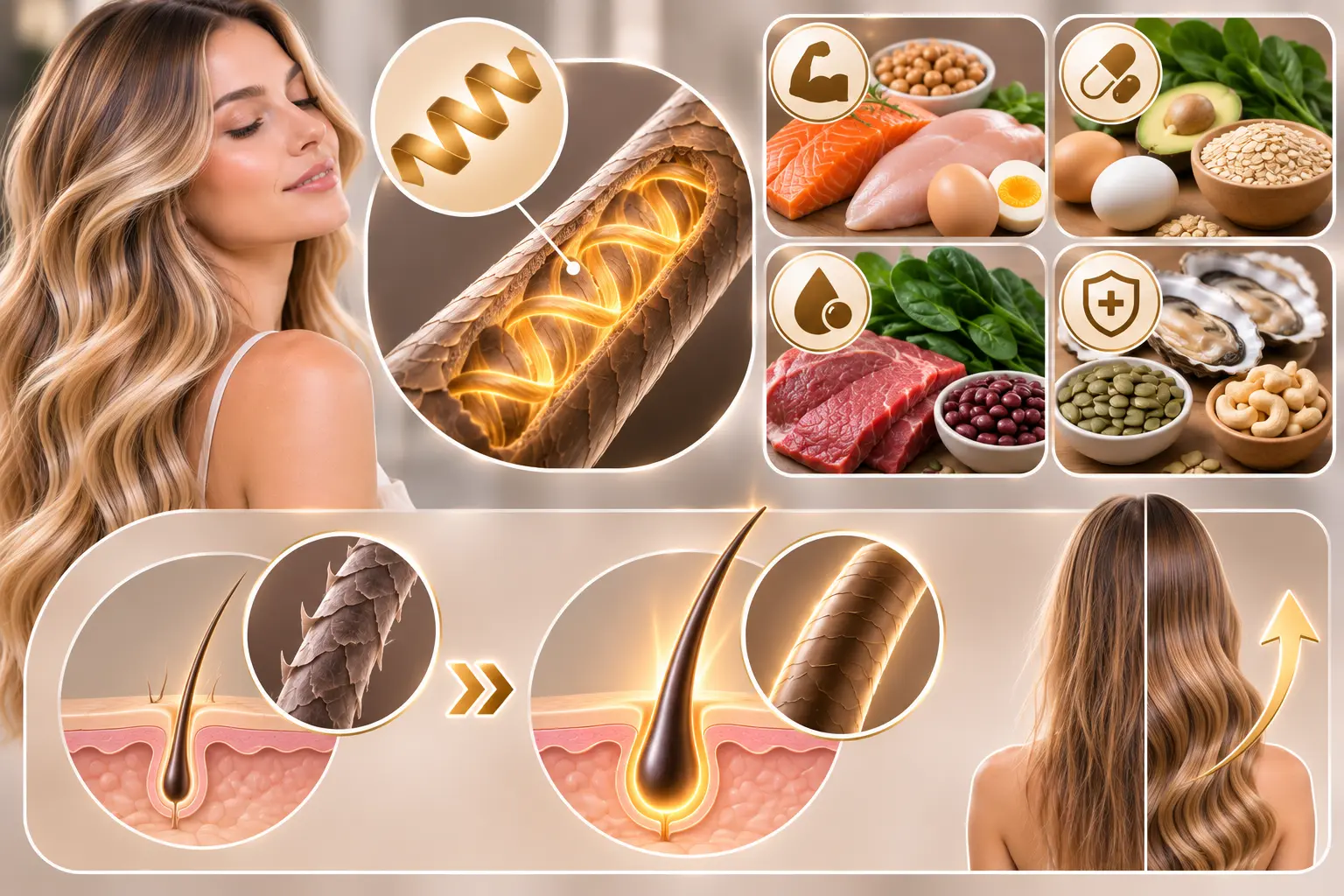
The key nutrients your hair follicles depend on
Your follicles are among the most metabolically active cells in your body[^1]. They demand a steady supply of fuel. Here are the nutrients that matter most:
- Protein: Hair is roughly 95% keratin[^2]. Aim for 0.8–1g of protein per kilogram of body weight daily. Eggs, chicken, fish, lentils, and Greek yogurt are excellent sources.
- Biotin (Vitamin B7): Biotin supports keratin infrastructure. Deficiency is directly linked to hair thinning[^3]. Eggs, almonds, sweet potatoes, and salmon are rich sources.
- Iron: Iron deficiency is one of the most common nutritional causes of hair loss, particularly in women[^4]. Lean red meat, spinach, and lentils help maintain healthy ferritin levels.
- Zinc: Zinc supports the hair follicle repair cycle. Oysters, pumpkin seeds, and chickpeas are good options.
- Vitamin D: Low vitamin D is associated with hair follicle dormancy[^5]. Safe sun exposure and fortified foods can help.
- Omega-3 fatty acids: Found in fatty fish, flaxseeds, and walnuts, these support scalp health and reduce inflammation that can impede growth.
A practical weekly eating framework
| Day Type | Focus Food | Key Nutrient Delivered |
|---|---|---|
| High protein days | Eggs, chicken, legumes | Keratin building blocks |
| Omega days | Salmon, walnuts, flaxseed | Scalp anti-inflammation |
| Iron-rich days | Spinach, lentils, lean beef | Follicle oxygenation |
| B-vitamin days | Avocado, nuts, whole grains | Biotin and B12 support |
I personally started tracking my protein intake after noticing my hair felt thinner during a particularly stressful and under-nourished stretch. Within a few months of consistently hitting my protein targets, I noticed measurably less shedding in the shower. Nutrition is slow-acting but foundational — it cannot be skipped.
How does hydration impact hair strength and growth?
Dehydration is one of the most overlooked contributors to brittle, slow-growing hair. When your body is short on water, it prioritizes vital organs over non-essential tissues — and hair falls firmly in the latter category.
Your hair shaft contains roughly 10–15% water by composition[^6]. When systemic hydration drops, that percentage falls, leaving strands dry, inelastic, and prone to snapping. A well-hydrated scalp also produces sebum more efficiently, which naturally conditions the hair from root to mid-shaft.
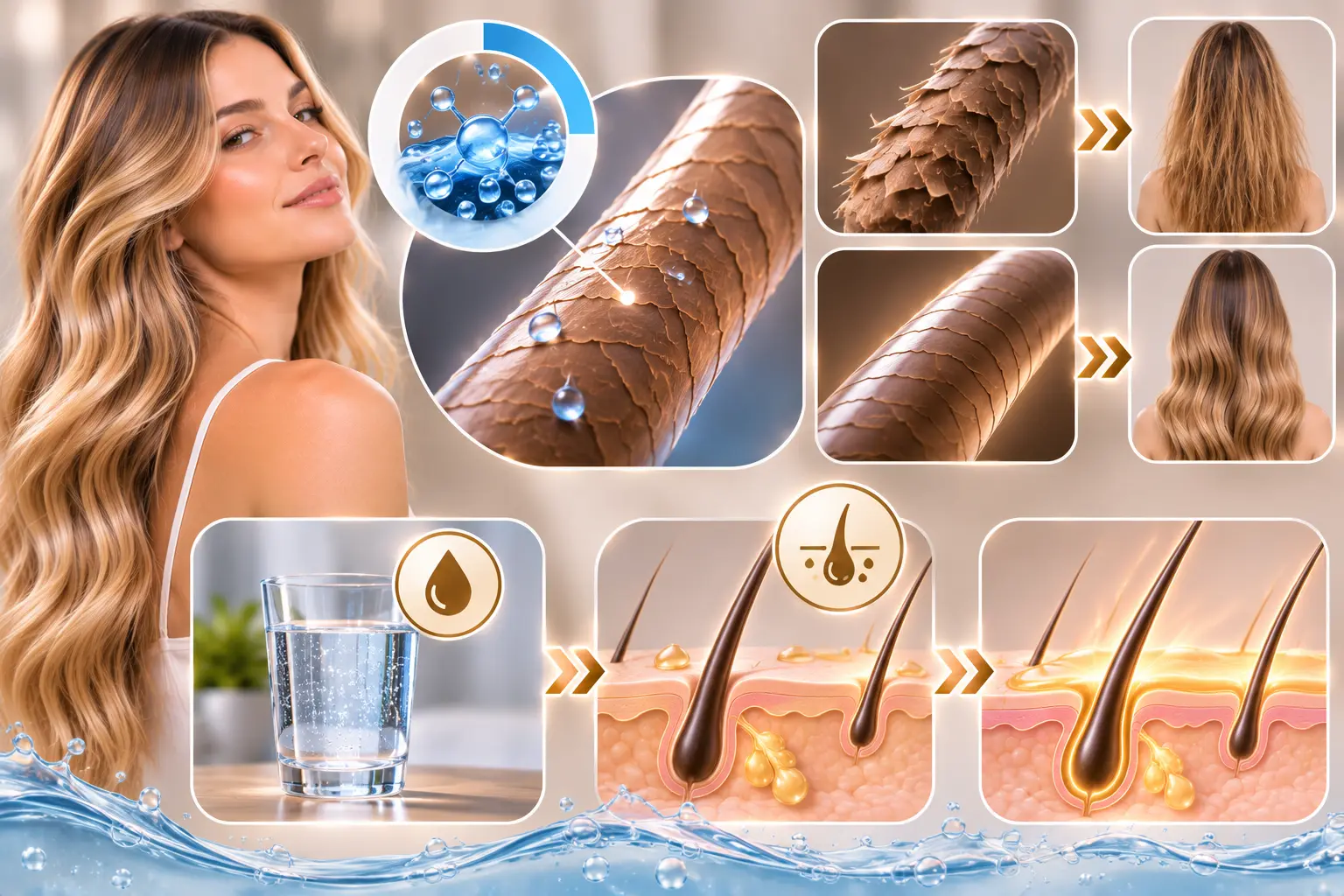
External vs. internal hydration
Many people reach for a deep conditioning mask when their hair feels dry — and that helps. But it only addresses the surface. Internal hydration, from drinking adequate water, works at the cellular level inside each follicle.
Target intake: Most health authorities recommend approximately 2–3 liters of water daily for adults[^7], adjusted for body weight and activity level. This is not a number most people consistently hit.
Signs your hair may be dehydrated:
- Increased frizz and flyaways in normal humidity
- Hair that snaps rather than stretches when pulled gently
- Scalp flakiness unrelated to product buildup
- Dullness and lack of natural shine
Hydration tips that actually work:
- Drink a large glass of water first thing in the morning before caffeine.
- Include water-dense foods — cucumber, watermelon, celery, and oranges — in daily meals.
- Use a humectant-based conditioner (look for glycerin or aloe vera) to lock surface moisture into the strand.
- Reduce diuretics like excess caffeine and alcohol, which accelerate water loss.
Hydration is one of the cheapest, most accessible tools for hair health. Yet it is consistently underestimated in favor of expensive topical treatments.
Can reducing heat styling help your hair grow stronger?
Excessive heat is one of the most direct forms of mechanical hair damage. It is also entirely within your control. Yet many people continue daily heat styling without understanding the cumulative cost.
Heat above 150°C (300°F) begins to denature the keratin protein bonds inside the hair shaft[^8]. Once those bonds are disrupted, the strand becomes permanently weaker at that point — and breakage follows.
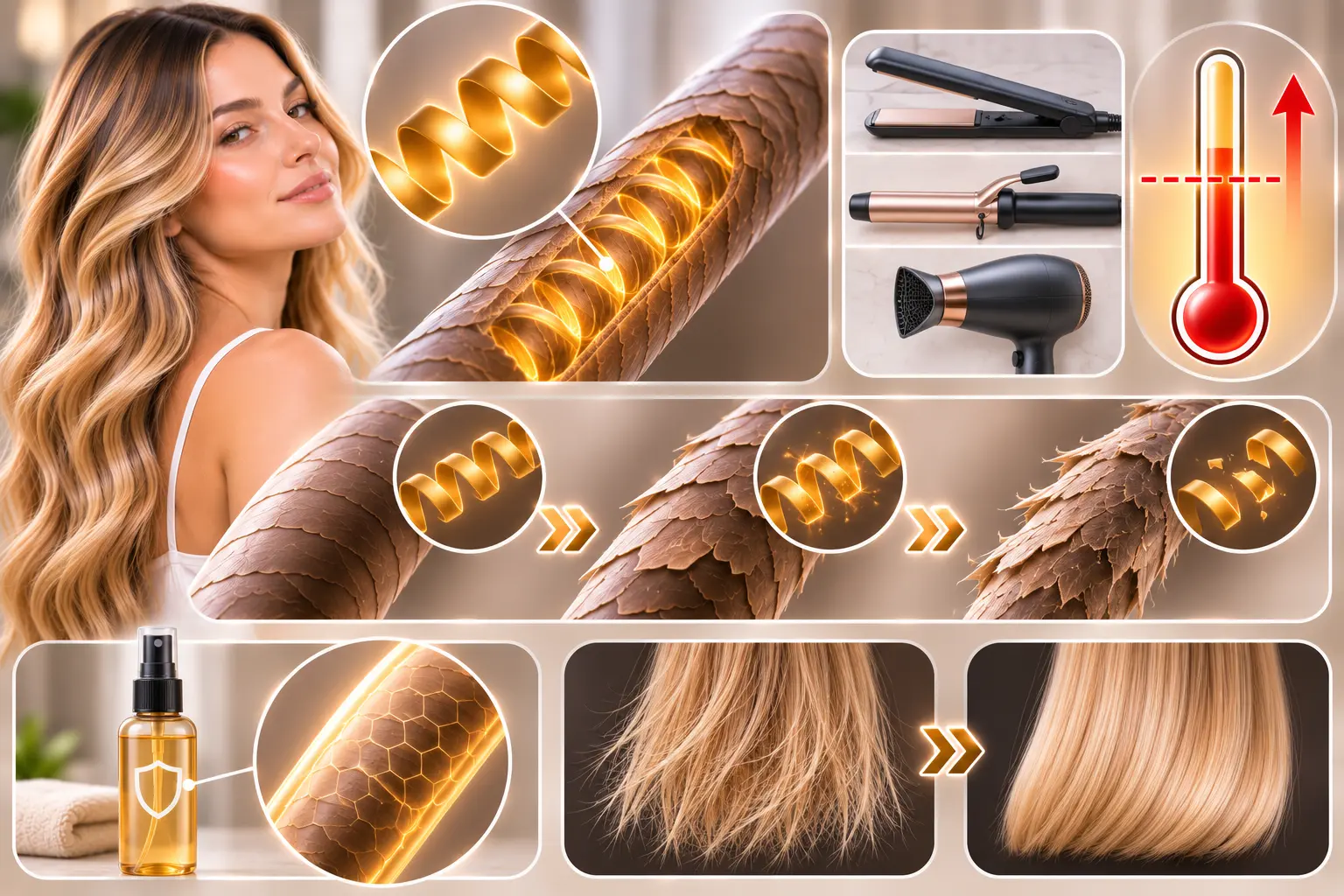
The real damage heat causes
- Cuticle lifting: High heat forces the outer cuticle layer open. Raised cuticles snag on each other, causing tangling and breakage.
- Moisture loss: Heat evaporates the internal moisture of the strand instantly, leaving it brittle.
- Protein denaturation: Repeated heat exposure over time permanently weakens the internal cortex of the hair.
- Split ends: Damaged ends split faster, requiring more frequent trims and reducing the perceived growth rate.
Practical heat reduction strategies
| Strategy | Benefit | Difficulty Level |
|---|---|---|
| Air dry 80% before blow drying | Reduces total heat exposure time | Low |
| Use heat protectant spray (400°F rated) | Creates a thermal barrier on the cuticle | Low |
| Drop styling temperature to 150–170°C | Achieves most results with far less damage | Low |
| Adopt weekly heat-free styling days | Allows cuticle recovery time | Medium |
| Learn heatless curl methods | Eliminates iron damage entirely | Medium |
A useful rule I follow: if I am adding volume or shine, I use lower heat for longer. If I am in a hurry and reach for maximum heat, that is a signal to schedule a trim soon. Heat damage accumulates invisibly until it becomes visible breakage.
Does scalp massage actually stimulate hair growth?
Scalp massage has moved from spa luxury to evidence-backed practice. A 2016 standardized scalp massage study published in ePlasty found that participants experienced increased hair thickness after 24 weeks of daily four-minute massages, attributed to direct mechanical stimulation of dermal papilla cells.
Consistent scalp massage increases blood circulation to follicles, delivering more oxygen and nutrients directly to the growth zone. It also helps loosen product buildup and excess sebum that can clog follicles over time.
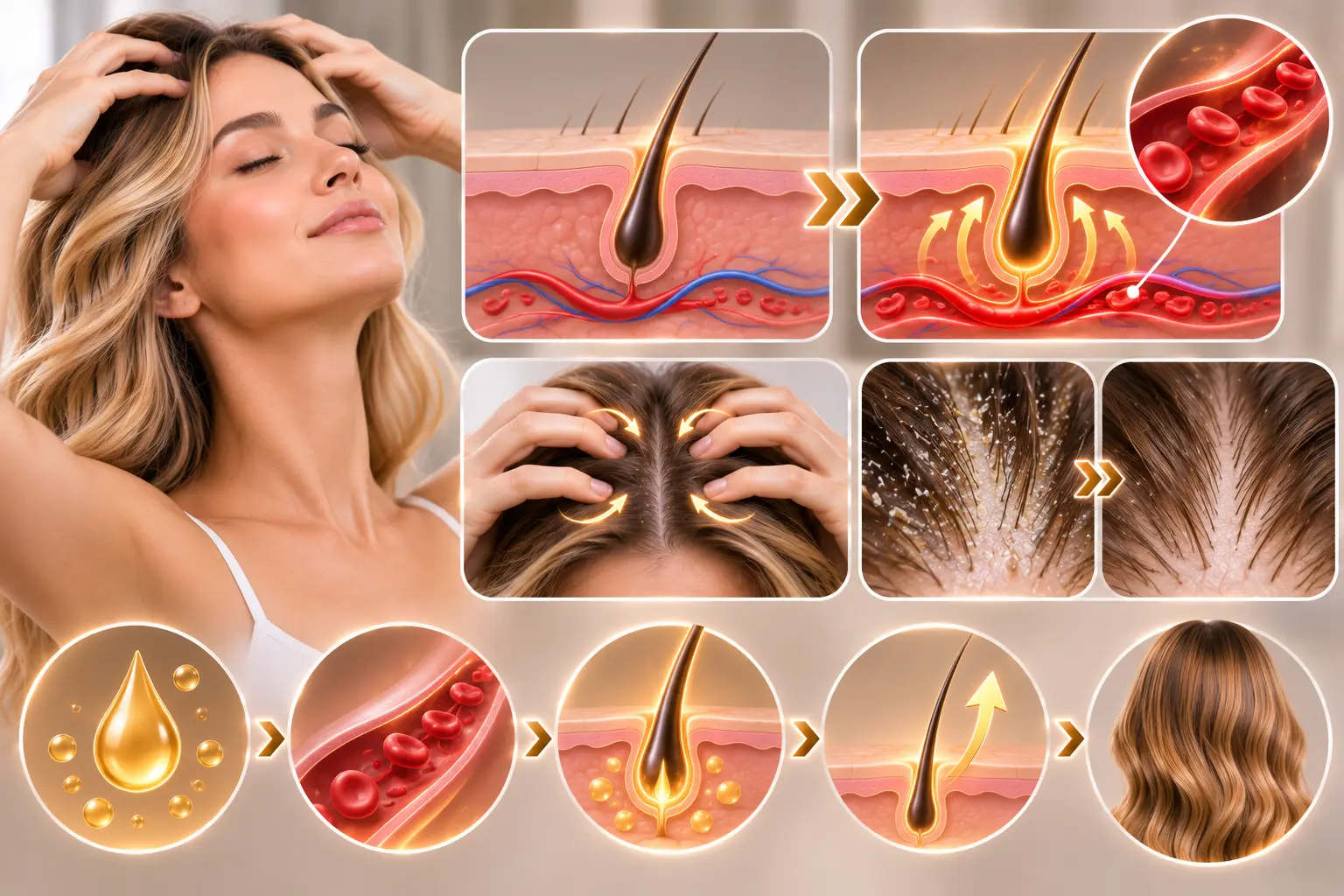
How to do it correctly
Technique matters. Aggressive scrubbing creates friction and tangles. Use the pads of your fingertips — not your nails — and apply firm but gentle circular pressure.
- Duration: 3–5 minutes daily is sufficient. Consistency matters more than duration.
- Timing: Dry scalp massage before washing is ideal. Wet scalp massage during shampooing is a convenient second option.
- Tools: Silicone scalp massager brushes can increase coverage and consistency, particularly for thick or long hair.
- Oil enhancement: Incorporating a light carrier oil — such as jojoba or rosemary oil — during massage may amplify circulation benefits. A 2023 study in Skinmed found rosemary oil comparable to 2% minoxidil for hair density improvement over six months.
Caution: If you have an active scalp condition such as seborrheic dermatitis, psoriasis, or open lesions, consult a dermatologist before starting a massage routine. Mechanical stimulation of an inflamed scalp can worsen some conditions.
When should you consider hair extensions instead of waiting for growth?
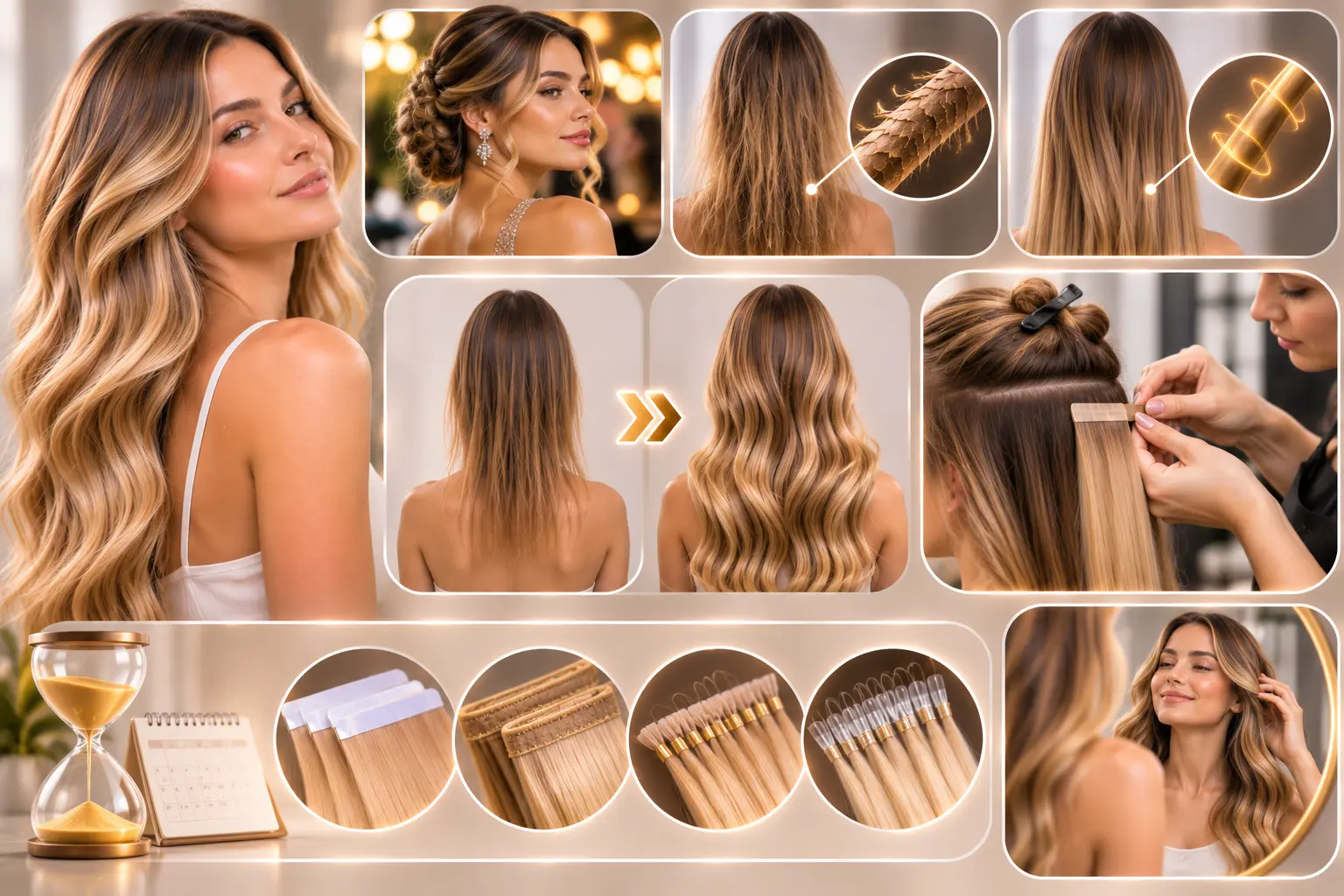
Sometimes the honest answer is: natural growth takes time you do not have right now. Whether you are preparing for an event, recovering from heat or chemical damage, or simply rebuilding confidence while your hair heals — extensions are a legitimate, widely used tool.
The key is choosing the right type and working with a qualified stylist to apply them without adding further stress to your natural hair.
Which extension types cause the least damage?
Two methods consistently stand out as the gentlest options for hair that is already weakened or in a growth phase:
Clip-In Hair Extensions
- Applied and removed daily — no adhesive, no heat, no commitment.
- Zero chemical interaction with natural hair.
- Ideal for occasional use or testing length and color before committing to a longer-term method.
- Best suited for medium to thick natural hair density.
Tape-In Hair Extensions
- Thin adhesive wefts sandwiched around small sections of natural hair.
- Lie flat against the scalp — lightweight and natural-looking.
- Professionally applied and moved up every 6–8 weeks as natural hair grows.
- Distribute weight evenly, reducing tension-related stress on individual follicles.
What to look for in extension quality
When sourcing extensions — especially for professional or salon use — the hair quality directly determines how the extensions behave and how safely they can coexist with weakened natural hair.
| Quality Factor | What to Look For | Why It Matters |
|---|---|---|
| Hair type | 100% Human Hair, Remy Hair | Natural movement, no tangling |
| Cuticle alignment | Cuticle Intact, unidirectional | Prevents matting and friction damage |
| Weft construction | Machine or Hand Tied Weft | Affects bulk, flexibility, and attachment |
| Color processing | Ethically processed, consistent color | Reduces chemical damage to the extension |
At RENAI HAIR, we work with salons, brands, and distributors who prioritize cuticle-intact Remy Human Hair precisely because it behaves most like natural, healthy hair. Extensions that match the structural integrity of your client's natural hair cause the least disruption during the recovery and growth phase.
Frequently Asked Questions
How long does it take to see results from hair-strengthening habits?
Most people notice reduced breakage within 4–8 weeks of consistent nutritional and routine changes. Visible length gains from improved growth take longer — hair grows approximately 1.25 cm (half an inch) per month on average[^9]. Give any new routine at least three months before evaluating results.
Are clip-in extensions safe to use while trying to grow your hair?
Yes, when applied and removed correctly. Clip-in extensions are one of the safest options because they create no permanent attachment. Avoid clipping too close to the scalp, do not sleep in them, and ensure the clips are not overly tight. A professional stylist can demonstrate safe placement technique.
Can scalp massage replace other hair growth treatments?
No. Scalp massage is a beneficial complementary tool, not a standalone treatment. It works best as part of a complete routine that includes adequate nutrition, hydration, gentle product use, and heat reduction. For significant hair loss or thinning, consult a dermatologist or trichologist for a formal evaluation.
Does drinking more water really improve hair growth speed?
Hydration supports the cellular environment that hair growth depends on, but it is one factor among many. Adequate water intake helps prevent brittleness and breakage, which effectively improves the retention of length — meaning your hair appears to grow faster because it breaks less. It does not directly accelerate the biological growth rate.
What should I look for when choosing a hair extension supplier?
Look for suppliers who offer 100% Remy Human Hair with intact cuticles, transparent quality control processes, verifiable certifications, and consistent color and texture matching across batches. For B2B buyers, ask for sample sets before committing to bulk orders and verify that the supplier supports custom length, color, and product development.
Conclusion
Learning how to strengthen your hair and make it grow faster is not about one miracle product — it is about building consistent, layered habits. A protein-rich diet, proper hydration, reduced heat exposure, and regular scalp massage each contribute meaningfully to stronger, longer hair over time. When you need immediate length or volume while your natural hair recovers, professionally applied tape-in or clip-in human hair extensions offer a safe and effective solution. If you are a salon owner, brand, or distributor looking for a reliable source of high-quality Remy Human Hair extensions, we invite you to contact the team at RENAI HAIR to discuss your product and supply requirements.
[^1]: "Compartmentation of Mitochondrial and Oxidative Metabolism ...", https://pmc.ncbi.nlm.nih.gov/articles/PMC5545130/. Hair follicle matrix cells are among the most rapidly proliferating cell populations in the human body, with cell cycle times of approximately 12–24 hours during the anagen growth phase, creating substantial demands for nutrients including amino acids, vitamins, and minerals. Evidence role: definition; source type: research. Supports: That hair follicle matrix cells exhibit high metabolic activity and rapid cell division, placing significant nutritional demands on the body. Scope note: The characterization of follicles as among the 'most' metabolically active cells is a relative comparison; the claim is broadly supported but precise metabolic rate rankings across cell types are not standardized in the literature. [^2]: "The structure of people's hair - PMC - NIH", https://pmc.ncbi.nlm.nih.gov/articles/PMC4201279/. The hair shaft is composed predominantly of keratin proteins, with estimates of keratin content typically ranging from 90 to 95% of total hair fiber mass, as reported in structural analyses of human hair composition. Evidence role: definition; source type: research. Supports: That the human hair shaft is composed predominantly of keratin protein, with figures commonly cited in the range of 90–95%. Scope note: Exact percentage figures vary slightly across sources depending on measurement methodology and hair type studied. [^3]: "Biotin for Hair Loss: Teasing Out the Evidence - PMC", https://pmc.ncbi.nlm.nih.gov/articles/PMC11324195/. Clinical reviews have documented that biotin deficiency presents with hair thinning and alopecia as recognized symptoms, and that biotin is involved in the carboxylation reactions supporting keratin protein synthesis; however, evidence for supplementation benefits in non-deficient individuals remains limited. Evidence role: expert_consensus; source type: research. Supports: That biotin deficiency is associated with hair thinning and that biotin plays a role in keratin synthesis. Scope note: The link between biotin and hair loss is well-established in cases of true deficiency, but supplementation in individuals with adequate biotin levels has not been shown to produce consistent hair growth benefits in controlled trials. [^4]: "Iron Deficiency and Nonscarring Alopecia in Women - PMC", https://pmc.ncbi.nlm.nih.gov/articles/PMC8928181/. Clinical reviews of nutritional hair loss have identified iron deficiency as one of the most prevalent modifiable nutritional factors associated with diffuse hair shedding in women, with low serum ferritin commonly observed in affected patients. Evidence role: expert_consensus; source type: research. Supports: That iron deficiency is a frequently identified nutritional contributor to hair loss, particularly among women of reproductive age. Scope note: Causality between iron deficiency and hair loss remains debated in some literature; association is well-documented but direct causation is harder to isolate. [^5]: "The role of vitamin D receptor signaling in hair follicle ... - PMC", https://pmc.ncbi.nlm.nih.gov/articles/PMC12747802/. Research on vitamin D receptor expression in hair follicles suggests that vitamin D signaling is involved in the regulation of the hair cycle, with deficiency associated with increased rates of alopecia in several observational studies. Evidence role: mechanism; source type: research. Supports: That vitamin D receptors play a role in hair follicle cycling and that deficiency has been associated with disrupted follicle activity and alopecia. Scope note: Most supporting evidence is observational or derived from animal models; randomized controlled trials demonstrating that vitamin D supplementation reverses follicle dormancy in humans remain limited. [^6]: "Near-infrared imaging of water in human hair", https://pubmed.ncbi.nlm.nih.gov/22672448/. Physicochemical analyses of human hair fiber composition report water content of approximately 10–15% by weight under standard humidity conditions, with moisture levels influencing mechanical properties such as elasticity and tensile strength. Evidence role: definition; source type: research. Supports: That the human hair shaft contains water as a measurable component of its structure, with reported values typically in the range of 10–15% by weight. Scope note: Water content in hair is dynamic and varies with ambient humidity, hair porosity, and prior chemical treatment, so the cited range reflects controlled measurement conditions. [^7]: "About Water and Healthier Drinks", https://www.cdc.gov/healthy-weight-growth/water-healthy-drinks/index.html. Health authorities including the U.S. National Academies of Sciences, Engineering, and Medicine have established adequate intake levels for total water of approximately 2.7 liters per day for women and 3.7 liters per day for men, encompassing water from all dietary sources including food and beverages. Evidence role: statistic; source type: government. Supports: That recognized health authorities have established daily adequate water intake recommendations for adults in the range of approximately 2–3 liters. Scope note: These figures represent total water intake from all sources, not drinking water alone, and are adjusted for body weight, climate, and physical activity level. [^8]: "Thermal Induced Changes in Cuticle and Cortex to ... - PMC", https://pmc.ncbi.nlm.nih.gov/articles/PMC12701549/. Studies using differential scanning calorimetry and electron microscopy have demonstrated that keratin protein denaturation in human hair begins at temperatures in the range of 150–200°C, with cumulative structural degradation observed at repeated exposures. Evidence role: mechanism; source type: research. Supports: That thermal exposure at or above approximately 150°C causes structural changes to keratin proteins within the hair shaft, leading to measurable damage. Scope note: The precise threshold varies depending on hair porosity, moisture content, and duration of heat exposure, so a single temperature figure is a simplification. [^9]: "Human hair growth", https://en.wikipedia.org/wiki/Human_hair_growth. Dermatological literature consistently reports average scalp hair growth rates of approximately 1.0–1.25 cm per month, equivalent to roughly 6 inches per year, though individual rates vary with age, genetics, nutritional status, and hormonal factors. Evidence role: statistic; source type: research. Supports: That the average rate of human scalp hair growth is approximately 1–1.25 cm per month under normal physiological conditions. Scope note: This figure represents a population average; individual growth rates vary considerably and may differ by ethnicity, age, and health status.