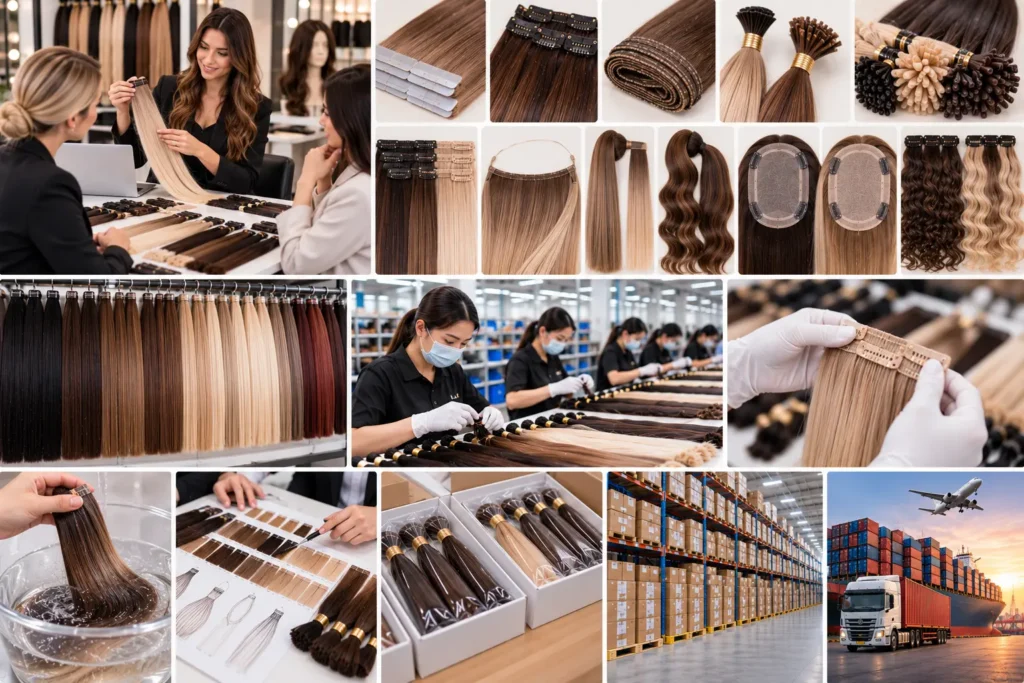

What Is a Hair Topper? A Complete Guide
A hair topper can solve a frustrating problem: thinning or flat hair around the crown that does not need a full wig. When coverage feels uneven, styling becomes stressful and inconsistent. I see many salons and brands choose toppers because they offer targeted volume, natural blending, and flexible product options.
A hair topper is a partial hairpiece designed to cover specific areas of the top, crown, or part line while blending with the wearer’s existing hair. Unlike a full wig, it does not cover the entire head. It is mainly used to add volume, density, and natural-looking coverage where extra hair is needed.
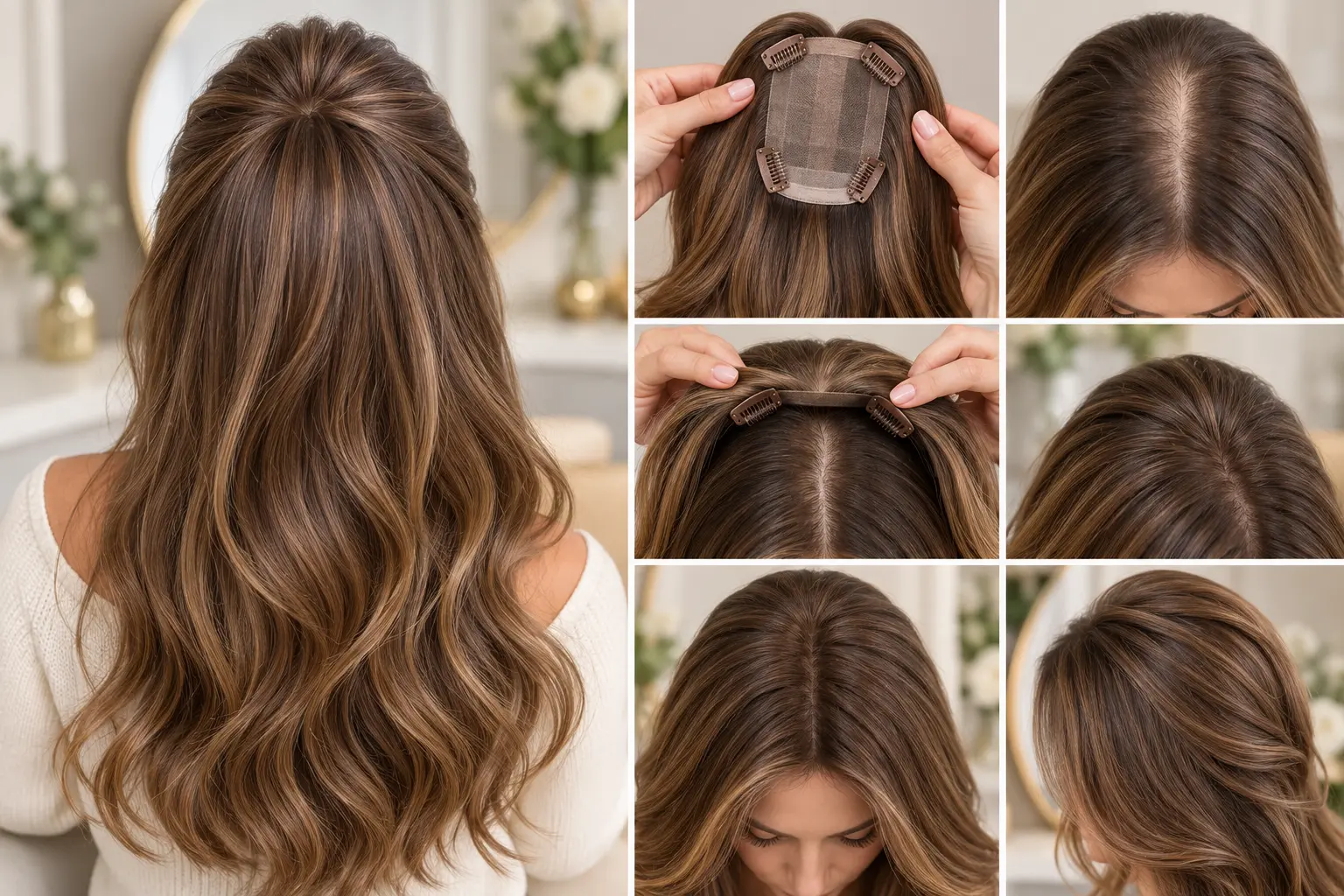
Hair toppers have become an important category in the alternative hair market because they sit between extensions and wigs.[^1] They are more targeted than wigs and more coverage-focused than standard extensions. To choose the right product, I always look at base construction, size, density, hair quality, color, and customization options.
What Is a Hair Topper Used For?
A hair topper is useful when a customer wants more coverage but does not want the weight or full-head coverage of a wig. The problem is that many buyers confuse toppers with wigs or extensions. This can lead to poor product selection, poor blending, and disappointed salon clients.
A hair topper is used to add volume, density, and coverage to the top, crown, or parting area of the head. It blends with the wearer’s natural hair and can help conceal visible scalp, improve fullness, and create a more balanced hairstyle without using a full wig.

How a Hair Topper Works
A topper is designed as a partial coverage hairpiece. It usually has a base that sits on the top or crown area. Hair is attached to that base through different construction methods, such as lace, mono, silk, PU, or combination bases. The base then attaches to the wearer’s natural hair or scalp area, depending on the design and attachment method.
In my experience working with professional buyers, most topper discussions start with one simple question:
“How much coverage does the customer really need?”
That answer affects almost every product decision.
A smaller base may work for light volume and minor part-line coverage. A larger base may be better when the visible scalp area is wider or when the customer wants more density across the crown.
Common uses include:
- Adding volume to fine or flat natural hair
- Covering thinning areas around the crown or part line
- Creating a fuller hairstyle without a full wig
- Adding density for special occasions or daily wear
- Supporting salon solutions for clients who need targeted coverage
Hair Topper vs Extensions
Hair extensions usually add length or volume through the sides and back of the hair. A hair topper focuses on the top, crown, or parting area. This is why toppers are often considered a more specialized product.
| Product Type | Main Purpose | Coverage Area | Blending Requirement |
|---|---|---|---|
| Hair Topper | Crown and top coverage | Partial top area | High |
| Hair Extensions | Length and side/back volume | Mid-lengths and ends | Medium to high |
| Wig | Full-head coverage | Full scalp | Lower natural hair blending |
| Hair Topper + Extensions | Fullness and length | Top plus sides/back | High |
For salons and B2B hair businesses, this category can be valuable because it meets a specific customer need. A client may still have enough natural hair to blend but may not feel confident with crown density. In that situation, a human hair topper can provide a lighter and more targeted option.
How Is a Hair Topper Different From a Wig?
A hair topper and a wig can both improve appearance, but they solve different problems. The confusion matters because a buyer who needs full coverage may not be satisfied with a topper. At the same time, a customer who only needs crown coverage may find a wig too heavy or unnecessary.
The biggest difference between a hair topper and a wig is coverage. A hair topper provides partial coverage and blends with existing hair, while a wig covers most or all of the scalp.[^2] Toppers are usually lighter, smaller, and designed for targeted volume or coverage.
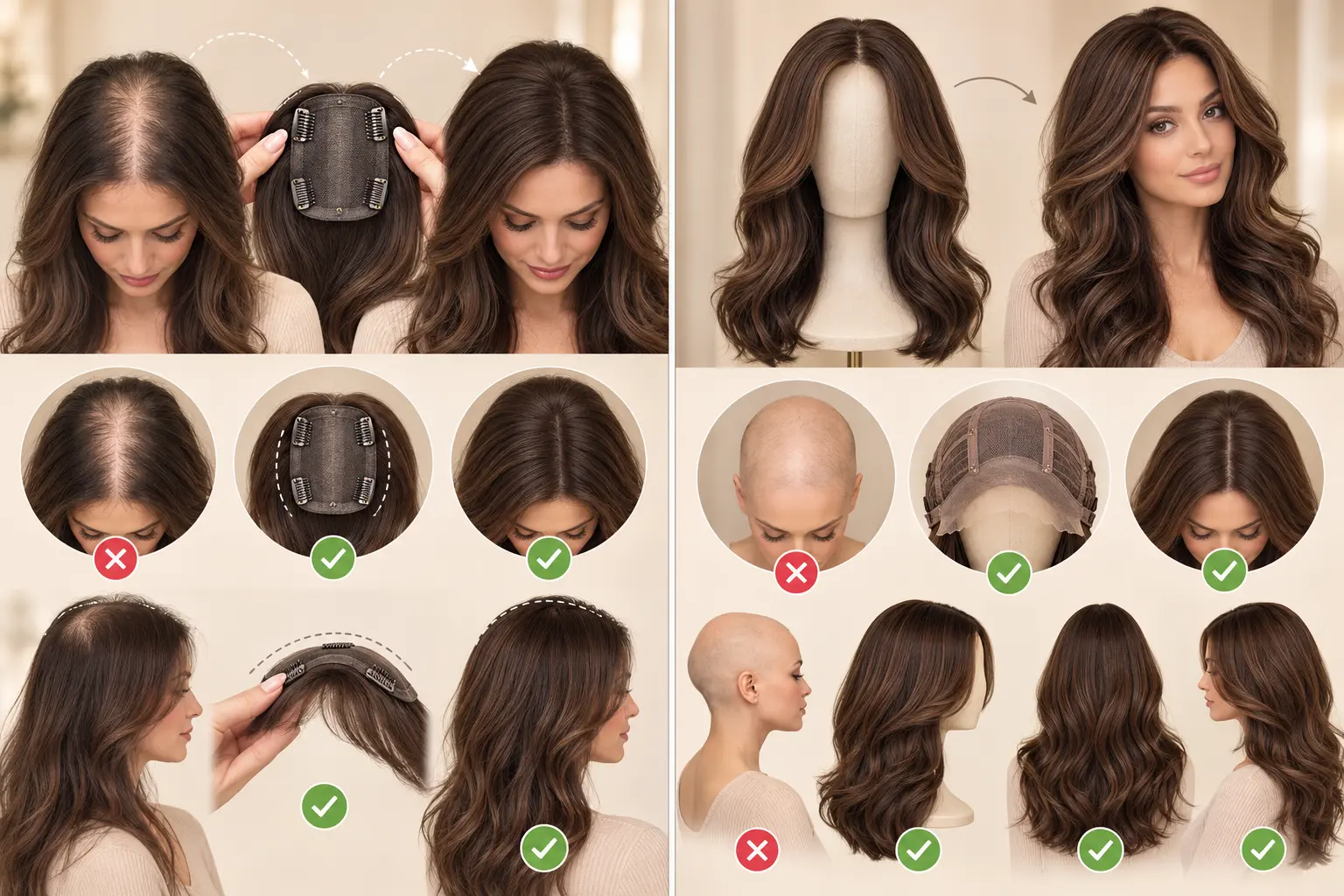
Hair Topper vs Wig Comparison
A wig is usually designed to replace or cover the natural hair appearance across the whole head. A topper is different because the wearer’s natural hair remains visible and plays a major role in the final result.
| Feature | Hair Topper | Wig |
|---|---|---|
| Coverage | Partial | Full or nearly full |
| Natural hair visible | Yes | Usually no |
| Blending required | Yes | Less natural-hair blending |
| Base size | Smaller | Larger |
| Main purpose | Volume and targeted coverage | Full-head coverage |
| Weight | Usually lighter | Usually heavier |
| Attachment | Often clips or other systems | Depends on wig construction |
| Best for | Crown, top, or part-line coverage | Extensive coverage needs |
When a Topper Makes More Sense
A topper often makes more sense when the customer still has enough natural hair for blending. The product depends on surrounding hair for a seamless finish.[^3] If the natural hair is too sparse around the attachment area, the customer may need a different solution. I usually recommend that salons evaluate this in person because photos alone can miss important details.
A topper may be suitable when:
- The customer has visible thinning at the crown.
- The sides and back still have enough natural density.
- The customer wants a lighter product than a wig.
- The main goal is volume, not full coverage.
- The hairstyle can be blended after installation.
When a Wig May Be Better
A wig may be better when the customer needs full-head coverage or when there is not enough natural hair to secure and blend a topper. A wig can also create a complete style change without relying heavily on the wearer’s own hair.
For professional buyers, this distinction affects inventory planning. A salon or distributor may need both categories because customers have different levels of coverage needs. I have seen buyers start with extensions, then add toppers, and later include wigs as their alternative-hair business matures.
From a procurement perspective, toppers are more complex than they first appear. The buyer must evaluate base size, base material, hair density, hair direction, clips, color matching, and styling flexibility. A wig also has complex construction, but it does not rely as much on blending with existing hair.
Should You Choose a Human Hair Topper or Synthetic Hair Topper?
A hair topper can be made with human hair or synthetic fiber, and this decision changes the final appearance, cost, styling flexibility, and target customer. The wrong fiber choice can create problems for salons because clients may expect styling freedom that the product cannot safely provide.
A human hair topper usually offers more natural movement, a more realistic appearance, and greater styling flexibility than many synthetic toppers.[^4] Synthetic toppers can be lower cost and easier to maintain, but they may have limits in heat styling, color matching, texture realism, and long-term wear performance.[^5]
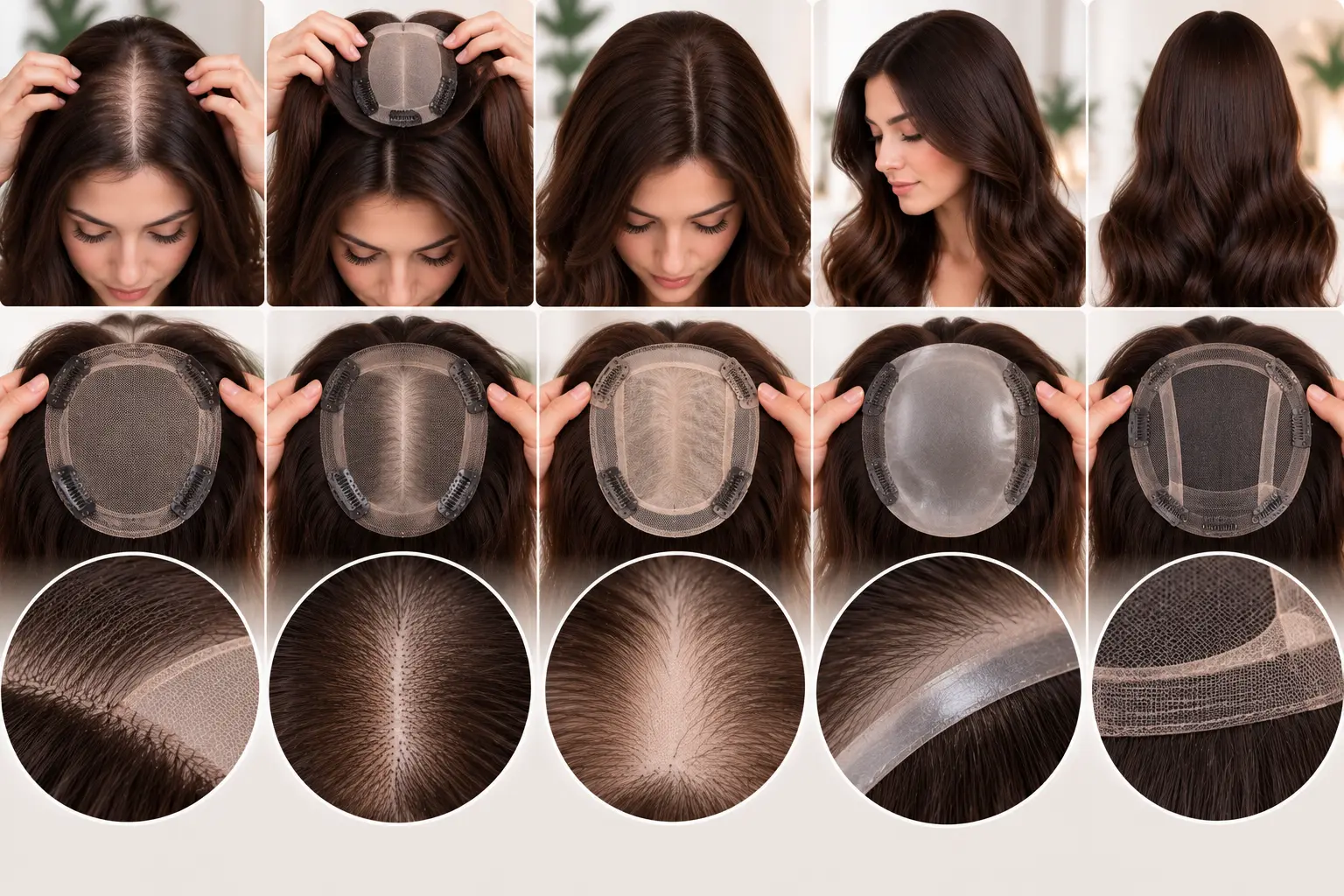
Human Hair Toppers
A human hair topper is often chosen for premium salon and professional hair business applications. It can offer natural movement and a realistic finish, especially when the hair quality, ventilation, density, and color are well controlled.
At RENAI HAIR, I focus on 100% Human Hair, Remy Hair, and Cuticle Intact Hair categories because professional buyers often care about consistency across repeat orders. A topper must look good not only in a product photo but also after washing, brushing, styling, and installation.
Human hair toppers may allow:
- Washing, according to care instructions
- Curling or straightening, depending on hair quality and base design
- Professional cutting and blending
- More natural movement
- More advanced color options
- Better alignment with premium salon services
However, a human hair topper still needs proper care. Buyers should not assume that all human hair products perform the same. Hair origin, cuticle direction, processing, coloring, knotting, and quality control all affect the final result.
Synthetic Hair Toppers
Synthetic toppers can be practical for cost-sensitive markets. They may hold a preset style well and require less daily styling. However, synthetic fibers can vary widely. Some fibers look shiny or feel less natural, while higher-grade synthetic options may perform better.
Synthetic toppers may offer:
- Lower entry price
- Preset style retention
- Lighter maintenance for some users
- Good options for temporary or occasional wear
The limitations may include:
- Reduced heat-styling freedom
- Less natural movement in some fibers
- More difficult color blending
- Shorter useful life in some cases
- Less flexibility for salon customization
Procurement Comparison
| Factor | Human Hair Topper | Synthetic Hair Topper |
|---|---|---|
| Appearance | More natural when quality is high | Varies by fiber grade |
| Styling flexibility | Higher | Often limited |
| Cost | Higher | Lower |
| Salon customization | Stronger | More limited |
| Market position | Premium/professional | Entry to mid-range |
| Color blending | Usually better | Depends on fiber |
| Heat styling | Often possible with care | Depends on fiber type |
For B2B buyers, the decision is not only about price. It is about the customer segment. A beauty supply store may carry both. A premium salon may prefer human hair toppers because stylists can cut, blend, and finish the piece for each client. A private-label brand may choose human hair if its positioning depends on natural appearance and repeat customer satisfaction.
I always suggest that buyers test samples before placing larger orders. They should check shedding, tangling, wash performance, color consistency, base comfort, and clip strength. A topper is a high-touch product, so small quality differences can become big customer-service issues.
What Hair Topper Base Types Are Available?
A hair topper base is one of the most important parts of the product because it affects appearance, breathability, durability, comfort, and styling options. If the base is wrong, even good hair may not create a natural result. This is why base construction deserves careful evaluation.
Common hair topper base types include lace, mono, silk, PU, and combination bases.[^6] Lace can be lightweight, mono can create a natural scalp effect, silk can conceal knots, PU can support attachment areas, and combination bases balance realism, durability, and function.
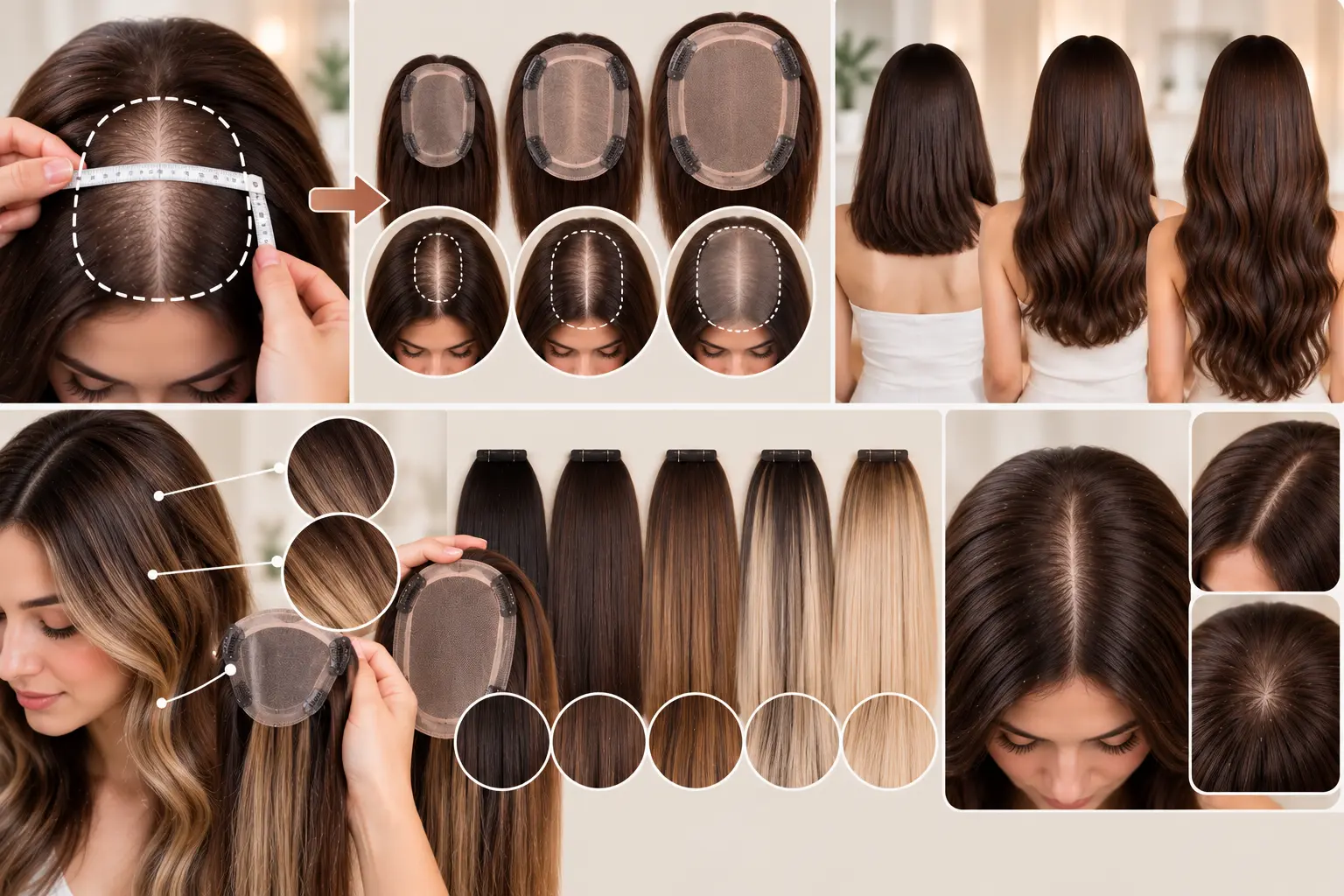
Lace Base
Lace is lightweight and breathable.[^7] It can create a natural-looking effect in certain areas, especially around the front or parting zone. Lace may be used alone or combined with other materials.
Common benefits include:
- Lightweight feel
- Good breathability
- Natural appearance in selected areas
- Flexible construction options
The trade-off is durability. Lace can be delicate, so buyers should evaluate lace strength and workmanship before purchasing in volume.
Mono Base
A monofilament base is widely used in professional hairpieces. Individual hairs can appear as though they are growing from the scalp, especially when the ventilation work is clean and consistent.[^8]
Mono bases are often valued for:
- Scalp-like appearance
- Good structure
- Professional finish
- Practical durability
Mono can be a strong choice for salons because it balances appearance and function.
Silk Base
A silk base can create a very realistic scalp effect because knots are hidden beneath an upper layer.[^9] This can make the parting area look smooth and natural.
Silk bases can be attractive for premium products, but buyers should check thickness, breathability, and customer comfort. A very realistic base may not always be the lightest option.
PU Base
PU, or polyurethane, is often used around perimeter or attachment areas.[^10] It can support clips, tape, or other attachment methods depending on the design.
PU can help with:
- Stronger attachment zones
- Easier cleaning in some designs
- Defined perimeter structure
- Durable edge construction
However, too much PU may reduce breathability. The final choice depends on climate, wear pattern, and customer expectations.
Combination Base
Many professional toppers use a combination base. For example:
- Lace + Mono
- Mono + PU
- Silk + PU
- Lace front + Mono top + PU perimeter
Combination bases allow manufacturers to balance different needs. A brand may want a natural parting area, stronger perimeter, and comfortable wear. One material alone may not deliver all three.
| Base Type | Main Advantage | Buyer Should Check |
|---|---|---|
| Lace | Lightweight and breathable | Strength and edge durability |
| Mono | Natural scalp effect | Ventilation consistency |
| Silk | Concealed knots | Thickness and comfort |
| PU | Attachment support | Breathability and flexibility |
| Combination | Balanced function | Material transitions and workmanship |
For wholesale buyers, I recommend checking base samples in hand. Photos cannot always show ventilation quality, knot size, hair direction, or material feel. A physical sample helps the buyer test brushing, parting, clip placement, and scalp appearance under natural light.
How Do You Choose the Right Hair Topper Size, Length, and Color?
A hair topper must match the coverage area, natural hair length, and color tone. If the base is too small, coverage may be insufficient. If the color is wrong, even a high-quality topper can look obvious. This is where professional evaluation makes a major difference.
To choose the right hair topper size, measure the area needing coverage and select a base that covers it while leaving enough natural hair for blending and attachment.[^11] Then match the length, color, density, texture, and parting direction to the wearer’s existing hairstyle.
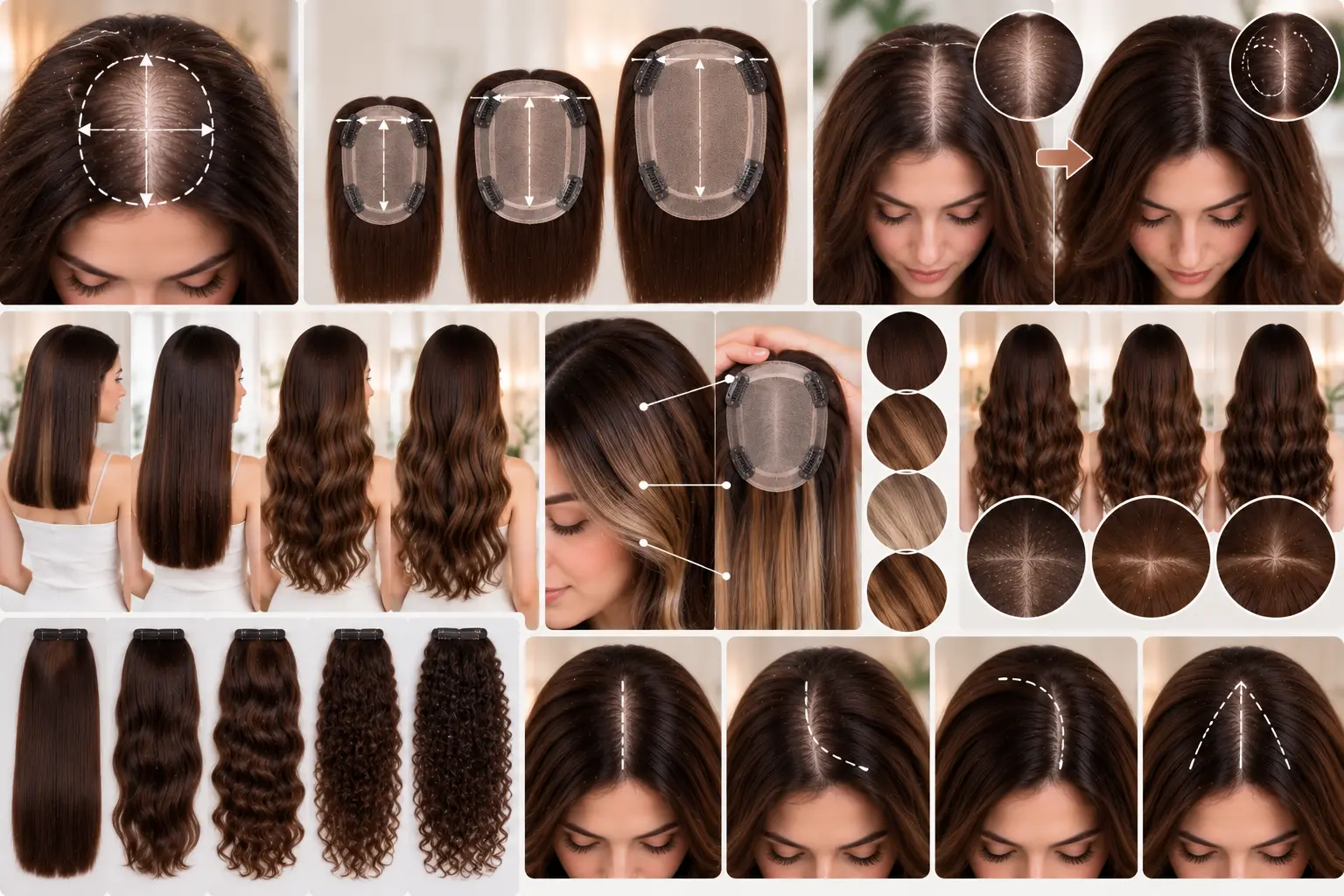
Choosing the Right Size
Topper sizes vary considerably. A small base may suit minor thinning or added volume. A larger base may be needed when the thinning area extends across the crown or part line.
When I help buyers discuss sizing, I focus on five practical questions:
-
Where is the coverage needed?
The part line, crown, front top, or wider top area may each require a different base. -
How large is the visible scalp area?
The base should cover the target area with some margin. -
Is there enough natural hair for clips?
Clip-in toppers need suitable hair around the attachment points. -
What hairstyle will the customer wear?
Middle part, side part, bangs, and updos all affect the ideal design. -
How much volume is desired?
A customer may want light density or a fuller fashion result.
A common mistake is choosing the smallest possible base to keep the product light. This may work for minor volume, but it may not provide enough coverage. Another mistake is choosing a large base without considering blending. Bigger is not always better.
Choosing Hair Length
Human hair toppers are available in multiple lengths. The right choice should match the wearer’s natural hair and desired style. A longer topper is not automatically better.
Length selection should consider:
- Existing natural hair length
- Desired final haircut
- Layering needs
- Styling habits
- Customer age and market preference
- Salon customization plan
A professional stylist can cut and layer the topper after installation. This step often makes the difference between “good” and “natural.” I have seen sample pieces look average on a table but excellent after a stylist cuts the front, softens the perimeter, and blends the density.
Choosing the Right Color
Color matching is extremely important. Even a well-constructed topper can fail if the tone is wrong. Many natural hair colors contain multiple tones, so buyers should not rely only on simple labels like brown or blonde.
Common topper colors include:
- Black
- Natural black
- Dark brown
- Medium brown
- Light brown
- Ash brown
- Dark blonde
- Blonde
- Ash blonde
- Platinum blonde
- Highlighted colors
- Balayage colors
For salons and distributors, a professional color ring is very useful. It allows more accurate communication between the supplier and buyer. It also helps when customers compare shades in person.
Density and Texture Matter Too
Size, length, and color are not enough. Density and texture also affect the final look.
| Selection Factor | Why It Matters |
|---|---|
| Base size | Controls coverage area |
| Hair length | Affects blending and styling |
| Color | Determines visual match |
| Density | Controls fullness and realism |
| Texture | Matches straight, wavy, or curly hair |
| Hair direction | Affects parting and styling |
| Clip position | Affects security and comfort |
For application-specific decisions, I always recommend professional stylist evaluation. A supplier can provide specifications, but the final fit depends on the wearer’s hair condition, styling habits, and comfort needs.
What Should B2B Buyers Look for in a Hair Topper Supplier?
A hair topper is more complex than many standard hair extension products, so B2B buyers should evaluate more than price. Poor workmanship can cause shedding, unnatural hair direction, weak attachment, or inconsistent repeat orders. A supplier must be able to control both hair quality and base construction.
B2B buyers should look for consistent human hair quality, accurate base construction, clean ventilation, reliable density, color consistency, secure clips, wash performance, customization capability, and clear communication. Samples should be checked before bulk orders, especially for new base designs or private-label products.
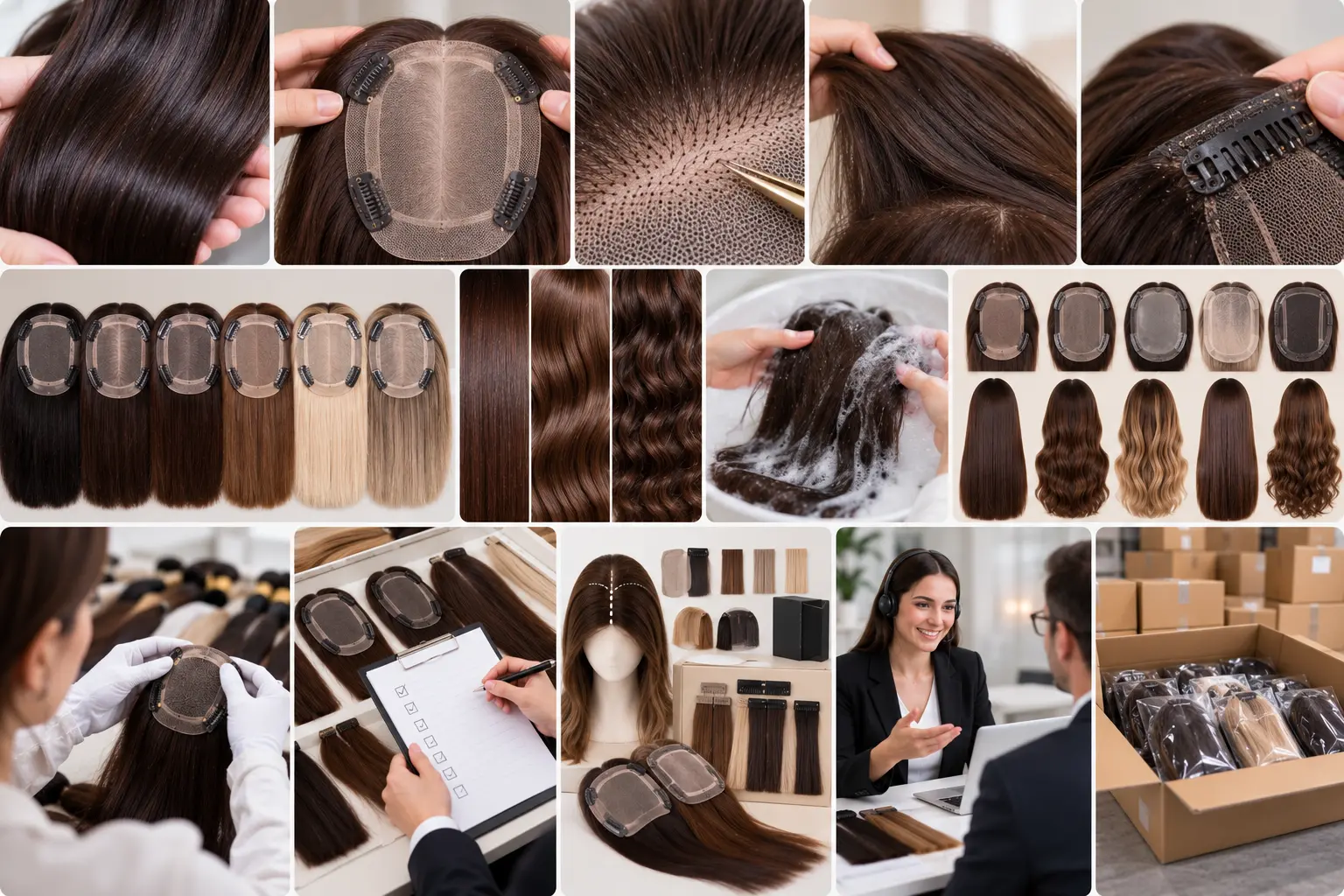
Key Quality Points to Inspect
Professional buyers should evaluate a topper from several angles. A product may look good in a photo, but real quality appears during handling, brushing, washing, and styling.
Important inspection points include:
- Human hair quality
- Base construction and material stability
- Knotting or ventilation workmanship
- Hair density and distribution
- Hair direction and parting behavior
- Base dimensions and shape
- Color consistency across batches
- Hairline and scalp appearance
- Clip quality and attachment components
- Shedding during brushing and washing
- Tangle resistance after washing
- Customization accuracy
- Packaging and labeling quality
At RENAI HAIR, I position topper production as a professional human hair solution for salons, wholesalers, distributors, and private-label brands. Because toppers involve many specifications, I prefer detailed product discussions before production. This reduces misunderstanding and helps the buyer build a more suitable product line.
Sample Testing Before Bulk Orders
Samples are especially important for hair toppers. A buyer should not judge only from catalog photos. I recommend testing at least one or two base types, especially if the buyer is new to the category.
A practical sample test can include:
- Visual inspection under natural light
- Base measurement check
- Parting and hair direction check
- Comb-through test
- Clip opening and closing test
- Gentle shedding check
- Wash and air-dry observation
- Heat styling test if allowed by care instructions
- Color comparison with a color ring
- Stylist feedback after trial fitting
Supplier Questions to Ask
Before placing an order, B2B buyers should ask clear questions:
- What hair grade and hair type options are available?
- Can the supplier provide Remy Hair or Cuticle Intact Hair options?
- What base materials are available?
- What standard base sizes are in stock?
- Can the base size be customized?
- What density options are possible?
- Can colors, highlights, and balayage effects be customized?
- What clip positions are standard?
- Can packaging and private labeling be provided?
- What is the sample lead time and bulk production lead time?
- How is outgoing quality control handled?
Custom Hair Toppers for Brands and Salons
Customization is a major advantage for professional businesses. A brand may want a specific base size, density, and color range for its market. A salon may want toppers that match its common client profiles.
Possible customization options include:
- Base size
- Base construction
- Hair length
- Hair density
- Hair color
- Highlight combinations
- Balayage colors
- Hair texture
- Parting direction
- Clip position
- Packaging
- Private labeling
For private-label hair brands, custom packaging can also support a stronger retail experience. However, buyers should confirm minimum order requirements, sample approval procedures, and production tolerances before moving forward.
Frequently Asked Questions
What is a hair topper used for?
A hair topper is used to add volume, density, or targeted coverage to the top, crown, or parting area. It blends with the wearer’s existing hair and can help create a fuller, more balanced hairstyle without using a full wig.
Is a hair topper the same as a wig?
No. A hair topper provides partial coverage and depends on the wearer’s natural hair for blending. A wig is designed to cover most or all of the scalp. Toppers are usually lighter and more targeted than wigs.
Can you style a human hair topper?
Yes, many human hair toppers can be professionally styled, cut, curled, or straightened, depending on the hair quality and care instructions. Buyers and wearers should always follow the manufacturer’s recommendations to protect the hair and base construction.
How do I choose a topper size?
Measure the area that needs coverage, then choose a base that covers that area with enough margin for blending. Also check whether there is enough natural hair around the attachment points, especially if the topper uses clips.
Can hair toppers be customized?
Yes. Professional hair topper manufacturers may offer custom base sizes, base constructions, colors, lengths, densities, textures, parting designs, clip positions, packaging, and private-label options. Availability depends on production capability and order requirements.
Conclusion
A hair topper is a targeted hairpiece that adds coverage, volume, and density to the top or crown while blending with natural hair. The best choice depends on base type, size, length, color, density, attachment, and hair quality. For salons, distributors, wholesalers, and private-label brands, sample evaluation is essential before bulk purchasing. If you want professional human hair toppers for your market, contact RENAI HAIR to discuss available base constructions, colors, lengths, customization options, and sample support.
[^1]: "Human Hair Wigs, Toupee Hair, Hair Pieces, Hair Extensions", https://www.superhairpieces.com/?srsltid=AYCX9vKr3e117bC3W32XS3ZL7XTsjWajvMUzyZTyxX5bhGLH-JOZugwd. Independent hair-replacement guidance distinguishes full wigs, extensions, and partial hairpieces as separate options with different coverage purposes, supporting the article’s classification of toppers as an intermediate category; the source does not necessarily measure the commercial importance of the topper segment. Evidence role: general_support; source type: institution. Supports: A neutral source should show that wigs, extensions, and partial hairpieces are treated as different hair-replacement or cosmetic hair product categories.. Scope note: This would support the categorical distinction, not the stronger market-size implication of being an “important” category. [^2]: "Wig", https://en.wikipedia.org/wiki/Wig. Reference definitions of wigs describe them as head coverings made from human hair, animal hair, or synthetic fiber, while hairpieces may cover only selected areas; this supports the article’s coverage-based distinction between wigs and toppers. Evidence role: definition; source type: encyclopedia. Supports: A source should define a wig as a head covering made of hair or synthetic fiber and distinguish it from smaller hairpieces or partial pieces.. Scope note: The source may define wigs generally and may not discuss modern commercial hair toppers in detail. [^3]: "All that a Dermatotrichologist needs to know about Hair ... - PMC", https://pmc.ncbi.nlm.nih.gov/articles/PMC9231527/. Clinical and cosmetic hair-loss literature notes that partial hairpieces and camouflage techniques work by integrating added fibers or hair with remaining hair, supporting the statement that a topper’s natural appearance depends on surrounding hair for blending. Evidence role: mechanism; source type: research. Supports: A source should explain that partial hairpieces or cosmetic camouflage methods use remaining hair to integrate the added hair into the wearer’s hairstyle.. Scope note: The source may discuss cosmetic hair-loss management broadly rather than salon topper fitting specifically. [^4]: "Complete Guide to Natural-Looking and Glueless Wig Styles", https://campusweb.cofo.edu/ICS/icsfs/mm/human-hair-wigs-glueless-styles.html?target=393a3e00-4b70-49aa-96ed-7ba903d053fa. Independent wig-selection guidance commonly reports that human-hair pieces allow greater styling versatility and can appear more natural, while synthetic pieces are often less costly and easier to maintain; this supports the article’s material comparison, though the evidence is generally based on wig and hairpiece guidance rather than controlled trials of toppers alone. Evidence role: expert_consensus; source type: institution. Supports: A neutral wig or cancer-support organization should compare human hair and synthetic wigs/hairpieces in terms of appearance, styling, cost, and maintenance.. Scope note: The support is contextual because many sources discuss wigs and hairpieces together rather than hair toppers exclusively. [^5]: "Synthetic Wigs vs Human Hair Wigs | Selecting a Wig", https://www.simplywigs.co.uk/blog/human-hair-wigs-vs-synthetic-hair-wigs/. Neutral wig-care and patient-support resources describe synthetic hairpieces as generally less expensive and easier to care for than human-hair pieces, while noting restrictions on heat styling and differences in appearance or longevity; this supports the article’s comparison at a category level. Evidence role: general_support; source type: institution. Supports: A neutral source should describe typical advantages and limitations of synthetic hairpieces, including cost, maintenance, and heat-styling restrictions.. Scope note: The source would support general tendencies, not performance of every synthetic fiber or every topper construction. [^6]: "Wig Cap Construction Types - Created by Jon Renau", https://www.blog.wigs.co.za/wig-cap-construction-types/. Independent descriptions of wig and hairpiece construction identify lace, monofilament, polyurethane, and related multi-material cap or base designs as established construction types, supporting the article’s list of common topper bases. Evidence role: definition; source type: institution. Supports: A neutral wig or hairpiece construction source should identify lace, monofilament, silk-like, polyurethane, or mixed constructions as recognized base types.. Scope note: The support is partly contextual because construction terminology is often documented for wigs and hair systems generally, not only toppers. [^7]: "BEEOS Skinlike HD Wig Cap, 4 Pieces Invisible and Sheer ...", https://www.amazon.com/clp/B0BZ786XL3. Wig-construction guidance describes lace or mesh cap materials as lightweight and more ventilated than less porous base materials, supporting the article’s statement that lace bases can improve breathability and comfort. Evidence role: mechanism; source type: institution. Supports: A source should explain that lace or mesh-like wig bases allow airflow and are used for lightweight construction.. Scope note: Breathability depends on lace type, density, adhesives, and the overall base design, so the source supports the general mechanism rather than every lace topper. [^8]: "What does monofilament actually mean? It's the most natural- ...", https://www.facebook.com/bosscrownsme/videos/what-does-monofilament-actually-mean-its-the-most-natural-looking-cap-constructi/956766393507274/. Independent wig-construction resources describe monofilament tops as cap areas where individual hairs are tied to a fine mesh, producing the visual impression that hair emerges from the scalp; this supports the article’s explanation of the monofilament effect. Evidence role: mechanism; source type: institution. Supports: A source should describe monofilament tops or bases as allowing individual hair movement and creating a scalp-like appearance.. Scope note: The effect depends on workmanship, hair density, and the wearer’s scalp or cap color, so the support is for the construction principle rather than guaranteed appearance. [^9]: "What is a silk top wig? Natural scalp guide", https://atmwigs.com/what-is-a-silk-top-wig/. Hairpiece-construction references describe silk-top bases as layered designs in which knots are concealed beneath an upper fabric layer, supporting the article’s claim that silk bases can create a smoother, scalp-like parting area. Evidence role: mechanism; source type: institution. Supports: A source should explain that silk-top or silk-base construction hides knots between layers to create a scalp-like appearance.. Scope note: Most available sources are practical construction guides rather than peer-reviewed studies, so the citation would support the design mechanism rather than quantify realism. [^10]: "Lordhair Toupee for Men Hair Replacement System ...", https://www.amazon.com/Lordhair-Replacement-Natural-Perimeter-available/dp/B081NC6K6Z. Hair-system construction guidance describes polyurethane base sections as durable, non-mesh areas often used for tape, adhesive, or perimeter reinforcement, supporting the article’s statement that PU is commonly used in attachment zones. Evidence role: mechanism; source type: institution. Supports: A source should explain that polyurethane sections in hairpieces provide surfaces for tape, adhesive, or reinforced attachment.. Scope note: The citation would support common design practice; individual manufacturers may use PU in different locations or omit it entirely. [^11]: "How to Choose a Hair Topper: A Step-by-Step Guide", https://www.headcovers.com/pages/hair-topper-buying-guide?srsltid=AYCX9vLB1xWxemGnUL7Tbhy3R0_CJSBHlmyw6fQniU9Maj5OYJLPDeGJ. Independent fitting guidance for toppers and partial hairpieces recommends measuring the thinning area and choosing a base that extends beyond the area while allowing integration with the wearer’s remaining hair, supporting the article’s sizing advice. Evidence role: general_support; source type: institution. Supports: A fitting guide should recommend measuring the area of thinning or coverage needed and selecting a piece that allows blending with existing hair.. Scope note: Sizing practices vary by attachment method, hair density, and stylist preference, so the source should be treated as practical guidance rather than a universal standard.