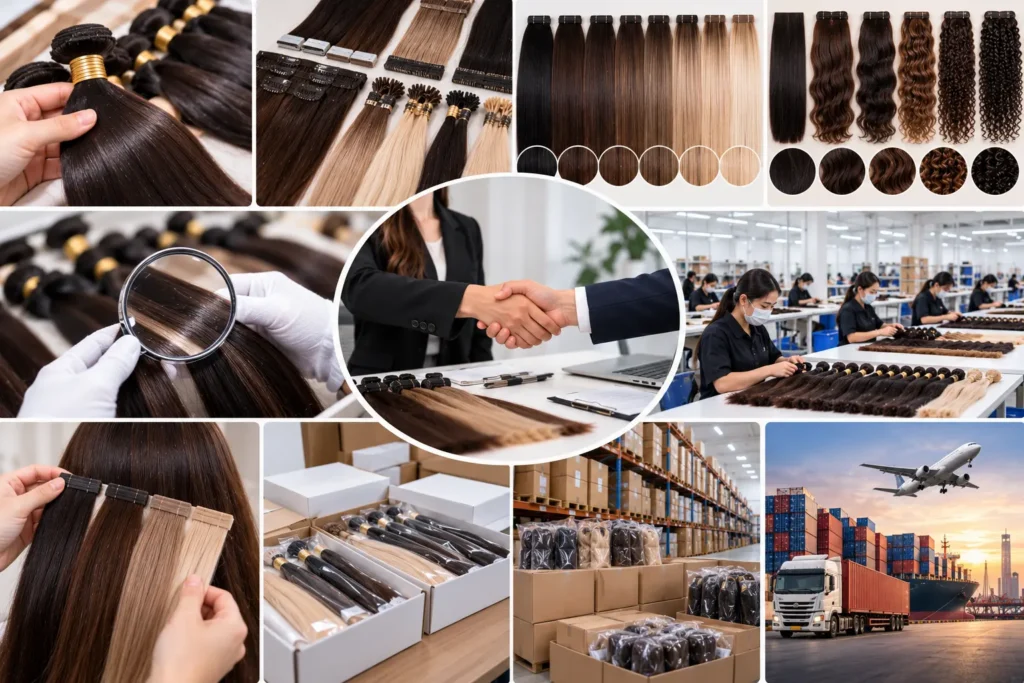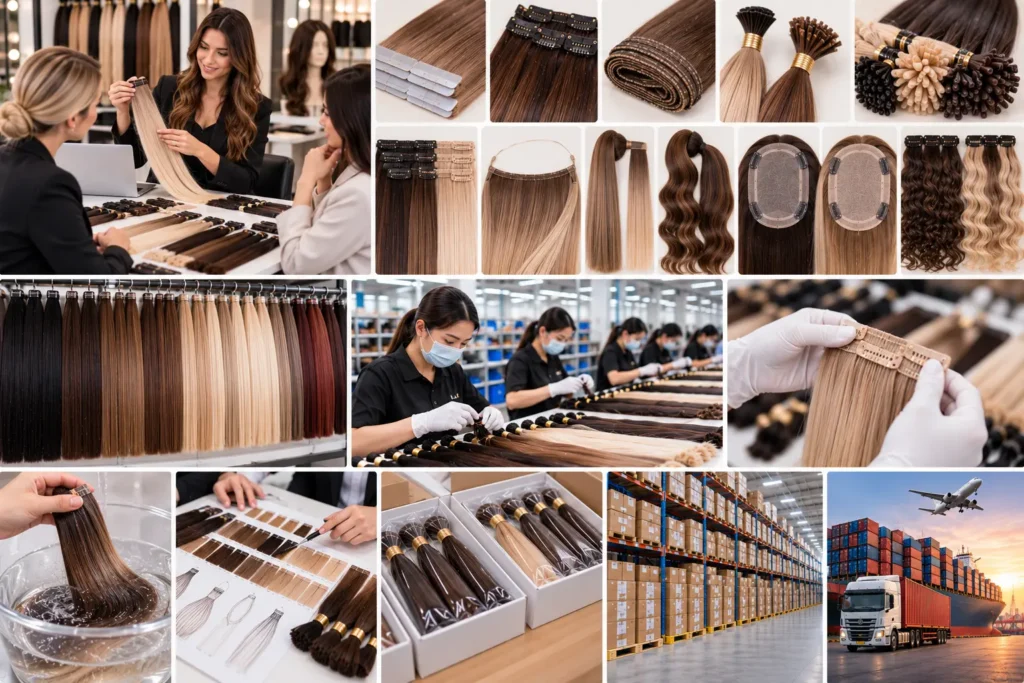
does keratin bond extensions suitable for you?
Keratin bond extensions can feel like the perfect solution when you want longer, fuller, natural-looking hair, but the wrong choice can waste money, damage confidence, and create salon problems. I look at fit, hair quality, maintenance, and supplier reliability first, so the decision becomes much easier.
Keratin bond extensions are suitable for people who want discreet, long-lasting, natural-moving hair extensions and are ready for professional installation, careful maintenance, and a 2–3 month wear commitment[^1]. They are especially useful for long-term extension wearers, salons, and brands that need secure bonds, premium human hair, and flexible color options.
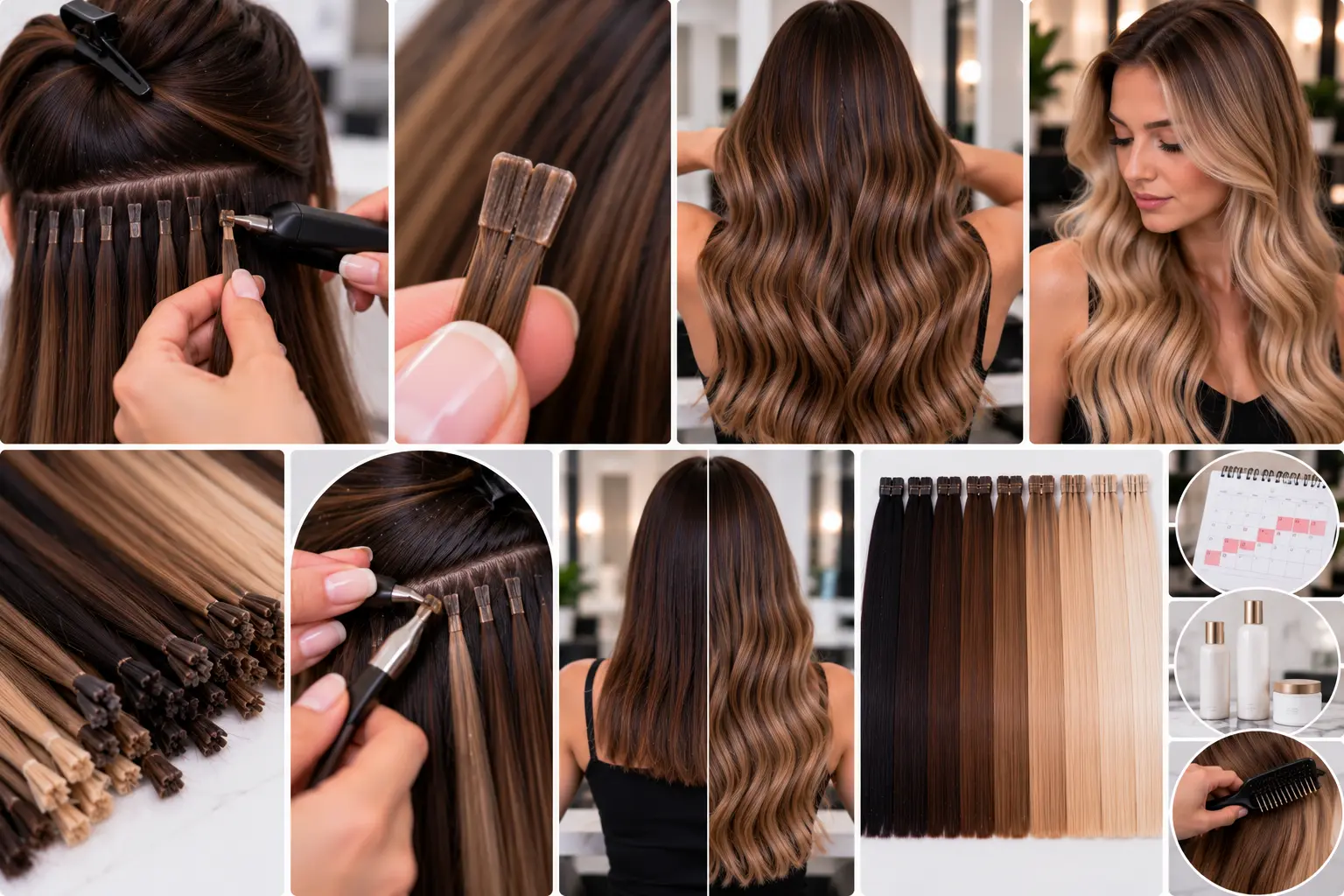
I have seen many buyers compare tape-ins, wefts, clip-ins, and fusion hair before making a decision. Each method has value. However, keratin fusion stands out when the goal is comfort, movement, discretion, and long wear without daily removal.
What are keratin bond extensions and how do they work?
Choosing a hair extension method can feel confusing because every product sounds promising. I often see buyers worry about damage, comfort, visibility, and cost at the same time. Keratin bond extensions solve many of these concerns when a trained stylist installs them correctly.
Keratin bond extensions are individual strands of human hair with a small keratin tip at the top. A stylist uses a heat tool to soften the bond[^2], attaches it to a small section of natural hair, and lets it cool. The bond cures quickly and holds securely until professional removal.
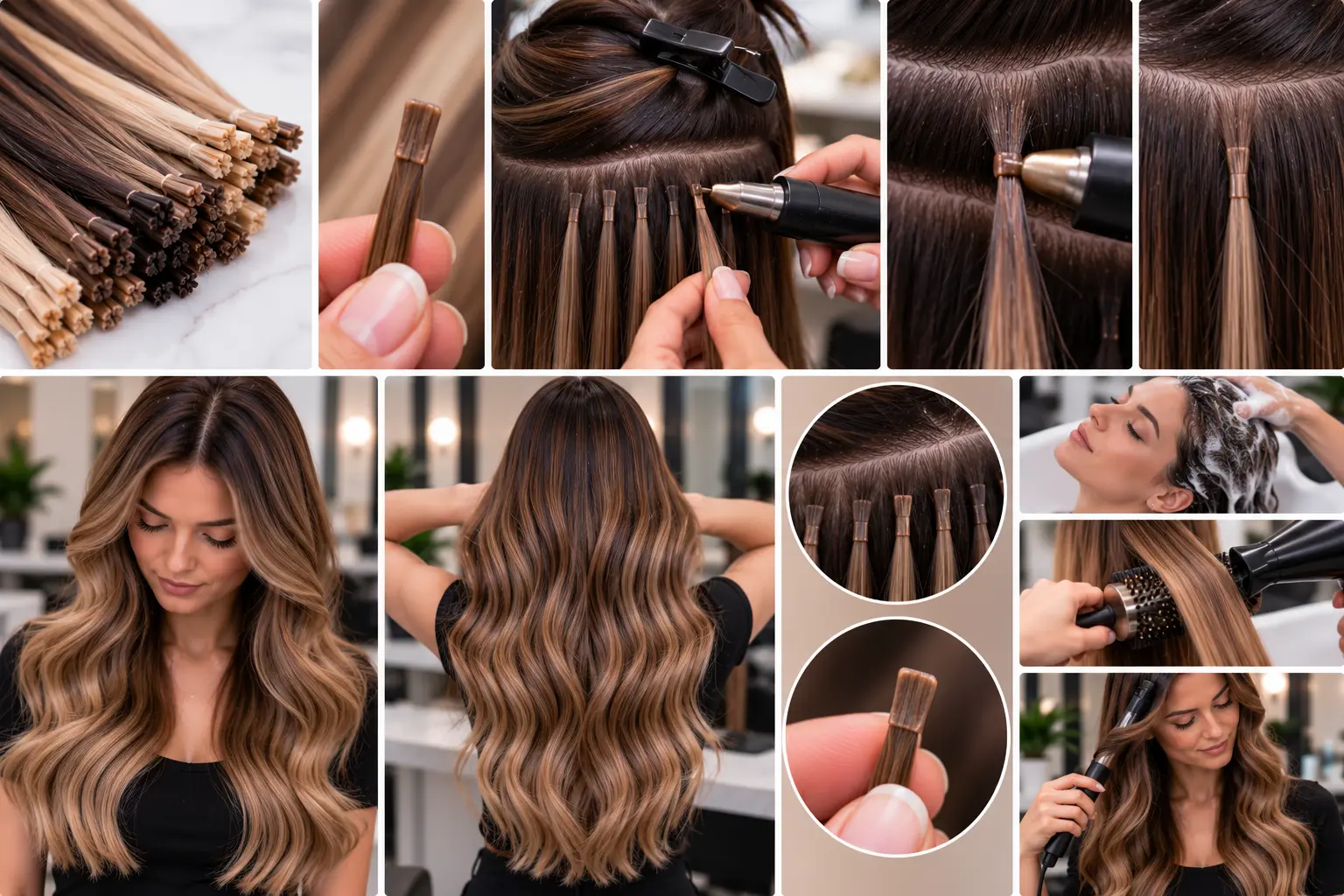
The basic structure of a keratin bond
A keratin bond extension usually includes three parts:
-
Human hair strand
This can be Remy hair, cuticle-intact hair, or other grades depending on the supplier. -
Keratin tip or bond
The bond sits at the top of the strand and is designed to attach to natural hair. -
Small attachment section
A stylist separates a small section of natural hair and applies the keratin bond with controlled heat.
I like this method because each strand moves independently. That movement helps the finished style look more natural than one large attachment point. The result can blend well with straight, wavy, or textured hair when the color, length, density, and bond size are chosen carefully.
Why the application method matters
The method is simple in theory, but skill matters. A stylist must control:
- Section size
- Heat temperature
- Bond placement
- Distance from the scalp
- Direction of natural hair growth
- Total strand weight
If the section is too small, the natural hair may carry too much weight[^3]. If the section is too large, the bond may not seal properly. If the bond is too close to the scalp, the wearer may feel tension.[^4] These details decide whether the experience feels comfortable or frustrating.
Keratin bond extensions compared with common methods
| Extension Method | Typical Wear Time | Best For | Main Consideration |
|---|---|---|---|
| Keratin bond extensions | 2–3 months | Long-term wear, discreet styling | Requires professional application and removal |
| [Tape-in hair extensions | 6–8 weeks](https://www.instagram.com/reel/DQvNQR9jP53/?hl=en)[^5] | Faster salon installation | Tape may need more frequent move-up |
| Machine weft | 6–10 weeks | Volume and density | May feel heavier depending on install method |
| Hand tied weft | 6–10 weeks | Flat, natural-looking volume | Requires compatible hair density |
| Clip-in hair extensions | Daily wear | Temporary styling | Must be removed daily |
| Halo hair extensions | Daily wear | Quick length and volume | Not ideal for all hairstyles |
From a buyer’s perspective, keratin fusion hair extensions are not just a beauty item. They are a product system. The hair quality, bond formula, color range, packaging, and after-sales guidance all affect the customer experience.
For B2B customers such as salons, distributors, and extension brands, I usually suggest reviewing samples before placing bulk orders. A sample lets you test the bond strength, wash behavior, shedding level, tangling resistance, and color accuracy. This is more reliable than judging from photos alone.
At RENAI HAIR, we focus on 100% human hair, Remy hair, and cuticle-intact hair options for professional buyers. I always remind buyers that product claims should be verified through their own tests, especially if they sell into demanding salon markets.
Are keratin bond extensions suitable for every hair type?
Many people ask this because they want one clear answer before they invest. The concern is reasonable. Thin hair, thick hair, fragile hair, and chemically treated hair all react differently. Keratin bond extensions are versatile, but the final decision should depend on hair condition and professional evaluation.
Keratin bond extensions can suit many hair types because the individual bonds are small, flexible, and customizable. They work well for fine, medium, and thick hair when the stylist selects the right strand weight, bond size, and placement. They may not suit severely damaged, weak, or actively shedding hair.[^6]
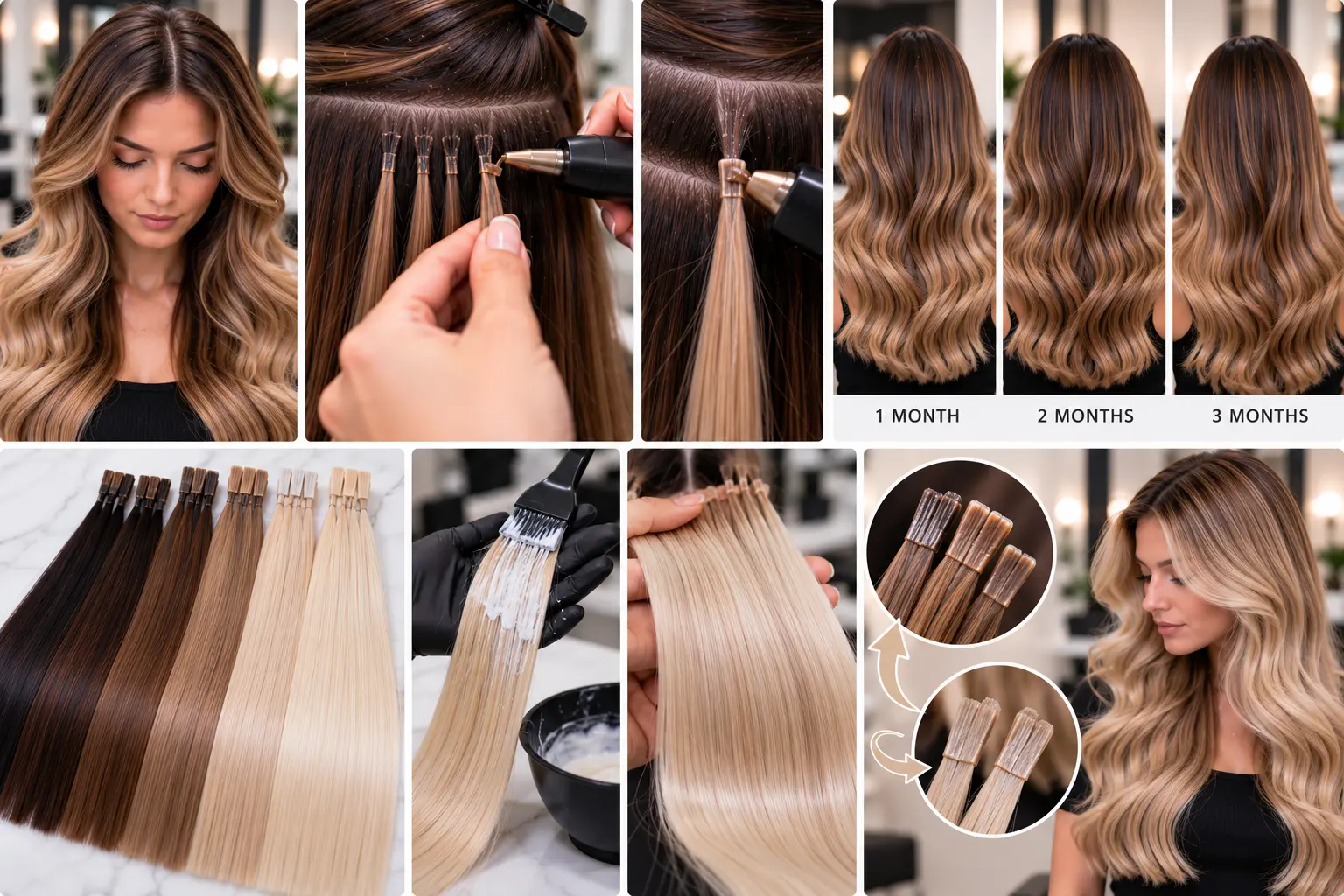
Why keratin bonds work across different textures
The biggest advantage of this method is individual movement. Each extension strand attaches to a small natural hair section. This allows the hair to fall in a more natural direction. I have seen this make a visible difference on clients who like ponytails, layered cuts, and loose waves.
Keratin bonds can blend with:
- Fine hair, when the bond is small and lightweight
- Medium-density hair, when standard bonds are used
- Thick hair, when enough strands are installed for balance
- Straight hair, when the texture match is precise
- Wavy hair, when the extension texture supports the final style
However, “suitable” does not mean “automatic.” A stylist should check scalp health, breakage, porosity, density, and lifestyle[^7]. I always prefer a conservative consultation before installation because prevention is better than repair.
Who is a strong candidate?
A strong candidate usually has:
- Healthy natural hair with enough density to support bonds
- Realistic expectations about maintenance
- A preference for long-term wear
- A willingness to avoid harsh brushing near bonds
- A regular salon maintenance schedule
- A need for discreet and flexible styling
Keratin fusion is ideal for wearers who do not want daily clip-in installation. It also suits salon clients who want a more permanent transformation for events, work, travel, or personal style.
Who should be careful?
Some people should pause before choosing this method:
- People with severe hair breakage
- People with active scalp irritation
- People experiencing heavy postpartum or medical hair shedding[^8]
- People who cannot return for professional removal
- People who frequently use oily products near the roots
- People who want a very low-maintenance method
For these clients, a stylist may recommend tape-ins, toppers, halos, or clip-ins instead. I never believe one method should be forced on every client. The best extension choice respects both beauty goals and hair health.
Why bond size customization matters
One feature I value in keratin tips is customizable bond sizing. A smaller bond can look more discreet on fine hair. A stronger or standard-size bond may be better for thicker hair. For professional buyers, this creates more flexibility across different salon clients.
Here is a simple evaluation table:
| Hair Condition | Keratin Bond Suitability | Suggested Buyer Check |
|---|---|---|
| Fine but healthy hair | Good with small bonds | Test lightweight strands |
| Medium healthy hair | Very good | Use standard application plan |
| Thick hair | Good with enough volume | Confirm strand count and density |
| Bleached fragile hair | Case-by-case | Require stylist consultation |
| Active shedding | Usually not ideal | Delay installation |
| Sensitive scalp | Case-by-case | Test comfort and placement |
For B2B buyers, this is also a product development issue. A brand that offers only one bond size may limit its market. A supplier with multiple colors, lengths, and bond options can better support salons and distributors.
How long do keratin bond extensions last?
The biggest frustration with extensions is buying beautiful hair that does not last. I understand that concern because repeat purchasing costs add up for consumers and inventory issues affect brands. Keratin bond extensions can offer strong value when the hair and bonds are made well.
Keratin bond extensions commonly last up to 3 months per installation, depending on natural hair growth, care habits, bond quality, and stylist technique. With high-quality human hair and improved bleaching technology, the hair itself may be reusable in product life terms for much longer, depending on condition and method.
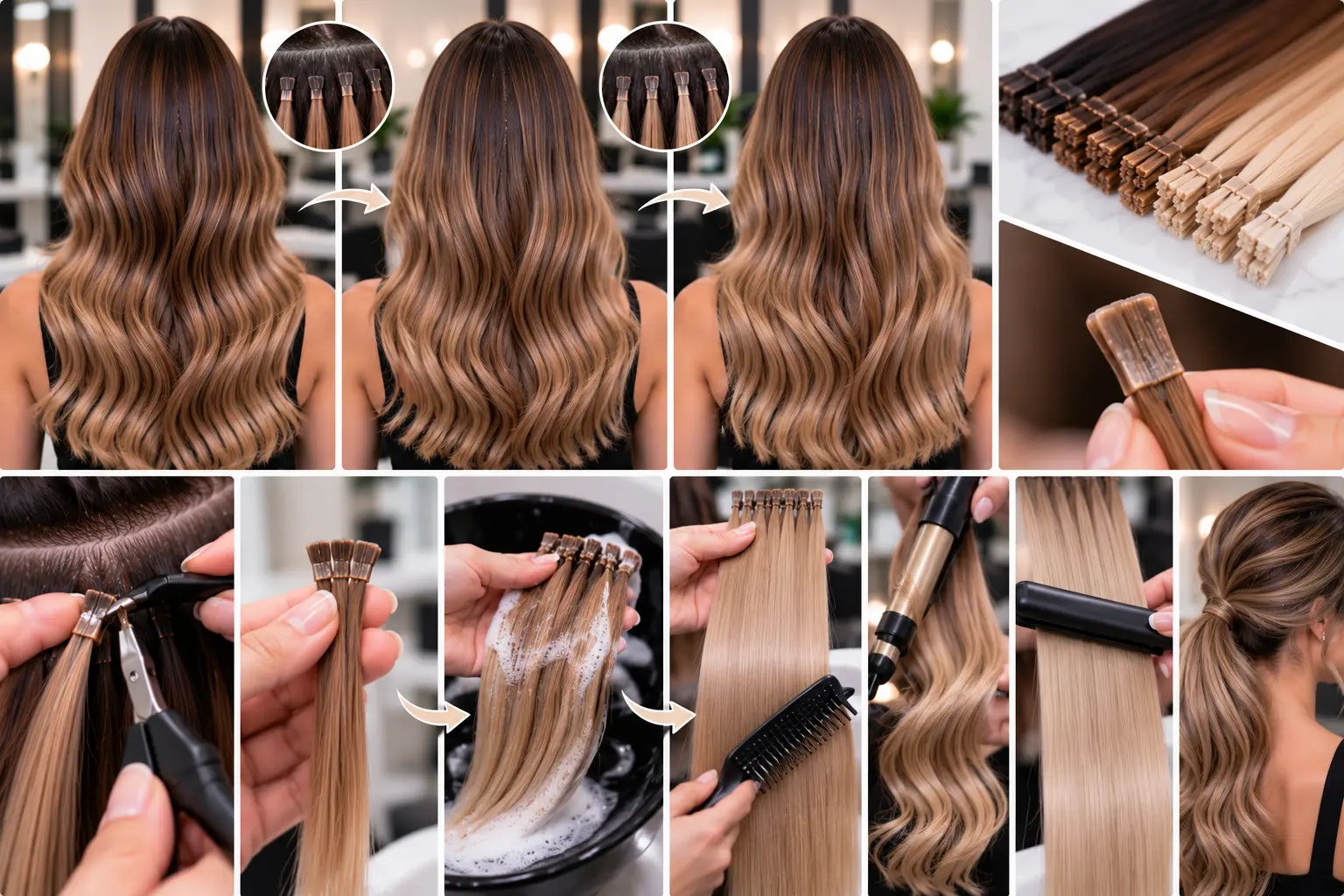
Installation wear time versus hair lifespan
I like to separate two ideas:
-
Wear time per installation
This usually means how long the bonds stay in the hair before removal is needed. -
Hair fiber lifespan
This means how long the extension hair remains soft, smooth, and usable under proper care.
Many keratin bond installations are worn for around 2 to 3 months. Natural hair grows during that time, so the bonds move farther from the scalp.[^9] If a client waits too long, the bonds can twist, tangle, or create tension. That is why professional removal is important.
For premium hair, the hair fiber itself may remain in good condition for a longer period. In my business context, RENAI HAIR uses human hair options and cold-bleaching technology for certain product lines to support longevity, softness, and color performance. Buyers should still test samples because washing routines, heat styling, climate, and customer behavior all influence results.
Factors that affect longevity
The following factors make a major difference:
- Hair quality: Cuticle-aligned Remy hair usually performs better than mixed-cuticle hair.[^10]
- Bleaching process: Harsh bleaching can weaken hair and reduce shine.[^11]
- Bond quality: A secure bond reduces slippage and emergency salon visits.
- Installation skill: Correct sectioning helps prevent premature shedding.
- Aftercare: Sulfate-heavy shampoo, heavy oils, and rough brushing shorten wear time.
- Heat styling habits: Excessive heat can dry out extension hair.[^12]
- Color level: Very light blonde shades often need more careful maintenance.
Practical care routine
I usually recommend this simple routine:
- Brush gently from ends upward with an extension-safe brush.
- Keep conditioner and oils away from the bonds.
- Dry the root area after washing.
- Sleep with a loose braid or low ponytail.
- Avoid pulling wet hair aggressively.
- Schedule removal on time.
- Use salon-approved products.
These steps sound simple, but they protect the investment. A wearer who follows aftercare can experience much better softness, movement, and bond security.
Why B2B buyers should test durability
For wholesale buyers, longevity is not just a marketing benefit. It affects returns, reviews, salon trust, and repeat orders. I suggest testing:
| Test Item | What to Check | Why It Matters |
|---|---|---|
| Wash test | Softness after 5–10 washes | Predicts customer satisfaction |
| Heat test | Response to curling/straightening | Supports salon styling claims |
| Bond pull test | Slippage under tension | Reduces service complaints |
| Color fastness | Fading or bleeding | Protects brand reputation |
| Tangle test | Nape area behavior | Shows cuticle alignment quality |
| Shedding check | Hair loss during brushing | Reveals weft or bond processing quality |
At RENAI HAIR, we emphasize strict outgoing quality control before shipment. I believe buyers should still perform their own incoming inspection, especially when launching a new line or changing specifications. Good supplier communication and documented standards help both sides avoid misunderstandings.
What are the main benefits of keratin bond extensions?
Many buyers compare benefits because they want to know whether the higher installation time is worth it. I think this question matters. If a method takes commitment, it should give clear advantages in comfort, appearance, styling freedom, and long-term value.
Keratin bond extensions offer discreet attachment, natural movement, strong hold, flexible styling, and long wear. They can reduce daily styling effort and create a seamless result when matched well. For salons and brands, they also support premium positioning because the method feels customized and professional.
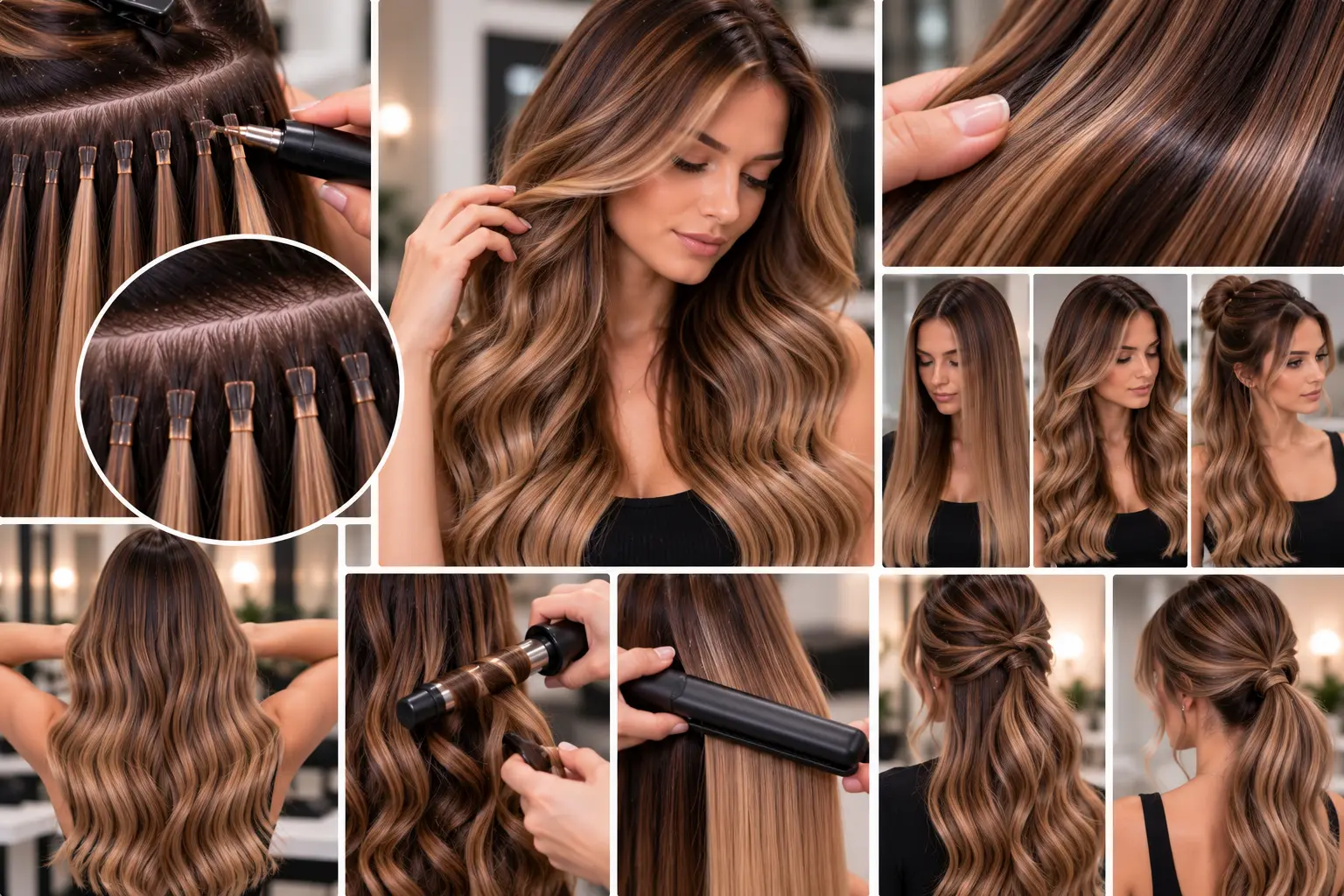
Benefit 1: Natural movement
Keratin bonds mimic the natural growth pattern better than many larger attachment systems. Each strand moves separately. This creates softness when the wearer turns the head, brushes the hair, or styles waves.
I once helped a salon buyer compare fusion tips with a heavier weft sample. The stylist immediately noticed that the keratin tips gave more freedom around the face and crown. That small detail made the final style look more believable.
Benefit 2: Discreet appearance
The bonds are small and can be placed strategically. This helps them hide under natural hair. For clients who want updos, half-up styles, or face-framing layers, this matters a lot.
Discretion depends on:
- Bond color
- Bond size
- Placement
- Natural hair density
- Extension shade match
- Stylist skill
A poor color match can ruin even the best attachment method. That is why a wide color range is a real advantage. In my product experience, having many shades available helps salons avoid over-toning, over-coloring, or delaying appointments.
Benefit 3: Secure wear
Keratin fusion can feel more secure than temporary methods. The bond is cured around natural hair, so the wearer does not remove it daily. This can reduce the risk of clips pulling in the same area every day.
A secure bond also benefits salons. Fewer slippage problems can mean fewer emergency visits and fewer service complaints. However, the security must come from correct bond formulation and installation, not excessive heat or oversized bonds.
Benefit 4: Styling versatility
Keratin bond extensions support many styles:
- Loose curls
- Sleek straight hair
- Layered cuts
- Low ponytails
- Braids
- Half-up styles
- Event styling
The wearer should avoid placing direct heat on the bond area. Still, the mid-lengths and ends can usually be styled with care when the hair quality is strong.
Benefit 5: Better long-term value for committed wearers
Keratin fusion is not the cheapest method upfront. However, it can be cost-effective for long-term wearers because it stays installed longer than many temporary options. It also saves daily styling time.
Here is a simple value comparison:
| Buyer Goal | Why Keratin Bonds Help |
|---|---|
| Long-lasting wear | Up to around 3 months per installation |
| Natural look | Small individual bonds blend well |
| Secure hold | Less slippage when applied correctly |
| Premium salon service | Supports customized installation |
| Color flexibility | Many shades reduce color correction |
| Comfortable movement | Individual strands move naturally |
For professional brands, these benefits can support a higher-value product line. Buyers can build collections by length, color, texture, bond size, and packaging style. At RENAI HAIR, we also support customized packaging, including more environmentally friendly packaging options, because presentation matters in retail and salon channels.
How should you choose a keratin bond extensions supplier?
A beautiful product photo can hide many quality problems. I have seen buyers focus only on price and then struggle with tangling, shedding, inconsistent color, or weak bonds. Supplier selection is one of the most important decisions for keratin bond extensions.
You should choose a keratin bond extensions supplier by checking hair quality, cuticle alignment, bond strength, color consistency, production inspection, customization ability, packaging support, and after-sales service. For B2B procurement, sample testing and clear specifications are more reliable than price comparisons alone.
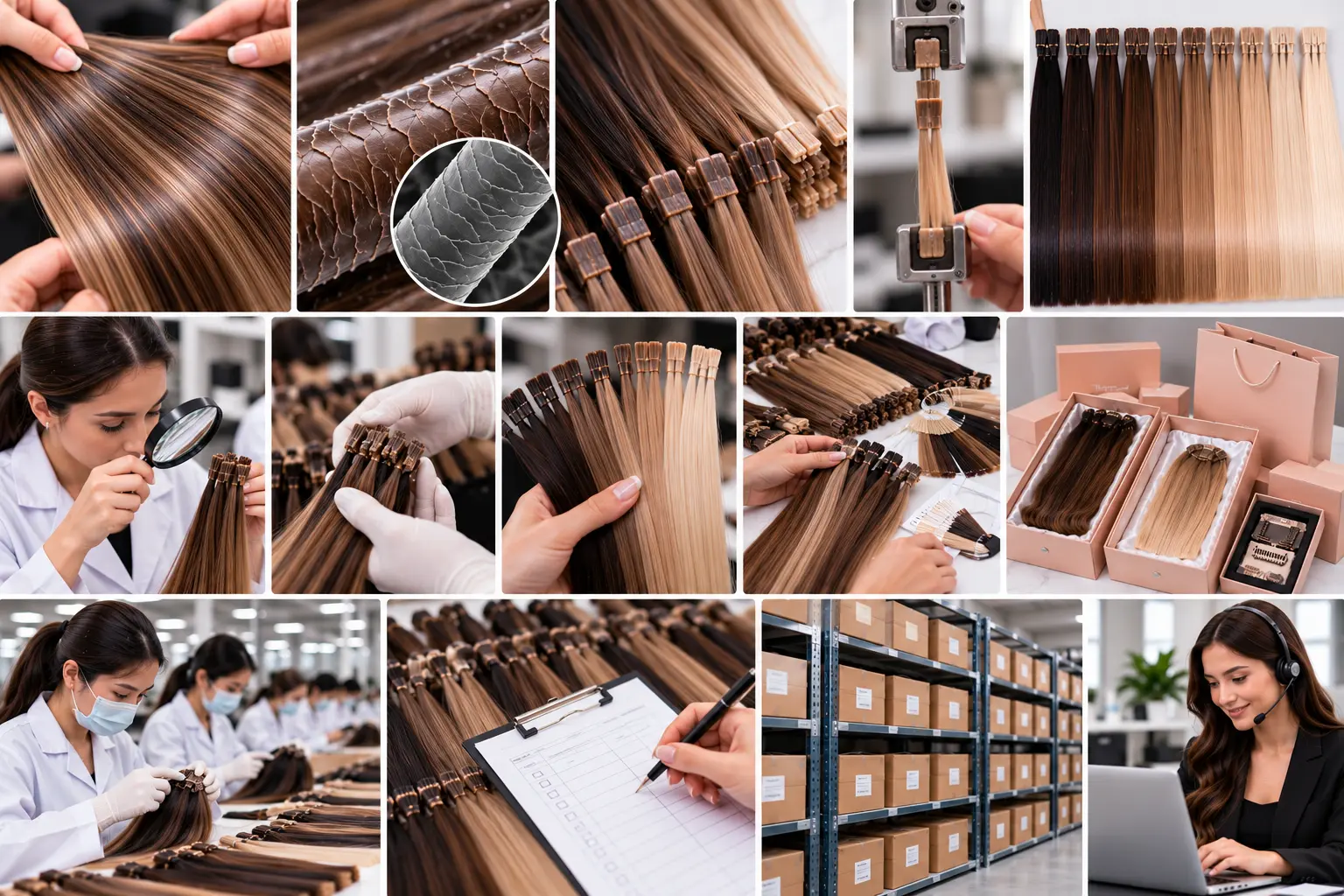
Start with hair quality
The hair itself decides the customer experience. I recommend asking whether the supplier offers:
- 100% human hair
- Remy hair
- Cuticle-intact hair
- Consistent hair ratio
- Stable texture after washing
- Minimal tangling
- Low shedding
- Color consistency
Cuticle direction is especially important. When cuticles are aligned, the hair usually feels smoother and tangles less. When cuticles are mixed or heavily processed, the hair may feel good at first but become rough after several washes.
Check bleaching and coloring capability
Keratin tips are often sold in many shades, especially blondes, browns, blacks, rooted colors, piano colors, and balayage blends. Light colors require strong processing control because over-bleaching can weaken the hair.
In my business context, RENAI HAIR uses cold-bleaching technology for premium hair lines. I present this as a production capability buyers should verify through sample testing. A buyer can wash, style, and compare the hair before committing to a large order.
Evaluate bond quality
The bond must hold securely but remove safely with the correct solution. A good bond should not crumble, slide too easily, or become sticky during normal wear.
Buyers should test:
- Bond shape consistency
- Bond hardness and flexibility
- Melting behavior under heat
- Cooling and curing speed
- Slippage resistance
- Removal behavior
- Residue level after removal
A reliable supplier should be willing to discuss specifications clearly. If a supplier cannot explain the bond type, weight, or application guidance, I would be cautious.
Review production inspection
Quality control should not happen only at the end. It should happen throughout production. RENAI HAIR emphasizes quality inspection during the full production process and before shipment. For B2B buyers, this helps reduce risk across bulk orders.
Useful inspection points include:
| Production Stage | Inspection Focus |
|---|---|
| Raw hair selection | Hair quality, length, texture |
| Sorting | Color, direction, ratio |
| Bleaching/coloring | Shade accuracy, hair strength |
| Bond making | Shape, size, weight |
| Packaging | Label, quantity, presentation |
| Final QC | Shedding, tangling, color, bond security |
Consider product development support
A strong supplier does more than ship existing stock. A good manufacturing partner can help brands develop new colors, new lengths, new bond sizes, and new packaging concepts. This matters when a brand wants to stand out in a competitive extension market.
At RENAI HAIR, we support products such as Genius Weft, Flex Weft, Machine Weft, Hand Tied Weft, Tape In Hair, Keratin/Prebonded Hair, Clip In Hair, Halo Hair, Ponytail, Hair Topper, and related extension tools. This broader product range can help buyers expand from keratin tips into a full hair extension collection.
Ask the right procurement questions
Before placing a bulk order, I suggest asking:
- What hair grade is used?
- Is the hair Remy or cuticle-intact?
- What is the standard strand weight?
- How many colors are available?
- Can the bond size be customized?
- What packaging options are available?
- Can you support private label branding?
- What is the production lead time?
- What quality checks are performed?
- What happens if a quality issue appears?
These questions help serious buyers separate trading-only sellers from manufacturing partners. Price still matters, but stable quality, communication, and service matter more for long-term business.
Frequently Asked Questions
Are keratin bond extensions damaging?
Keratin bond extensions are not automatically damaging. Damage usually comes from poor installation, wrong strand weight, delayed removal, rough brushing, or improper aftercare. I recommend professional application and removal, especially for clients with fine, bleached, or fragile natural hair.
How many keratin bonds do I need for a full head?
A full head often uses around 100–150 strands, but the exact amount depends on natural hair density, desired volume, strand weight, and haircut. A stylist should assess the client in person before deciding the final quantity.
Can keratin bond extensions be reused?
Traditional keratin bonds are usually removed and re-tipped if the hair is reused. The hair quality must still be good enough. Some salons offer re-bonding services, but the decision should depend on hair condition, bond residue, and professional judgment.
Can I color keratin bond extensions?
You can sometimes tone or darken human hair extensions, but I do not recommend aggressive bleaching after purchase. Chemical processing can weaken the hair and affect the bonds. B2B buyers should order the correct shade or request custom colors from the supplier.
Are keratin bond extensions better than tape-ins?
Keratin bonds are better for discreet, long-lasting, individual movement. Tape-ins are better for faster installation and easier move-ups. The best choice depends on the wearer’s hair condition, styling habits, budget, and maintenance schedule.
Conclusion
Keratin bond extensions are a strong choice if you want natural movement, secure wear, discreet bonds, and a long-term extension solution. They are best for wearers who accept professional installation, proper care, and scheduled removal. For salons, brands, and wholesalers, the key is choosing reliable human hair, stable bond quality, consistent colors, and a supplier with strict quality control. If you are developing a premium keratin fusion line, I invite you to contact RENAI HAIR for samples, customization options, and B2B production support.
[^1]: "Fusion Hair Extensions Guide | Cost, Care & Results", https://www.perfectlocks.com/pages/fusion-hair-extensions-guide?srsltid=AYCX9vLHxSUFXF8dHR1F2_yQPwOBBT03SVv282pzQS3zzGQ6rxZh__sU. A cosmetology education source describes fusion or keratin-bond extensions as a semi-permanent method that generally requires professional maintenance or removal after a multi-month wear period. Evidence role: general_support; source type: education. Supports: A cosmetology or hair-extension education source should support that fusion or keratin-bond extensions are commonly worn for several months and require scheduled maintenance or removal.. Scope note: The source may give a range that varies by stylist practice, hair growth, and aftercare rather than proving a universal two-to-three-month rule. [^2]: "Artificial hair integrations", https://en.wikipedia.org/wiki/Artificial_hair_integrations. An encyclopedia entry on hair extensions identifies fusion or pre-bonded extensions as individual hair additions attached with a bonding material that is softened or activated during application. Evidence role: definition; source type: encyclopedia. Supports: The source should define fusion or pre-bonded hair extensions and describe heat application to soften the bond.. Scope note: The source may describe the general fusion method rather than the exact bond formula used by a specific manufacturer. [^3]: "Traction Alopecia: Causes, Symptoms, and How To Treat It Early", https://dermatrials.medicine.iu.edu/blogs/understanding-traction-alopecia. Dermatology literature on traction alopecia explains that sustained mechanical tension on hair follicles, including from extensions or tightly attached styles, can contribute to breakage and hair loss. Evidence role: mechanism; source type: paper. Supports: A dermatology paper should support that sustained tension from extensions or hairstyles can contribute to traction-related hair damage.. Scope note: This evidence supports the general mechanism of tension-related damage, not a precise threshold for keratin-bond strand weight. [^4]: "Traction Alopecia: Causes, Symptoms, and How To Treat It Early", https://dermatrials.medicine.iu.edu/blogs/understanding-traction-alopecia. Dermatology guidance notes that tight hairstyles and extensions can place traction on the scalp and hair follicles, which may cause discomfort and contribute to hair damage over time. Evidence role: mechanism; source type: institution. Supports: A dermatology institution should support that tightly attached extensions or styles can create scalp tension and increase risk of hair damage.. Scope note: The source may address tight extensions generally rather than keratin bonds placed at a specific distance from the scalp. [^5]: "How often should tape-in extensions be moved up? ...", https://www.instagram.com/reel/DQvNQR9jP53/?hl=en. Cosmetology training material commonly describes tape-in extensions as requiring periodic move-up appointments after several weeks because natural hair growth changes the placement of the tapes. Evidence role: general_support; source type: education. Supports: A cosmetology education source should support that tape-in extensions are typically adjusted or moved up every several weeks as natural hair grows.. Scope note: The exact six-to-eight-week interval may vary with hair growth rate, adhesive type, and salon protocol. [^6]: "Traction Alopecia: Causes, Symptoms, and How To Treat It Early", https://dermatrials.medicine.iu.edu/blogs/understanding-traction-alopecia. Dermatology guidance on hair loss and traction alopecia indicates that extensions and tightly attached hairstyles can aggravate fragile or shedding hair by adding mechanical stress. Evidence role: expert_consensus; source type: institution. Supports: A dermatology institution should support that extensions can worsen hair breakage or traction problems in vulnerable hair and that people with hair loss should be cautious.. Scope note: The source may not list keratin-bond extensions as a formal contraindication, but it provides relevant clinical context for caution. [^7]: "Hair Cosmetics: An Overview - PMC - NIH", https://pmc.ncbi.nlm.nih.gov/articles/PMC4387693/. Cosmetology education materials describe hair and scalp analysis, including porosity, density, breakage, and scalp condition, as part of assessing suitability for salon services. Evidence role: expert_consensus; source type: education. Supports: A cosmetology education source should support that hair and scalp analysis includes factors such as porosity, density, breakage, and scalp condition before chemical or extension services.. Scope note: The evidence is procedural and general to salon consultation rather than a controlled study of keratin-bond outcomes. [^8]: "Postpartum Telogen Effluvium Unmasking Traction Alopecia", https://pmc.ncbi.nlm.nih.gov/articles/PMC9274946/. Medical references on telogen effluvium describe postpartum changes and illness-related triggers as common causes of temporary increased hair shedding. Evidence role: general_support; source type: institution. Supports: A medical institution should support that postpartum shedding and some medical conditions can cause temporary increased hair shedding.. Scope note: The source supports the shedding context but may not directly evaluate keratin-bond extension safety during postpartum shedding. [^9]: "Human hair growth", https://en.wikipedia.org/wiki/Human_hair_growth. Studies of human scalp hair growth report measurable monthly hair growth, providing the biological basis for bonded extensions moving progressively farther from the scalp after installation. Evidence role: mechanism; source type: paper. Supports: A scientific paper should support the typical rate of scalp hair growth, which explains why fixed attachment points move away from the scalp over time.. Scope note: The source supports the hair-growth mechanism; the specific movement of keratin bonds follows logically from the fixed attachment point rather than being directly tested. [^10]: "Systems Approach to Human Hair Fibers - PMC", https://pmc.ncbi.nlm.nih.gov/articles/PMC6393780/. Hair-fiber research shows that cuticle condition and surface friction influence combing behavior and tangling, which provides a mechanism for why aligned-cuticle hair is expected to perform better than mixed-cuticle hair. Evidence role: mechanism; source type: paper. Supports: A hair-fiber science paper should support that cuticle condition and orientation affect friction, combing force, and tangling.. Scope note: The source may address hair-fiber mechanics generally rather than directly comparing commercial Remy and non-Remy extension products. [^11]: "Effects of excessive bleaching on hair: comparative analysis of ...", https://pmc.ncbi.nlm.nih.gov/articles/PMC11652465/. Research on oxidative hair bleaching reports structural and surface changes to human hair fibers, including damage associated with reduced mechanical integrity and altered optical appearance. Evidence role: mechanism; source type: paper. Supports: A scientific paper should support that oxidative bleaching changes hair structure and can reduce mechanical strength or surface quality.. Scope note: The source supports the effect of bleaching on hair fibers generally, not the quality control of any specific extension supplier. [^12]: "Establishment of Heat‐Damaged Model for Hair - PMC - NIH", https://pmc.ncbi.nlm.nih.gov/articles/PMC12308778/. Hair-fiber studies of thermal styling show that repeated exposure to high temperatures can alter the hair shaft and contribute to dryness, surface damage, and reduced fiber quality. Evidence role: mechanism; source type: paper. Supports: A hair-science paper should support that repeated thermal exposure from styling tools can damage hair fibers or reduce moisture-related properties.. Scope note: The source concerns human hair fibers generally; extension hair may respond differently depending on prior processing and care products.