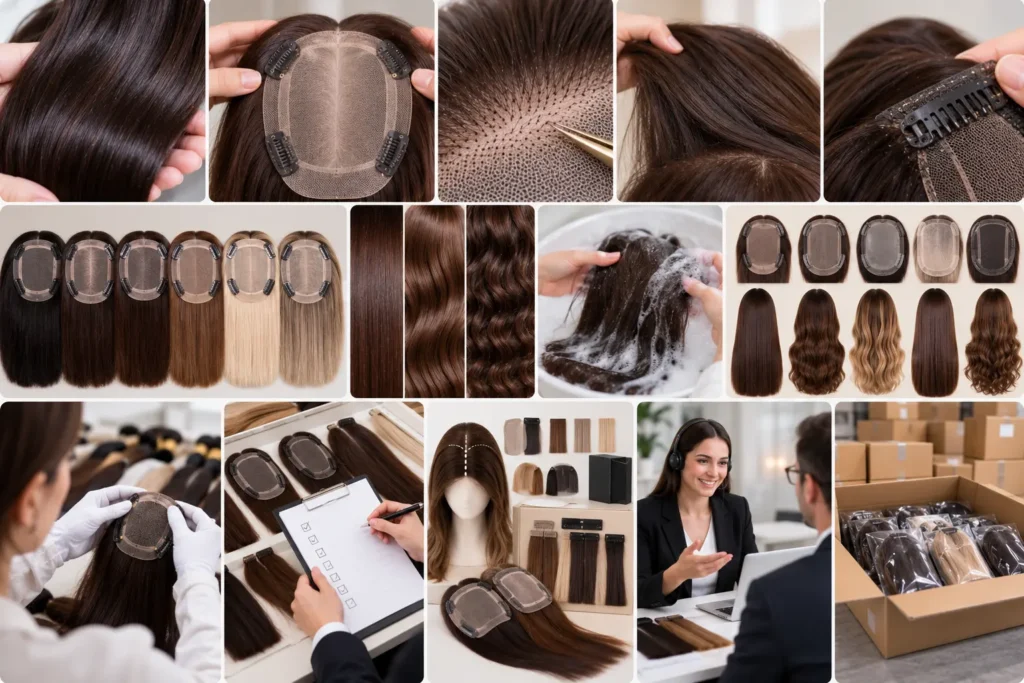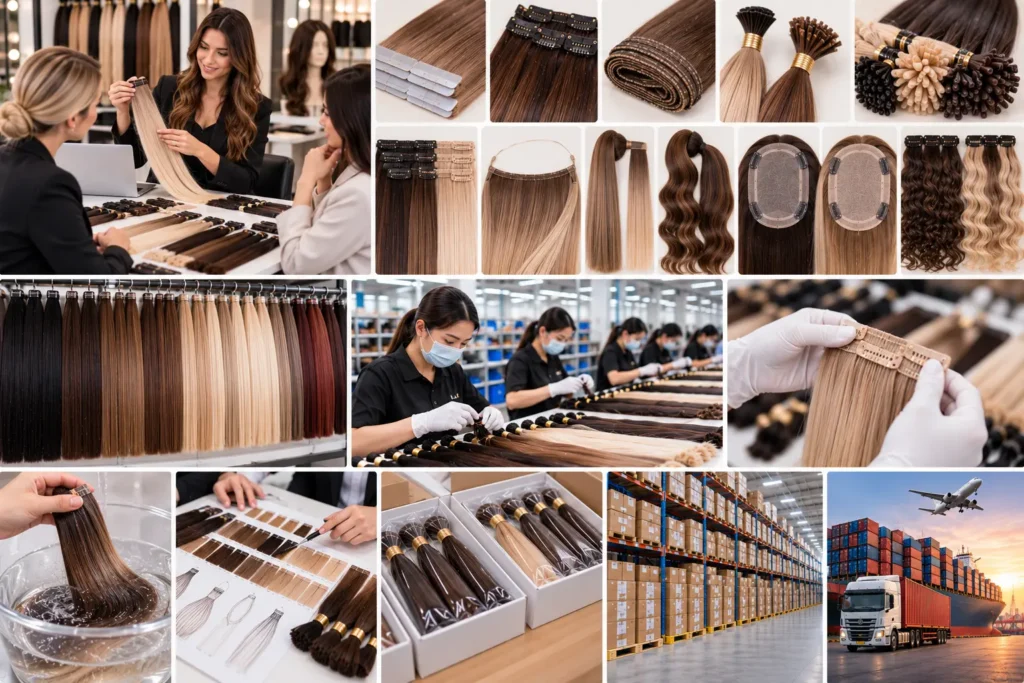

Finding the right human hair extensions wholesale supplier is one of the most critical decisions a salon, stylist, distributor, or hair extension business will make. Get it wrong, and you end up with inconsistent stock, unhappy clients, and costly returns. Get it right, and you build a product line your customers come back to again and again. This guide explains exactly what to look for.
Wholesale human hair extensions are products purchased by professional buyers such as salons, distributors, beauty supply stores, and private-label hair brands. When comparing a wholesale program, evaluate its product specifications, reorder consistency, pricing, and suitability for your business.
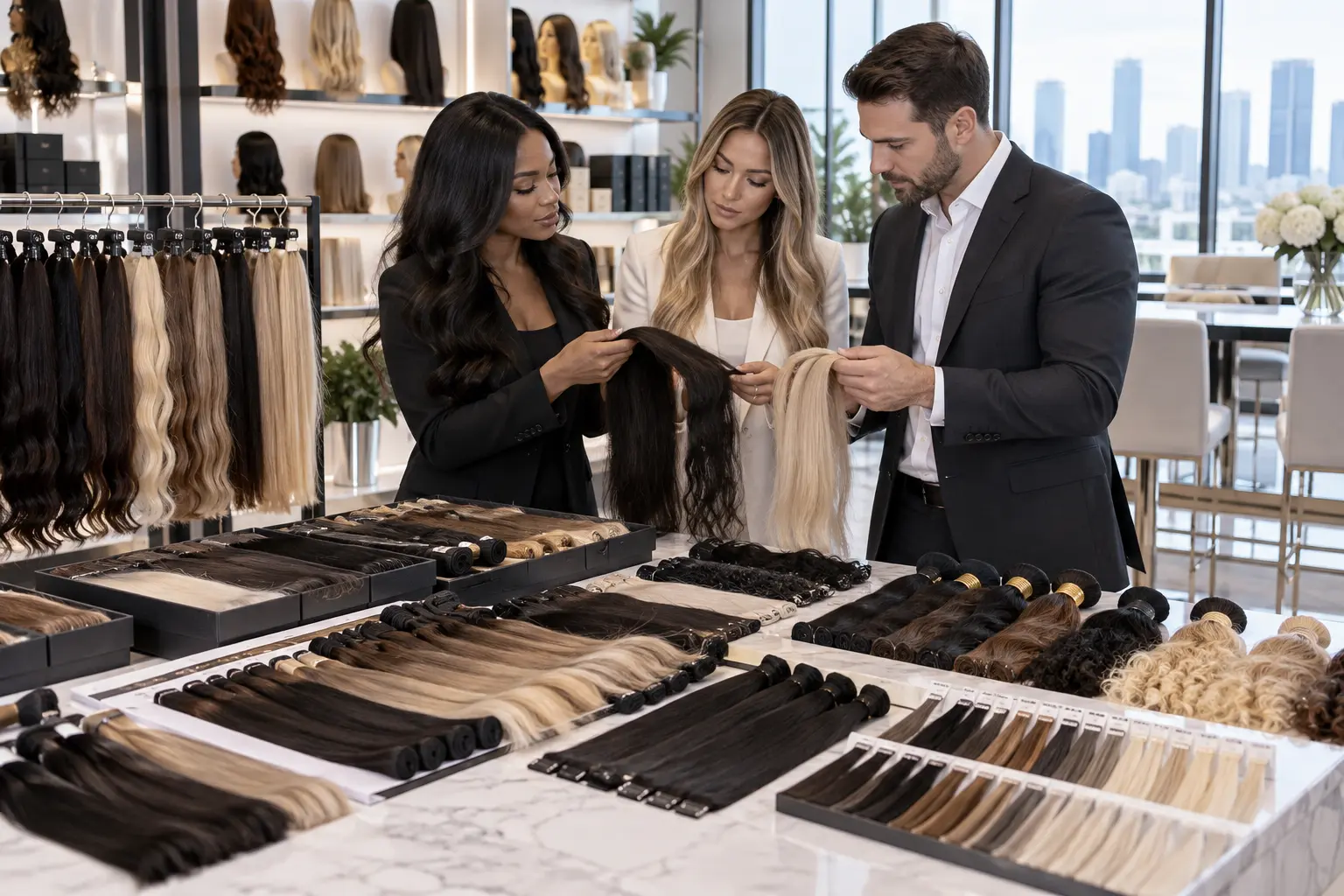
Choosing a wholesale supplier involves far more than comparing a price list. Hair quality, color consistency, product range, and long-term supply reliability all play a direct role in how well your business performs. The sections below break down exactly what professional buyers need to evaluate.
What Are Wholesale Human Hair Extensions?
Salons and distributors purchasing hair extensions for the first time often underestimate how different wholesale sourcing is from retail buying. The wrong approach leads to mismatched inventory, inconsistent results, and stalled growth.
Wholesale human hair extensions are human hair products sold in commercial quantities. They allow hair businesses to build a consistent, repeatable product range at a price point that supports resale or professional service delivery.
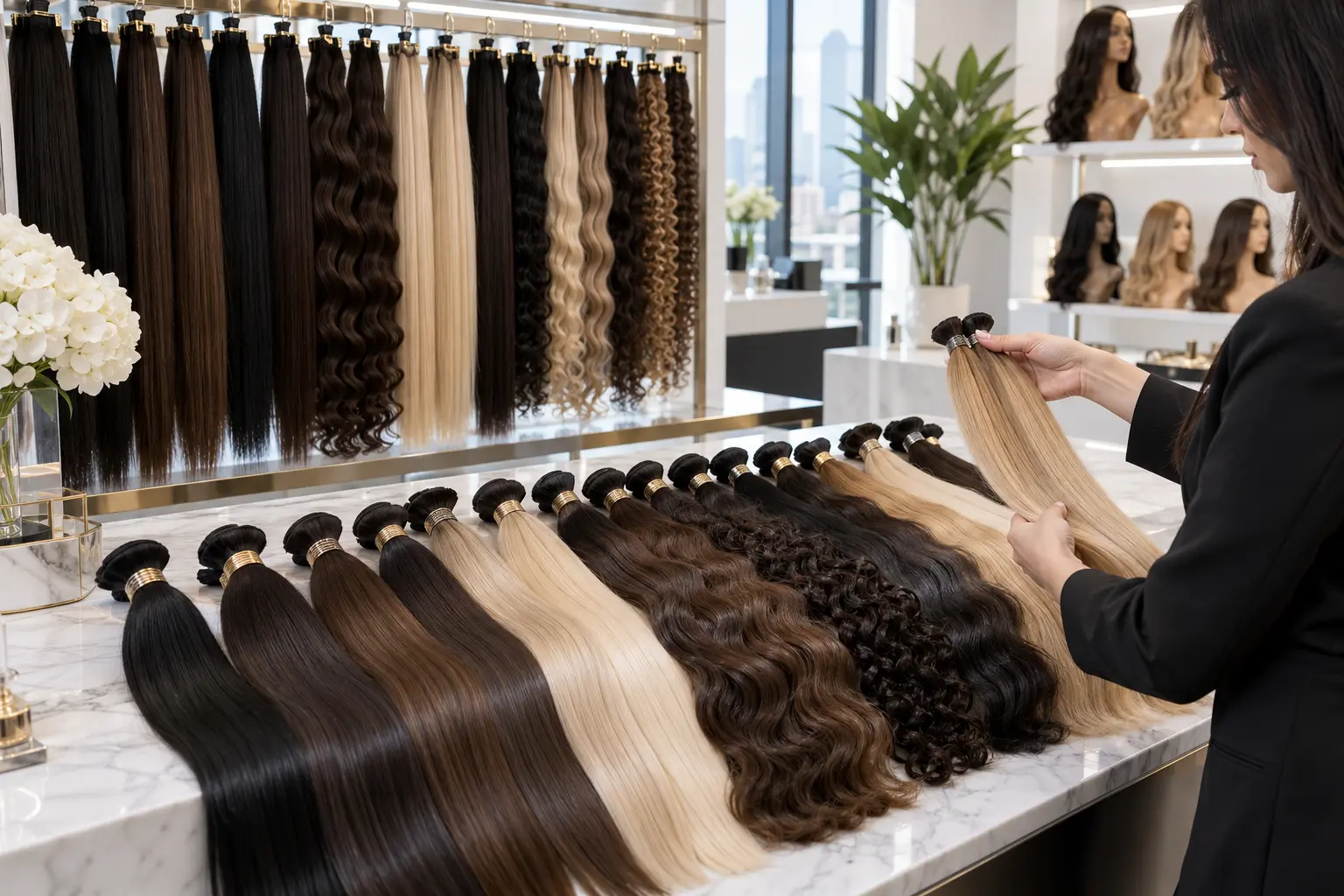
Wholesale buyers typically include:
- Hair salons and extension studios
- Hair extension specialists and mobile stylists
- Distributors and importers
- Beauty supply stores
- Online hair brands
- Hair extension academies
- Private-label hair businesses
Why Consistency Matters More Than Price
A lower unit price can be less useful if a reorder differs from the approved sample. Compare batches for color, texture, density, and construction before changing a core supplier.
For professional buyers, compare consistency across repeat orders alongside unit price. Here is what to evaluate in practice:
| Quality Factor | Why It Matters for Wholesale Buyers |
|---|---|
| Color matching between batches | Clients expect reorders to match their existing extensions |
| Texture stability | Stylists need predictable installation behavior |
| Density uniformity | Consistent density means consistent weight and result |
| Ends quality | Thin ends affect finished appearance and longevity |
| Shedding control | Excessive shedding triggers client complaints immediately |
The quality of the hair you stock directly affects installation experience, post-wash performance, and ultimately whether clients rebook or request refunds.
What Types of Hair Extensions Should Salons Offer?
Many salons starting out try to stock every method, every color, and every length at once. The result is a fragmented inventory that ties up cash and confuses clients.
Extension method selection should consider the client’s hair density, texture, and lifestyle. Choose the systems your salon offers around those needs and the techniques your stylists are trained to use.
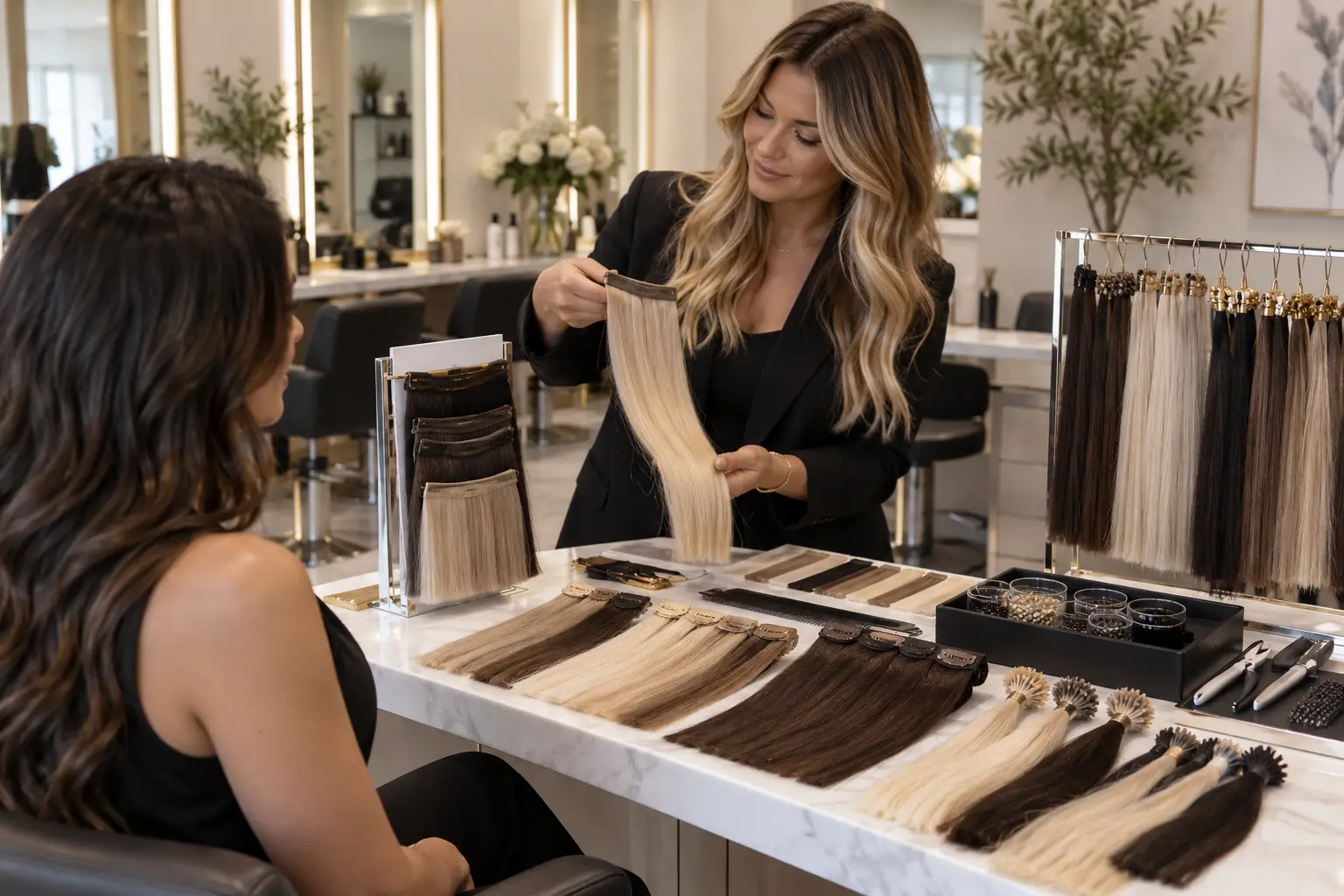
Tape-In Hair Extensions
Tape-in extensions use adhesive tabs to attach extension hair to sections of natural hair. When sourcing this category, compare the tape construction and the supplier’s installation and care instructions.
Why salons favor tape-in extensions:
- Flat attachment points sit close to the scalp
- Relatively quick installation compared to strand-by-strand methods
- Natural movement and comfortable wear
- Available in a wide range of colors and lengths
- Some tape-in systems allow the hair to be re-taped and reused, depending on the product and its condition
For businesses purchasing tape-in hair extensions wholesale, evaluate tape compatibility, hair direction, and color accuracy. Ask the supplier how attachment performance should be tested and which installation and care conditions it requires.
Weft Hair Extensions
Weft extensions represent one of the most versatile categories in the professional market. Depending on the installation method — sewn, beaded, or taped — the same weft construction can serve a wide range of clients.
Common weft types buyers evaluate:
- Machine wefts — produced on a weft machine, generally more affordable, suitable for sew-in and beaded methods
- Hand-tied wefts — check seam thickness, weight, and suitability for the client’s hair density
- Genius weft and other flat weft designs — newer flat weft constructions designed to minimize bulk at the attachment point
When sourcing wefts wholesale, salons should evaluate weft thickness, shedding control at the weft edge, density, and how easily the product can be cut and customized during installation without compromising the weft structure.
Keratin Bond Hair Extensions
Hot-fusion keratin extensions use individual pre-tipped strands attached with a heated tool. The manufacturer’s comparison of K-tip and I-tip methods distinguishes heat-activated keratin bonds from bead-based attachment.
Stylists often select this method when they want precise control over placement and movement — particularly when working around the hairline, crown, or other areas that require careful blending.
Because individual bonds are applied one at a time, the installation process is more time-intensive. This positions keratin extensions as a premium service in most salons.
I-Tip Hair Extensions
I-tip extensions are individual strands designed for installation using micro-beads or rings rather than adhesive or heat. This makes them a preferred choice for clients who want to avoid direct heat or adhesive near their natural hair.
I-tip extensions allow stylists to control placement strand by strand and can be moved up during maintenance appointments as the natural hair grows.
What Should You Look for in a Human Hair Extension Supplier?
Most wholesale buyers who encounter problems with a supplier later admit the signs were visible during the evaluation stage — they just didn't have a structured process for identifying them.
Choosing a wholesale human hair extension supplier should involve a structured evaluation across several dimensions, not a single price comparison.

1. Hair Quality
The hair should look natural, remain manageable after normal washing and styling, and perform consistently across production batches.
Key quality indicators to assess before wholesale ordering:
- Cuticle condition and direction, which can affect surface friction; verify manageability with sample tests
- Texture feel before and after washing
- Shedding from both the weft and individual strands
- Color depth and accuracy compared to reference shades
- Density distribution from root to tip
- Ends quality — whether the ends are full or noticeably thin
Request samples before placing a first wholesale order. Packaging alone cannot show how a product will behave during the care and installation procedures you plan to use.
2. Color Selection
A strong color range allows salons to serve more clients without relying on time-consuming custom blending at every appointment.
Professional extension buyers often need:
| Color Category | Notes |
|---|---|
| Natural black shades | High demand across most markets |
| Brown spectrum | From dark chocolate to light brown |
| Blonde spectrum | From dark ash to platinum |
| Rooted colors | Natural-looking regrowth effect |
| Balayage / ombre | Popular for lived-in blends |
| Highlighted blends | Multi-dimensional tone options |
| Fashion colors | Market-dependent demand |
Blended and rooted shades are especially useful for stylists creating dimensional results without full custom coloring on every set.
3. Length and Weight Options
Different markets and different clients prefer different lengths. A complete wholesale range typically covers:
- Shorter lengths (10–14 inches) for volume enhancement and shorter styles
- Mid lengths (16–20 inches) for everyday wearability
- Longer lengths (22–28+ inches) for dramatic transformations
Offering multiple weight options per length also gives stylists greater control over the finished density.
4. Product Consistency Across Reorders
A salon may test a supplier once and receive excellent results. The real test comes on the third or fourth reorder. For professional buyers, the ability of a supplier to maintain stable specifications across production batches is one of the most important factors in a long-term relationship.
5. Packaging and Private Label Options
For businesses developing a proprietary hair extension brand, private-label options are often a key part of the growth strategy. Depending on the supplier and minimum order requirements, customization may include:
- Branded outer packaging
- Custom labels and logo application
- Product-specific inserts or care cards
- Custom specifications for density, length, or color range
This allows distributors and hair brands to create a consistent customer experience at the point of sale.
Should You Test Hair Extensions Before Buying in Bulk?
Many wholesale buyers skip sample testing to save time. This is one of the most common — and most expensive — mistakes in wholesale hair sourcing.
Yes. Before buying in bulk, evaluate samples using the installation, washing, and styling procedures permitted for that product. Record what you observe rather than relying on packaging or photographs.

How to Structure a Supplier Evaluation
Using a simple, consistent evaluation sheet makes it easier to compare suppliers based on measurable criteria rather than first impressions.
Supplier Sample Evaluation Checklist:
- [ ] Hair feel and appearance before washing
- [ ] Hair feel and appearance after washing
- [ ] Shedding levels (weft and strand)
- [ ] Tangling behavior
- [ ] Color accuracy versus reference swatch
- [ ] Density from roots to ends
- [ ] Bond or tape performance (where applicable)
- [ ] Packaging presentation and condition on arrival
- [ ] Communication quality during the sample process
- [ ] Lead time from order to delivery
If possible, conduct a full installation test on a training head and document the results with photos. This gives you a realistic performance reference before committing to bulk quantities.
Building a Long-Term Wholesale Hair Extension Business
New buyers often focus exclusively on their first order. Experienced buyers think about what the supplier relationship looks like at order number ten.
Sustainable growth in the hair extension business depends on sourcing reliability. A good wholesale partner should offer stable quality, manageable lead times, responsive communication, and the flexibility to grow with your business.

Building Smarter Inventory for Salons
Rather than stocking every possible variation, professional salon buyers benefit from identifying their most frequently requested combinations and building deeper inventory around those:
- Top 3–5 colors in your market
- Most popular lengths for your clientele
- Preferred extension methods your stylists are certified in
- Core weight options for each method
Use demand and reorder records to prioritize core stock, then review slow-moving items and replenishment needs regularly.
A reliable wholesale program should balance product quality, color and length selection, batch consistency, responsive communication, and supply stability. For salons and distributors, these factors directly affect customer retention and business reputation.
Frequently Asked Questions
Can salons buy human hair extensions wholesale?
Yes. Wholesale programs are specifically designed for salons, professional stylists, distributors, and other hair businesses purchasing products for professional use or resale. Minimum order quantities vary by supplier, so it is worth confirming requirements before requesting a sample.
What types of hair extensions are available for wholesale?
Common wholesale categories include tape-in extensions, weft extensions (machine weft, hand-tied weft, and flat weft constructions), keratin bond extensions, and I-tip extensions. Available lengths, colors, and specifications vary by supplier.
Should I order samples before placing a wholesale order?
Yes — especially when working with a new supplier for the first time. Sample testing allows you to evaluate hair quality, color accuracy, attachment system performance, and overall product behavior before committing to larger order quantities.
What is the best hair extension method for salons to stock?
There is no single best method. The right choice depends on your clientele's natural hair type, lifestyle, maintenance expectations, and the extension methods your stylists are trained to install. Choose a manageable range based on your customers and your team’s training.
How do I evaluate a wholesale hair extension supplier's quality?
Request samples before ordering in bulk. Evaluate the hair before and after washing, check for shedding and tangling, assess color accuracy against a reference, and document the supplier's communication and lead time. Use a consistent checklist to compare multiple suppliers objectively.
Conclusion
Sourcing human hair extensions wholesale is a long-term business decision, not just a single transaction. The supplier you choose affects the quality of every installation your stylists complete, the consistency your clients experience on reorders, and the reputation your business builds over time. Evaluate suppliers on hair quality, color selection, batch consistency, and communication — not on price alone. Test samples before ordering in bulk. Build your inventory around what your clients actually need.
RENAI HAIR works with professional human hair buyers. Contact us to discuss your product requirements, sample options, or wholesale cooperation, and confirm current specifications and private-label requirements before ordering.