How to Blend Hair Extensions with Short Hair?
To blend hair extensions with short hair, I first have to solve one main problem: short layers can expose the difference between natural hair and added hair[^1]. That mismatch can make even premium extensions look obvious. I use the right extension type, hair quality, color match, weight, and cutting technique to create a softer, more natural finish.
The best way to blend hair extensions with short hair is to choose lightweight, high-quality human hair extensions, match the color and texture closely, install them below the shortest layers, and trim or layer the extensions after application[^2]. For most short hairstyles, clip-ins, tape-ins, genius wefts, and hand-tied wefts can work well when selected correctly.

I have seen many short-hair clients focus only on length, but length is only one part of the result. A natural blend depends on product structure, density, color dimension, and professional finishing. I will break down each decision so buyers, salons, and stylists can evaluate extensions with more confidence.
How do I choose the right type to blend hair extensions with short hair?
Choosing the wrong extension type can make short hair look bulky, uneven, or disconnected. I always start with lifestyle, budget, natural hair density, and styling habits. If the extension method does not fit the client’s hair, the blend becomes harder before the stylist even starts cutting.
The best extension type for short hair depends on the client’s natural density and desired wear time. I usually consider clip-in hair, tape-in hair, genius weft, machine weft, hand-tied weft, keratin bonds, or I-tip extensions. For temporary use, clip-ins work well. For salon wear, tape-ins and wefts often blend better.

I start with the client’s lifestyle
I do not choose extensions by trend alone. I choose them by how the client lives. A customer who styles her hair only on weekends may prefer clip-in hair extensions. A salon client who wants daily volume for six to eight weeks may prefer tape-in extensions.[^3] A client who wants a fuller transformation may need weft hair extensions installed by a professional stylist.
Here is how I usually compare the main options:
| Extension Type | Best For Short Hair? | Main Benefit | Key Buying Concern |
|---|---|---|---|
| Clip-in hair | Yes, for temporary styling | Easy to apply and remove | Clips may show on very fine short hair |
| Tape-in hair | Yes, if hair is long enough to cover tapes | Flat and lightweight | Adhesive quality and tape placement matter |
| Genius weft | Yes, for premium weft work | Thin, flexible, customizable | Requires professional installation |
| Machine weft | Sometimes | Strong and cost-effective | Can feel bulky on fine short hair |
| Hand-tied weft | Yes, with trained stylist | Soft and lightweight | Cannot be cut freely like some wefts |
| Keratin bonds / pre-bonded hair | Yes, for detailed placement | Good movement and natural distribution | Heat or bonding quality must be controlled |
| I-tip hair | Yes, for strand-by-strand work | No heat required | Bead placement needs skill |
I match the method to the short haircut
A blunt bob needs a different approach than a layered pixie grow-out. If the natural hair has a heavy line at the ends, I usually need more density and a better cut after installation. If the hair is very fine, I avoid adding too much weight near the scalp because the attachments may show.[^4]
For short hair, I pay close attention to three zones:
- The crown area — This area must hide clips, tapes, bonds, or beads.
- The side areas — These areas often expose short layers first.
- The nape area — This area can look bulky if the extensions start too low or too thick.
I recommend professional evaluation for permanent methods
Clip-in and some tape-in products can be worn at home by experienced users. However, I still recommend a professional stylist for major length changes, color blending, and permanent or semi-permanent installation. A stylist can check scalp health, natural hair strength, and safe placement.[^5]
In my own work with hair extension buyers, I often see that the best results come from a complete product plan, not one product choice. A salon may use tape-ins around the sides, a weft in the back, and custom layering to soften the finish. That kind of decision depends on the client’s natural hair and the stylist’s technique.
What length and weight help blend hair extensions with short hair?
Length and weight can make or break a short-hair transformation. If I choose extensions that are too long, the natural short layers stand out. If I choose extensions that are too heavy, the client may feel discomfort, and the natural hair may not cover the attachments well.
To blend hair extensions with short hair, I usually recommend a realistic length increase and a balanced gram weight. For many short styles, moving from chin length to shoulder length looks more natural than jumping immediately to waist length. Medium density often blends better than very heavy sets.

I avoid extreme length jumps
When a client has short hair, I rarely think “longest possible.” I think “most believable.” A dramatic change can work, but it needs more hair, more layering, and more skill. If the natural hair is above the chin, very long extensions may create a visible step where the short hair ends.
A practical guide looks like this:
| Natural Hair Length | Suggested Extension Length | Blend Difficulty | Notes |
|---|---|---|---|
| Pixie grow-out | 12–14 inches | High | Usually needs advanced stylist work |
| Chin-length bob | 14–18 inches | Medium to high | Layering is very important |
| Shoulder-length short cut | 16–20 inches | Medium | Easier to blend with soft layers |
| Long bob / lob | 18–22 inches | Low to medium | More flexible for wefts and tape-ins |
I use this table as a starting point, not a rule. Hair density, face shape, and styling goals still matter.
I check grams before I check inches
Many buyers ask for length first, but I always ask about weight too. A 20-inch set with too little hair can look thin at the ends. A very heavy set can feel uncomfortable and may be hard to hide in short hair.
Here are general guidelines I use for planning:
- Fine short hair: lighter sets, flatter attachments, soft density
- Medium short hair: moderate grams, layered cutting, flexible methods
- Thick short hair: higher grams, fuller wefts, more rows or pieces
- Blunt short hair: extra blending density around the mid-lengths
For B2B buyers, I recommend checking actual gram weight per pack, not only the marketing description. Two suppliers may both call a set “full head,” but one may include 100 grams and another may include 160 grams. That difference changes the final look.
I think about comfort and hair safety
Weight is not only a visual issue. It is also a comfort and safety issue. Short hair may not always have enough length to distribute tension well. If extensions pull too much, the client may experience discomfort or stress on natural hair.[^6]
I recommend that salons and brands evaluate:
- Attachment thickness
- Hair weight per piece
- Root tension after installation
- Client’s daily styling routine
- Removal and maintenance schedule
At RENAI HAIR, based on the business context I work within, we manufacture different lengths, colors, textures, and extension types for B2B buyers. I still encourage salons and distributors to test samples before committing to a full product line. A sample can reveal how the hair feels, how the ends look, and whether the weight matches the target client group.
How do color and texture matching make short hair extensions look natural?
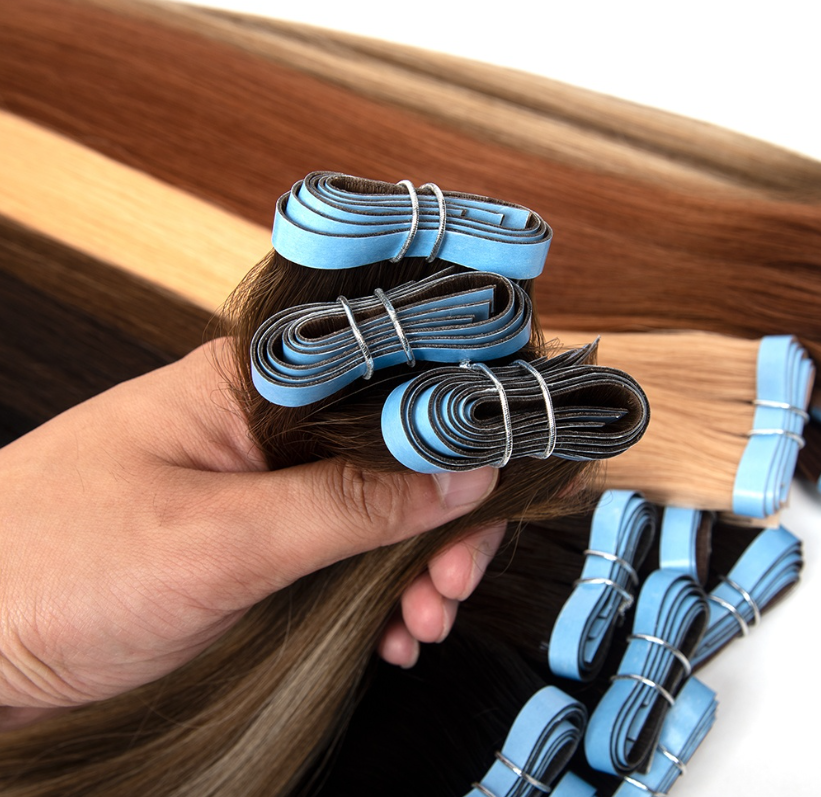
Color and texture matching matter even more on short hair because the natural hair sits directly on top of the extensions. If the shade is flat, too warm, too cool, or too shiny, the difference becomes clear. I always treat color matching as a technical step, not a guess.
The most natural way to blend short hair extensions is to match the base color, undertone, texture, and finish. I also like multi-tonal shades, rooted colors, balayage tones, or custom coloring when needed. A perfect single-color match is rare, so dimension often creates a better blend.[^7]
I match undertone, not just shade level
A client may say she has “brown hair,” but brown can be ash brown, golden brown, chocolate brown, neutral brown, or reddish brown. If I match only the level and ignore undertone, the extensions may look separate from the natural hair.[^8]
I usually check:
- Level: How light or dark the hair is
- Undertone: Ash, neutral, gold, copper, red, or violet
- Dimension: Highlights, lowlights, balayage, or rooted color
- Finish: Matte, silky, glossy, or coarse
- Lighting: Indoor light, daylight, and salon lighting
For short hair, I often prefer extensions with slight color dimension. Multi-tonal hair can hide the line between the natural hair and the extension hair better than a flat shade.
I use texture to create visual continuity
Texture is just as important as color. Straight extensions may not blend with naturally wavy hair unless the client styles both together.[^9] Curly extensions must match curl pattern, not only curl size. If the curl pattern is wrong, the extensions can look like a separate layer.
Here is a simple comparison:
| Natural Hair Texture | Better Extension Choice | Styling Note |
|---|---|---|
| Straight | Straight or body wave | Use flat iron or blowout for smooth blending |
| Slight wave | Body wave or natural wave | Style both natural hair and extensions together |
| Loose curl | Loose curly texture | Define curls with matching products |
| Coarse or thick hair | Thicker human hair texture | Avoid overly silky hair that looks artificial |
I prefer human hair for flexible styling
For short hair transformations, I usually prefer 100% human hair extensions, especially Remy hair or cuticle intact hair, because they can be styled more naturally than synthetic fiber. Human hair can usually be curled, straightened, toned, and washed with more flexibility, depending on processing and care instructions.[^10]
I use careful language here because buyers should verify supplier claims. “Remy hair,” “virgin hair,” and “cuticle intact hair” are terms that should be supported by supplier documentation, sample testing, and quality inspection. In general, aligned cuticles help reduce friction and tangling.[^11] However, the final durability also depends on collection, processing, coloring, acid treatment, coating, and aftercare.
For brands, wholesalers, and salons, I recommend requesting:
- Color rings or color swatches
- Hair samples for wash testing
- Tangle and shedding checks
- Cuticle alignment information
- Care instructions for end users
In the supplied business context, RENAI HAIR can provide free color card samples for buyers who need to compare shades and inspect hair quality. I see this as a practical step because screen colors are never enough for accurate hair matching.
Which installation method is best for short hair clients?
Installation can turn a good product into a beautiful result, but poor placement can make even expensive hair look unnatural. Short hair gives less coverage, so every attachment must be placed with care. I always look at the client’s haircut before choosing the method.
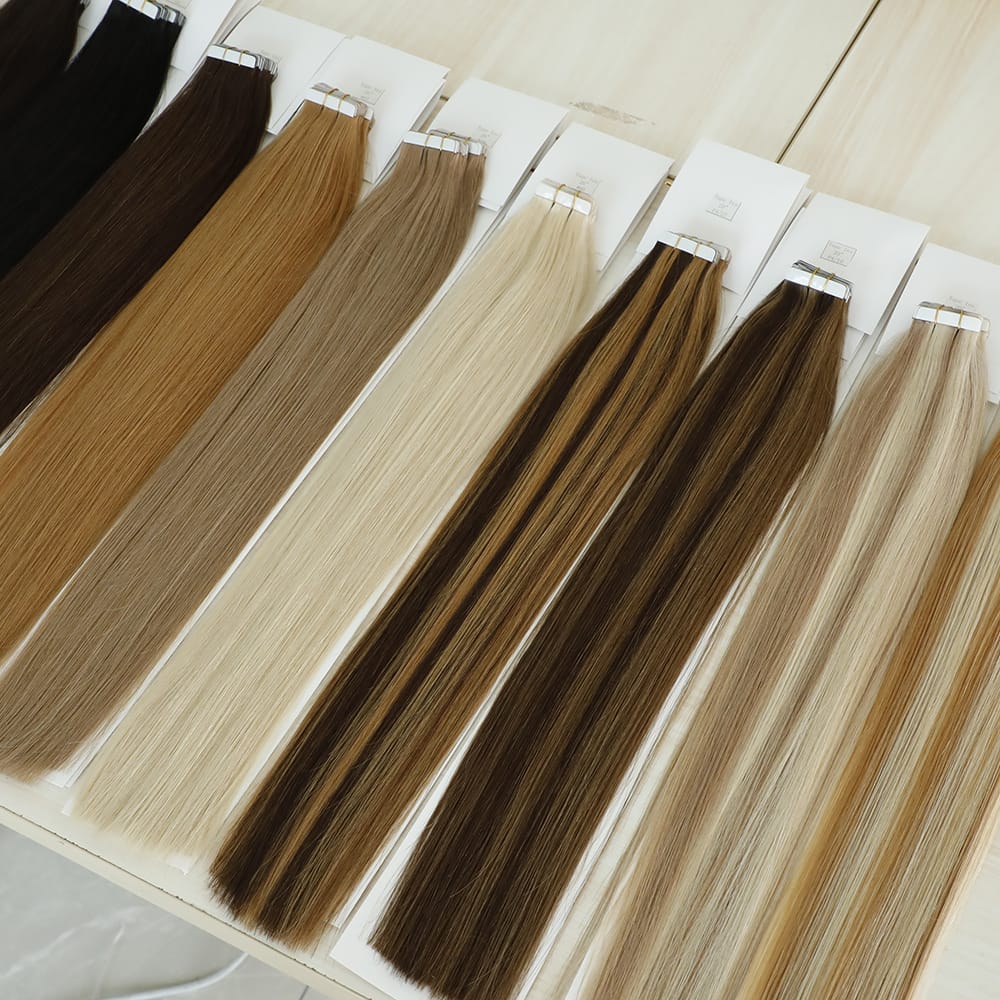
The best installation method for short hair is the one that stays flat, hidden, and comfortable while supporting the desired style. Tape-ins, clip-ins, genius wefts, hand-tied wefts, keratin bonds, and I-tips can all work, but the best choice depends on hair density, length, lifestyle, and stylist skill.
I compare home use and salon use
Some extension methods are easier for users to apply at home. Others should be handled by a trained stylist. I separate them clearly because the risk level is different.
At-home friendly options:
- Clip-in hair extensions
- Halo hair extensions, if the haircut can cover the wire
- Some temporary ponytail pieces
- Selected tape-in use by experienced users, though I still prefer salon help
Salon-focused options:
- Tape-in hair extensions
- Genius weft extensions
- Hand-tied weft extensions
- Machine weft extensions
- Keratin bond extensions
- I-tip extensions
Clip-ins can be a good entry product because the user can remove them at night. However, on very short hair, clip placement takes practice. The top layers must cover the clips, and the extensions often need trimming.
I place extensions below the shortest visible layers
Short hair usually has a visible outer layer. I try not to place extension attachments where that layer will separate or lift. If the top section is too short, the attachments may show when the client moves.
A stylist may use these techniques:
- Backcomb lightly near the roots to help clip-ins grip better.
- Stack wefts carefully to add density without too much bulk.
- Leave enough natural hair on top to cover attachment points.
- Cut face-framing layers after installation.
- Blend the ends with point cutting or slide cutting.
The haircut after installation is often the hidden secret. I rarely expect extensions to blend perfectly straight out of the package. Even high-quality human hair usually needs shaping to match the client’s natural cut.
I evaluate supplier consistency for salon results
For B2B buyers, installation success also depends on product consistency. If a salon orders tape-ins this month and reorders next month, the color, grams, adhesive quality, and hair texture should remain stable. Inconsistent products create more work for stylists and more complaints from clients.
I recommend that wholesale buyers check:
| Quality Point | Why It Matters for Short Hair |
|---|---|
| Tape adhesive strength | Weak tape may slip; overly aggressive tape may be hard to remove |
| Weft thickness | Thick seams may show under short layers |
| Hair direction | Mixed directions can increase tangling |
| Color consistency | Short hair exposes color mismatch quickly |
| End fullness | Thin ends make the blend look unfinished |
| Shedding control | Short styles need clean, stable pieces |
In the RENAI HAIR business context, the company emphasizes strict outgoing quality control, product development, international market experience, and after-sales service. As a buyer, I would still verify these advantages through samples, repeat orders, and supplier communication. I like suppliers who can discuss not only price, but also product structure, packaging, color development, and salon feedback.
How can I style and maintain extensions so the short hair blend lasts?
A fresh installation can look beautiful on day one, but poor styling and care can ruin the blend quickly. Short hair needs daily control because the natural layers can flip out, separate, or reveal the attachments. I always give aftercare instructions with the product recommendation.
To keep short hair extensions blended, I style the natural hair and extensions together, use heat protection, brush gently, avoid heavy oils near attachment points, and follow the maintenance schedule. Regular trimming, proper washing, and professional adjustment help the blend stay soft and natural.
I style both the natural hair and extensions together
One common mistake is styling the extensions separately from the natural hair. If the natural short layer stays straight while the extensions are curled, the result looks disconnected. I prefer to curl or smooth both sections together so they move as one shape.
For short hair, these styling techniques help:
- Use loose waves to hide layer differences.
- Curl away from the face for softer blending around the front.
- Straighten carefully if the natural haircut is blunt.
- Add texture spray lightly to reduce separation.
- Use a round brush blowout for volume and movement.
Loose waves are often the easiest style for blending because they break up the line where the natural hair ends. A sleek straight style can look beautiful, but it requires a more accurate cut, better density, and a closer color match.
I protect the hair during washing and brushing
Human hair extensions need care. Remy hair and cuticle intact hair can last longer when clients treat them properly, but no extension hair is maintenance-free. I always remind users that extensions do not receive natural scalp oils in the same way growing hair does.[^12]
A simple care routine includes:
- Brush before washing to reduce tangles.
- Use sulfate-free or extension-safe shampoo when recommended.
- Apply conditioner from mid-lengths to ends, not on tape or bonds.
- Dry attachment areas properly before sleeping.
- Sleep with hair in a loose braid or low ponytail.
- Avoid pulling, rough brushing, and excessive heat.
For tape-ins and bonded methods, I avoid heavy oils or conditioners near the roots. Oils can weaken adhesive or make attachments slip. For clip-ins, I remove them before sleeping to protect both the extensions and natural hair.
I schedule maintenance before problems appear
Maintenance should not start only after tangling, slipping, or matting happens. I prefer planned care because it protects the client’s natural hair and helps the extensions look better for longer.
Typical maintenance timing may include:
| Method | Common Maintenance Window | Notes |
|---|---|---|
| Clip-ins | After several wears | Wash only when product buildup appears |
| Tape-ins | 6–8 weeks | Re-taping and repositioning may be needed |
| Wefts | 6–10 weeks | Depends on growth and installation method |
| Keratin bonds | 8–12 weeks or longer | Requires professional removal |
| I-tips | 6–8 weeks | Beads may need adjustment |
These timelines are general. A professional stylist should adjust them based on scalp condition, hair growth, product quality, and daily care habits.
For salon and wholesale buyers, I recommend adding aftercare cards to every package. Good instructions reduce complaints and help clients protect the hair. If a buyer is building a private label extension line, aftercare education can become part of the brand experience.
Frequently Asked Questions
Can very short hair wear extensions?
Yes, very short hair can wear extensions, but the result depends on length, density, and method. I usually recommend a professional consultation if the natural hair is above chin length. The stylist may need strand-by-strand extensions, careful weft placement, or a custom cut to hide short layers.
Are clip-in extensions good for short hair?
Clip-in extensions can work well for short hair when the clips are hidden and the extensions are layered after application. I like clip-ins for temporary styling because users can remove them at night. However, very fine or very short hair may not cover the clips easily.
What type of hair extensions looks most natural on short hair?
Human hair extensions usually look most natural on short hair because they can be styled with the client’s own hair. I prefer Remy hair or cuticle intact hair when the buyer wants better movement and reduced tangling. Buyers should verify hair quality through samples and testing.
How do I hide short layers when wearing extensions?
I hide short layers by choosing enough density, placing extensions under the natural top layer, and cutting the extensions after installation. Loose waves also help blend the transition. A stylist can soften blunt ends with layering, point cutting, or face-framing work.
Should short hair extensions be installed by a stylist?
I recommend a stylist for most semi-permanent short hair extension applications. Short hair gives less coverage, so placement and cutting are important. Clip-ins can be used at home, but tape-ins, wefts, keratin bonds, and I-tips usually need professional evaluation and installation.
Conclusion
Learning how to blend hair extensions with short hair starts with the right product choice and ends with skilled finishing. I look at extension type, hair quality, length, weight, color, texture, installation, and aftercare together. For salons, wholesalers, and hair extension brands, consistent quality matters just as much as style. If you are developing a short-hair extension line or comparing suppliers, I invite you to contact RENAI HAIR for samples, color cards, and product recommendations.
[^1]: "Jelly Roll Cut His Hair: A Complete Guide To His New ...", https://veterans.rutgers.edu/libraries/pannellum/pannellum.htm?config=/%5C/video.unkk.top/panketo2/JkWQbHdgEiP. Cosmetology education materials describe layering and texturizing as methods for reducing visible weight lines and creating continuity between different hair lengths. Evidence role: general_support; source type: education. Supports: A source should support that visible discontinuities in length, texture, density, or color affect perceived hair blending.. Scope note: This would support the general blending principle rather than directly testing short-hair extensions. [^2]: "Choosing the Perfect Hair Extensions for Every Client", https://brillarebeautyinstitute.edu/choosing-the-right-extensions-for-your-client/. Professional cosmetology guidance treats color matching, texture compatibility, attachment concealment, and post-installation shaping as core factors in achieving a natural hair-extension result. Evidence role: expert_consensus; source type: education. Supports: A cosmetology or professional training source should support that matching color/texture and cutting extensions after installation are standard blending practices.. Scope note: The source would document accepted practice, not prove that this exact combination is best for every short haircut. [^3]: "Extension maintenance After 6-8 weeks it's time to re-tape for ...", https://www.instagram.com/reel/DYMiZ3eqEiQ/. Professional hair-extension guidance commonly places tape-in maintenance or repositioning at roughly six to eight weeks, reflecting hair growth and adhesive wear. Evidence role: general_support; source type: institution. Supports: A source should support the commonly cited maintenance interval for tape-in extensions.. Scope note: The timing varies with hair growth rate, installation quality, product type, and aftercare. [^4]: "The Best Hair Extensions for Fine Hair: Our 2025 Picks", https://www.greatlengths.com/en-us/blog/the-best-hair-extensions-for-fine-hair-our-2025-picks. Cosmetology training sources note that fine or short hair offers less coverage over attachment points, making bulky extension bases more likely to be visible. Evidence role: mechanism; source type: education. Supports: A source should explain that fine or short hair provides less coverage for bulky attachment points.. Scope note: This supports the placement and bulk mechanism, not a precise weight threshold. [^5]: "Traction Alopecia: Clinical and Cultural Patterns - PMC", https://pmc.ncbi.nlm.nih.gov/articles/PMC8530059/. Dermatology literature identifies hair extensions and other tension-producing hairstyles as potential contributors to traction alopecia and hair-shaft damage, supporting the need to assess scalp condition and hair resilience before installation. Evidence role: expert_consensus; source type: paper. Supports: A dermatology review should support that extensions and tight hairstyles can contribute to traction-related hair damage, making scalp and hair assessment relevant.. Scope note: The evidence addresses medical risk factors generally and does not evaluate every salon consultation protocol. [^6]: "Traction alopecia: the root of the problem - PMC", https://pmc.ncbi.nlm.nih.gov/articles/PMC5896661/. Reviews of traction alopecia describe sustained pulling forces from hairstyles, including extensions, as a mechanism that can produce follicular stress, discomfort, and hair loss over time. Evidence role: mechanism; source type: paper. Supports: A dermatology paper should support that sustained traction from extensions can stress follicles and contribute to traction alopecia or breakage.. Scope note: The literature supports the risk mechanism but does not specify the exact extension weight at which discomfort occurs. [^7]: "Hair Color 101: A Complete Guide", https://continentalschoolofbeauty.edu/hair-color-101/. Hair-color education sources describe highlights, lowlights, and tonal variation as techniques for adding dimension and reducing a flat, uniform appearance. Evidence role: general_support; source type: education. Supports: A source should support that natural hair commonly contains tonal variation and that highlights/lowlights create visual dimension.. Scope note: This provides contextual support for the blending rationale rather than direct experimental evidence on extensions. [^8]: "Hair Color 101: A Complete Guide", https://continentalschoolofbeauty.edu/hair-color-101/. Cosmetology color theory distinguishes level, the lightness or darkness of hair, from tone or underlying pigment, supporting the need to match both when selecting extension color. Evidence role: definition; source type: education. Supports: A cosmetology source should define hair color level and tone/undertone as separate matching variables.. Scope note: The source would support the color-matching principle, not predict the outcome for a specific client. [^9]: "Classification of High Curl Pattern Hair: A Systematic Review ...", https://pmc.ncbi.nlm.nih.gov/articles/PMC13046883/. Cosmetology training materials emphasize texture, wave pattern, and curl pattern as visible characteristics that should be considered when integrating added hair with natural hair. Evidence role: general_support; source type: education. Supports: A source should support that matching or coordinating hair texture and curl pattern is important for natural-looking extension integration.. Scope note: This supports the general professional practice rather than a controlled comparison of straight and wavy extensions. [^10]: "Volatile Organic Compound Emissions From Heated Synthetic ...", https://pmc.ncbi.nlm.nih.gov/articles/PMC6990612/. Hair-fiber and cosmetology references distinguish human hair from synthetic fibers by their different responses to heat, washing, and chemical processing, which explains why human hair extensions are generally more adaptable for styling. Evidence role: mechanism; source type: research. Supports: A materials or cosmetology source should support that human hair and synthetic fibers differ in heat tolerance, chemical response, and care requirements.. Scope note: Specific limits depend on the extension’s processing history, coating, and manufacturer care instructions. [^11]: "Systems Approach to Human Hair Fibers - PMC", https://pmc.ncbi.nlm.nih.gov/articles/PMC6393780/. Hair-science studies link cuticle condition and surface orientation with fiber friction and combing behavior, supporting the claim that aligned cuticles can reduce tangling risk. Evidence role: mechanism; source type: paper. Supports: A hair-science paper should support the role of cuticle orientation and surface condition in friction, combing force, and tangling.. Scope note: Durability still depends on processing, chemical treatments, coatings, and user care. [^12]: "Hair Oils: Indigenous Knowledge Revisited - PMC - NIH", https://pmc.ncbi.nlm.nih.gov/articles/PMC9231528/. Dermatology references describe sebaceous glands as follicle-associated structures that secrete sebum onto the hair and skin surface, providing context for why detached extension hair does not receive continuous natural lubrication. Evidence role: mechanism; source type: paper. Supports: A dermatology or anatomy source should support that sebaceous glands associated with follicles produce sebum that coats growing hair shafts.. Scope note: This explains the biological context; it does not directly measure moisture loss in every type of extension hair.