
how much are hair extensions
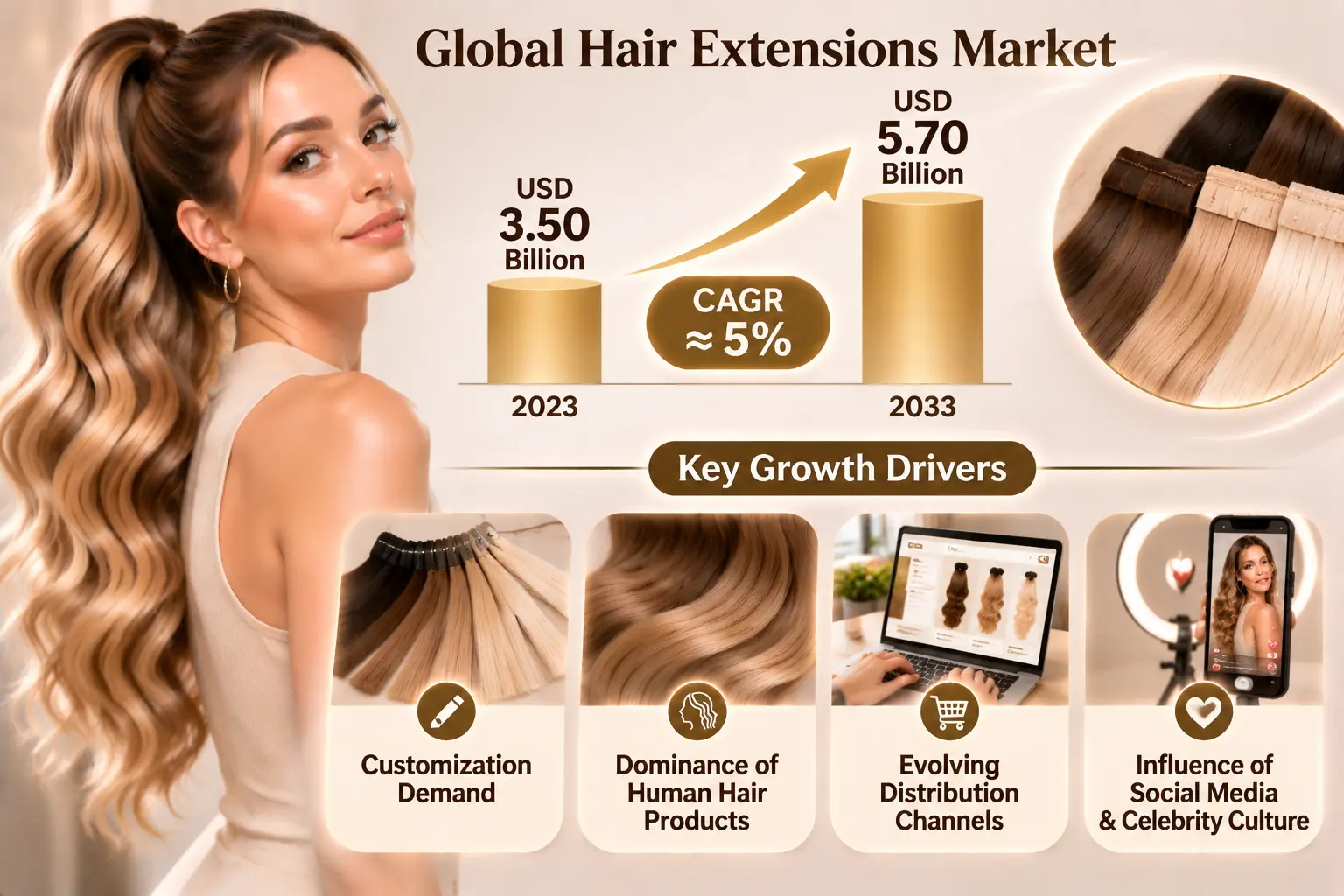
Hair extensions are one of the most searched beauty investments online[^1] — yet most buyers have no idea what a fair price looks like. Without a clear benchmark, you risk overpaying for low-quality product or underpaying and ending up with hair that tangles, sheds, and damages your natural hair within weeks. Understanding how much hair extensions cost — and why — puts you in control.
The cost of hair extensions ranges from $100 to $1,500 or more, depending on the hair type, extension method, hair quality, and whether professional application is required. Clip-in extensions are the most affordable option, starting around $100. Fusion and sew-in methods using premium Remy human hair sit at the higher end of the range. Quality, sourcing, and labor are the three biggest price drivers.
That wide price range exists for real reasons. The gap between a $150 set and a $1,200 set is not just marketing — it reflects raw material quality, manufacturing standards, and the expertise required to apply them. The sections below break down every major cost factor so you can evaluate any quote with confidence.
What types of hair extensions are there, and how does type affect cost?
Most buyers search for a price before they understand what they are actually buying. That gap leads to bad purchasing decisions. Knowing the main extension categories first makes every other cost comparison more meaningful.
Hair extensions fall into two broad categories: synthetic hair and human hair. Synthetic extensions are machine-made from fiber and are significantly cheaper. Human hair extensions feel more natural, last longer, and can be heat-styled[^2] — which is why they cost more and dominate the professional and B2B market.
 "Types of Hair Extensions – Synthetic vs Human Hair")
Synthetic vs. Human Hair: A Cost Overview
| Hair Type | Typical Price Range | Heat Styling | Lifespan |
|---|---|---|---|
| Synthetic | $20 – $150 | Usually no | 1–3 months |
| Human Hair (standard) | $100 – $600 | Yes | 6–12 months |
| Remy Human Hair | $200 – $1,500+ | Yes | 12–24 months |
| Virgin / Cuticle Intact | $300 – $1,500+ | Yes | 12–24+ months |
Within human hair, quality tiers matter enormously:
- Standard human hair — hair collected from multiple sources, cuticles stripped and coated with silicone. Feels smooth at first but degrades quickly.
- Remy hair — all cuticles face the same direction, which reduces tangling dramatically. This is the industry benchmark for quality.
- Virgin hair / Cuticle Intact hair — hair that has never been chemically processed. The cuticle layer is fully intact, making it the most durable and premium option available.
At RENAI HAIR, we focus exclusively on 100% Human Hair, Remy Hair, and Cuticle Intact Hair — because these are the grades that professional buyers and brands rely on for consistent, repeatable quality across large orders.
One more factor buyers often overlook: origin matters. Hair sourced, sorted, and manufactured under consistent quality control processes will behave more predictably than bulk-collected hair with no traceability. When evaluating suppliers, ask for documentation on hair sourcing and quality inspection processes.
How much are clip-in hair extensions?
Clip-in extensions are the most popular entry point into the hair extension market — but even within this single category, prices vary by a factor of five or more. Buyers who only look at the price tag often end up buying cheap sets that shed within weeks.
Clip-in hair extensions typically range from $100 to $500 for quality human hair sets. Budget synthetic options can be found for $20–$80, but they cannot be heat-styled and wear out quickly. Premium Remy human hair clip-ins from professional-grade suppliers sit between $200 and $500 for a full head set.
Why Clip-Ins Are the Most Accessible Extension Type
Clip-in extensions have two major advantages that keep them popular:
- No professional installation required. You can apply and remove them at home, which eliminates salon labor costs entirely.
- No commitment. Because they are temporary, there is no risk of damage from adhesives, heat bonds, or stitching.
This makes clip-ins especially attractive for first-time buyers, retail customers, and salon clients who want volume or length for occasional use.
What Drives the Price Within Clip-Ins?
- Hair quality — Remy vs. non-Remy is the single biggest variable. Non-Remy clip-ins may look similar in product photos but will tangle and matt after a few washes.
- Weight and coverage — A full head set typically contains 100g to 200g of hair. Heavier sets with more weft panels cost more and give denser coverage.
- Clip quality — Cheap snap clips break or slip. Better clips use silicone-lined pressure snaps that hold without pulling.
- Color accuracy and options — A supplier with a wide, consistent color range adds real value for buyers building a product line.
For B2B buyers and brands, the per-set cost drops significantly when ordering in volume. Establishing a relationship with a manufacturer who can supply consistent color matches and stable quality across reorders is worth more than saving a few dollars per unit on a one-time order.
How much do tape-in hair extensions cost?
Tape-in extensions offer a semi-permanent solution that sits between the low commitment of clip-ins and the intensity of fusion bonds. They are one of the fastest-growing extension methods in professional salons — but the cost structure is more complex because professional application is strongly recommended.
Tape-in hair extensions typically cost $200 to $800 for the hair itself. Installation at a salon adds $100 to $300 or more depending on the stylist's experience and location. Maintenance appointments every 6–8 weeks add to the ongoing cost.
Breaking Down the Tape-In Cost Structure
| Cost Component | Typical Range |
|---|---|
| Hair (full head, Remy) | $200 – $800 |
| Salon installation | $100 – $300 |
| Re-tape / move-up (every 6–8 weeks) | $75 – $200 |
| Tape replacement adhesive | $20 – $50 |
Unlike clip-ins, tape-in extensions bond directly to your natural hair with double-sided adhesive strips. Application requires heat tools and experience to ensure even placement, correct sectioning, and proper tension — mistakes can cause damage or visible bumps.
Key Buying Considerations for Tape-Ins
- Tape quality — The adhesive must be strong enough to hold through washing and styling but gentle enough to be removed without pulling. Medical-grade, skin-safe tape is the standard.[^3]
- Hair thickness per tab — Professional tape-in wefts are typically cut into 1.5-inch sections. Consistent thickness across the set ensures even blending.
- Reusability — High-quality Remy tape-ins can be re-taped and reused 2–3 times, which significantly reduces the cost per wear over time.[^4] This is a real advantage that buyers should ask suppliers about directly.
For brands and distributors sourcing tape-in extensions, consistency in adhesive tab size, hair weight per pack, and color matching across batches are the most critical quality control checkpoints.
How much do weft, fusion, and other permanent hair extensions cost?
Permanent extension methods — including sew-in weaves, fusion/keratin bonds, and hand-tied wefts — carry the highest price tags in the market. They also deliver the most natural-looking, long-lasting results when done correctly. These are not DIY methods; professional application is required.
Permanent hair extensions range from $200 to $1,500 or more in total cost. The hair itself ranges from $150 to $800+. Professional installation adds $200 to $800 depending on method and stylist. These methods typically last 3–6 months before requiring maintenance.

Comparing Permanent Extension Methods
| Method | Hair Cost | Install Cost | Total Range | Lifespan |
|---|---|---|---|---|
| Sew-In / Weave | $100 – $500 | $150 – $600 | $250 – $1,100 | 6–10 weeks |
| Hand Tied Weft | $200 – $600 | $200 – $500 | $400 – $1,100 | 6–8 weeks |
| Genius / Flex Weft | $200 – $700 | $150 – $400 | $350 – $1,100 | 6–12 weeks |
| Fusion / Keratin Bond | $300 – $800 | $300 – $800 | $600 – $1,500+ | 3–6 months |
What Makes Fusion Extensions More Expensive?
Fusion or pre-bonded extensions use keratin-tipped strands that are heat-fused one by one to small sections of natural hair. The process is extremely time-intensive — a full head can take 3–6 hours[^5]. That labor cost is the primary reason fusion extensions sit at the top of the price range.
From a product quality standpoint, fusion extensions demand very high-grade hair. Because each strand is bonded individually and worn for months, any quality inconsistency — shedding, dryness, uneven cuticle alignment — becomes obvious over time. This is why buyers in this category consistently seek Remy or Cuticle Intact hair from verified suppliers.
A Note on Weft Extensions
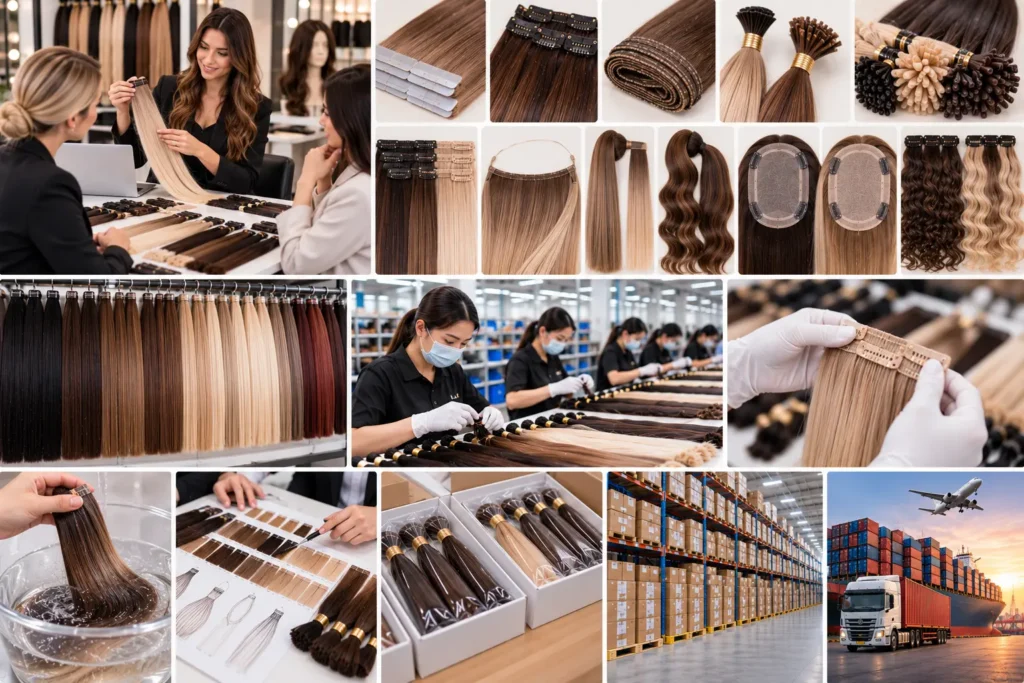
Weft extensions — including machine weft, hand tied weft, genius weft, and flex weft — are among the most versatile formats available. They can be applied by sewing, gluing, beading, or hand-knotting, depending on the method a stylist prefers. For B2B buyers, wefts are often the most efficient format to source because:
- They ship and store efficiently
- They can be cut and customized at the salon level
- They work across multiple application techniques
- Reorder consistency is easier to achieve than with individual bond strands
Frequently Asked Questions
Does the price of hair extensions include installation?
Not always. Most quoted hair extension prices cover the hair product only. Professional installation is a separate service fee charged by your stylist or salon. For permanent methods like fusion bonds and hand-tied wefts, installation can add $200 to $800 or more on top of the hair cost.
Are more expensive hair extensions always better quality?
Not necessarily. Price reflects quality, but high retail prices can also reflect brand markup, salon overhead, and marketing costs. The most reliable quality indicators are hair type (Remy vs. non-Remy), cuticle condition, sourcing transparency, and whether the supplier has a consistent quality control process — not price alone.
How long do human hair extensions last?
Clip-in human hair extensions can last 1–2 years with proper care.[^6] Tape-ins last 6–8 weeks per application cycle but can be reused 2–3 times.[^7] Fusion and weft methods typically last 3–6 months per application. Hair quality is the biggest factor — Remy and Cuticle Intact hair consistently outlasts standard human hair.
Can I apply hair extensions at home?
Clip-in and halo hair extensions are designed for at-home application and removal. All other permanent methods — tape-ins, sew-ins, fusion bonds, and weft installs — should be applied by a trained, licensed professional stylist to avoid damage to your natural hair.
What is the most cost-effective hair extension method?
For occasional use, clip-ins offer the best value — no installation fee and reusable for 1–2 years. For everyday wear, high-quality tape-ins or wefts offer a better cost-per-day ratio over time because they stay in place without daily application. Investing in Remy hair upfront reduces replacement frequency and lowers long-term cost.
Conclusion
Understanding how much hair extensions cost means looking beyond the sticker price. The real variables are hair quality, extension method, and whether professional installation is required. Clip-ins start at $100 and require no stylist. Fusion and weft methods can reach $1,500 or more when you factor in premium Remy hair and skilled installation. For buyers sourcing extensions at scale — brands, distributors, and salons — consistent quality, reliable color matching, and a supplier with strong quality control processes matter far more than the lowest unit price.
If you are building or expanding a hair extension product line and need a reliable source of 100% Human Hair, Remy, and Cuticle Intact extensions across multiple formats, contact RENAI HAIR to discuss your requirements. We work directly with brands, wholesalers, and salon buyers worldwide.
[^1]: "Google Trends", https://en.wikipedia.org/wiki/Google_Trends. Market research reports on the global hair extensions and wigs industry consistently identify hair extensions as a high-demand consumer search category, with the global market valued in the multi-billion dollar range and sustained growth driven by online retail and social media influence. Evidence role: statistic; source type: research. Supports: That hair extensions represent a high-volume consumer search category within the broader beauty and personal care market.. Scope note: Specific search volume rankings vary by platform, region, and time period; the claim as stated is a qualitative assertion that market size data supports directionally but does not confirm precisely. [^2]: "When it comes to human hair vs. synthetic, which do you ...", https://www.reddit.com/r/Wigs/comments/1f7zhp4/when_it_comes_to_human_hair_vs_synthetic_which_do/. Synthetic hair fibers, typically composed of acrylic or polyester polymers, have lower thermal tolerance thresholds than human hair keratin, making them unsuitable for high-heat styling tools; human hair's keratin structure allows repeated heat application without immediate structural failure. Evidence role: mechanism; source type: research. Supports: That synthetic hair fibers are generally not heat-tolerant and degrade faster than human hair, which retains its structure under heat styling.. Scope note: Most available research addresses fiber properties in textile or wig manufacturing contexts and may not directly address consumer hair extension performance metrics. [^3]: "Supertape Straight 3/4" x 3" (36 pcs per pack)", https://www.superhairpieces.com/products/supertape-straight-3-4-x-3-36-pcs-per-pack.html?srsltid=AYCX9vLXgXZcc5ZLTP5nLccB-DnzZiBY2dTmkbpYkcw2SlDa3ruxvS_R. Regulatory frameworks governing cosmetic adhesives, such as those issued by the FDA or equivalent bodies, require that substances applied to skin or scalp be non-irritating and biocompatible; the term 'medical-grade' in the hair extension trade typically references adherence to these skin-contact safety thresholds. Evidence role: expert_consensus; source type: government. Supports: That adhesives used in direct skin or scalp contact applications, including hair extensions, should meet skin-safety and biocompatibility standards comparable to medical-grade materials.. Scope note: The specific designation 'medical-grade tape' is a trade term rather than a formally regulated certification category; regulatory sources address adhesive safety broadly rather than endorsing this specific label. [^4]: "Are Tape-In Hair Extensions Reusable? Yes—Here's How", https://thelaurenashtyncollection.com/blogs/blog/are-tape-in-hair-extensions-reusable-let-s-talk-about-it-3?srsltid=AYCX9vLdrjH8Ys72t28N8vbpkq8REaOipbYPbg-VJ83FbytjUMYtUG53. Professional stylist guides and manufacturer documentation for Remy tape-in extensions commonly indicate that the hair weft itself can withstand two to three re-taping cycles when properly maintained, with the adhesive tab — rather than the hair — being the component replaced at each cycle. Evidence role: general_support; source type: other. Supports: That Remy-grade tape-in extensions are capable of being re-taped and reapplied multiple times before the hair quality degrades sufficiently to require replacement.. Scope note: This figure varies by brand, hair quality, and maintenance practices; no standardized independent testing protocol exists to verify a universal reuse count. [^5]: "Fusion Hair Extensions: Keratin Application, Wear Time ...", https://cooviphair.com/blogs/blog/fusion-hair-extensions-keratin-application-wear-time-and-data?srsltid=AYCX9vIj8xmF3c4X83ZElcsLNdcjSr2YJxc5-4wKl7eDcSDbX4jcAFGS. Professional cosmetology training curricula and salon industry references consistently classify fusion bond extension application as one of the most labor-intensive extension methods, with full-head installations commonly cited as requiring between three and six hours depending on the volume of strands applied. Evidence role: general_support; source type: institution. Supports: That fusion or keratin-bond hair extension application for a full head is a time-intensive process typically requiring several hours of professional labor.. Scope note: Application time varies significantly based on the number of strands, stylist experience, and hair density; the cited range reflects typical professional estimates rather than a controlled industry benchmark. [^6]: "How Long Are Hair Extensions Supposed to Last", https://journal.lspr.edu/public/journals/5/submission_1157_1072_coverImage_en.html?bnb=0EJMmH. Consumer product assessments and manufacturer guidelines for human hair clip-in extensions generally indicate a usable lifespan of one to two years under regular use and proper maintenance, with degradation accelerated by heat styling frequency, washing practices, and storage conditions. Evidence role: general_support; source type: research. Supports: That human hair clip-in extensions, when properly maintained, have a usable lifespan of approximately one to two years before significant quality degradation occurs.. Scope note: No standardized independent durability testing protocol exists for hair extensions; lifespan estimates are largely derived from manufacturer claims and aggregated consumer experience rather than controlled laboratory studies. [^7]: "Caring for & Maintaining Your Tape In Hair Extensions", https://foxylocks.com/blog/caring-for-maintaining-your-tape-in-hair-extensions/?srsltid=AYCX9vIRTtFDC7grw9H889FnabZ_NfQIDH0nxpmRF91exD6ctRYDcIqe. Professional hair extension training programs and salon industry guidelines commonly recommend tape-in extension maintenance appointments at six-to-eight-week intervals, reflecting the rate of natural hair growth that causes the bonded tabs to migrate away from the scalp and the adhesive to weaken over time. Evidence role: general_support; source type: institution. Supports: That tape-in hair extensions typically require a maintenance or move-up appointment every six to eight weeks due to natural hair growth and adhesive bond degradation.. Scope note: The recommended interval is a professional consensus estimate and may vary based on individual hair growth rate, adhesive quality, and client lifestyle factors.