Do You Want to Explore the World of Hair Extensions?
Your hair frames your face, defines your style, and speaks volumes about your personality before you say a word. But what if you're stuck with thin, short, or damaged hair that won't cooperate with your vision? That's frustrating—especially when you scroll through social media seeing gorgeous, voluminous hair everywhere. Hair extensions have become the secret weapon for achieving the hair of your dreams without waiting years for growth or risking damage from endless styling.
Hair extensions are additional strands of synthetic or 100% human hair attached to your natural hair to add length, volume, or a complete style transformation.[^1] Whether you choose clip-in, tape-in, pre-bonded, or micro bead methods, extensions offer instant results that can be styled, colored, and treated like your own hair—especially when you invest in remy cuticle intact human hair that maintains the natural hair structure for longevity and realistic appearance.
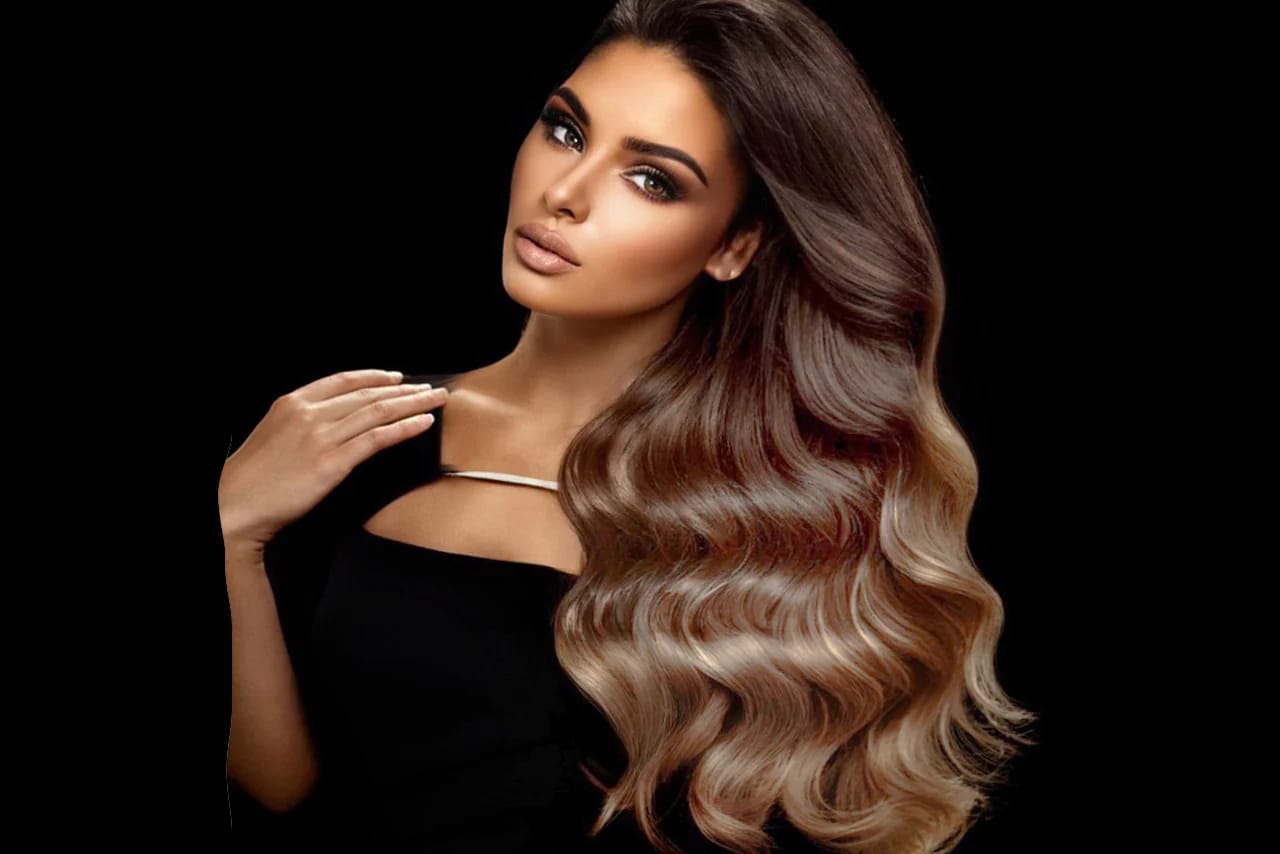
The world of hair extensions isn't just about length anymore. Modern extensions solve real problems: adding density to thinning hair, creating dimensional color without bleach damage, testing dramatic cuts before committing, or simply giving yourself the confidence boost that comes with great hair. Let's explore everything you need to know about choosing, installing, and styling hair extensions that look natural and last.
What Are the Main Types of Hair Extension Materials?
Understanding hair extension materials feels overwhelming when you first start researching. The market floods you with terms like "synthetic," "remy," "virgin," and "cuticle intact," but what do these actually mean for your hair?
The two primary categories of hair extension materials are synthetic fibers and 100% real human hair. Synthetic extensions are chemically processed fibers designed to mimic hair texture at a lower price point, ideal for temporary styling or costume use. Real human hair extensions offer natural movement, heat styling versatility, and longevity, with remy cuticle intact hair representing the highest quality tier where all cuticles align in one direction and remain intact[^2].

Synthetic Hair Extensions: Budget-Friendly But Limited
Synthetic hair extensions serve a specific market niche. Manufacturers create these extensions from various plastic fibers—typically polyester, acrylic, or polyvinyl[^3]—then treat them to achieve shine and texture resembling real hair.
Key characteristics of synthetic extensions:
- Price advantage: Synthetic extensions cost 60-80% less than human hair alternatives[^4]
- Ready-to-wear styling: Pre-styled curls or waves maintain their pattern without heat styling
- Heat sensitivity: Most synthetic fibers cannot withstand heat styling tools above 180°F[^5]
- Limited lifespan: Typically last 1-3 months with proper care
- Unnatural shine: Often displays an artificial sheen under certain lighting conditions
I've worked with salon owners who keep synthetic extensions available for clients wanting temporary color changes for special events or those testing extension wear before investing in human hair. The demand remains strong in specific markets—theatrical productions, costume design, and budget-conscious consumers who change styles frequently.
However, synthetic extensions come with significant limitations. You cannot color them, they tangle more easily than human hair, and the texture feels noticeably different when touched. For professional stylists building long-term client relationships or brands targeting discerning customers, synthetic options rarely meet quality expectations.
100% Human Hair Extensions: The Professional Standard
Real human hair extensions dominate the professional market because they deliver what clients actually want: undetectable, natural-looking hair that behaves like their own.
Human hair extensions break down into three quality categories:
- Non-remy hair: Collected from multiple sources with cuticles running in mixed directions, requiring harsh processing to prevent tangling
- Remy hair: Cuticles aligned in one direction during collection, maintaining natural structure with minimal processing
- Remy cuticle intact hair (virgin hair): The highest grade where cuticles remain completely intact and aligned, never chemically processed or colored
At RENAI HAIR, we've seen the quality difference firsthand in our manufacturing process. When you examine remy cuticle intact hair under magnification, you can see the complete cuticle scales running uniformly from root to tip—exactly as hair grows naturally. This structure determines everything: how the hair reflects light, how it moves, how long it lasts, and how well it accepts color[^6].
Quality comparison table:
| Feature | Non-Remy Hair | Remy Hair | Remy Cuticle Intact |
|---|---|---|---|
| Cuticle alignment | Mixed directions | Aligned one direction | Perfectly aligned, intact |
| Processing level | Heavy chemical treatment | Minimal processing | No chemical processing |
| Lifespan | 3-6 months | 6-12 months | 12-24+ months |
| Styling versatility | Limited heat styling | Full heat styling | Full styling + coloring |
| Tangle resistance | Tangles easily | Moderate tangling | Minimal tangling |
| Natural appearance | Noticeable texture difference | Natural appearance | Indistinguishable from natural hair |
| Price point | Lowest | Medium | Premium |
The investment in remy cuticle intact hair pays off through longevity and client satisfaction. I've tracked customer feedback across thousands of orders, and the repurchase rate for cuticle intact hair runs 3-4 times higher than lower grades. Clients who initially hesitate at the price point become loyal advocates once they experience the quality difference.
One salon owner in California told me her average client keeps the same set of our cuticle intact tape-ins for 18 months with proper maintenance—moving them up every 6-8 weeks. That's three times longer than the non-remy extensions she previously sourced, making the higher upfront cost actually more economical over time.
What Are the Most Popular Hair Extension Installation Methods?
Installation method determines everything about your extension experience: how natural they look, how long they last, how much damage they cause, and how much maintenance they require. Different methods serve different needs, hair types, and lifestyle demands.
The most popular installation methods include clip-in extensions for temporary wear and styling flexibility, tape-in extensions for semi-permanent lightweight application, pre-bonded keratin extensions for long-term wear and maximum security, and micro bead/micro link extensions for heat-free installation that's gentle on natural hair. Each method offers distinct advantages in application time, longevity, maintenance requirements, and suitability for different hair types.

Clip-In Hair Extensions: The Versatile Starter Option
Clip-in extensions revolutionized the hair extension market by putting salon-quality volume and length into consumers' own hands. These temporary extensions attach via small pressure-sensitive clips sewn onto wefts.
Why clip-ins dominate the beginner market:
- Zero commitment: Clip in before styling, remove before bed—no long-term attachment
- DIY-friendly: Most users master application within 2-3 attempts
- Hair health protection: No glue, heat, or chemicals touching natural hair
- Cost-effective: One set serves multiple occasions over years
- Styling freedom: Add volume for special events, remove for everyday wear
Clip-ins work particularly well for thin hair when you need temporary fullness. I've watched our customers develop sophisticated application techniques—strategically placing smaller wefts around the hairline for natural blending, using multiple clip patterns to distribute weight evenly, and even creating custom color blends by mixing wefts.
The learning curve involves finding the right placement zones. Too high and clips show through fine hair; too low and the extension hair doesn't blend with natural hair length. Professional stylists recommend a "three-layer sandwich" approach: place clip-ins in the middle density zone where natural hair is thick enough to conceal clips but close enough to roots for proper blending.
Ideal candidates for clip-in extensions:
- Special occasion styling (weddings, photoshoots, events)
- Those testing extensions before committing to semi-permanent methods
- Active lifestyles requiring extension removal for sports or swimming
- Budget-conscious buyers wanting maximum styling flexibility
- Fine or thin hair requiring extra volume without long-term commitment
Tape-In Hair Extensions: The Salon Professional's Choice
Tape-in extensions have become the workhorse of professional salons because they deliver the perfect balance of natural appearance, client comfort, and profitable service pricing.
These extensions feature pre-taped wefts with medical-grade adhesive that sandwiches a thin section of natural hair between two extension pieces[^7]. The result? Virtually invisible attachment points that lie completely flat against the scalp.
Tape-in advantages that drive salon adoption:
- Speed of application: Full head installation in 45-90 minutes versus 3-4 hours for other methods[^8]
- Lightweight comfort: Thin tape wefts distribute weight evenly without pulling
- Reusability: Quality tape-ins can be moved up 2-3 times with replacement tape
- Natural movement: Flat application allows hair to fall naturally without bulk
- Minimal damage: No heat, glue, or beads required for installation
From a manufacturer's perspective, tape-in production requires precision. The tape must bond firmly enough to hold for 6-8 weeks through shampooing, styling, and daily wear, yet release cleanly with proper remover solution without damaging natural hair. We've spent years refining our adhesive formula to achieve this balance.
The tape-in market specifically serves fine hair clients who cannot support the weight of other extension methods. The shallow, flat attachment distributes stress across a wider area than single-point attachment methods like pre-bonded or micro beads.
Maintenance requirements for tape-in longevity:
- Avoid oil-based hair products near the tape bonds (breaks down adhesive)
- Brush gently from mid-lengths to ends, holding roots to prevent pulling
- Sleep with hair in a loose braid to minimize nighttime tangling
- Return for professional move-up every 6-8 weeks as natural hair grows[^9]
- Use sulfate-free, extension-safe shampoos to preserve tape adhesive
One challenge with tape-ins involves the visibility factor during updos or high ponytails. The horizontal tape rows can show through lifted hair, requiring strategic styling to conceal bonds. Professional stylists develop techniques for working around this—placing bonds slightly lower, using creative sectioning patterns, or supplementing with clip-in pieces for updos.
Pre-Bonded Keratin Hair Extensions: Maximum Security for Active Lifestyles
Pre-bonded extensions represent the original professional extension method, refined over decades into a highly durable, long-lasting application technique. Each extension strand comes pre-tipped with a keratin bond that melts and fuses around a small section of natural hair using a heat tool.[^10]
Why pre-bonded extensions excel for long-term wear:
- Superior hold strength: Keratin bonds withstand vigorous activity, swimming, and styling
- Individual strand application: Allows precise placement for natural dimension and movement
- Longest wear time: Can last 3-4 months before requiring removal and reinstallation
- Customizable density: Add extensions exactly where volume is needed
- Heat-resistant bonds: Styling tools don't affect properly cured keratin
The application process requires significant skill and time investment. A full head of pre-bonded extensions takes 3-4 hours to install, with the stylist melting and molding each individual bond around sections of natural hair no wider than the bond itself.
I've seen incredible artistry in pre-bonded application. Master extension specialists create seamless blends by varying extension placement density—denser at the crown for lift, sparser through the sides to maintain natural fall, strategically placed highlights for dimensional color. This level of customization explains why pre-bonded methods command premium service pricing.
Installation method comparison:
| Installation Type | Application Time | Typical Lifespan | Reusable | Best For |
|---|---|---|---|---|
| Clip-In | 5-15 minutes (DIY) | Unlimited with care | Yes, indefinitely | Special occasions, temporary styling |
| Tape-In | 45-90 minutes | 6-8 weeks per move-up | Yes, 2-3 times | Fine/thin hair, natural daily wear |
| Pre-Bonded | 3-4 hours | 3-4 months | No, new bonds required | Long-term commitment, active lifestyle |
| Micro Bead | 2-3 hours | 6-8 weeks per move-up | Yes, 2-3 times | Heat-free application, fine hair |
The pre-bonded removal process requires professional expertise. Using a specialized keratin bond remover solution and careful manipulation, stylists break down the fusion bond without damaging natural hair. Improper removal—pulling bonds off forcefully or using incorrect solvents—can cause significant hair breakage.[^11]
Micro Bead Hair Extensions: The Heat-Free Alternative
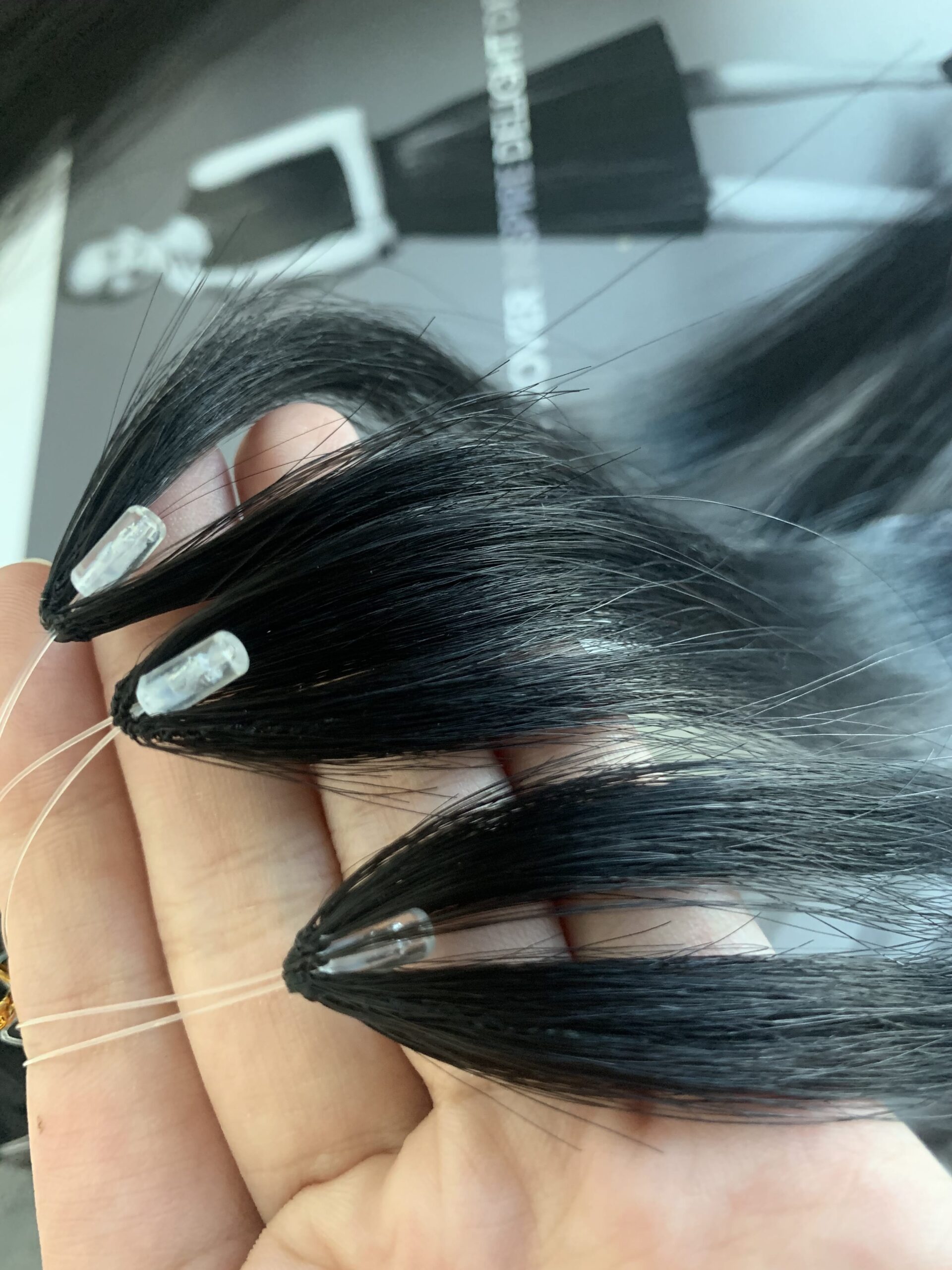
Micro bead extensions (also called micro link, micro ring, or I-tip extensions) offer a compelling middle ground: semi-permanent security without heat or chemicals. Small metal or silicone-lined beads secure each extension strand to natural hair through simple clamping pressure.
Advantages driving micro bead popularity:
- No heat or glue: Gentlest installation method for already-damaged hair
- Adjustable: Beads can be opened and repositioned if needed
- Natural movement: Individual strand application creates realistic dimension
- Color versatility: Easy to blend multiple tones for custom color effects
- Reusable extensions: Same hair can be reinstalled with new beads multiple times
The technique particularly appeals to clients concerned about heat damage or chemical exposure. New mothers dealing with postpartum hair loss, individuals undergoing medical treatments affecting hair health, or those recovering from previous extension damage often choose micro beads as the safest option.
Application requires precision with specialized pliers that properly close beads without crushing them flat or leaving them too loose. The sweet spot creates secure hold with zero slippage while maintaining comfortable wear and preventing hair breakage within the bead.
Micro beads work exceptionally well for creating versatile styles—the individual strand application allows any styling possibility without visible attachment points. High ponytails, braided updos, and even top knots remain achievable without strategic placement concerns.
How Do You Choose Hair Extension Colors and Styles?
Color selection makes or breaks the natural appearance of hair extensions. Even premium quality hair looks artificial when the color doesn't match your natural base or blend seamlessly with your existing color dimension. Modern color techniques have transformed extension selection from simple single-color matching into an art form.
Successful hair extension color selection requires matching both your natural base color and incorporating the dimensional tones present in your hair—whether subtle highlights, balayage gradients, or ombre effects. Popular options include balayage extensions that recreate hand-painted color transitions, ombre extensions featuring gradual root-to-tip color shifts, blonde extensions for adding bright dimensional pieces to darker bases, and custom color blends mixing multiple tones for perfect matching.
Understanding Base Color Matching Fundamentals
Base color matching seems straightforward until you examine hair under proper lighting. What appears as "dark brown" in bathroom light might reveal auburn undertones in sunlight and ash tones in fluorescent lighting.
Professional color matching follows specific protocols:
Step-by-step color matching process:
- Evaluate in natural daylight: Indoor lighting distorts color perception significantly[^12]
- Identify undertones: Determine whether your base runs warm (golden/red) or cool (ash/violet)
- Assess color dimension: Note whether your hair is solid color or has multi-tonal variation
- Consider your color history: Previous coloring affects how new extensions will blend
- Test with color rings: Use physical hair samples in your lighting before ordering
Single-process colored hair (solid, uniform color) matches most easily. You can order one color tone and achieve seamless blending. But most natural hair—especially hair that's never been colored—displays significant color variation from roots to ends, with lighter pieces framing the face and darker tones underneath.
This natural dimension is why single-color extensions often look artificial even when the base color matches perfectly. Your eye recognizes something unnatural about hair that's too uniform, too perfect, too consistent in color from root to tip.
Balayage Hair Extension Trends: Creating Natural Dimension
Balayage transformed hair coloring by creating natural-looking, sun-kissed dimension that grows out gracefully without harsh lines. Applying this same principle to extensions creates the most realistic, blended results possible.
What makes balayage extensions different:
- Hand-painted color: Each extension strand features unique color placement
- Multiple tone integration: Combines 3-5 different color shades in strategic patterns
- Seamless blending: No visible color lines or harsh transitions
- Natural lightness variation: Mimics how sun naturally lightens hair (darker roots, lighter ends)
- Dimensional movement: Hair catches light differently as it moves, creating depth
At RENAI HAIR, our balayage extension production process involves significantly more labor than single-color extensions. Colorists hand-paint individual wefts using multiple formulas, creating subtle gradients that differ slightly from weft to weft—just like natural hair. This variation is precisely what makes the final result look authentic.
Balayage extensions solve specific problems for stylists and clients:
[^1]: "Artificial hair integrations", https://en.wikipedia.org/wiki/Artificial_hair_integrations. Reference sources define hair extensions as added synthetic or human hair attached to a person's natural hair to increase length, volume, or styling options. Evidence role: definition; source type: encyclopedia. Supports: A neutral reference source should define hair extensions as synthetic or human hair additions attached to natural hair for length, volume, or styling effects.. [^2]: "What Is Remy Hair? A Professional Guide to Cuticle ...", https://www.verahairco.com/blogs/the-journal/the-science-behind-remy-hair-what-makes-it-the-gold-standard-for-extensions. Cosmetology references define remy hair as collected or processed so that the hair cuticles remain aligned in the same root-to-tip direction. Evidence role: definition; source type: education. Supports: A cosmetology education source should define remy hair by preserved, directionally aligned cuticles.. Scope note: Commercial grading terms such as “remy,” “virgin,” and “cuticle intact” are not always standardized across suppliers. [^3]: "Synthetic hair is created using man-made fibers ...", https://www.instagram.com/reel/DVEKvcxjTvs/?hl=en. Materials and cosmetology literature identifies synthetic hair products as polymer-based fibers, including acrylic, polyester, and polyvinyl-type materials. Evidence role: definition; source type: paper. Supports: A materials-science or cosmetology source should identify common polymer fibers used to manufacture synthetic hair products.. Scope note: Specific fiber composition varies by manufacturer and product line. [^4]: "How Much Do Hair Extensions Cost? 2026 Prices by Type", https://www.perfectlocks.com/pages/hair-extensions-cost-guide?srsltid=AU7gw4XL-6lg4z9uw4dAM1pFW4hTJGO723i2JUMXbsOceeXBaJJzDFVy. Market price comparisons generally report substantially lower retail prices for synthetic hair extensions than for human-hair extensions, consistent with a large percentage discount. Evidence role: statistic; source type: research. Supports: A market or consumer price analysis should support the approximate cost difference between synthetic and human hair extensions.. Scope note: The exact 60–80% range depends on brand, length, density, hair grade, and regional pricing. [^5]: "Volatile Organic Compound Emissions From Heated Synthetic ...", https://pmc.ncbi.nlm.nih.gov/articles/PMC6990612/. Polymer-fiber studies show that many synthetic hair fibers are vulnerable to thermal deformation at styling-tool temperatures, supporting cautions against high-heat styling. Evidence role: mechanism; source type: paper. Supports: A polymer or hair-fiber source should explain that synthetic hair fibers soften, deform, or melt at temperatures used by common heat-styling tools.. Scope note: The precise safe temperature varies by fiber type and whether the product is marketed as heat-resistant. [^6]: "Quantifying the effects of repeated dyeing: Morphological ...", https://pmc.ncbi.nlm.nih.gov/articles/PMC11417257/. Hair-fiber research links cuticle integrity to surface friction, optical shine, weathering, and chemical uptake, providing a mechanistic basis for differences in appearance and durability. Evidence role: mechanism; source type: paper. Supports: Hair-science research should explain how cuticle integrity affects friction, optical properties, surface smoothness, and chemical treatment response.. Scope note: Such studies support the underlying mechanism but may not directly compare commercial extension grades. [^7]: "Tape-In Hair Extensions Guide | Cost, Types & Care", https://www.perfectlocks.com/pages/tape-in-hair-extensions-guide?srsltid=AU7gw4XJfQyC7Dx2sRe3dcl0FyfZYCojBv9mDcDCKgRd-hAMobqYKHhR. Cosmetology training materials describe tape-in extensions as adhesive-backed wefts applied to thin sections of natural hair, often in paired panels. Evidence role: definition; source type: education. Supports: A cosmetology source should describe tape-in extensions as adhesive wefts attached around a section of the client's natural hair.. Scope note: The term “medical-grade” depends on the adhesive specification for a particular product. [^8]: "Hair Extensions Installation Time: What to Expect by Method", https://www.facebook.com/fb-answers/hair-extensions-installation-time/. Cosmetology training sources commonly describe tape-in extensions as faster to apply than strand-by-strand methods such as keratin fusion or micro-ring installation. Evidence role: statistic; source type: education. Supports: A cosmetology education or training source should provide typical application-time ranges for tape-in, fusion, and micro-bead extension methods.. Scope note: Installation time varies with head size, desired density, stylist skill, and whether a full or partial head is applied. [^9]: "New to extensions. Waited 8 weeks for move up, do I need ...", https://www.reddit.com/r/hairextensionsforgirl/comments/1t7tzar/new_to_extensions_waited_8_weeks_for_move_up_do_i/. Extension-maintenance guidance commonly recommends tape-in repositioning at roughly six to eight weeks as natural hair growth lowers the adhesive panels from their original placement. Evidence role: general_support; source type: education. Supports: A cosmetology maintenance source should support the common 6–8 week move-up interval and explain that growth changes bond placement.. Scope note: The interval is practical guidance rather than a fixed biological rule and may change with hair growth rate, shedding, and home care. [^10]: "How To: Keratin Hair Extensions Application. Step By ...", https://www.youtube.com/watch?v=QMdkbjbAf1E. Cosmetology references describe keratin fusion extensions as individual pre-tipped strands attached to small sections of natural hair by softening the keratin bond with a heat tool. Evidence role: definition; source type: education. Supports: A cosmetology source should describe fusion or pre-bonded extensions as keratin-tipped strands attached with heat to sections of natural hair.. Scope note: Exact tools, bond formulations, and sectioning practices vary across training systems. [^11]: "Traction Alopecia: Causes, Symptoms, and How to Treat It Early", https://dermatrials.medicine.iu.edu/blogs/understanding-traction-alopecia. Dermatology literature reports that hair extensions can contribute to shaft breakage and traction alopecia when excessive force, traction, or improper handling is applied. Evidence role: mechanism; source type: paper. Supports: Dermatology literature should support that mechanical traction and mishandling of extensions can cause hair shaft breakage or traction-related hair loss.. Scope note: Clinical sources generally document damage mechanisms and cases rather than testing every removal solvent or technique. [^12]: "The Eye of the Beholder: How Lighting Affects Our Color ...", https://www.nist.gov/blogs/taking-measure/eye-beholder-how-lighting-affects-our-color-perception. Color-science research shows that perceived object color depends on the light source's spectral characteristics and color-rendering properties, supporting the use of daylight or controlled lighting for color matching. Evidence role: mechanism; source type: government. Supports: A color-science or lighting source should explain that illuminant spectrum and color rendering affect how object colors are perceived.. Scope note: The evidence is general to color perception and lighting, not specific to hair-extension retail matching.