Everything You Need to Know About Tape-In Extensions
Tape-in extensions confuse a lot of people — not because they're complicated, but because there's so much contradicting information out there. Bad advice leads buyers and first-timers to the wrong product, the wrong method, or the wrong supplier. If you've ever wondered whether tape-in extensions are right for you — or whether they're safe, worth it, or easy to maintain — this guide covers it all.
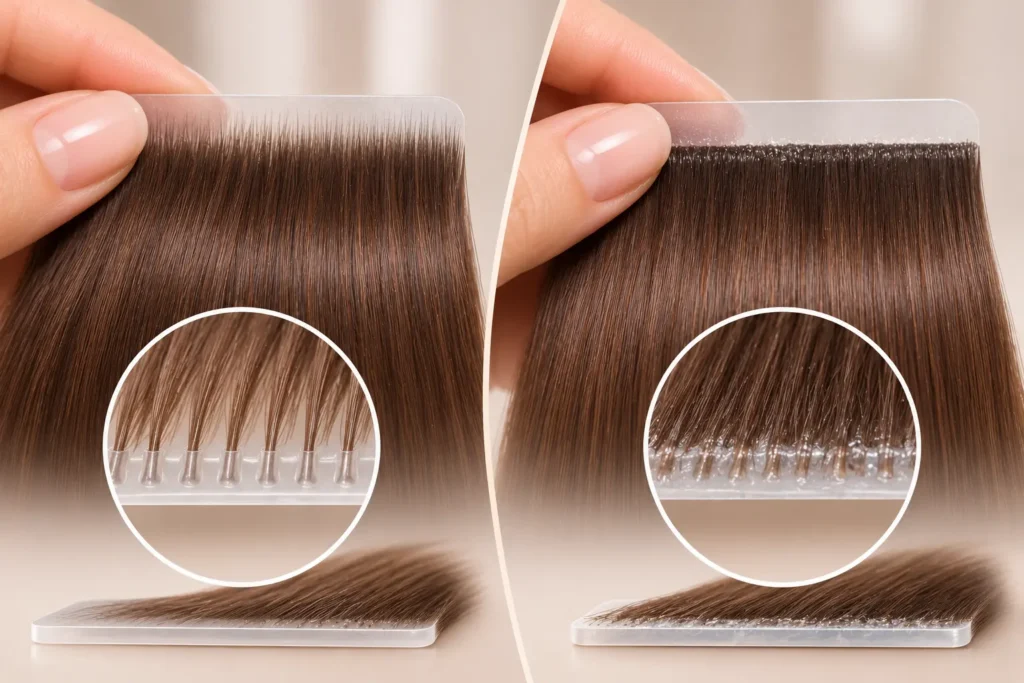
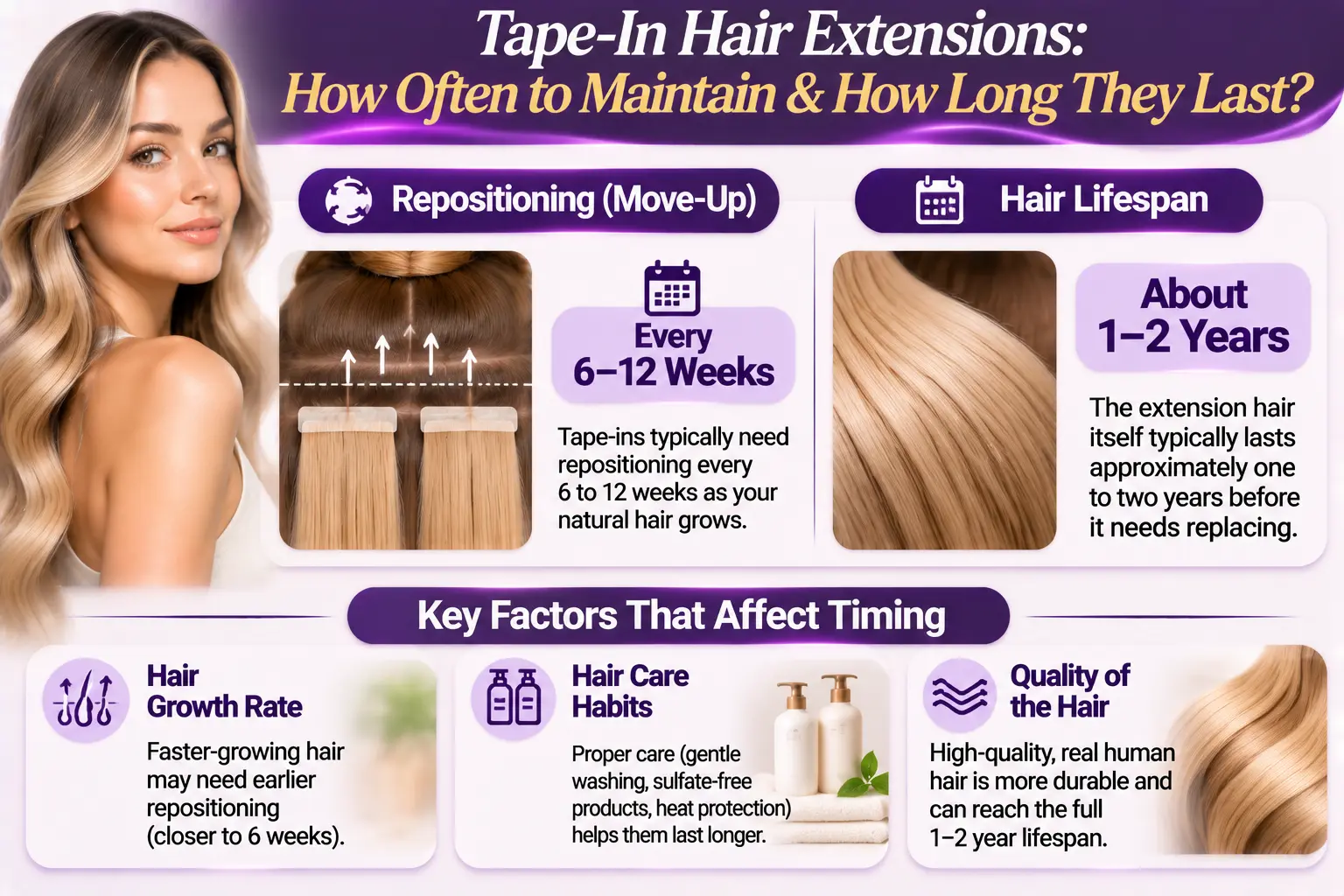
Tape-in extensions are flat, pre-taped wefts of real human hair that sandwich a thin section of your natural hair using medical-grade adhesive. They lie flat against the scalp, blend seamlessly, and can be removed and reapplied without significant damage. Most people wear them for 6–12 weeks before a move-up appointment, and the hair itself typically lasts one to two years with proper care.
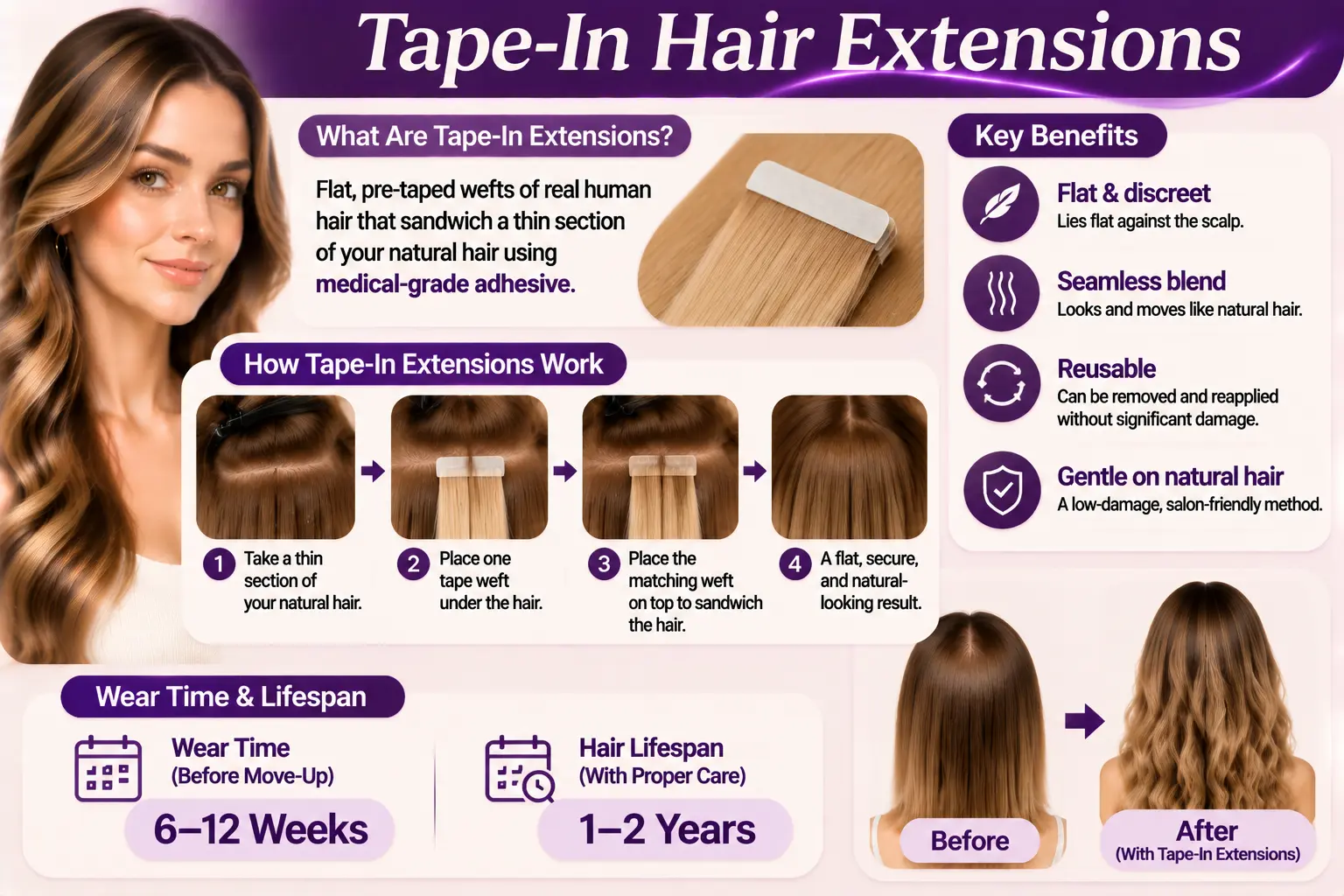
I've worn extensions for a while now. The most common question I used to get — before I started wearing them — was whether my hair was real. Now that I actually wear tape-ins, the questions have shifted entirely to how they work. So I'm breaking everything down here, from the install process to long-term care, supplier quality, and what to look for when you're buying hair.
Do Tape-In Extensions Damage Your Hair?
Hair damage is the first fear every new extension wearer brings up. And honestly, it's a fair concern — some extension methods do cause real, lasting damage if they're applied incorrectly or use low-quality hair.
Tape-in extensions, when applied correctly with high-quality human hair, are widely considered one of the gentlest extension methods available. The medical-grade adhesive is waterproof and flexible[^1]. The extension weft sandwiches a thin slice of your natural hair, balancing the weight rather than pulling any single follicle. This reduces the mechanical stress that causes breakage.

That said, not all tape-in extensions are created equal — and this is where product quality matters enormously.
Why Weight Balance Is the Key Factor
Most extension damage doesn't come from the adhesive. It comes from uneven weight distribution. Methods like keratin bonds or micro-links concentrate tension on individual strands[^2]. Tape-ins work differently.
When a tape-in is applied, a small, thin section of your natural hair sits between two tape wefts. The weight of that natural section closely matches the weight of the tape weft itself. The load is spread evenly across a flat surface rather than pulled from a single bonding point.
This matters especially for:
- Fine hair — where follicle stress from heavy bonds is most damaging
- Previously color-treated hair — which is already structurally weaker
- Hair in a growth or recovery phase — where minimizing tension supports healthier regrowth
What the Hair Itself Goes Through Before It Reaches You
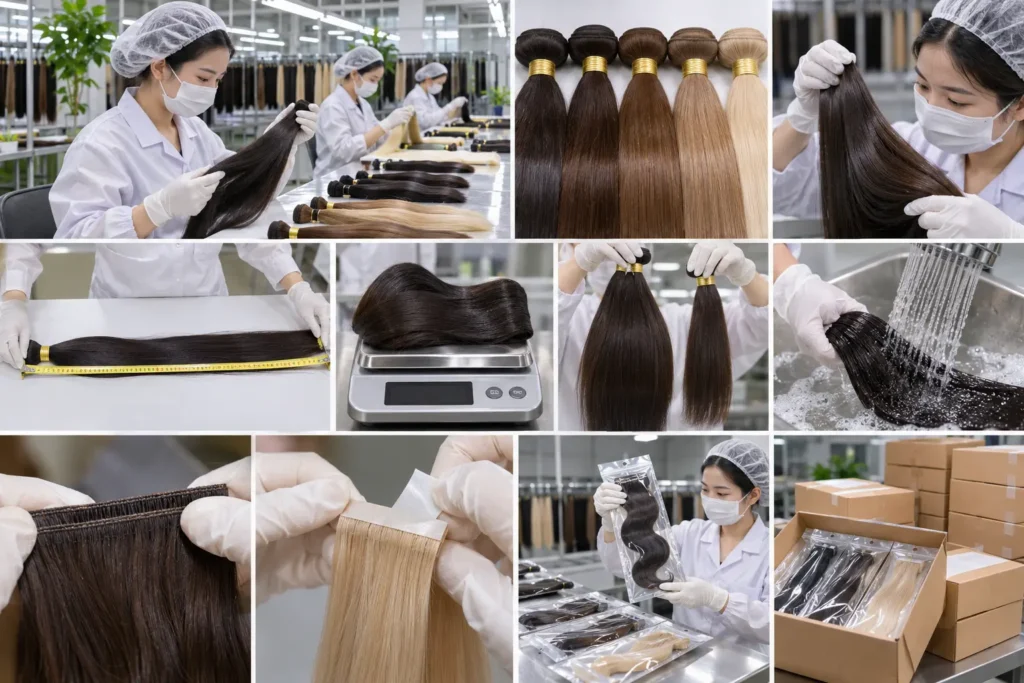
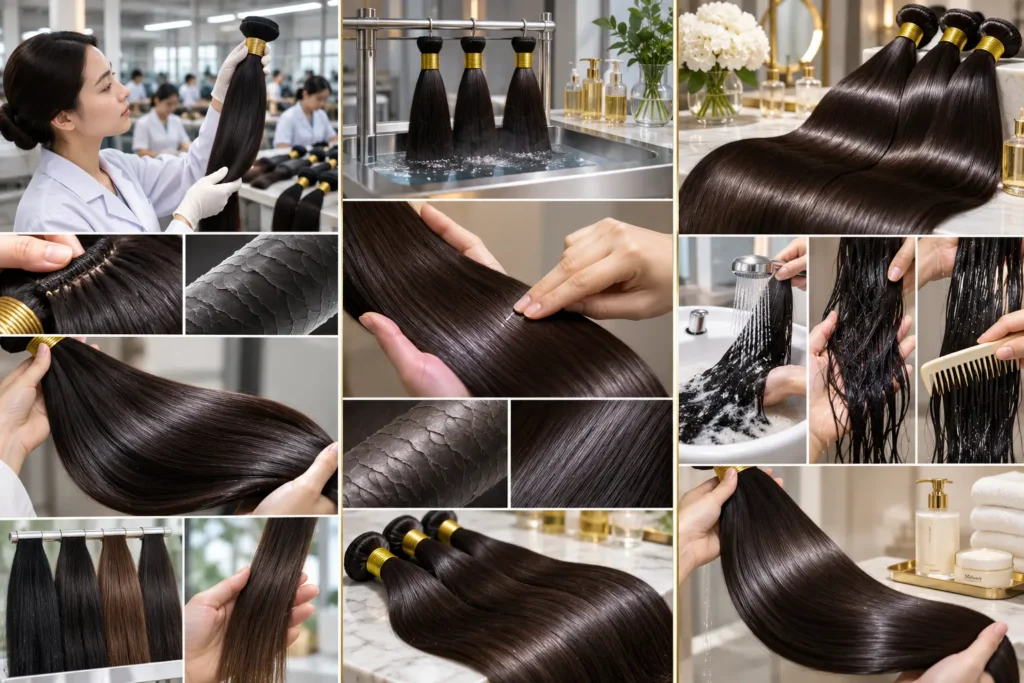
High-quality tape-in hair — particularly 100% Remy human hair with the cuticle intact[^3] — goes through a thorough preparation process before it becomes an extension. This typically includes:
- Deep cleaning to remove buildup and residue
- Cuticle alignment to prevent tangling and matting
- Color processing (if applicable)
- Treatment to restore moisture and shine
At RENAI HAIR, our tape-in extensions use 100% human hair with the cuticle intact and running in one direction. This is what separates a product that behaves like real hair from one that tangles, dries out, and deteriorates after a few washes.
My Personal Experience
My hair has always been naturally thick. I was skeptical about whether extensions would feel heavy or stressful on my scalp. After my first install, I was surprised. My hair felt thicker, not heavier in a pulling way. When extensions are removed, I've seen a few strands come out with the tape — which is normal shedding — but my hair has actually felt healthier overall over time.
One thing my extensionist told me that stuck with me: with some other methods, you'll feel compelled to keep the extensions in because your hair gets progressively more damaged. Tape-ins are different. You can wear them through a healing phase and eventually remove them without regret.
How Long Does the Tape-In Extension Process Take?
Time is always a practical concern, especially for salon clients and buyers evaluating product efficiency. One of tape-ins' biggest selling points is their speed.
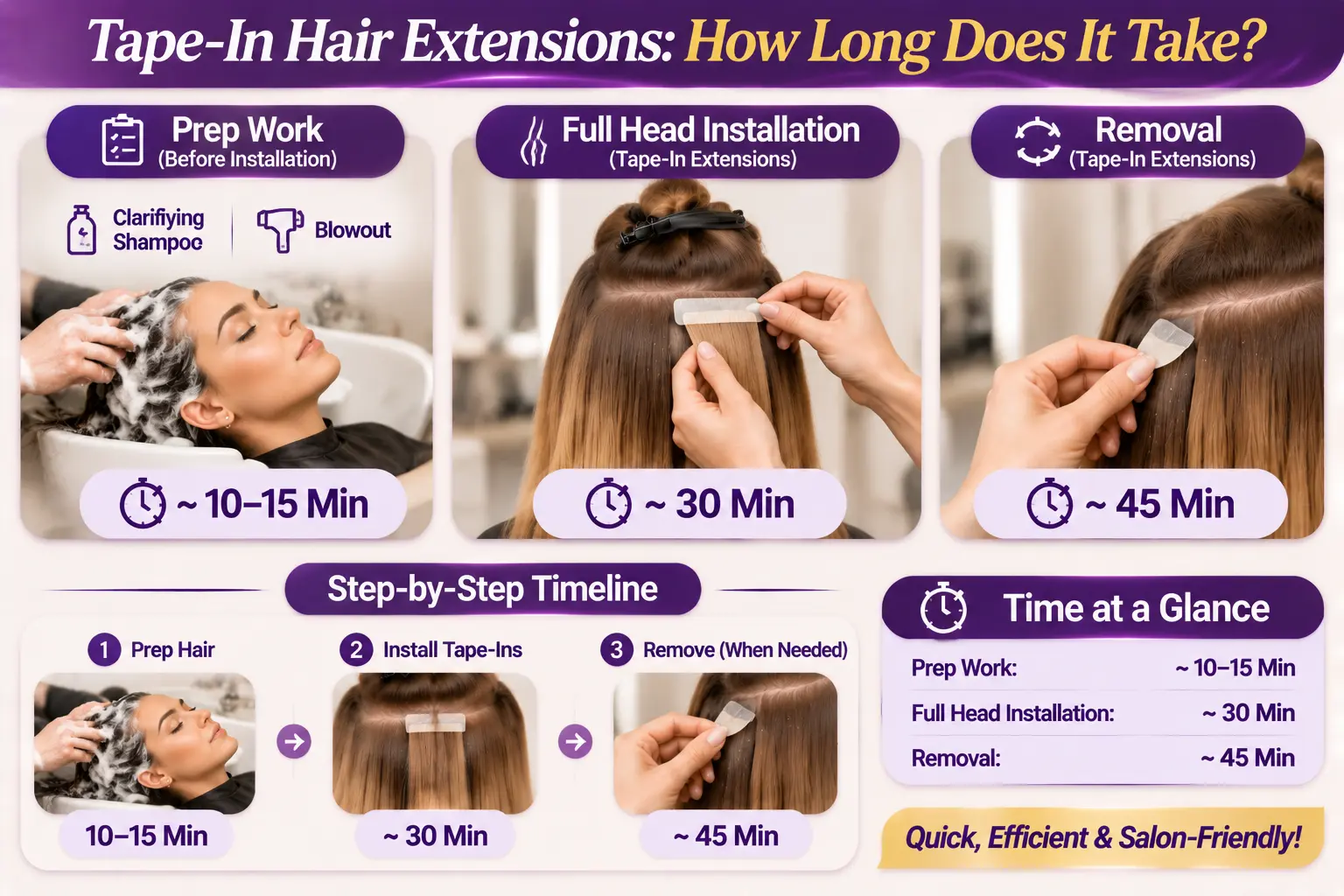
A full head installation of tape-in extensions typically takes around 30 minutes[^4] once the hair is prepped. Removal takes slightly longer — roughly 45 minutes. Prep work, including clarifying shampoo and a blowout, adds additional time before the install begins.
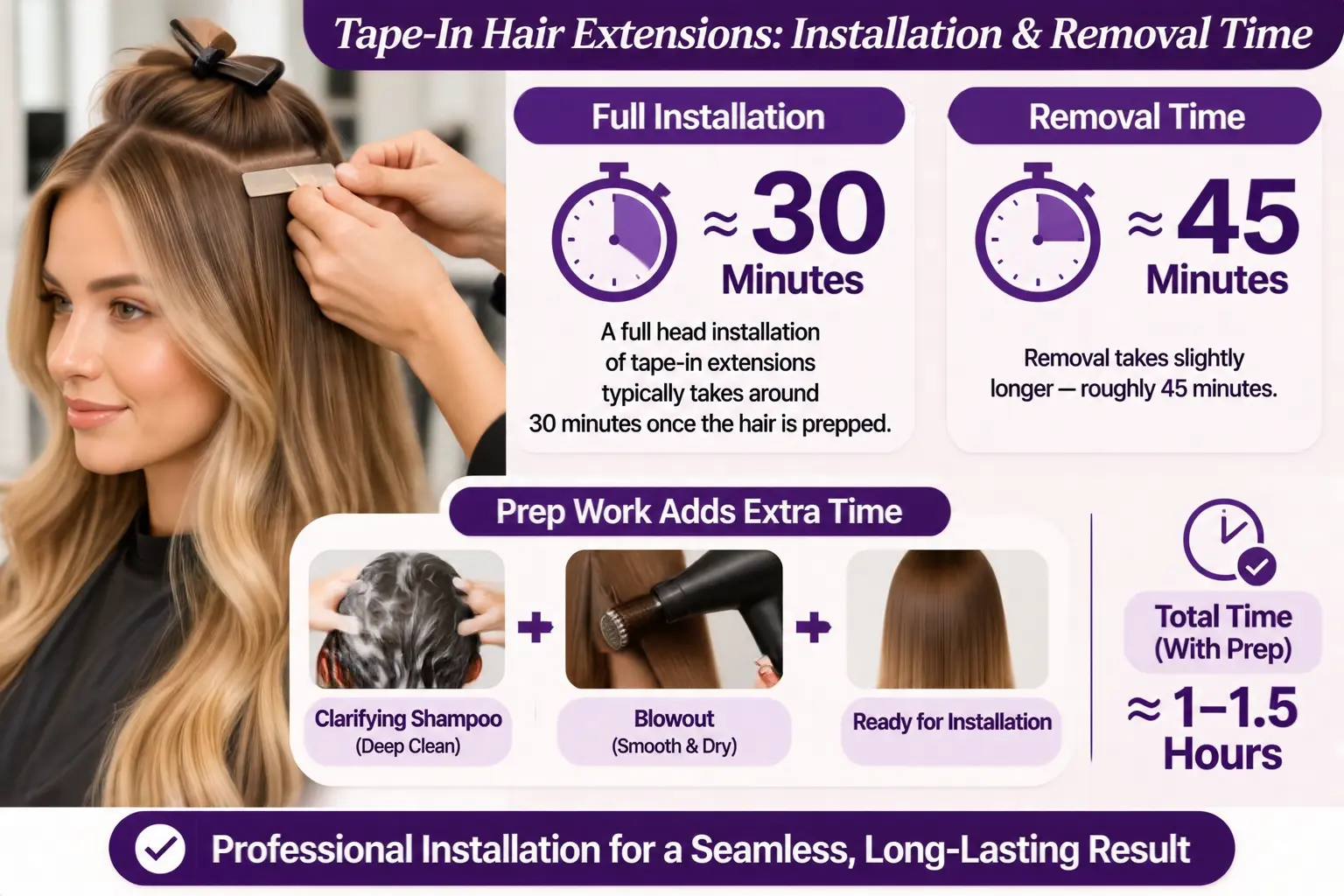
This is dramatically faster than methods like hand-tied wefts or keratin bonds, which can take two to four hours for a full install.
Breaking Down the Time Commitment
| Stage | Approximate Time |
|---|---|
| Clarifying wash + blowout | 45–60 minutes |
| Full head tape-in install | 25–35 minutes |
| Removal and reset | 40–50 minutes |
| Move-up appointment (reposition only) | 30–45 minutes |
Why Prep Work Matters for Adhesion
Hair must be completely clean and free of silicone, oils, and product buildup before tape-ins are applied. Residue on the hair shaft prevents the adhesive from bonding properly, which shortens wear time and increases the chance of slippage.
For salon professionals sourcing tape-in hair in bulk, the consistency of the tape quality — its thickness, adhesive strength, and uniformity across each weft — directly affects installation efficiency. Inconsistent tape requires more time to apply and increases the risk of early lift.
How Long Do Tape-In Extensions Last?
Longevity is one of the most common questions buyers ask, whether they're purchasing for personal use or stocking product for resale.
Tape-in extensions typically need repositioning every 6 to 12 weeks as your natural hair grows. The hair itself lasts approximately one to two years before it needs replacing[^5]. Growth rate, hair care habits, and the quality of the original hair are the main variables.
Understanding the Two Types of "Lasting"
There's an important distinction between two different timelines people mix up:
1. Move-up schedule (repositioning the tape) When tape-ins are first applied, they sit about ¼ inch from the root. As your natural hair grows, the tape migrates down the shaft. Most wearers schedule a move-up appointment every 6–12 weeks[^6]. I personally wait around 8 weeks — that's the point where I can see the tape has shifted but the extensions still look clean.
2. Hair replacement schedule (buying new hair) The physical hair weft itself wears out over time. Unlike your natural hair, it doesn't grow, regenerate, or benefit from the scalp's natural oils traveling down the shaft. Most professionals recommend replacing the hair every 12–18 months. Some people stretch this to two years with excellent care, though results vary.
Factors That Extend or Shorten Hair Life
- Cuticle integrity — Cuticle-intact Remy hair holds up significantly longer than processed or non-Remy hair
- Heat styling frequency — Daily flat iron use accelerates wear
- Product use — Sulfate-free shampoos and hydrating masks extend longevity[^7]
- Color treatments applied after purchase — Lightening the extensions after the fact weakens the hair structure
How Do You Remove and Reapply Tape-In Extensions?
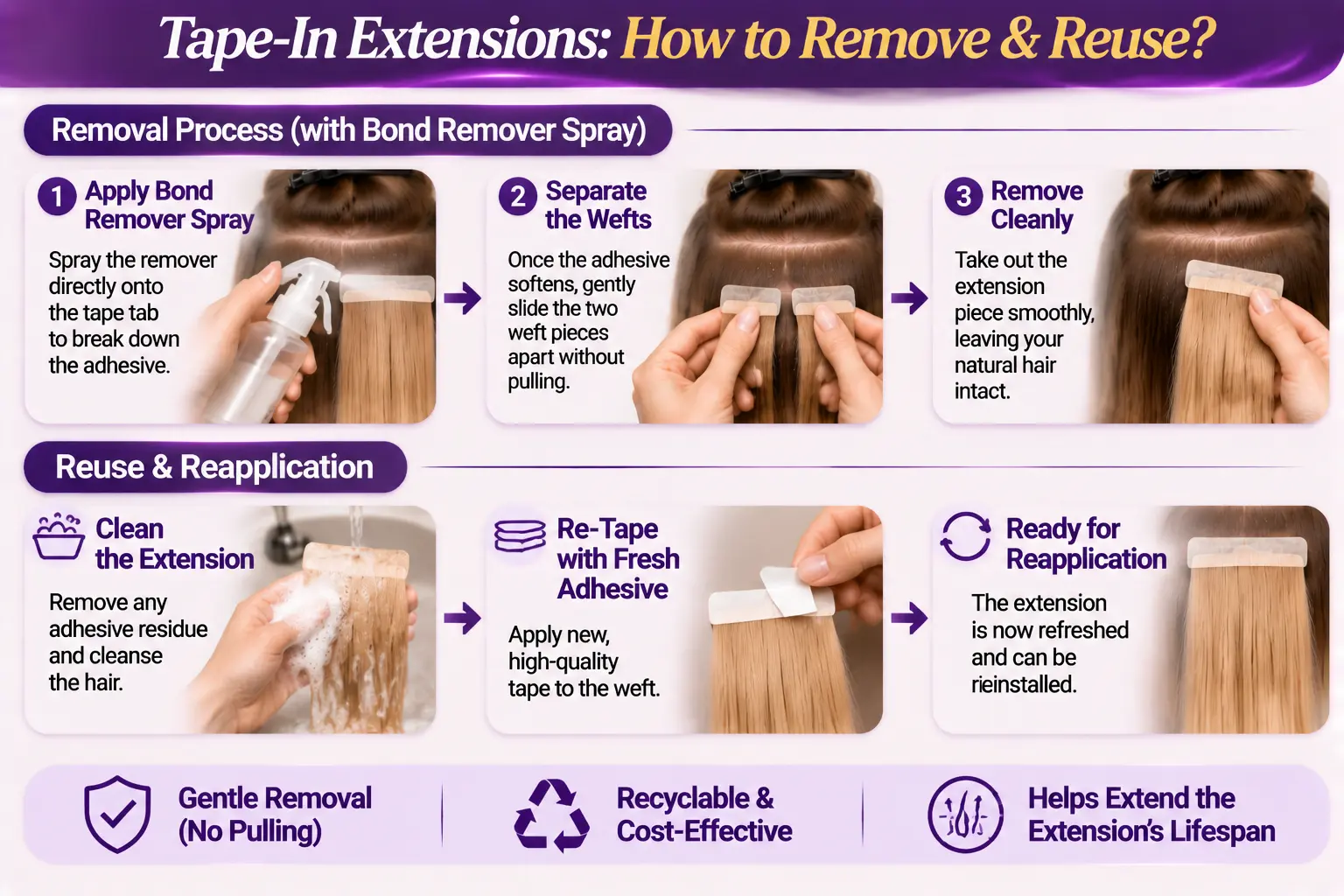
Tape-in extensions are removed using a bond remover spray applied directly to the tape tab[^8]. The spray breaks down the adhesive, allowing the two weft pieces to separate cleanly without pulling. The extension hair is then cleaned, re-taped with fresh adhesive, and is ready for reapplication.
This is one of the most important aspects of the tape-in system from a cost-of-ownership perspective. Because the hair itself is reusable — only the tape tab is replaced — buyers get significantly more value from each set of extensions compared to methods that require full replacement at every appointment.
The Removal and Reset Process Step by Step
- Spray bond remover directly onto the tape tab
- Wait 30–60 seconds for the adhesive to soften
- Slide the two weft pieces apart gently — no pulling
- Clean the extension weft to remove adhesive residue
- Apply fresh tape tabs to each weft
- Reinstall at the new root position
For salon operators, the quality of the tape tab matters at this stage. Low-quality tape can leave residue that's difficult to clean, permanently affecting the texture and appearance of the hair. Quality tape releases cleanly, preserving the weft for multiple reuse cycles.
Can People With Thick Hair Wear Tape-In Extensions?
This question comes up more than you'd expect. There's a widespread assumption that extensions are only for people with fine or thinning hair.
Yes — people with thick hair can absolutely wear tape-in extensions. Extensions add both length and volume, but they also serve other purposes: correcting uneven density, adding color without chemical damage to natural hair, or simply giving more styling versatility.
For thick-haired wearers, the placement strategy changes slightly. A skilled extensionist will section the hair differently to ensure the tape tabs remain hidden and the added hair blends naturally. The result is seamless as long as the hair color and texture are properly matched.
Using Extensions to Add Color Without Chemical Damage
This is one of the most underrated use cases for tape-ins. Instead of bleaching or toning your natural hair to achieve a balayage or highlighted effect, you can:
- Source pre-colored extension wefts in your desired tone
- Layer them strategically through the mid-lengths and ends
- Achieve a dimensional color effect with zero chemical contact on your scalp
For buyers interested in this application, consistent color accuracy across reorders is critical. At RENAI HAIR, we maintain a wide range of standard and custom color options with documented color matching so reorders stay consistent across batches.
Frequently Asked Questions
Are there specific tape-in extension brands I should look for?
Well-known professional brands include Hairtalk, Hot Heads, JZ Styles, and Bellami. For B2B buyers and salon owners sourcing directly from manufacturers, the brand matters less than the hair quality — specifically, whether it's 100% Remy human hair with intact cuticles and consistent tape adhesive quality.
Can tape-in extensions be colored or heat styled after purchase?
Yes, with limits. Tape-in extensions made from 100% human hair can be heat styled and toned. However, lightening the hair significantly after purchase weakens the shaft and shortens the lifespan of the weft. It's always better to source the hair in the desired color from the beginning.
What products should I avoid when wearing tape-in extensions?
Avoid applying oils, serums, or silicone-based conditioners near the root area where the tape sits. These products break down the adhesive bond over time and cause the tape to slip. Use sulfate-free shampoo and keep conditioning products focused on the mid-lengths and ends.
How many tape-in wefts does a full head installation require?
This varies by hair density, desired volume, and the length of the extensions. Most full-head installs use between 40 and 80 individual tape weft pieces. Buyers sourcing product in bulk should factor this into minimum order quantities.
Is it normal to lose some natural hair during tape-in removal?
A small amount of shedding during removal is normal. You'll typically see a few strands that were naturally shed but trapped between the tape tabs during wear[^9]. This is not the same as breakage. If significant hair is lost during removal, it usually indicates improper removal technique or inadequate bond remover use.
Conclusion
Tape-in extensions remain one of the most practical, low-damage, and versatile extension methods available. The key variables — hair quality, adhesive consistency, and proper installation — determine whether the experience is excellent or disappointing. For wearers, the takeaway is simple: prioritize 100% Remy human hair with intact cuticles, follow a consistent move-up schedule, and protect the tape bond from oil-based products. For salon owners and B2B buyers, sourcing tape-in extensions from a manufacturer with proven quality control, color consistency, and reliable supply is the foundation of a sustainable product line.
If you're looking to source high-quality tape-in extensions for your brand or salon, contact the RENAI HAIR team to discuss your specific requirements, color options, and volume pricing.
[^1]: "Use of International Standard ISO 10993-1, "Biological ...", https://www.fda.gov/media/142959/download. The designation 'medical-grade' for skin-contact adhesives generally refers to materials evaluated for biocompatibility under standards such as ISO 10993, which assesses cytotoxicity, sensitization, and irritation; however, the term is not uniformly regulated in the cosmetic hair extension industry. Evidence role: definition; source type: government. Supports: That 'medical-grade' adhesive refers to a classification of skin-contact adhesives meeting specific biocompatibility and safety standards. Scope note: The article does not specify which standard the adhesive meets, and 'medical-grade' is used loosely in the hair extension market without consistent regulatory oversight [^2]: "Traction Alopecia - StatPearls - NCBI Bookshelf", https://www.ncbi.nlm.nih.gov/books/NBK470434/. Dermatological literature on traction alopecia identifies concentrated, repetitive mechanical tension on hair follicles as a primary cause of follicular damage and hair loss, a mechanism more consistent with point-bonded extension systems than with flat-weft systems that distribute load across a broader surface area. Evidence role: mechanism; source type: research. Supports: That point-bonded extension methods concentrate mechanical load on fewer follicles, increasing the risk of traction-related hair loss. Scope note: Published studies typically address traction alopecia from extensions generally rather than isolating tape-in versus bond-specific mechanisms [^3]: "What Is Remy Hair? A Professional Guide to Cuticle ...", https://www.verahairco.com/blogs/the-journal/the-science-behind-remy-hair-what-makes-it-the-gold-standard-for-extensions. Remy hair is an industry classification denoting human hair in which all cuticles remain intact and are aligned in the same root-to-tip direction; this structural consistency is associated with reduced inter-fiber friction, lower tangling rates, and longer usable lifespan compared to non-Remy or acid-washed hair. Evidence role: definition; source type: institution. Supports: That Remy hair is defined by cuticle alignment in a single direction, which reduces tangling and matting compared to non-Remy hair where cuticles are randomly oriented or stripped. Scope note: Standardized international grading criteria for Remy hair are not universally enforced, and the term is applied inconsistently across suppliers [^4]: "What's the Best Hair Extension Method?", https://www.hi.edu/blog/whats-the-best-hair-extension-method/. Professional cosmetology training materials and salon industry sources consistently cite tape-in extensions as one of the most time-efficient application methods, with full-head installs frequently reported in the range of 30–45 minutes, excluding preparatory services such as washing and blow-drying. Evidence role: general_support; source type: institution. Supports: That tape-in extensions are among the fastest professional extension methods to install, with full-head applications commonly completed in under one hour. Scope note: Actual installation time varies with stylist experience, client hair density, and the number of wefts applied, so published figures represent averages rather than fixed benchmarks [^5]: "On Hair Care Physicochemistry: From Structure and ... - PMC", https://pmc.ncbi.nlm.nih.gov/articles/PMC9921463/. Unlike natural hair, extension wefts do not benefit from sebaceous gland secretions that maintain fiber hydration and flexibility; research on hair fiber degradation indicates that repeated thermal and chemical processing progressively compromises the cortex and cuticle, limiting the practical lifespan of extension hair to a range commonly cited in professional literature as 12 to 24 months under normal use conditions. Evidence role: general_support; source type: research. Supports: That human hair extension wefts have a finite usable lifespan influenced by cuticle integrity, heat exposure, and chemical processing. Scope note: Published lifespan figures are largely derived from industry practice rather than controlled longitudinal studies on extension hair degradation [^6]: "Human hair growth", https://en.wikipedia.org/wiki/Human_hair_growth. Human scalp hair grows at an average rate of approximately 1 to 1.5 centimeters per month, a figure that underlies the standard 6–12 week repositioning interval for tape-in extensions, as the tape tab migrates from the root as the natural hair shaft elongates. Evidence role: mechanism; source type: research. Supports: That average scalp hair growth of approximately 1–1.5 cm per month determines the practical interval between tape-in repositioning appointments. Scope note: Growth rate varies by individual, age, health status, and scalp region, so the move-up interval is an approximation rather than a universal standard [^7]: "Hair Cosmetics: An Overview - PMC - NIH", https://pmc.ncbi.nlm.nih.gov/articles/PMC4387693/. Studies on surfactant interactions with hair fiber indicate that anionic detergents such as sodium lauryl sulfate can cause cuticle lifting and protein loss from the hair shaft; because extension hair lacks the biological repair mechanisms of naturally growing hair, repeated exposure to harsh surfactants is expected to accelerate structural degradation relative to sulfate-free alternatives. Evidence role: mechanism; source type: research. Supports: That sulfate-based surfactants can strip the hair cuticle and remove lipid layers from the hair shaft, accelerating fiber degradation in extension hair that cannot self-repair. Scope note: Most surfactant studies focus on natural hair; direct evidence specifically measuring sulfate effects on extension hair adhesion or fiber longevity is limited [^8]: "how to remove keratin hair extensions by yourself", https://www.youtube.com/watch?v=JzLcjK-LPbg. Pressure-sensitive adhesives used in tape-in extensions are typically acrylic-based polymers; solvent-based removers function by penetrating the adhesive matrix and disrupting intermolecular bonds, reducing adhesion strength sufficiently to allow separation without the shear forces that would otherwise stress the hair shaft and follicle. Evidence role: mechanism; source type: research. Supports: That solvent-based bond removers work by disrupting the polymer chains in pressure-sensitive adhesives, reducing tack and allowing separation without mechanical force on the hair shaft. Scope note: The specific formulations of commercial bond removers vary, and their relative safety profiles for repeated use on hair and scalp have not been extensively studied in peer-reviewed literature [^9]: "The Hair Shedding Visual Scale: A Quick Tool to ... - PMC - NIH", https://pmc.ncbi.nlm.nih.gov/articles/PMC5336434/. Trichological research establishes that healthy individuals shed approximately 50 to 100 scalp hairs per day as part of the normal hair growth cycle; hairs entering the telogen (resting) phase and detaching from the follicle during the weeks a tape-in extension is worn would be retained within the adhesive tab rather than shed naturally, accounting for the strands observed at removal without necessarily indicating mechanical breakage. Evidence role: general_support; source type: research. Supports: That daily hair shedding of 50–100 strands is a normal physiological process, and hairs in the telogen phase that detach from the follicle during the wear period would accumulate within the tape tab rather than falling freely. Scope note: The proportion of observed strands attributable to normal shedding versus adhesive-related breakage has not been quantified in published clinical studies