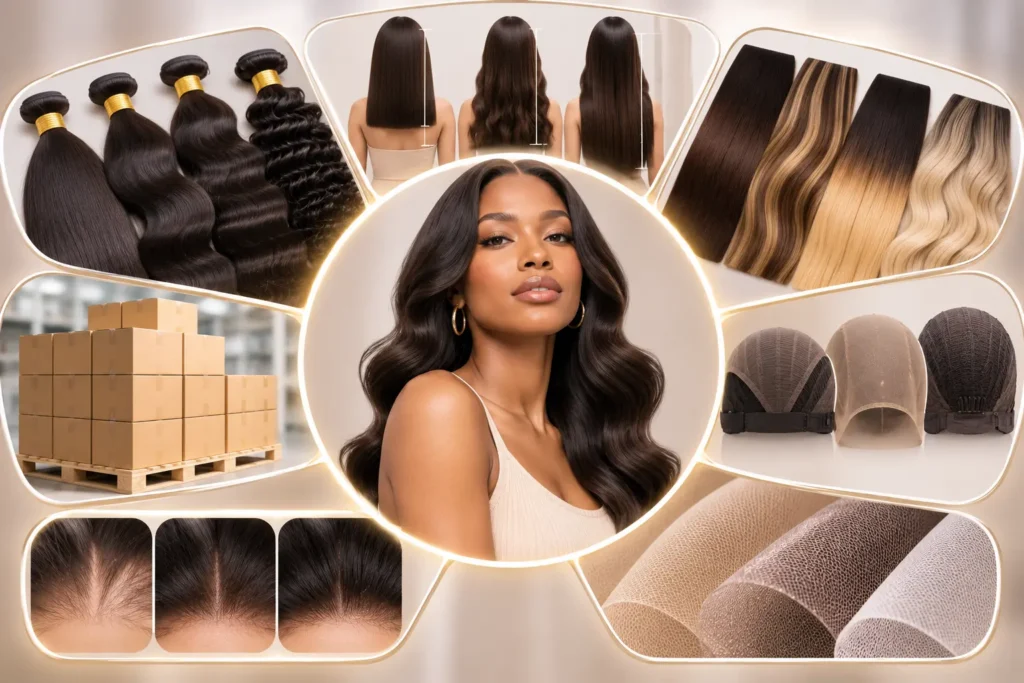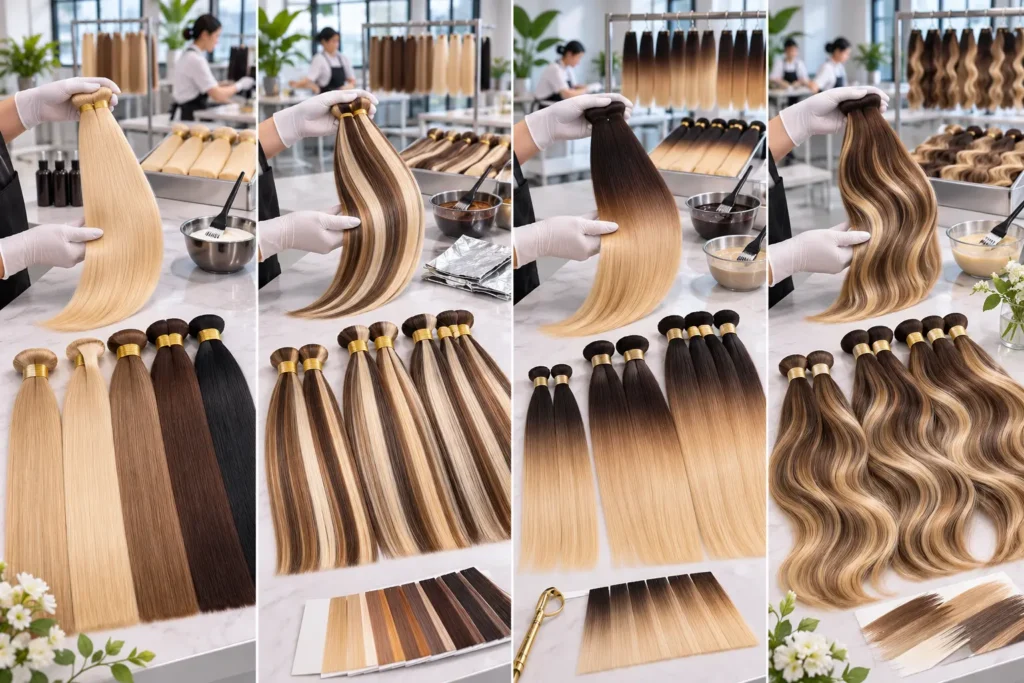

Bulk Human Hair Wholesale: How to Specify Weight, Length and Hair Quality
Ordering bulk human hair wholesale can feel overwhelming when you're staring at a supplier's spec sheet for the first time. Vague descriptions, inconsistent units, and unclear grading systems lead to costly mismatches between what you expected and what arrives at your warehouse. Knowing exactly how to specify weight, length, and hair quality eliminates surprises and protects your margins.
When placing a bulk human hair wholesale order, you need to specify three core parameters: weight (measured in grams per piece, strand, or pack), length (measured in inches, typically ranging from 12″ to 26″), and hair quality grade (such as Remy Hair, Virgin Hair, or Full Cuticle Hair, combined with a draw type like Single Drawn or Double Drawn). Precise specifications on all three ensure you receive exactly the product your brand or salon clients expect.
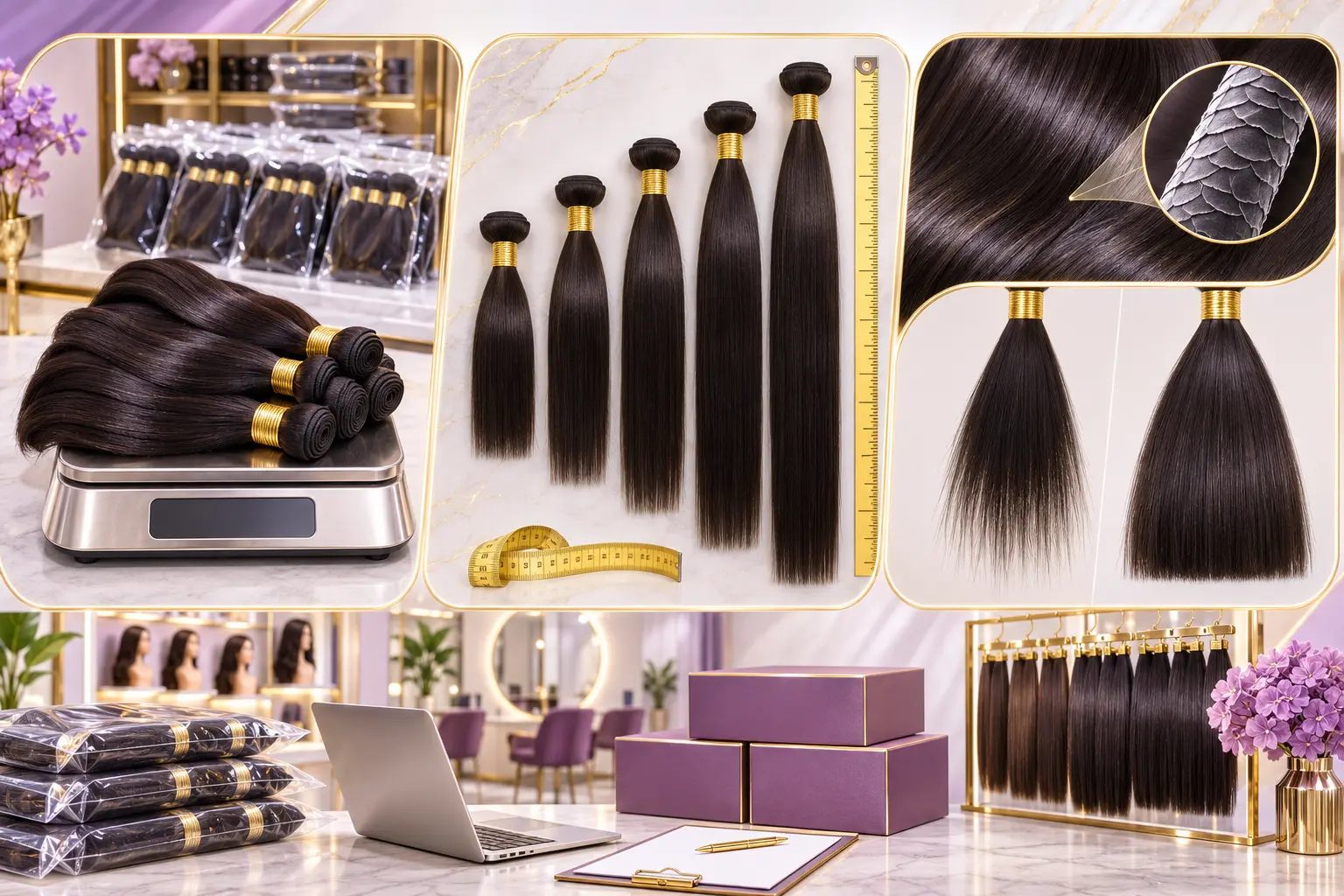
Below, I'll walk through each parameter in detail — the standard industry units, the most popular options, and the practical tips I've learned from years of manufacturing and exporting hair extensions to brands, distributors, and salons worldwide. Whether you're launching a new product line or switching suppliers, this guide will help you write specifications that leave zero room for misinterpretation.
How Is Weight Measured for Bulk Human Hair Wholesale Orders?
Weight confusion is one of the fastest ways to derail a wholesale hair extension order[^1]. Some buyers assume "100g" means the same thing across every product type. It doesn't — and that misunderstanding can mean receiving half the volume you planned to sell.
In the hair extension industry, weight is universally measured in grams (g). However, the way grams are applied depends on the product type: some are weighed per individual piece or strand, while others are weighed per pack or per full weft strip. Understanding these distinctions is essential for accurate bulk human hair wholesale procurement.
Weight Standards by Product Type
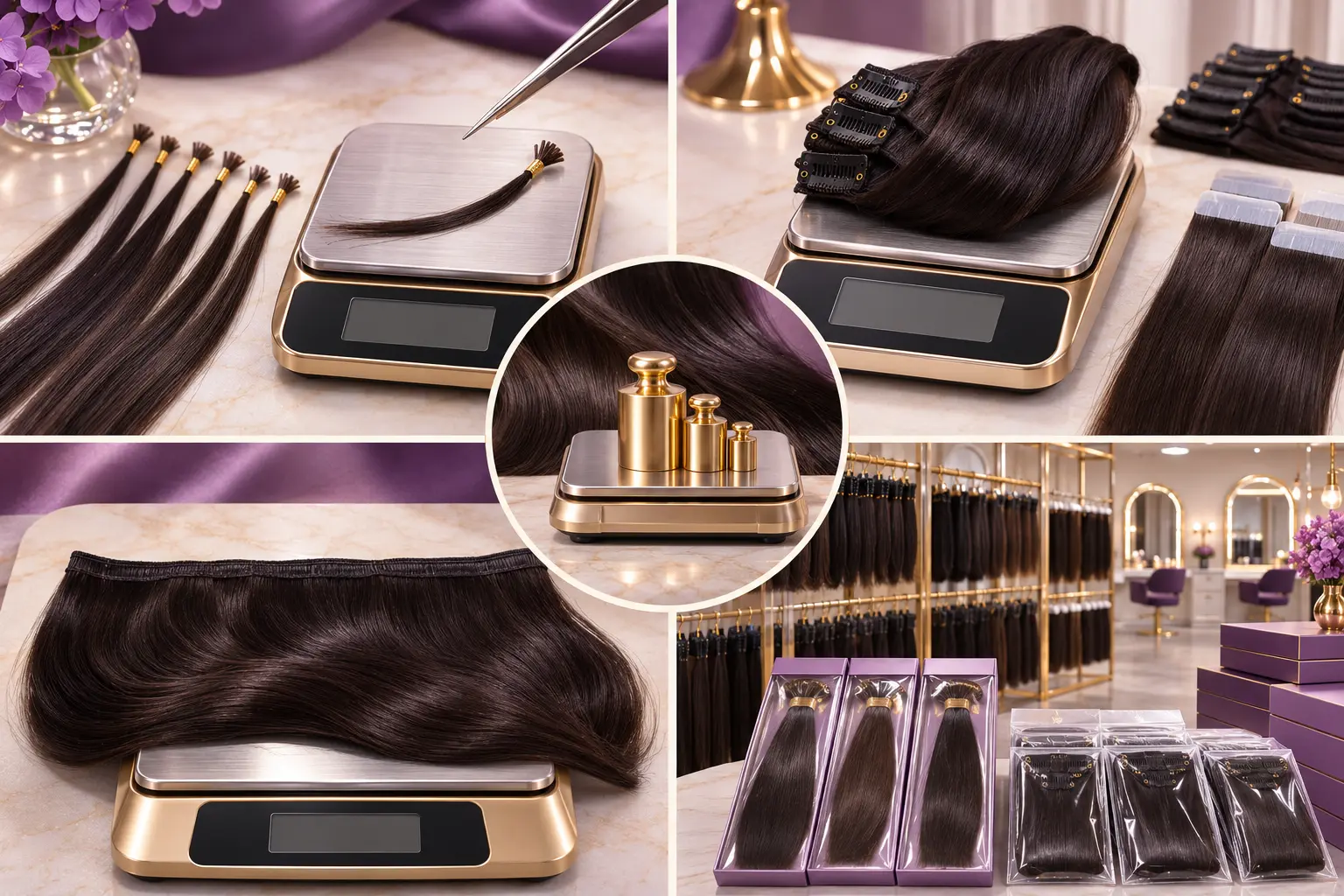
Different hair extension methods require different attachment sizes, which directly determines how weight is counted. Here's a breakdown of the most common formats I manufacture and ship daily:
| Product Type | Typical Weight | Unit of Measurement | Common Packaging |
|---|---|---|---|
| Genius Weft | 50g, 100g | Per full strip/pack | 1 or 2 strips per pack |
| Machine Weft | 50g, 100g | Per full strip/pack | Customizable |
| Tape-In Extensions | 2g–2.5g | Per individual piece | 20 or 40 pieces/pack |
| Flat Tip (Keratin) | 0.8g, 1g, 1.2g | Per individual strand | 50 or 100 strands/pack |
| Nano Ring | 0.8g, 1g, 1.2g | Per individual strand | 50 or 100 strands/pack |
| Butterfly Weft | 50g, 100g | Per full strip/pack | Customizable |
Why Strand Weight Matters for Pre-Bonded Extensions
For products like Flat Tip and Nano Ring extensions, the weight per strand directly affects the end-user experience. A 0.8g strand is lighter and more suitable for fine hair or precision placements around the hairline. A 1.2g strand delivers more volume per bond, which works well for clients with thicker natural hair.
When you specify "1g Flat Tip" in your order, every single strand should weigh approximately 1 gram. At RENAI HAIR, we weigh strands during production and perform quality control checks before shipment to ensure consistency. Even small deviations — say, 0.7g instead of 1g — add up across hundreds of strands and affect the total volume your end customer experiences.
Pack Weight vs. Installed Weight
Here's a nuance many first-time wholesale buyers miss: the weight listed on a pack is the hair weight, not including packaging, clips, tape, or keratin bonds (or at least it should be). Always confirm with your supplier whether the stated weight is net hair weight or gross weight. A 100g pack of Genius Weft that actually contains 90g of hair and 10g of weft construction material is a different product than a true 100g net hair weight pack.
Pro tip: When comparing quotes from different bulk human hair wholesale suppliers, always request net hair weight specifications. This is the only way to make apples-to-apples comparisons.
Customization Options
Most product types allow weight customization. For example, some of my brand clients prefer 60g Genius Weft packs instead of the standard 50g or 100g — it fits their pricing tier better. If you have a specific weight requirement, discuss it early in the sampling phase. Custom weights may affect minimum order quantities, but they can differentiate your product line in a crowded market.
What Lengths Are Available for Wholesale Hair Extensions?
Choosing the wrong length mix is a classic inventory mistake. Order too much of a slow-moving length, and capital sits on your shelves. Order too little of a popular length, and you lose sales. Understanding market demand patterns helps you allocate your bulk human hair wholesale budget wisely.
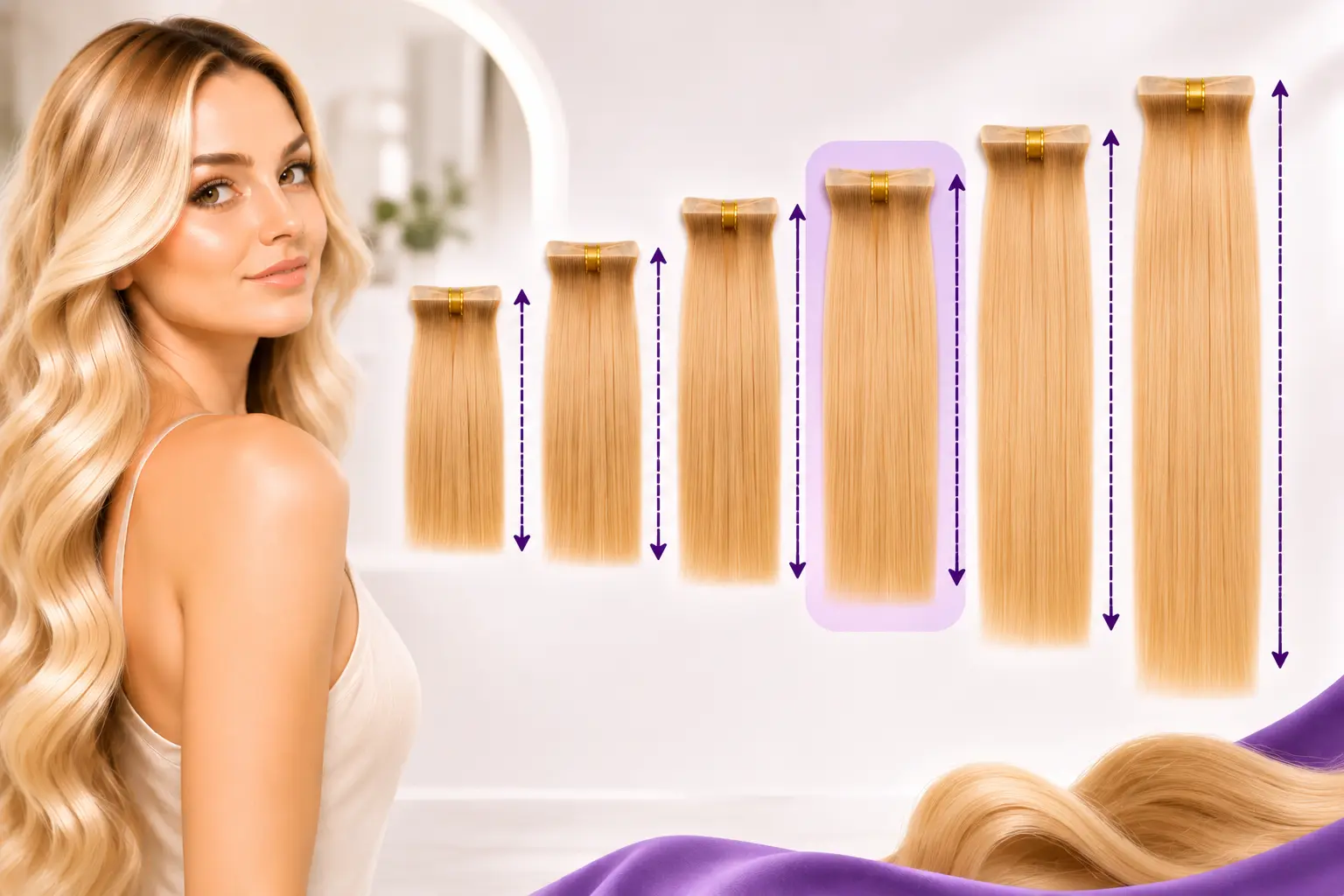
Hair extension length is measured in inches (″), and the standard range runs from 12 inches to 26 inches. The most commercially popular lengths — the ones that consistently generate the highest reorder rates — fall between 18 inches and 22 inches. These lengths hit the sweet spot between dramatic visual impact and comfortable, manageable daily wear.
Standard Length Options
Here's the full range of lengths most manufacturers, including RENAI HAIR, offer as standard:
- 12″ – Adds volume and subtle length; popular for bob styles
- 14″ – Shoulder length; great for natural-looking fullness
- 16″ – Just past the shoulders; versatile everyday length
- 18″ – Mid-back; one of the top-selling lengths globally
- 20″ – The most popular single length in many markets
- 22″ – Long and dramatic without being impractical
- 24″ – Statement length; popular for special occasions and content creators
- 26″ – Maximum length in standard production; niche but steady demand
The 18″–22″ Sweet Spot
In my experience shipping to brands across North America, Europe, and Australia, the 18″ to 22″ range accounts for roughly 60–70% of all orders. If you're building a new hair extension product line and need to manage initial inventory investment carefully, I'd recommend starting with these four lengths and expanding from there based on actual sell-through data.
How Length Affects Weight and Cost
Longer hair requires more raw material and more processing time. A 24″ strand uses roughly twice the raw hair of a 12″ strand[^2] — and premium-quality long hair is significantly scarcer. This directly impacts wholesale pricing:
| Length Range | Relative Cost | Availability |
|---|---|---|
| 12″–16″ | Lower | Readily available |
| 18″–22″ | Moderate | High demand, good supply |
| 24″–26″ | Higher | More limited raw material |
Length Measurement Accuracy
When you specify 20 inches, the hair should measure 20 inches when straightened and laid flat. Wavy or curly textures will appear shorter when worn because the curl pattern contracts the visible length. For example, a 20″ body wave extension may hang at approximately 17″–18″ when worn[^3]. Always confirm whether the stated length is stretched length or natural hang length — this varies by supplier, and the distinction matters for customer satisfaction.
Key takeaway: Specify lengths clearly in your purchase order, and confirm the measurement method with your supplier before production begins.
How Do You Evaluate Hair Quality Grades in Wholesale?
Hair quality is where the most money is made — and lost — in the bulk human hair wholesale business. Misleading grade labels, inconsistent terminology, and lack of industry standardization[^4] make this the single most important area to understand before you commit to a supplier.
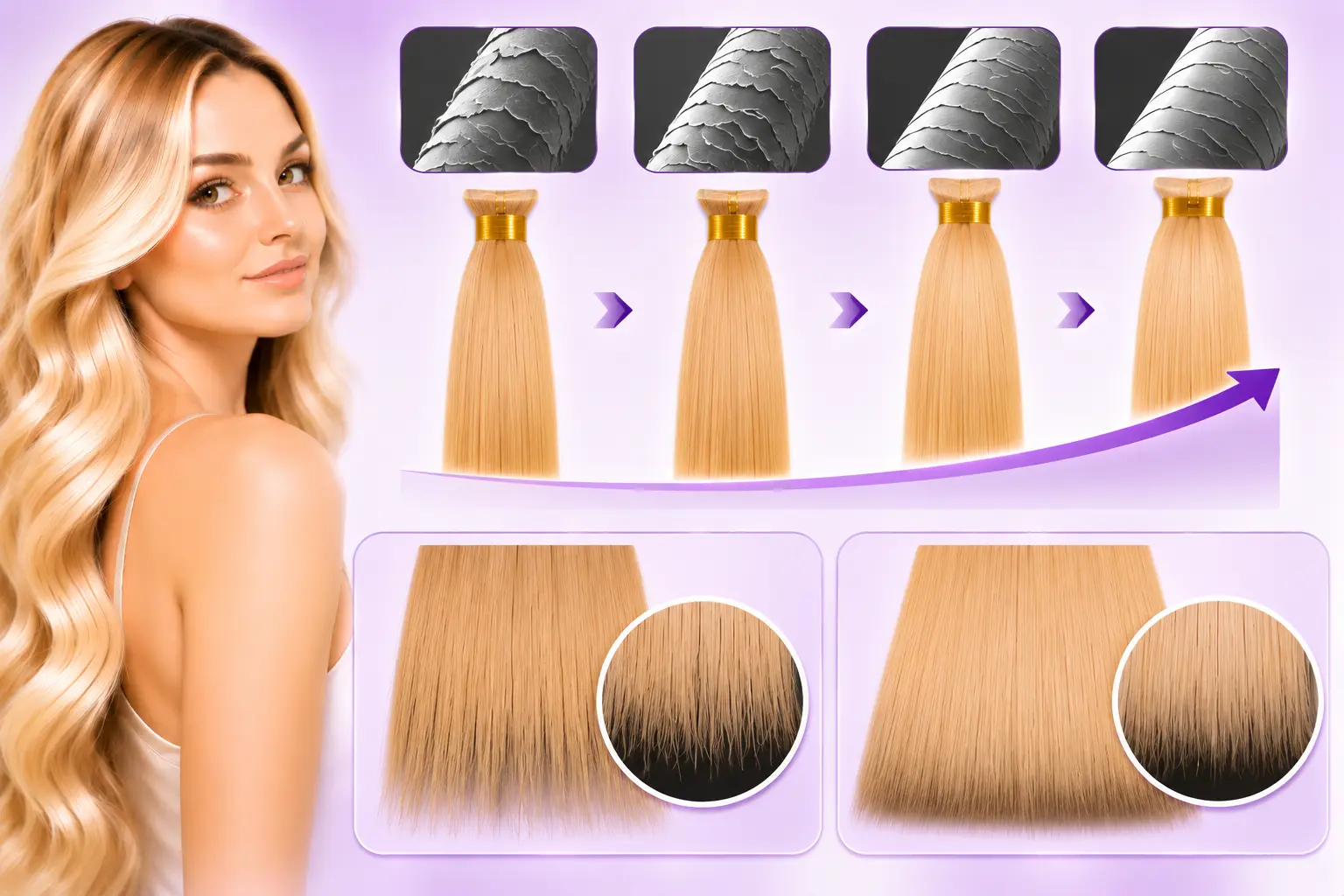
Hair quality in wholesale is evaluated across two dimensions: the hair source and processing level (Human Hair → Remy → Virgin → Full Cuticle) and the draw type (Single Drawn vs. Double Drawn). The source determines longevity and natural behavior. The draw type determines thickness and fullness from root to tip. Together, they define the product's performance, appearance, and price point.
Hair Source and Processing Grades
Understanding the hierarchy of hair quality grades helps you match the right product to your target customer's expectations and budget:
100% Human Hair
This is the baseline requirement for any reputable hair extension. 100% Human Hair means the product is made entirely from real human hair — no synthetic fibers blended in. However, this label alone doesn't tell you about the cuticle condition, processing history, or origin. It's the starting point, not the finish line.
Remy Hair
Remy Hair indicates that the cuticle layers on the hair strands are aligned in the same direction, from root to tip. This alignment is critical because it dramatically reduces tangling and matting. When cuticles face random directions, they interlock like Velcro[^5] — creating the frizzy, knotted mess that frustrates end users and generates returns.
Most commercial-grade hair extensions sold by reputable brands use Remy Hair as a minimum standard.
Virgin Hair
Virgin Hair typically refers to hair that has not been chemically processed — no dyeing, bleaching, perming, or other treatments. It represents the hair in its natural state after collection. Virgin Hair commands a premium price because it offers maximum flexibility: buyers or end users can color and style it as desired, starting from a clean, undamaged baseline.
Important note: "Virgin" is not a regulated term. I always recommend that wholesale buyers request documentation or samples to verify processing claims rather than relying on labels alone.
Full Cuticle Hair (Cuticle Intact Hair)
Full Cuticle Hair goes a step further: it not only hasn't been chemically processed but also retains the complete cuticle layer intact. The cuticle is the outermost protective layer of each hair strand. When preserved, it gives the hair a natural shine, smooth texture, and significantly longer lifespan. Full Cuticle Hair is the highest quality grade and commands the highest wholesale price.
Hair Quality Comparison Table
| Grade | Cuticle Condition | Chemical Processing | Tangle Resistance | Lifespan | Price Level |
|---|---|---|---|---|---|
| 100% Human Hair | Varies | Possible | Moderate | 3–6 months | $ |
| Remy Hair | Aligned direction | Possible | Good | 6–12 months | $$ |
| Virgin Hair | Aligned, intact | None | Very good | 12+ months | $$$ |
| Full Cuticle Hair | Fully preserved | None | Excellent | 12–24+ months | $$$$ |
Draw Type: Single Drawn vs. Double Drawn
Beyond hair source, the draw type determines the visual fullness of the final product — and it's one of the most common points of confusion in bulk human hair wholesale ordering.
Single Drawn Hair
Single Drawn Hair contains a natural mix of different hair lengths within each bundle or weft. Some strands are full length, while shorter strands are mixed in. This creates a look that tapers naturally toward the ends — thicker at the top, thinner at the bottom. Single Drawn is more affordable because it requires less sorting during production.
This is a solid choice for brands targeting price-sensitive markets or for customers who prefer a natural, blended look.
Double Drawn Hair
Double Drawn Hair has gone through an additional sorting process where most shorter hairs are removed. The result is a weft or bundle that maintains consistent thickness from root to tip. The ends look dramatically fuller compared to Single Drawn.
Double Drawn typically costs 30–50% more than Single Drawn of the same quality grade because the sorting process is labor-intensive and reduces the yield from each batch of raw hair.
| Feature | Single Drawn | Double Drawn |
|---|---|---|
| Thickness at ends | Naturally tapered | Full and even |
| Shorter hair content | Higher percentage | Minimal |
| Price | More affordable | Premium |
| Best for | Natural looks, budget lines | Luxury lines, volume-focused clients |
How to Verify Quality Before Committing
I always recommend the following steps before placing a large bulk human hair wholesale order:
- Request physical samples in the exact specification you plan to order — not generic samples from a different production run
- Test wash and heat-style the samples to observe tangling, shedding, and texture retention
- Ask about quality control processes — at RENAI HAIR, we conduct pre-shipment inspections on every order
- Request photos or videos from actual production to verify consistency
- Start with a smaller trial order before scaling to full production quantities
How Should You Write a Complete Wholesale Hair Specification?
Vague purchase orders create disputes. Precise specifications create smooth transactions. Yet many buyers — even experienced ones — submit orders that leave critical details open to interpretation.
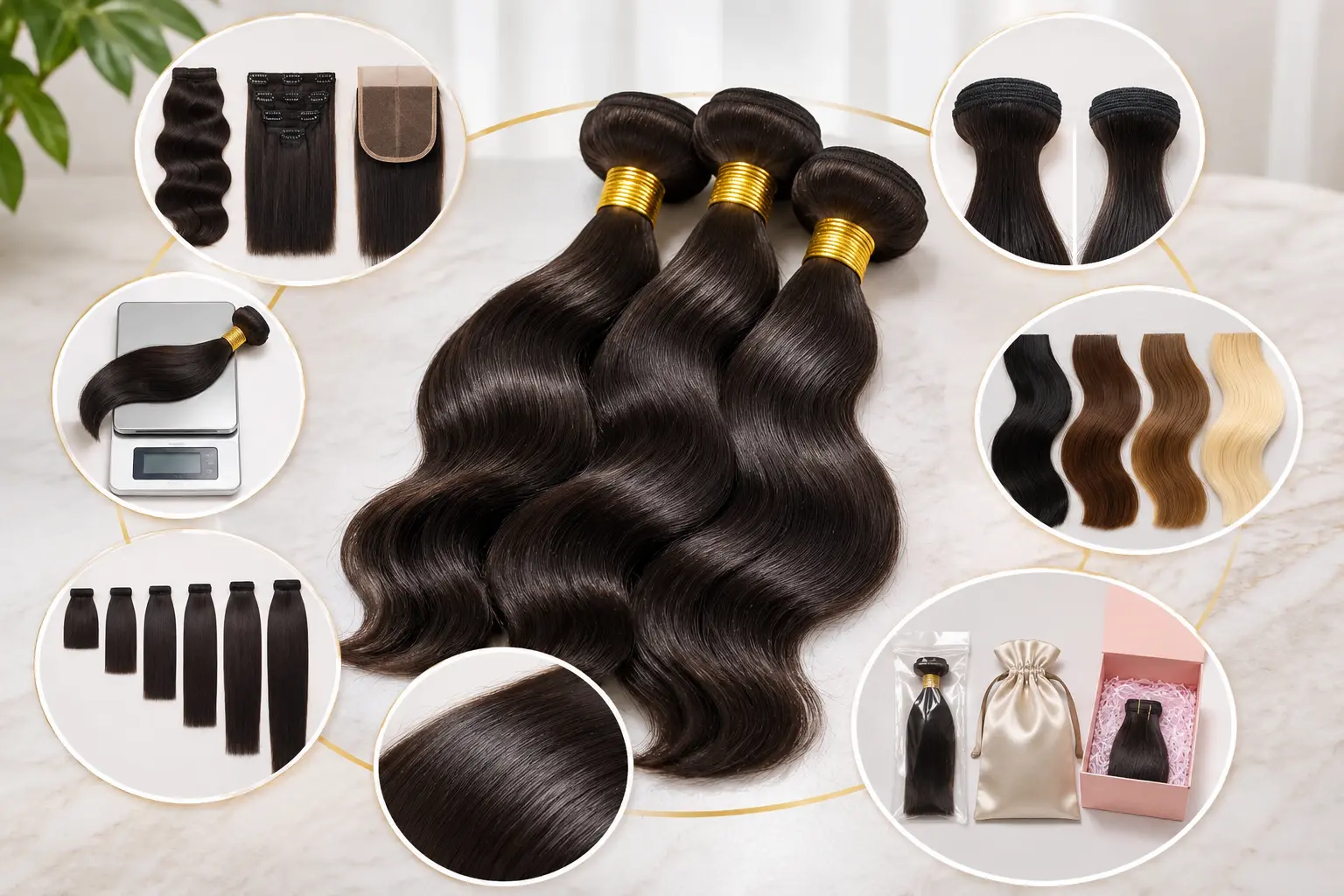
A complete bulk human hair wholesale specification should include product type, weight per unit, length, hair quality grade, draw type, color, and packaging requirements — all in a single, unambiguous document. The more specific you are upfront, the fewer quality disputes and returns you'll deal with later.
Sample Specification Format
Here's an example of what a clear, professional purchase specification looks like:
| Parameter | Specification |
|---|---|
| Product Type | Genius Weft |
| Weight | 100g net hair weight per pack |
| Length | 20 inches (stretched, straight measurement) |
| Hair Quality | Full Cuticle Remy Hair |
| Draw Type | Double Drawn |
| Color | #4 Chocolate Brown |
| Texture | Natural Straight |
| Packaging | Individual sealed bags with brand label |
| Quantity | 200 packs |
Common Specification Mistakes to Avoid
- Not specifying net vs. gross weight — Always clarify whether the weight includes or excludes the weft base, adhesive, or keratin tips
- Omitting draw type — "Remy Hair 100g 20″" can be either Single or Double Drawn; the price and appearance differ significantly
- Using vague color descriptions — "Blonde" is not a specification. Use numbered color codes (e.g., #613, #60) or provide a physical color ring reference
- Forgetting texture — Natural straight, body wave, and deep wave extensions require different processing and have different pricing
- Skipping packaging details — If you need branded packaging, hang tags, or specific box sizes for retail, include this in your initial specification
Working with Your Supplier on Custom Specs
At RENAI HAIR, we work with brands and distributors to develop custom specifications that match their exact market positioning. If you're unsure about the right combination of weight, length, and quality for your target customer, our product development team can recommend options based on your price point and market segment. The key is to have this conversation before production, not after the goods arrive.
Frequently Asked Questions
What is the most popular length for wholesale hair extensions?
The 18″ to 22″ range is the most popular for wholesale orders globally. These lengths offer the best balance between visual impact and everyday wearability. If you're starting a new product line, begin with this range and expand based on customer demand data.
How much does a full head of hair extensions typically weigh?
A full head installation typically requires 100g to 200g of hair, depending on the client's natural hair density and desired volume. For weft-based products like Genius Weft or Machine Weft, most stylists use 100g–150g. For strand-by-strand methods like Flat Tip, 100–150 strands (at 1g each) is common.
What's the difference between Remy Hair and Virgin Hair?
Remy Hair means the cuticle layers are aligned in the same direction, reducing tangling. It may have been lightly processed or colored. Virgin Hair has not undergone any chemical treatment — it's completely unprocessed. Virgin Hair is a subset of Remy Hair, but not all Remy Hair is Virgin.
How do I know if a supplier's quality claims are accurate?
Request physical samples before placing a bulk order. Wash, heat-style, and wear-test the samples yourself. Ask about the supplier's quality control process, request production photos, and consider starting with a trial order. At RENAI HAIR, we welcome sample requests and provide pre-shipment quality inspection on every order.
Is Double Drawn hair always worth the extra cost?
It depends on your market positioning. Double Drawn delivers fuller, more luxurious-looking extensions and justifies a higher retail price. If your brand targets the premium segment, the extra cost is typically recovered through higher margins. For budget-conscious product lines, Single Drawn offers good quality at a more accessible price point.
Conclusion
Specifying weight, length, and hair quality correctly is the foundation of successful bulk human hair wholesale procurement. Use grams as your weight unit and confirm whether figures represent net hair weight. Specify lengths in inches and confirm the measurement method. Define hair quality using both a grade (Remy, Virgin, Full Cuticle) and a draw type (Single or Double Drawn). Write every detail into your purchase specification — clarity upfront prevents costly misunderstandings later.
At RENAI HAIR, we specialize in manufacturing premium 100% human hair extensions with strict quality control, flexible customization, and reliable global shipping. Whether you're building a new brand, expanding your product line, or searching for a more consistent supply partner, contact our team today to request samples and discuss your exact specifications. Let's make your next wholesale order your smoothest one yet.
[^1]: "Hair Extension Quality Control: How to Inspect Every Order Before It ...", https://hairbyrussians.com/hair-extension-quality-control-salon-guide/. Industry analyses of the global hair extensions market note that inconsistent product specifications and quality grading remain persistent challenges in B2B transactions, contributing to order disputes and returns. Evidence role: general_support; source type: research. Supports: That specification mismatches, including weight discrepancies, are a recognized source of disputes in the wholesale hair extension trade. Scope note: Direct quantitative data on weight-specific order errors may not be available; general industry quality challenges serve as contextual support. [^2]: "Artificial hair integrations", https://en.wikipedia.org/wiki/Artificial_hair_integrations. Hair extension manufacturing analyses indicate that longer products require disproportionately more raw material due to the scarcity of naturally long donor hair, increased sorting waste, and the premium pricing of longer raw hair bundles in sourcing markets. Evidence role: general_support; source type: research. Supports: That longer hair extensions require proportionally more raw material and that longer raw hair is scarcer and more expensive to source. Scope note: The 'roughly twice' claim is a simplification; actual raw material ratios depend on donor hair length distribution, draw type, and processing losses, which may make longer lengths more than proportionally expensive. [^3]: "Curly Hair Extension Length Chart: 12"–24" Guide", https://toallmyblackgirls.com/en-us/blogs/news/curly-hair-extension-length-chart-where-12-24-actually-falls-on-textured-hair?srsltid=AYCX9vJG2pq1j6cjlZ9vtIq3uKKeEW080foVZqHWSD1DU7dyQOF1iAWf. Professional hairstyling and extension training materials note that textured hair extensions (body wave, deep wave, curly) exhibit significant length shrinkage when worn in their natural pattern, with body wave textures typically appearing 2–4 inches shorter than their stretched measurement. Evidence role: mechanism; source type: education. Supports: That wavy and curly hair textures exhibit length contraction (shrinkage) when worn naturally versus measured in a straightened state. Scope note: Exact shrinkage varies by wave pattern, hair origin, and processing; the 2–3 inch contraction cited is an approximation. [^4]: "The Truth About Hair Grades: What 10A and 12A Actually Mean", https://www.beautico.io/blogs/journal/truth-about-hair-grades-10a-12a?srsltid=AYCX9vLSWNVjKZ14WG81EenBpxZRo3mMir-2bo7nZ6LUJ9BGK3zhWhv0. Industry observers and market researchers have noted the absence of a universally adopted, independently regulated grading standard for human hair extensions, with terms such as 'Remy,' 'Virgin,' and various alphanumeric grade labels (e.g., 5A, 8A) applied inconsistently across manufacturers and markets. Evidence role: expert_consensus; source type: research. Supports: That the hair extensions industry lacks a universally recognized, regulated grading system for hair quality, leading to inconsistent terminology across suppliers. Scope note: While the lack of standardization is widely acknowledged in trade discussions, formal published research specifically documenting this gap is limited. [^5]: "Hair Cosmetics: An Overview - PMC - NIH", https://pmc.ncbi.nlm.nih.gov/articles/PMC4387693/. Trichological research demonstrates that the overlapping scale structure of the hair cuticle produces directional friction—hair slides smoothly root-to-tip but resists movement in the opposite direction. When strands with opposing cuticle orientations are bundled together, the raised scale edges interlock, significantly increasing tangling and matting. Evidence role: mechanism; source type: paper. Supports: That the directional orientation of hair cuticle scales creates differential friction, and misaligned cuticles interlock to cause tangling. Scope note: Most trichology literature addresses natural hair on the scalp rather than hair extension manufacturing specifically.