
Custom Human Hair Wig OEM: A Buyer’s RFQ Checklist
Sourcing a custom human hair wig OEM order without a clear specification checklist is a costly mistake. Vague inquiries lead to misquoted prices, wrong samples, and delayed launches. If you're building or expanding a wig brand, you need every variable locked down before you send that first email to a supplier.
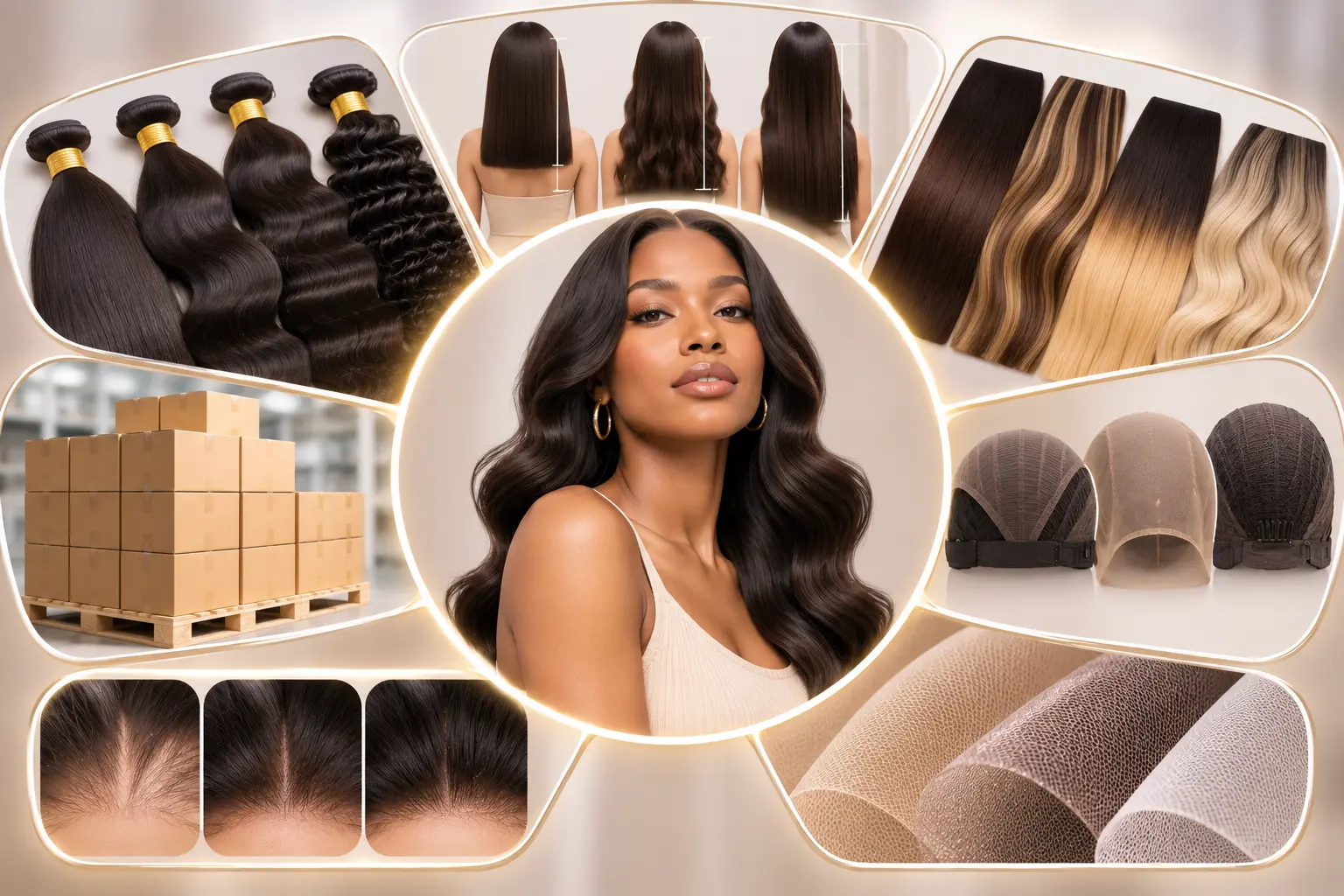
A custom human hair wig OEM order requires specifying at least seven variables[^1] before a supplier can provide an accurate quote: hair quality (Virgin, Remy, or Full Cuticle), length (typically 12–26 inches), color (solid, mixed, ombre, or balayage), cap construction type, lace material, density, and target order quantity. Missing any one of these will result in an incomplete or inaccurate RFQ response.
Understanding what to specify is only half the job. You also need to understand why each variable matters to price, lead time, and end-user satisfaction. The sections below break down every item on the checklist with the detail your procurement team needs.
What Hair Quality Grade Should You Specify for OEM Wigs?
Many buyers list "100% human hair" in their RFQ and wonder why quotes vary by 40% across suppliers. The problem is that "human hair" is not a grade — it is a category. Without a defined quality tier, suppliers will quote what suits their margin, not your brand.
For custom human hair wig OEM sourcing, three quality grades are standard: Virgin Hair (unprocessed, never chemically treated, cuticles fully intact and aligned)[^2], Remy Hair (cuticles aligned, may have undergone minimal processing)[^3], and Full Cuticle Hair (cuticles intact and aligned, often used interchangeably with high-grade Remy). Each tier differs in longevity, texture consistency, and price point.
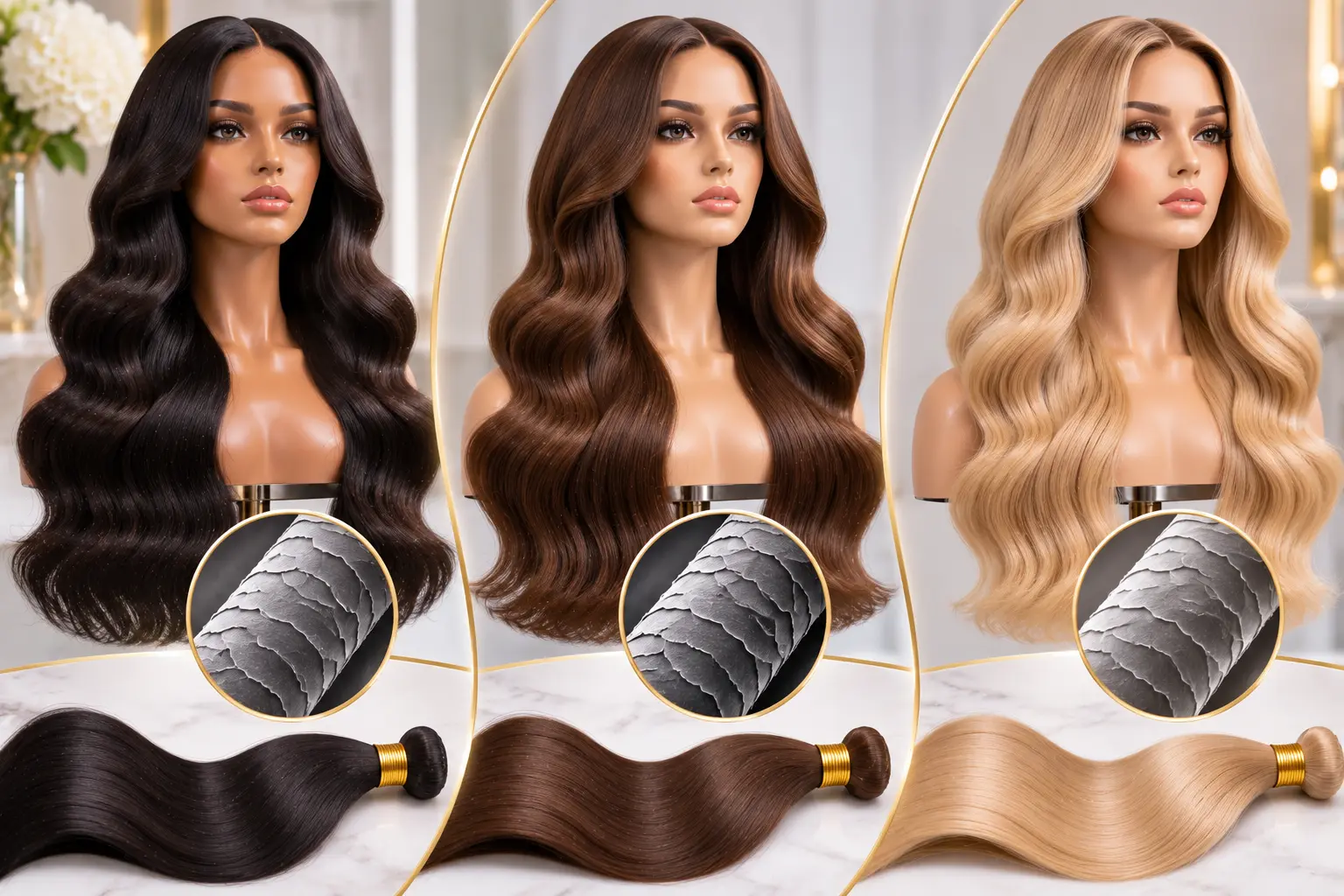
Breaking Down the Three Quality Tiers
Understanding the practical differences between these grades helps you match the product spec to your target market's price sensitivity and usage expectations.
Virgin Hair
- Never chemically processed — no dye, no perm, no bleach
- Cuticles are intact and running in the same direction
- Longest lifespan when properly maintained (12–24+ months with regular wear[^4])
- Highest raw material cost; premium retail positioning
Remy Hair
- Cuticles are aligned during collection, reducing tangling
- May have undergone single-pass processing (e.g., light color treatment)
- Strong mid-market option — good quality-to-cost ratio
- Most common grade in professional salon and boutique distribution
Full Cuticle Hair
- Cuticles intact from root to tip
- Often sourced from single donors to maintain cuticle direction
- Bridges the gap between high-end Remy and Virgin in some product lines
- Increasingly requested by buyers building "clean label" extension brands
| Grade | Cuticles Intact | Chemically Processed | Relative Price | Best For |
|---|---|---|---|---|
| Virgin Hair | Yes | Never | Highest | Luxury brands, premium retail |
| Full Cuticle Hair | Yes | Minimal / None | High | Premium to mid-premium |
| Remy Hair | Aligned | Possible | Mid | Professional salons, mid-market brands |
Buyer's note: Always request a lab report or factory documentation confirming the hair grade. "Virgin" is a heavily misused marketing term. At RENAI HAIR, we classify our grades according to traceable sourcing and processing records — buyers are encouraged to verify this during sampling.
Specifying the grade upfront eliminates the single largest source of quote variation in custom wig RFQs.
How Do You Specify Wig Length for an OEM Order?
Length sounds straightforward. It is not. Buyers frequently discover that "20 inch" means different things depending on how the supplier measures — straightened length vs. natural wave length vs. installed length on a mannequin head.
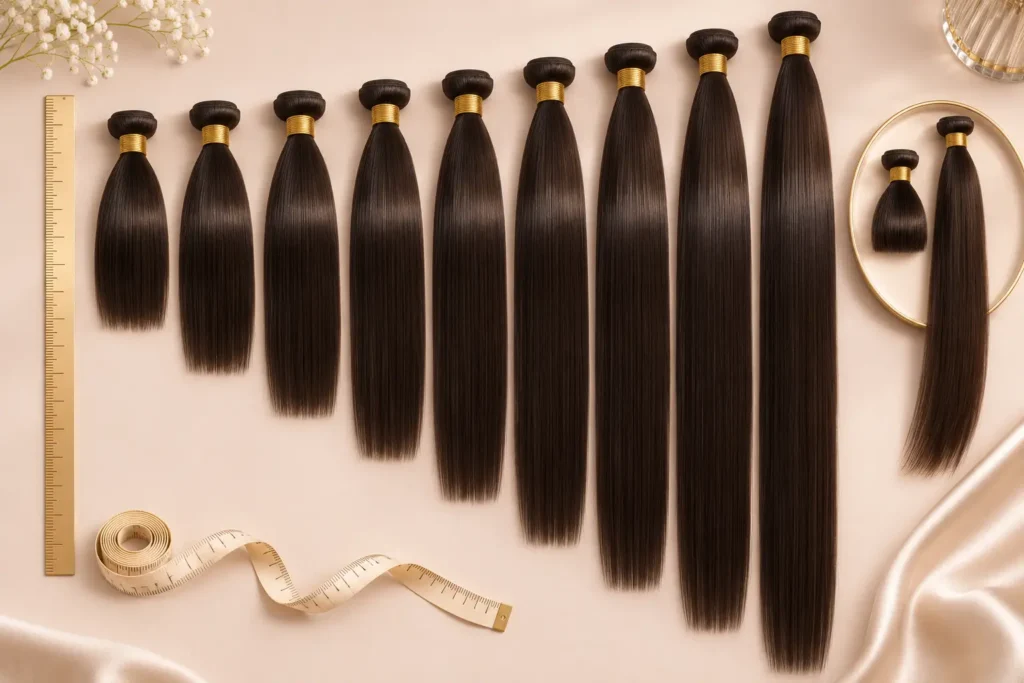
For custom human hair wig OEM orders, length is measured as the straight hair length from root to tip, typically ranging from 12 to 26 inches. Buyers should specify the desired length in this straight-measured format and confirm with the supplier how curly or wavy styles are measured, since curl pattern will reduce visible wear length by 20–40%[^5].
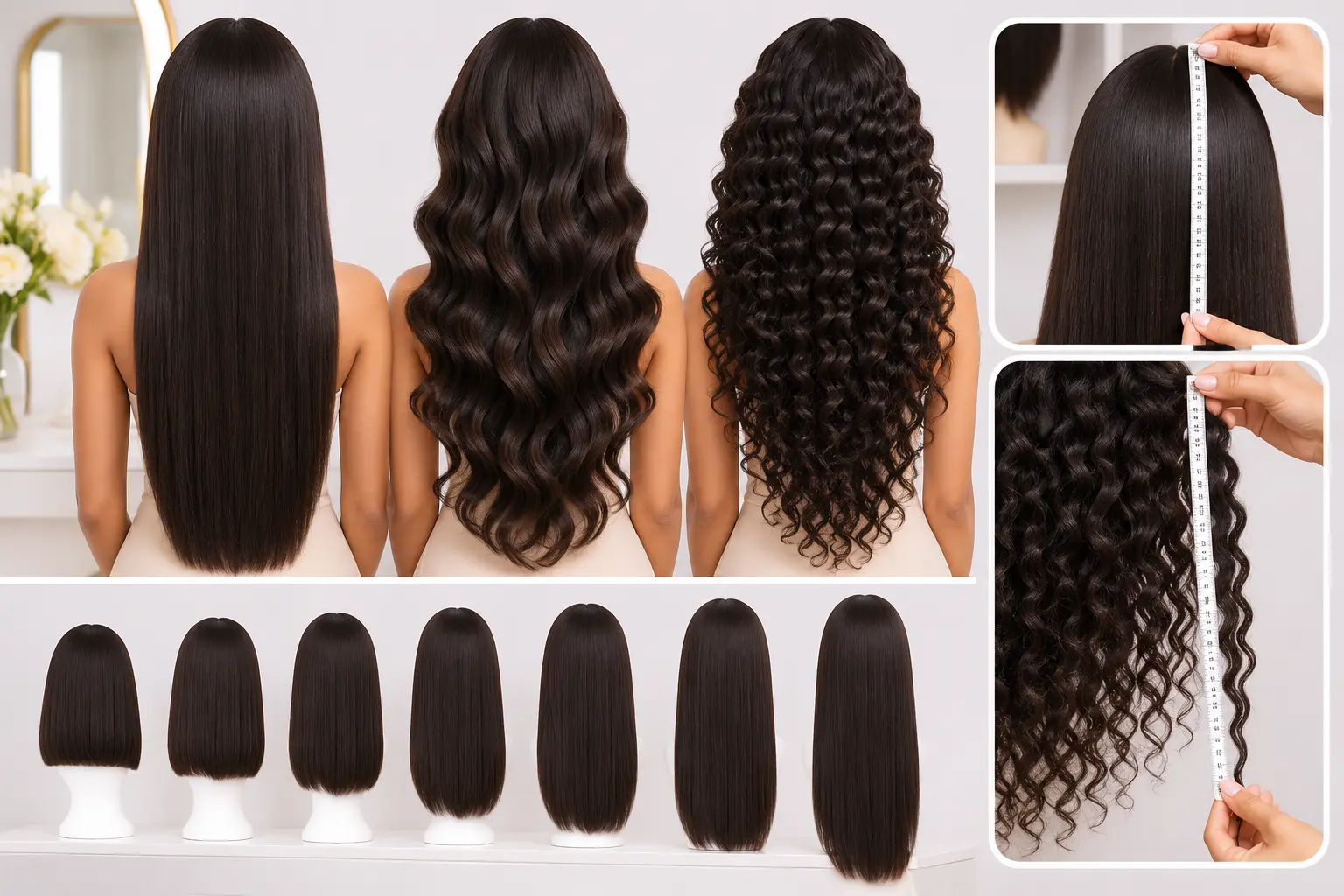
Length Specification Best Practices
Standard OEM length range: 12–26 inches
This range covers the vast majority of commercial wig SKUs. Custom lengths outside this range are possible but typically require minimum order quantity (MOQ) adjustments and longer lead times.
Here is how straight-measured length translates to approximate on-head appearance:
| Straight Length | Approximate Worn Position |
|---|---|
| 12 inch | Chin to shoulder |
| 14–16 inch | Shoulder |
| 18–20 inch | Mid-back |
| 22–24 inch | Lower back |
| 26 inch | Waist |
Key length-related questions to include in your RFQ:
- Is the quoted length measured straight or in its natural curl state?
- For body wave, deep wave, or curly textures — what is the shrinkage percentage?
- Are mixed-length cap constructions (e.g., shorter layers at the front) available?
- What is the MOQ per length increment if ordering a size range (e.g., 14/16/18/20 in one PO)?
Locking in the measurement standard in writing before sampling saves a full sample revision cycle.
Which Color Options Are Available for OEM Custom Wigs?
Color is the most visible brand differentiator in a wig product line. It is also one of the most common points of RFQ miscommunication. Submitting a vague color request like "blonde" or "brown" gives your supplier almost no actionable information.
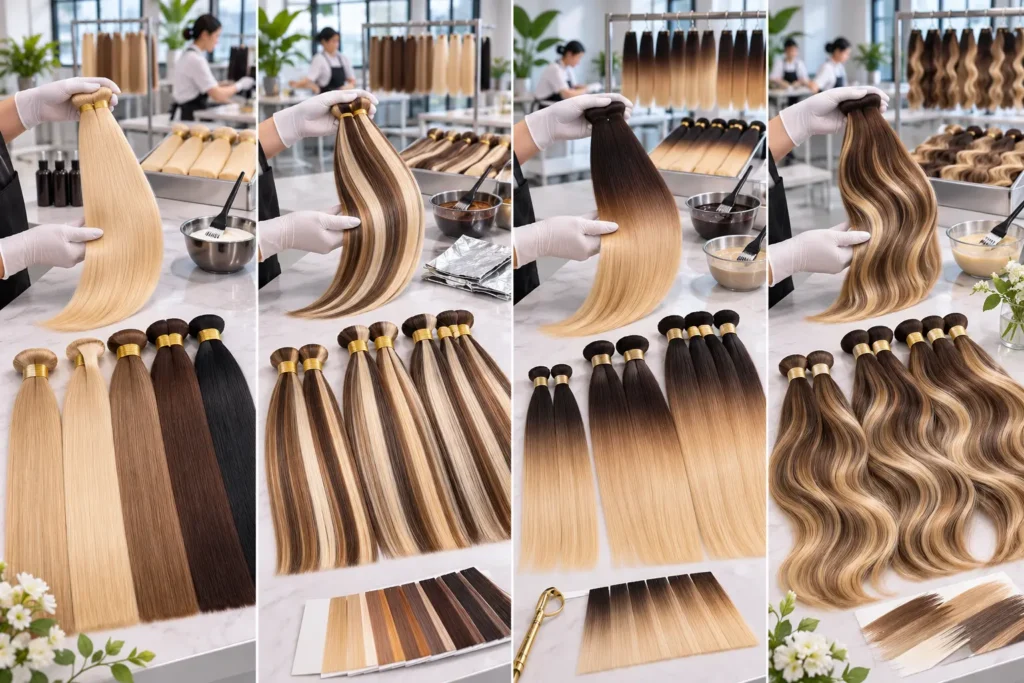
Custom human hair wig OEM color options include: solid color (single uniform shade), mix color / piano color (two or more tones blended or in alternating sections), T-color / ombre (dark roots graduating to a lighter shade), and balayage (hand-painted highlights for a natural, sun-kissed effect)[^6]. Specify the color family, technique, and reference number (e.g., from a standard color ring) for accurate sampling.
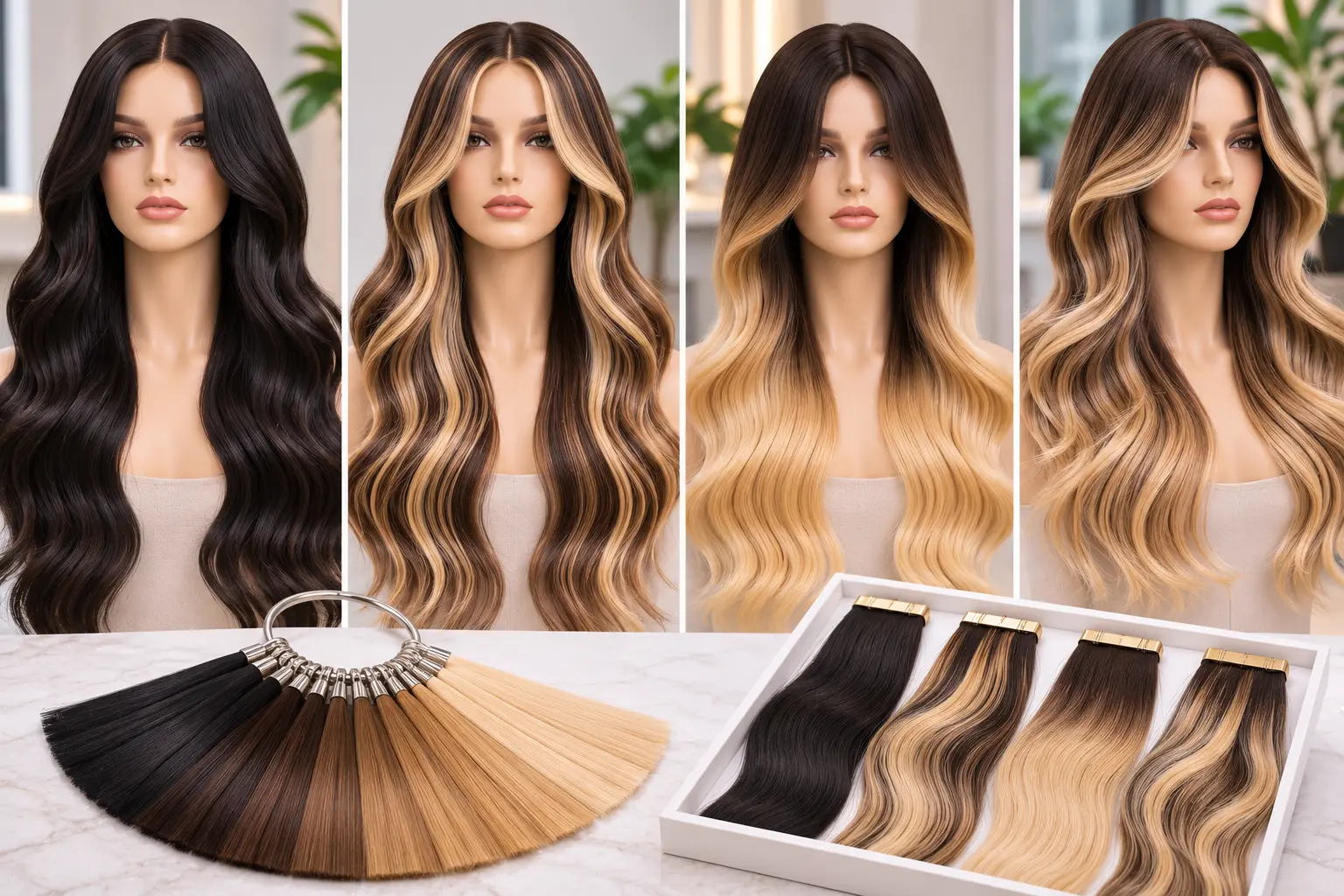
Color Technique Breakdown for Buyers
Solid Color (Single Tone)
- Uniform shade from root to tip
- Easiest to produce at scale; lowest color-related cost
- Reference using a standardized color number (e.g., #1B, #4, #613)
- Best for: classic SKUs, natural look lines
Mix Color / Piano Color
- Two or more shades blended or alternated through the hair
- Piano color = visible contrast between light and dark sections (like piano keys)
- Adds dimension; appeals to balayage-trend markets without full custom coloring cost
- Reference both shades by number
T-Color / Ombre
- Darker at the roots, gradually lightening toward the ends
- Creates a grown-out, low-maintenance aesthetic
- Specify the root color, the tip color, and where the transition begins (e.g., 2/3 down the shaft)
Balayage
- Hand-painted highlights; no uniform pattern
- Most labor-intensive color technique
- Higher per-unit cost and longer production lead time
- Best for: premium product lines targeting salon professionals
Practical advice: Always request a physical color sample (a small weft or hair swatch) before approving bulk production. Color appearance on a monitor differs significantly from actual hair in natural or studio lighting.[^7]
What Cap Construction Types Are Used in OEM Wig Manufacturing?
Cap construction determines comfort, styling versatility, and retail price point more than almost any other variable. A buyer who skips this specification will receive a quote that may be completely misaligned with their product concept.
The four primary cap construction types for custom human hair wig OEM orders are: lace front wig (lace at the hairline only), full lace wig (lace covering the entire cap), 360 lace wig (lace around the full perimeter), and machine made wig (wefts sewn onto a cap without hand-tying)[^8]. Each type carries different production costs, styling capabilities, and target consumer profiles.
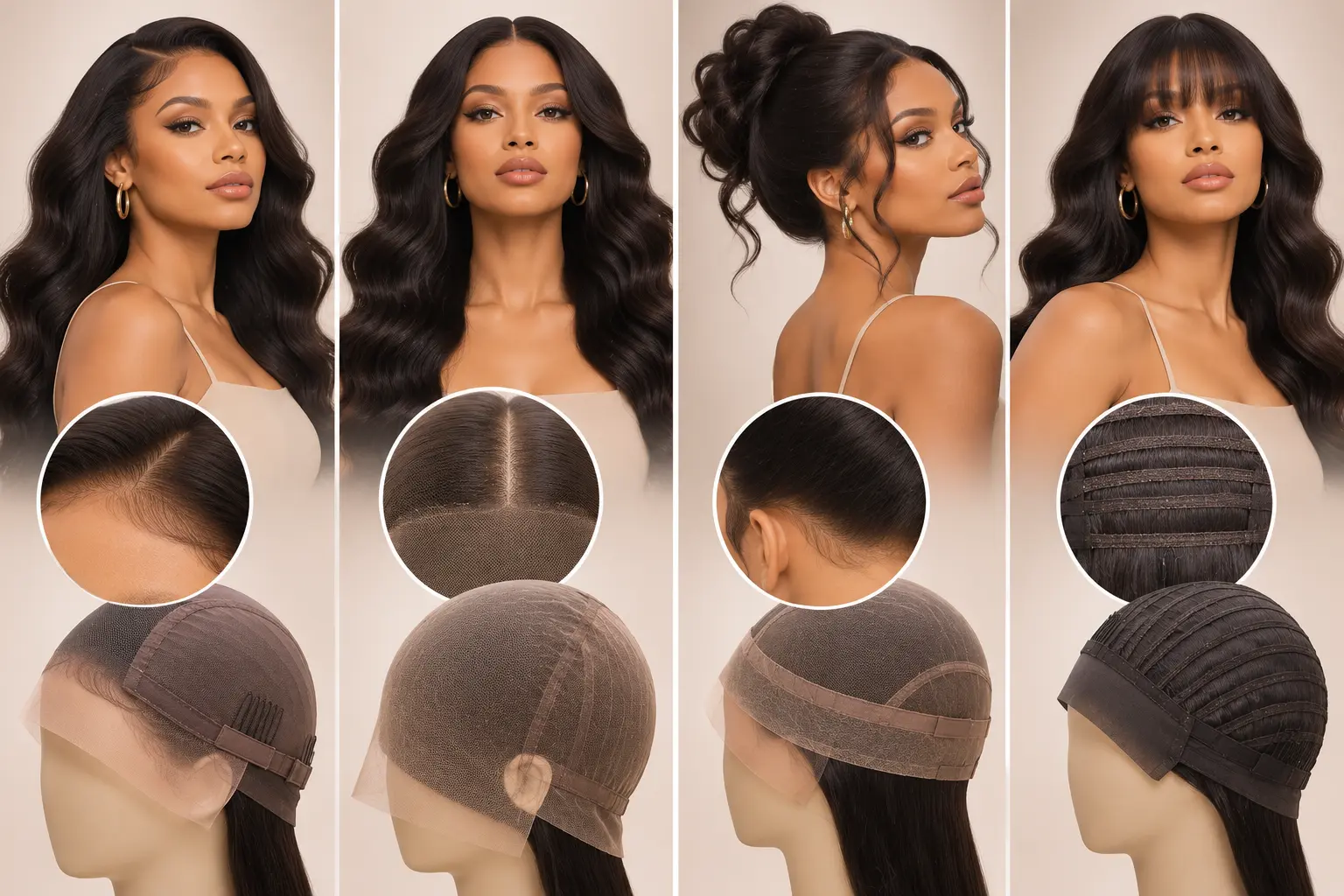
Comparing Cap Construction Options
| Cap Type | Lace Coverage | Styling Versatility | Relative Cost | Best Market |
|---|---|---|---|---|
| Lace Front | Hairline only | Moderate (front styles) | Mid | Mass market, beginners |
| Full Lace | Entire cap | Highest (all directions) | Highest | Luxury, editorial |
| 360 Lace | Full perimeter | High (ponytails, updos) | High | Mid-premium, stylists |
| Machine Made | None | Low | Lowest | Value market, fashion wigs |
Lace Front Wig
- Most popular commercial cap type
- Lace panel spans ear to ear across the hairline
- Allows natural-looking parting within the lace zone
- Easiest to wear; suitable for everyday consumers
Full Lace Wig
- Hand-tied lace covers the entire cap surface
- Hair can be parted anywhere; worn in updos and high ponytails
- Highest production labor cost[^9] — reflects in MOQ and unit price
- Preferred by professional stylists and high-end retail
360 Lace Wig
- Lace runs around the full perimeter of the cap
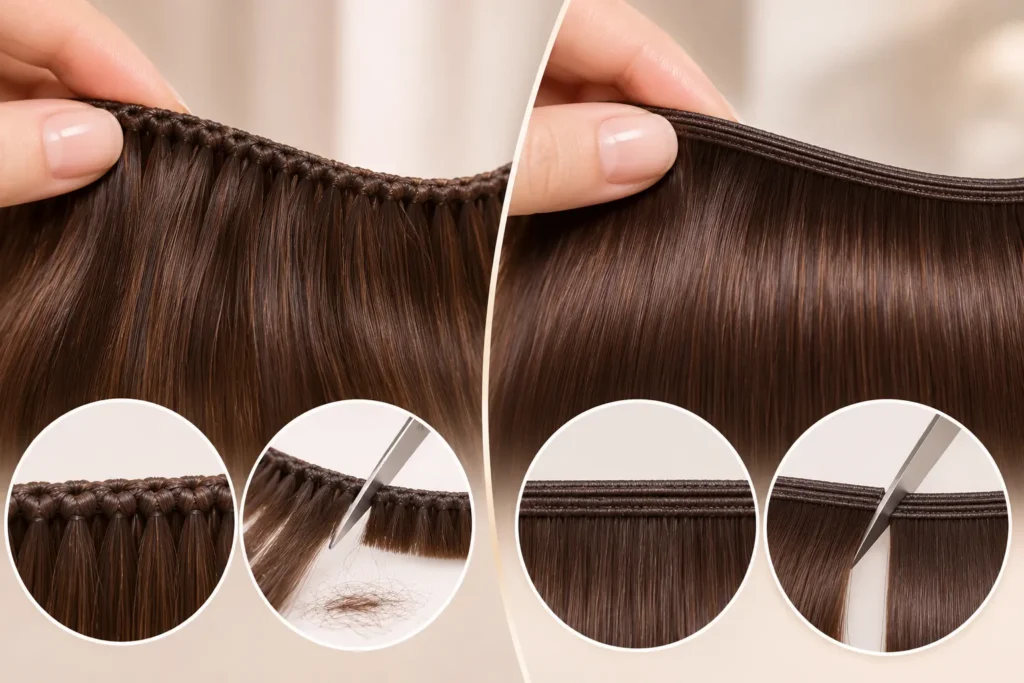
- Interior cap is typically weft construction
- Practical middle ground: updo capability without the full lace cost
Machine Made Wig
- Wefts are sewn onto a cap using machines
- Most affordable production method
- Less natural hairline appearance without additional finishing
- Strong option for fashion wigs, costume, or value product lines
Which Lace Material Should You Request in Your OEM Specification?
Lace type is frequently overlooked in RFQs from newer buyers. It directly affects the natural appearance of the hairline, durability, and the difficulty of application for the end consumer.
Four lace materials are standard in custom human hair wig OEM production: Transparent Lace (light beige, suits lighter skin tones), HD Lace (ultra-thin, nearly invisible on a wide range of skin tones), Swiss Lace (fine, soft, durable — industry workhorse), and French Lace (thicker, more durable, slightly more visible). Specify lace type alongside cap construction for a complete hairline specification.
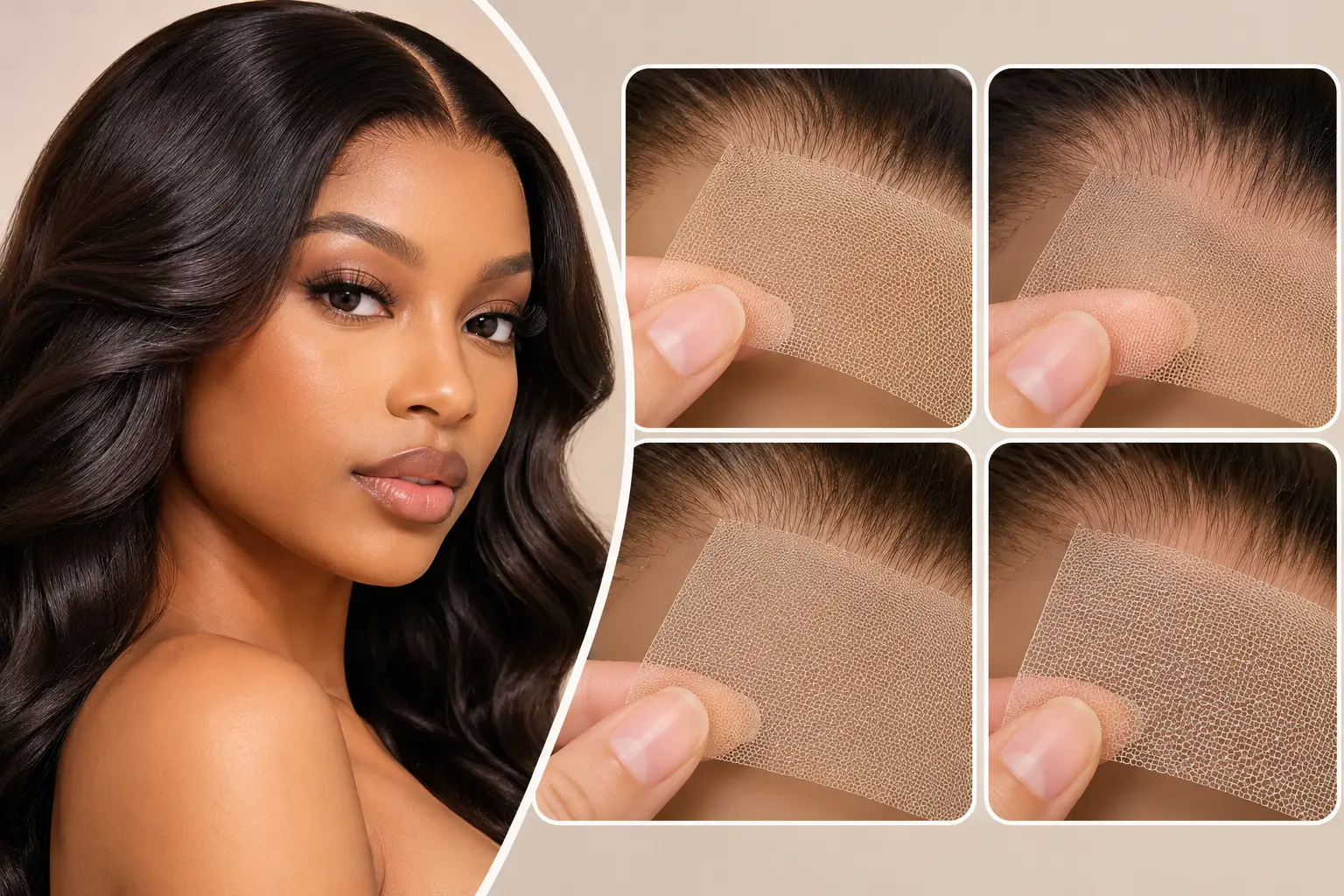
Lace Material Comparison Table
| Lace Type | Visibility | Durability | Skin Tone Range | Relative Cost |
|---|---|---|---|---|
| Transparent Lace | Medium | Medium | Light to medium | Low |
| HD Lace | Lowest (near invisible) | Lower | Wide range | Highest |
| Swiss Lace | Low | High | Light to medium | Mid |
| French Lace | Medium | Highest | Medium to dark | Mid-low |
HD Lace has seen the strongest demand growth in professional markets over the past three years.[^10] Its ultra-thin construction melts into the skin with minimal adhesive, creating the "undetectable" hairline that dominates social media styling content. However, its lower durability means it is better suited for professional application than daily consumer self-installation.
Swiss Lace remains the most balanced option for brands that need a natural finish and reliable durability across a broad customer base.
Specify lace type by name in your RFQ. Do not assume a supplier's default lace matches your product requirement.
How Does Hair Density Affect Your OEM Wig Specification?
Density is the variable that most directly controls how "full" or "natural" the wig looks and feels. It also significantly affects the weight of raw materials per unit — which means it directly impacts your unit cost.
Hair density in custom human hair wigs refers to the thickness and volume of hair per square area of the cap. Standard commercial densities are 130%, 150%, 180%, and 200%.[^11] 130% and 150% are considered natural densities — replicating the look of an average head of hair. 180% and 200% are high-density options offering a fuller, more dramatic look.
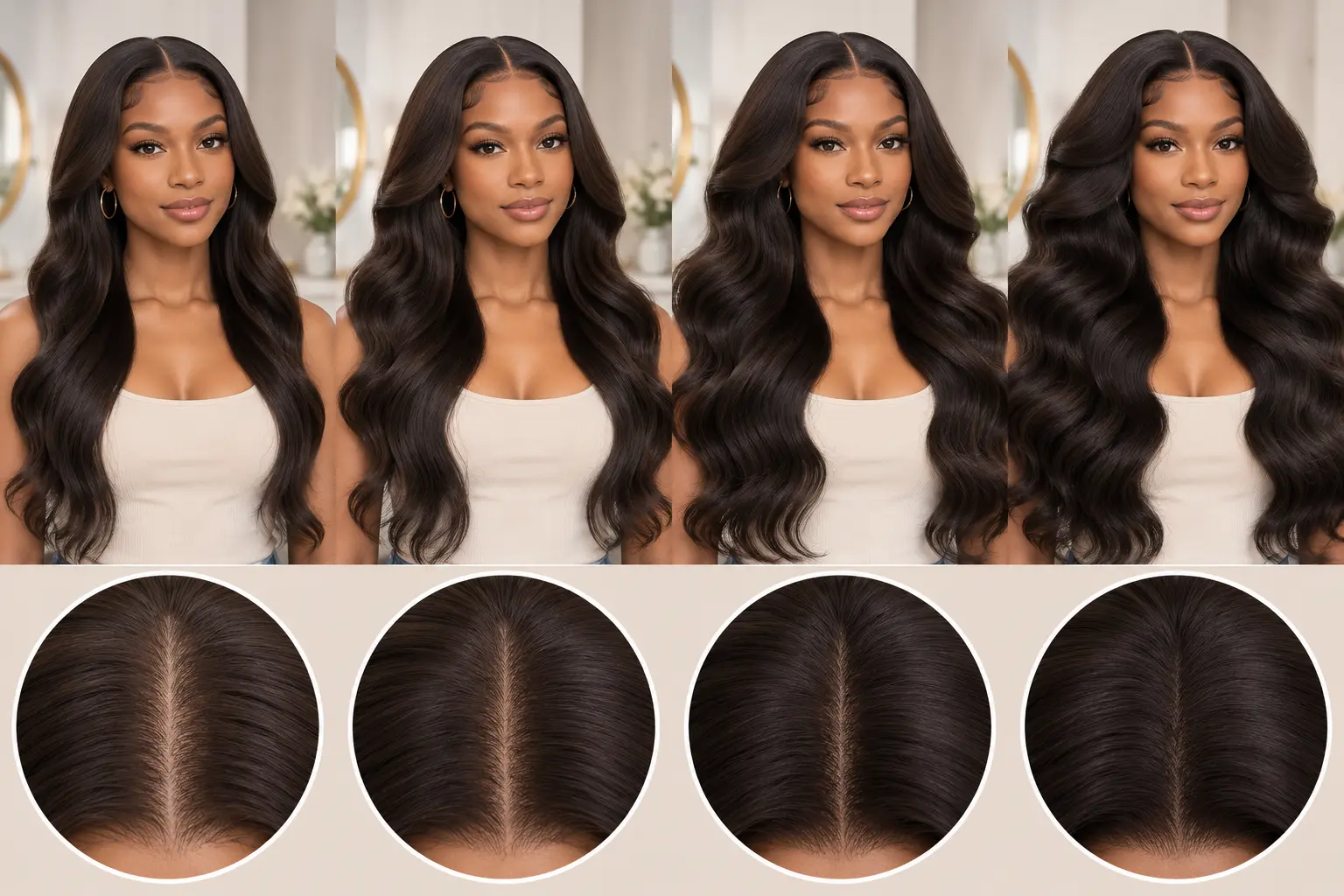
Density Guide for Procurement Teams
| Density | Classification | Hair Volume | Weight | Best Application |
|---|---|---|---|---|
| 130% | Natural | Moderate | Light | Everyday wear, natural look |
| 150% | Natural | Medium-full | Medium | Most popular commercial option |
| 180% | High | Full | Heavier | Styling, volume-focused SKUs |
| 200% | High | Very full | Heaviest | Glamour, special occasion |
Why density matters for cost: Higher density means more hair per cap. More hair directly increases raw material cost per unit. A 200% density wig can cost 25–40% more in materials than the same style at 130% density, depending on length.[^12]
Common buyer mistake: Requesting 200% density across all SKUs to appear "premium." This inflates cost without necessarily improving customer satisfaction — most everyday consumers find 150% natural density more comfortable for daily wear.
A well-structured product line typically includes both a natural density option (130% or 150%) and a high-density option (180% or 200%) to serve different customer preferences at different price points.
Frequently Asked Questions
What is the typical MOQ for custom human hair wig OEM orders?
MOQ varies by supplier and product complexity. For custom lace wigs with specific color and cap construction, most manufacturers set MOQ at 10–50 units per style. Machine made wigs with standard specs may have lower MOQs. Confirm MOQ per SKU and per colorway early in your RFQ process.
How long does OEM wig production take after specification approval?
Standard production lead time for custom human hair wigs is typically 30–60 days after sample approval and deposit receipt. Complex cap constructions (full lace), custom color formulations, or high-density specs may extend lead time. Always confirm in writing before placing a production order.
Can I request a sample before committing to bulk OEM production?
Yes — and you should. Reputable manufacturers provide pre-production samples for buyer approval. Expect a sample fee (often credited against bulk orders) and a 7–15 day sample lead time. Never approve bulk production without physically reviewing an approved sample.
What documentation should I request from an OEM wig supplier?
Request product specification sheets, hair grade documentation, lace material specs, and quality control reports. For regulated markets, ask about relevant certifications. Treat all supplier documentation as materials to be independently verified, not accepted at face value.
What is the difference between a lace front wig and a 360 lace wig for OEM purposes?
A lace front wig has lace only at the hairline (ear to ear). A 360 lace wig has lace running around the full perimeter of the cap, including the nape. This allows the wearer to style their hair in updos and high ponytails with a natural hairline all around. 360 lace wigs cost more to produce and carry a higher retail price point.
Conclusion
A complete custom human hair wig OEM RFQ covers seven non-negotiable variables: hair quality grade, length, color technique, cap construction, lace material, density, and target quantity. Miss any one of them and you will receive an incomplete quote — or worse, a sample that misses your product vision entirely.
Locking down these specifications before your first supplier conversation compresses your sampling cycle, sharpens your cost projections, and protects your brand launch timeline. If you are sourcing wigs for a new brand or expanding an existing product line, use this checklist as your pre-RFQ standard.
At RENAI HAIR, we work with brands, wholesalers, and distributors globally to develop custom human hair wig OEM solutions across all construction types, lace options, and quality tiers. Reach out to our team with your specification requirements, and we will respond with a structured quote — no vague ballparks.
[^1]: "SOP-PURCH-03: Competition and Sourcing - IU Procurement Services", https://procurement.iu.edu/sop/sop-purch-03.html. Institutional procurement guidance states that manufacturing RFQs require defined specifications, quantities, materials, and technical requirements to enable comparable supplier pricing; this supports the need for a detailed wig RFQ checklist, although it does not independently validate the exact seven-variable list used here. Evidence role: general_support; source type: institution. Supports: RFQs in manufacturing require sufficiently complete technical specifications, materials, quantities, and requirements for suppliers to return comparable and accurate quotations.. Scope note: The likely support is for RFQ completeness in manufacturing generally, not for these exact wig-specific variables. [^2]: "New study finds over 90% of hair extensions tested contain harmful ...", https://fletcher.house.gov/news/documentsingle.aspx?DocumentID=7253. Hair-science literature distinguishes untreated human hair from chemically treated hair and describes the cuticle as the outer hair-shaft layer whose integrity and orientation affect friction, tangling, and surface quality; this supports the technical basis of the virgin-hair definition while noting that commercial grade labels are not universally standardized. Evidence role: definition; source type: paper. Supports: Virgin human hair is generally understood as hair that has not been chemically processed, and hair cuticle integrity and direction affect hair behavior and quality.. Scope note: A scientific source may support untreated hair and cuticle mechanics without endorsing the commercial label as a regulated grade. [^3]: "Cuticle Aligned Virgin Hair Extensions", https://www.onychair.com/product-category/shop-by-collection/virgin-hair-extensions-cuticle-aligned-luxury-ultima. Reference sources on hair extensions define Remy hair as human hair in which the cuticles are kept aligned in the same direction, a condition associated with reduced tangling; this supports the cuticle-alignment portion of the claim, although processing levels may vary by supplier. Evidence role: definition; source type: encyclopedia. Supports: Remy hair is commonly defined by preserving or aligning cuticles in the same direction, which helps reduce tangling compared with mixed-direction hair.. Scope note: The source may not confirm that Remy hair is always only minimally processed. [^4]: "Wigs for Cancer Patients: Your Guide to Finding the Right Wig", https://www.nationalbreastcancer.org/blog/wigs-for-cancer-patients/. Institutional wig-care guidance reports that human hair wigs can have substantially longer usable lifespans than synthetic wigs when properly maintained, supporting the article’s lifespan discussion while leaving the exact 12–24 month range dependent on wear frequency, processing history, and care practices. Evidence role: general_support; source type: institution. Supports: Human hair wigs generally last longer than synthetic wigs and their lifespan depends on wear frequency, maintenance, and processing quality.. Scope note: The source may contextualize expected lifespan rather than directly verify the precise 12–24+ month range for virgin hair OEM wigs. [^5]: "The what, why and how of curly hair: a review - PMC", https://pmc.ncbi.nlm.nih.gov/articles/PMC6894537/. Studies of hair curvature and curl morphology show that curled fibers have a shorter apparent linear length than the same fibers when stretched or straightened, supporting the mechanism behind visible length reduction; the cited evidence may not directly establish the article’s specific 20–40% range for commercial wigs. Evidence role: mechanism; source type: paper. Supports: Curl pattern changes the apparent length of hair relative to stretched or straightened length because curved fibers occupy a shorter linear distance.. Scope note: The mechanism is likely supported directly, but the exact percentage range may require industry measurement data. [^6]: "Balayage Vs. Highlights: Key Differences & Which To Choose", https://cosmetologyandspaacademy.edu/balayage-vs-highlights/. Cosmetology education sources define balayage as a freehand, hand-painted highlighting method used to create graduated, natural-looking lightness in the hair, supporting the article’s description of the technique. Evidence role: definition; source type: education. Supports: Balayage is a freehand or hand-painted highlighting technique used to create graduated, natural-looking lightness.. [^7]: "Color appearance model", https://en.wikipedia.org/wiki/Color_appearance_model. Color-science research shows that perceived color depends on illumination, viewing conditions, device calibration, and metameric effects, explaining why a monitor image may not reproduce the appearance of a physical hair swatch under natural or studio lighting. Evidence role: mechanism; source type: paper. Supports: Perceived color varies with display calibration, illumination, viewing conditions, and metamerism, so digital images may not match physical samples.. [^8]: "5 Different Types Of Wig Cap Constructions How To Choose", https://m.beautyforever.com/blog/5-different-types-of-wig-cap-constructions-how-to-choose.html/. Wig-making and cosmetology instructional materials distinguish lace-front caps, full-lace caps, perimeter-lace constructions, and wefted machine-made caps by lace placement and hair-attachment method, supporting the article’s construction taxonomy. Evidence role: definition; source type: education. Supports: Wig-making education materials distinguish lace-front, full-lace, perimeter-lace, and wefted machine-made cap constructions by the placement of lace and method of hair attachment.. [^9]: "The Ultimate Guide to Hand Tied Wigs", https://www.simplywigs.co.uk/blog/guide-hand-tied-wigs/. Wig-making instructional sources describe ventilating or hand-tying individual hairs into lace as a labor-intensive process compared with machine-weft construction, supporting the claim that full-lace caps generally carry higher production labor costs. Evidence role: mechanism; source type: education. Supports: Hand-tying hair into lace is more labor-intensive than sewing wefts by machine, making full-lace constructions more costly to produce.. Scope note: The source may support relative labor intensity without providing exact factory cost comparisons. [^10]: "Google Trends", https://en.wikipedia.org/wiki/Google_Trends. Market research or search-interest data documenting increased interest in HD lace wigs over the past three years would support the article’s demand-growth claim, although such data may measure consumer search behavior or reported sales broadly rather than professional-market purchasing alone. Evidence role: statistic; source type: research. Supports: Market or search-interest data show rising demand for HD lace wigs over a defined recent period, especially compared with other lace types.. Scope note: The evidence may be contextual unless it specifically separates professional buyers and compares HD lace with other lace materials. [^11]: "What Does Density Mean in Wigs?150%, 180%, 200% or 250%", https://shop.luvmehair.com/blogs/wigs-101/what-does-density-mean-in-wigs?srsltid=AYCX9vJ0HQm9CccyO0uB1fgW_a9FU3BWomHHSfHDhTrnYOYR6f0TN1YY. Wig-specification and cosmetology education materials commonly use percentage-based density categories to describe relative fullness, including values such as 130%, 150%, 180%, and 200%; this supports the article’s terminology while recognizing that density percentages are an industry convention rather than a scientific measurement standard. Evidence role: definition; source type: education. Supports: Wig specification materials commonly use percentage-based density categories such as 130%, 150%, 180%, and 200% to describe relative hair fullness.. Scope note: The source may validate common usage but not prove universal standardization across all manufacturers. [^12]: "Wig Density Guide: How Hair Volume Affects Price, Look, and ...", https://world.taobao.com/lang/en-us/shopping-guide/2058187420360245248.htm. Comparative costing or production-weight data showing that higher-density wigs require greater hair input and higher material expenditure would support the stated cost relationship; the precise 25–40% range may vary by length, hair grade, waste rate, and factory pricing model. Evidence role: statistic; source type: research. Supports: Higher-density wigs require more hair input by weight and therefore can have higher material costs, with quantified differences between 130% and 200% density where available.. Scope note: Neutral sources may support the cost mechanism but may not directly verify the exact percentage range for all OEM orders.