
Human Hair Wig Market 2026: North America, Europe and the GCC
Human Hair Wig Market 2026 matters because many B2B buyers are facing higher customer expectations, tighter margins, and more pressure to choose reliable human hair suppliers. If buyers misread regional demand, they may overstock the wrong products or miss premium opportunities. I see the best results when brands match product strategy to each market.
The Human Hair Wig Market 2026 is expected to be shaped by three major regions: North America, Europe, and the GCC. Based on my market view, the global human hair wig market may reach about USD 1.85 billion in 2026[^1], with North America leading in consumption[^2], Europe prioritizing quality, and the GCC offering premium opportunities.

I always remind buyers that a market report is only useful when it connects to real purchasing decisions. The numbers help, but product quality, channel fit, color planning, and supplier stability decide whether a buyer can actually grow profitably.
Why does Human Hair Wig Market 2026 matter for North American buyers?
North American buyers face a clear problem: demand is large, but competition is intense. Consumers have more choices, and brands need wider product ranges to stay relevant. If a buyer only follows volume without checking product positioning, inventory can become expensive very quickly.
The Human Hair Wig Market 2026 matters in North America because the region combines large import volume, mature consumer education, and strong brand competition. The United States remains the key market, and buyers usually need product variety, fast launches, consistent color supply, and a clear retail or salon education strategy.
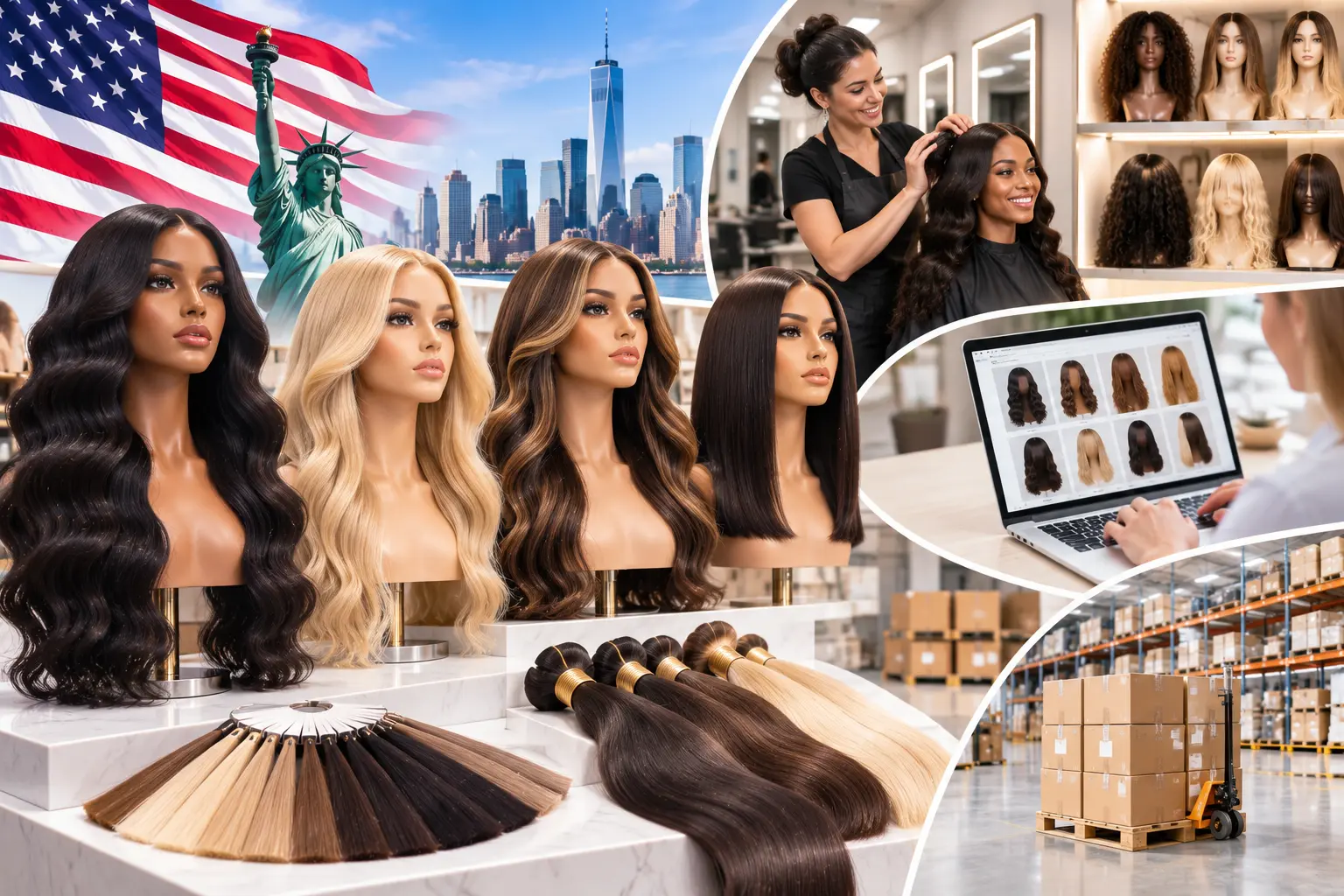
North America, especially the United States, is still one of the most important consumption markets for human hair wigs and extensions. In my view, the U.S. market gives buyers both opportunity and pressure. The opportunity comes from scale. The pressure comes from educated consumers, social media comparison, and strong brand storytelling[^3].
According to the insight you shared, U.S. imports under HS 670420 reached about USD 769 million in 2024[^4]. Buyers should treat this figure as a useful market signal, not as a complete category definition, because customs classifications can include different types of human hair products and related items[^5]. Still, it shows that the U.S. remains a major destination for human hair products.
What makes the U.S. market different?
The American market often rewards brands that do more than sell products. I have seen brands build trust through:
- Education-based selling
- Stylist training programs
- Product application tutorials
- Color matching support
- Aftercare guidance
- Influencer and salon partnerships
- Strong return and customer service systems
Bellami is a common example buyers mention because it combines product visibility with training and professional education. I do not present this as an endorsement. I see it as a useful business model reference. The lesson is clear: in North America, product alone is not always enough. Buyers often need a full commercial system around the product.
Key product expectations in North America
B2B buyers serving the U.S. market often ask for wide product coverage. Human hair wig buyers may also purchase wefts, tape-ins, keratin tips, clip-ins, toppers, ponytails, and tools. This is important for suppliers like us at RENAI HAIR because many customers want to build a complete product line, not just buy one SKU.
| North American buyer need | Why it matters | Procurement focus |
|---|---|---|
| Product diversity | Consumers want choices | Wigs, toppers, wefts, tape-ins, clip-ins |
| Color range | Matching is critical | Natural shades, rooted colors, balayage, fashion tones |
| Fast replenishment | Trends move quickly | Stable stock planning and repeatable production |
| Training content | Consumers need trust | Application guides, care instructions, salon education |
| Quality consistency | Reviews affect sales | QC before shipment, tangle and shedding checks |
How I would approach North America
For the Human Hair Wig Market 2026 in North America, I would not focus only on the cheapest price. I would first segment the buyer’s customer base. A wholesale distributor may need different products than a salon education brand. A beauty supply chain may need different packaging and SKU depth than an online DTC brand.
I would usually ask buyers these questions:
- Do you sell through salons, e-commerce, distributors, or beauty supply stores?
- Do your customers prefer ready-to-wear wigs or custom solutions?
- Do you need bulk volume or smaller product launches?
- Which colors drive repeat orders?
- What quality complaints have you received before?
This kind of questioning helps reduce procurement risk. In my experience, the brands that win in the U.S. usually combine reliable human hair quality, clear specifications, and consistent education. They also test new products in small batches before scaling up. That approach is especially useful when launching lace wigs, toppers, or premium Remy hair collections.
What makes Europe important in Human Hair Wig Market 2026?
European buyers often face a different challenge. The market is mature, and many professional customers know how to judge hair quality. If a supplier sends inconsistent texture, inaccurate color, or unclear specifications, the buyer may lose trust quickly. This makes supplier selection more technical.
Europe is important in Human Hair Wig Market 2026 because countries such as the United Kingdom, Germany, Italy, and France have developed professional hair channels[^6]. Buyers there often evaluate cuticle alignment, Remy hair quality, color consistency, product specification accuracy, and long-term supply stability before they increase orders.

Europe is not always the easiest market, but I consider it one of the most valuable markets for serious human hair suppliers. Many European buyers are careful. They ask detailed questions. They often compare samples slowly. They may request repeat shipments before they commit to a larger program.
That careful buying process can frustrate low-quality suppliers, but it benefits manufacturers that focus on stable production. At RENAI HAIR, our business context fits this type of buyer because we focus on 100% Human Hair, Remy Hair, Cuticle Intact Hair, strict outgoing quality control, and product development.
What European buyers usually inspect
European B2B buyers often care about both beauty and technical consistency. I have seen buyers pay close attention to small details that less mature markets may ignore.
Common inspection points include:
- Hair origin and grade claims
- Cuticle direction and cuticle integrity[^7]
- Shedding and tangling after washing
- Color matching between batches
- Length ratio and fullness
- Weight accuracy
- Cap construction and comfort
- Bleaching and coloring performance
- Packaging compliance and labeling
- Repeatability of specifications
Buyers should verify any supplier claims through samples, documentation, and professional testing when needed. If a buyer has application-specific needs, such as medical wigs, salon resale, or luxury retail collections, I recommend qualified professional evaluation before making large purchasing decisions.
Europe by market character
| Market | Typical character | Buyer focus |
|---|---|---|
| United Kingdom | Strong salon and extension culture | Trend colors, education, fast-moving product lines |
| Germany | Detail-oriented and quality-conscious | Specification accuracy, documentation, consistency |
| Italy | Fashion-driven and style-focused | Color, texture, premium presentation |
| France | Mature beauty market | Natural appearance, brand image, product reliability |
I do not treat Europe as one single market. I prefer to think of it as several professional markets with shared quality expectations. A German distributor may value documentation and repeatable specifications. An Italian brand may care deeply about color direction and fashion presentation. A U.K. salon supplier may need trend speed and stylist education.
How buyers should reduce quality risk in Europe
For the European side of the Human Hair Wig Market 2026, I would advise buyers to build a structured sampling process. A single beautiful sample is not enough. Buyers should check whether the supplier can reproduce the same product repeatedly.
A practical sample test can include:
-
Initial visual inspection
I would check color, shine, density, hair direction, and finish. -
Comb test
I would comb from ends to roots and record shedding. -
Wash test
I would wash with a standard shampoo and observe tangling, dryness, and wave retention. -
Heat styling test
I would test how the hair responds to curling or straightening. -
Color tolerance test
If the buyer plans to tone or color hair, I would test carefully before bulk orders. -
Repeat sample comparison
I would compare first samples with pre-production and bulk samples.
This process may feel slow, but it protects the buyer’s reputation. European customers often notice inconsistency quickly, and negative feedback can damage a brand[^8]. For this reason, Europe rewards suppliers that invest in strict outgoing QC, accurate communication, and long-term product development.
Where are the premium opportunities in the GCC human hair wig market?
The GCC creates a different problem for buyers. Demand can be premium, but the market is channel-sensitive. A buyer may fail if the product is good but the positioning is unclear. In this region, brand image, private-label presentation, and distribution relationships often matter as much as product sourcing.
The GCC human hair wig market offers premium opportunities in the United Arab Emirates and Saudi Arabia[^9]. Buyers should focus on high-end human hair wigs, custom products, strong packaging, salon or boutique distribution, and healthy profit margins rather than only low-cost volume competition.

The GCC, especially the UAE and Saudi Arabia, deserves careful attention in Human Hair Wig Market 2026 planning. I see this region as a premium opportunity rather than a simple volume market. Buyers often look for products that support brand image, exclusivity, and service.
Dubai is important because it connects local demand, tourism, luxury retail, beauty services, and regional distribution[^10]. Saudi Arabia is also attractive because of growing beauty consumption and a strong interest in premium personal care[^11]. However, buyers should not assume that every product will work. Product-market fit is very important.
What premium buyers may request
GCC buyers may prefer:
- Luxury human hair wigs
- Custom density and cap construction
- Natural-looking hairlines
- High-quality lace options
- Longer lengths
- Rich dark tones and dimensional browns
- Premium packaging
- Private-label service
- Exclusive colors or collections
- Distributor-friendly product margins
The business opportunity is not only in the wig itself. It is also in the full commercial package. A premium buyer may ask for branding support, product naming, care cards, specification sheets, and stable reorder planning.
Product and channel strategy for the GCC
| Strategy area | Recommendation | Why it matters |
|---|---|---|
| Product positioning | Premium or luxury | Buyers often need margin and brand value |
| Product range | Curated, not too broad | Clear collections sell better than random SKUs |
| Packaging | Strong private-label presentation | Shelf appeal and gifting value matter |
| Distribution | Boutiques, salons, beauty distributors | Channel trust supports premium pricing |
| Customization | Offer length, color, cap, density options | High-end customers expect personalization |
I would be careful about entering the GCC with only price-based products. Low-cost competition exists everywhere, but premium buyers need confidence. They want to know whether the supplier can support a brand for the long term.
Procurement risks in the GCC
The GCC opportunity is attractive, but buyers still need careful supplier evaluation. I would pay attention to:
- Payment terms and order planning
- Import requirements and documentation
- Private-label accuracy
- Product photography consistency
- Color naming and SKU control
- After-sales support
- Shipment protection for high-value goods
I have seen buyers underestimate the importance of packaging in premium markets. A good wig in weak packaging can feel less valuable[^12]. A well-made product with strong presentation can support better retail pricing. This is especially true for boutique and salon-led distribution.
For the Human Hair Wig Market 2026 in the GCC, I would recommend a focused approach. Buyers should select fewer hero products, build a strong brand story, and maintain enough margin for distributors and service partners. This region can reward quality, but it usually requires patient channel development.
How should buyers compare suppliers for Human Hair Wig Market 2026?
Supplier selection is the biggest hidden risk in this category. A buyer can choose the right market but still fail because the supplier cannot maintain quality. If the hair tangles, sheds, or changes color between batches, marketing cannot fully protect the brand.
Buyers should compare suppliers for Human Hair Wig Market 2026 by checking human hair quality, Remy or cuticle-intact claims, manufacturing control, sample consistency, QC process, product development ability, export experience, communication speed, and after-sales support. Price matters, but stable quality and repeat supply usually matter more.

I believe procurement in the human hair wig industry should be structured, not emotional. A beautiful sample can create excitement, but buyers need evidence that the supplier can deliver the same quality at scale. This is where manufacturing quality control becomes more important than sales promises.
At RENAI HAIR, our business context includes production, R&D, and international trade. We supply products such as Genius Weft, Flex Weft, Machine Weft, Hand Tied Weft, Tape In Hair, Keratin/Prebonded Hair, Clip In Hair, Halo Hair, Ponytail, Hair Topper, and related tools. This broad product background matters because many wig buyers also build extension lines or complete hair systems.
Supplier evaluation checklist
Buyers can use the following checklist before placing larger orders.
| Evaluation area | What I would ask | Why it matters |
|---|---|---|
| Hair material | Is it 100% human hair? Is it Remy or cuticle intact? | Material quality affects lifespan |
| Manufacturing | Where and how is the product made? | Process control affects consistency |
| QC process | What is checked before shipment? | Prevents avoidable complaints |
| Color control | Can the supplier repeat colors across batches? | Critical for brand consistency |
| Sample policy | Can samples match bulk production? | Reduces launch risk |
| Customization | Can length, density, cap, and color be adjusted? | Supports brand differentiation |
| Export experience | Which markets does the supplier serve? | Helps with communication and documentation |
| After-sales | How are issues handled? | Protects long-term partnership |
Documents and claims buyers should verify
Suppliers may use terms like Remy Hair, Virgin Hair, Cuticle Intact Hair, or 100% Human Hair. Buyers should not rely only on marketing language. I recommend verifying claims through a mix of documents, samples, and performance testing.
Useful verification steps include:
- Requesting clear product specifications
- Comparing sample and bulk hair behavior
- Checking washing and combing performance
- Asking for QC photos or inspection reports
- Confirming packaging and labeling details
- Reviewing export documents when relevant
- Using third-party testing for critical programs
I also suggest that buyers define acceptable quality standards before production. For example, the buyer can specify acceptable shedding limits, weight tolerance, length measurement method, and color tolerance. Clear standards help both sides avoid disputes.
Product development ability matters
The Human Hair Wig Market 2026 will not only reward suppliers that make current products. It will also reward suppliers that can develop new products and new colors. Trends move fast. Buyers may need lighter lace, more natural parting, new rooted shades, softer textures, or improved cap comfort.
A supplier with R&D ability can help buyers test:
- New cap constructions
- New lace types
- New density options
- New color collections
- New packaging formats
- New hair extension add-ons
- New salon and retail kits
This is especially useful for B2B customers that want to build or expand their own hair extension brand. A supplier should not only accept orders. A good supplier should help buyers think through market fit, MOQ planning, quality positioning, and reorder strategy.
Price comparison should not be simple
I often see buyers compare hair products only by unit price. That can be dangerous. A cheaper wig may cost more if it creates returns, bad reviews, customer service pressure, or lost salon accounts.
A better comparison includes:
- Unit price
- Product lifespan
- Return rate risk
- Color repeatability
- Styling performance
- Packaging value
- Delivery stability
- Supplier response speed
- After-sales cost
- Brand reputation impact
For Human Hair Wig Market 2026, buyers should think in terms of total commercial value, not just FOB price. The right supplier can help a buyer reduce complaints, launch better products, and maintain a stable brand position across North America, Europe, and the GCC.
What regional strategy should brands use for Human Hair Wig Market 2026?
Many brands make one common mistake: they use the same product strategy in every region. This can create slow sales and weak margins. North America, Europe, and the GCC each have different buying habits, so brands need separate plans.
Brands should approach Human Hair Wig Market 2026 with regional strategies: North America needs scale, variety, and education; Europe needs quality control, consistency, and specification accuracy; the GCC needs premium positioning, customization, packaging, and distributor margin planning.

A good regional strategy starts with honest segmentation. I would not send the same product list to every buyer. I would first ask where the buyer sells, what customer level they target, and how they plan to compete.
North America: variety and education
For North America, I would build a broad but organized product line. Buyers may need multiple textures, colors, lengths, and related extension products. The customer journey often includes social media discovery, education, reviews, and tutorials.
A strong North American plan may include:
- Lace wigs and toppers
- Multiple extension formats
- Training content for salons
- Strong color charts
- Influencer-ready packaging
- Fast replenishment options
- Seasonal product launches
Europe: consistency and technical trust
For Europe, I would narrow the focus and strengthen documentation. Buyers often prefer fewer surprises. A European buyer may be more willing to build slowly if the supplier proves repeatability.
A strong European plan may include:
- Clear product specification sheets
- Batch color records
- Repeat sampling
- Strict outgoing QC
- Remy and cuticle-focused product lines
- Natural shades and refined fashion colors
- Professional salon packaging
GCC: premium positioning and channel support
For the GCC, I would avoid looking too generic. Premium buyers usually want products that feel exclusive. A smaller collection with strong presentation may work better than a large but unfocused catalog.
A strong GCC plan may include:
- Premium human hair wigs
- Custom cap and density options
- Private-label packaging
- Longer lengths
- Dark luxury tones and dimensional colors
- Boutique or salon distribution support
- High-margin product planning
Simple regional comparison
| Region | Main opportunity | Main risk | Best strategy |
|---|---|---|---|
| North America | Large scale and diverse demand | Heavy competition | Product variety plus education |
| Europe | Mature professional buyers | Strict quality expectations | Stable QC and clear specifications |
| GCC | Premium pricing and customization | Channel and positioning mismatch | Luxury branding plus distribution planning |
I see the Human Hair Wig Market 2026 as a market of specialization, not only expansion. The brands that win will not simply buy more products. They will buy better-matched products. They will understand what each region rewards and choose suppliers that can support those goals.
Frequently Asked Questions
What is the expected size of the global human hair wig market in 2026?
Based on the market insight provided, the global human hair wig market may reach about USD 1.85 billion in 2026. Buyers should treat this as a planning reference and compare it with customs data, channel feedback, and supplier order trends before making procurement decisions.
Why is the United States important for human hair wig buyers?
The United States is important because it has large import volume, strong consumer demand, and mature wig and hair extension brands. The 2024 HS 670420 import value of about USD 769 million shows strong category activity, although buyers should review classification details carefully.
What do European buyers care about most when sourcing human hair wigs?
European buyers often care about human hair quality, Remy hair claims, cuticle integrity, color consistency, accurate specifications, and stable repeat orders. Many professional buyers also test samples carefully before moving to bulk production.
Are the UAE and Saudi Arabia good markets for premium human hair wigs?
Yes, the UAE and Saudi Arabia can be attractive for premium human hair wigs, especially for brands focused on customization, luxury packaging, and distributor channels. Buyers should plan positioning carefully because premium markets need strong product presentation and reliable supply.
How can I choose a reliable human hair wig supplier?
I would choose a supplier by checking samples, QC process, hair quality claims, production capability, color repeatability, export experience, communication, and after-sales support. I would also test washing, combing, shedding, and styling performance before placing a large order.
Conclusion
Human Hair Wig Market 2026 will not look the same in every region. North America offers scale and product diversity, Europe rewards strict quality and consistency, and the GCC creates premium opportunities for well-positioned brands. I believe buyers should connect market data with practical supplier evaluation before making sourcing decisions. If you are building or expanding a human hair wig or hair extension line, RENAI HAIR can help you review product options, samples, colors, and manufacturing plans for your target market.
[^1]: "Human Hair Wig Market Size, Share & Industry Report, 2034", https://www.fortunebusinessinsights.com/human-hair-wig-market-113160. Market-size estimates place the global human-hair wig segment near USD 1.85 billion in 2026; because market-research providers define product categories differently, the figure should be treated as an approximate planning benchmark rather than an audited total. Evidence role: statistic; source type: other. Supports: A market-size or industry forecast source should support the approximate 2026 revenue estimate for the global human hair wig market.. Scope note: Most market-size forecasts for this niche are produced by commercial research firms, so definitions and methods may vary. [^2]: "6704.20.00.00 - Harmonized Tariff Schedule", https://hts.usitc.gov/search?query=6704200000. International trade data for HS 670420 and related market estimates indicate that North America, led by the United States, is a major destination for human-hair wig and related product imports; this supports the article’s regional emphasis, although import value is not identical to final consumer consumption. Evidence role: statistic; source type: institution. Supports: Trade or market data should show that North America, especially the United States, accounts for a leading share of relevant human hair wig or hair-product imports or sales.. Scope note: Import data can indicate market activity but does not directly measure retail sell-through or end-user consumption. [^3]: "Insights from Kidfluencers, Brand Withdrawal, and Consumers' Attitudes", https://scholarsarchive.library.albany.edu/cgi/viewcontent.cgi?article=1072&context=honorscollege_business. Studies of beauty-product consumer behavior find that social media content, online reviews, and influencer communication shape product comparison and purchase intentions, providing contextual support for the article’s claim that U.S. hair-product brands compete through education and storytelling as well as product features. Evidence role: mechanism; source type: paper. Supports: Academic research should support the mechanism that social media, reviews, influencers, and brand narratives influence beauty-product comparison and purchase decisions.. Scope note: Most studies address beauty products broadly rather than human hair wigs specifically. [^4]: "DataWeb: U.S. Trade & Tariff Data - International Trade Commission", https://dataweb.usitc.gov/. Official U.S. trade data for HS 670420 report approximately USD 769 million in import value for 2024, supporting the article’s use of this figure as a signal of U.S. category activity. Evidence role: statistic; source type: government. Supports: An official trade database should confirm the 2024 U.S. import value for HS 670420.. Scope note: The HS code covers a customs category rather than a narrowly defined retail market, so the value should not be read as total U.S. human-hair wig sales. [^5]: "6704.20.00.00 - Harmonized Tariff Schedule", https://hts.usitc.gov/search?query=6704200000. The official tariff description for HS 670420 covers wigs and related articles of human hair, which supports the article’s caution that customs data may include products beyond finished consumer wigs. Evidence role: definition; source type: government. Supports: The official tariff description should define the scope of HS 670420 and show that it covers more than a narrowly defined retail wig category.. Scope note: Tariff descriptions clarify classification scope but do not reveal the exact product mix inside a reported import value. [^6]: "Europe Hair Care Products & Styling Tools Market Size [2032]", https://www.fortunebusinessinsights.com/europe-hair-care-products-and-styling-tools-market-106596. European business and industry statistics show substantial hairdressing and beauty-service activity in major markets such as the United Kingdom, Germany, Italy, and France, supporting the article’s characterization of these countries as having developed professional hair channels. Evidence role: general_support; source type: institution. Supports: Institutional or statistical sources should show substantial professional hairdressing, salon, or beauty-service activity in major European markets.. Scope note: Salon and beauty-service data provide contextual support and do not directly measure human-hair wig procurement. [^7]: "Understanding and controlling the friction of human hair", https://pubmed.ncbi.nlm.nih.gov/40782659/. Hair-fiber research shows that cuticle condition influences surface friction, combing behavior, and damage, supporting the use of cuticle direction and integrity as technical inspection criteria for human-hair products. Evidence role: mechanism; source type: paper. Supports: Hair-science research should explain that the hair cuticle affects friction, surface damage, tangling, and combing behavior.. Scope note: Scientific studies usually examine hair fibers generally, so application to commercial Remy wigs is inferential rather than product-specific. [^8]: "Factors Affecting Negative E-WOM: A Literature Review and Merged Model", https://scholarspace.manoa.hawaii.edu/bitstreams/55dc697c-1915-4b6a-8f42-802ed575ec95/download. Research on electronic word of mouth finds that negative online reviews can reduce consumer trust and purchase intention, supporting the article’s warning that quality inconsistency and negative feedback may harm a hair-product brand. Evidence role: mechanism; source type: paper. Supports: Research should show that negative online reviews or negative word of mouth can reduce trust, purchase intention, or perceived brand quality.. Scope note: The evidence is general to consumer markets and online reviews, not specific to wigs. [^9]: "United Arab Emirates Beauty and Personal Care Market Growth", https://www.trade.gov/market-intelligence/united-arab-emirates-beauty-and-personal-care-market-growth. Regional beauty and personal-care market data indicate strong demand and premium retail activity in the UAE and Saudi Arabia, providing contextual support for treating the GCC as an opportunity area for higher-positioned human-hair wig products. Evidence role: general_support; source type: institution. Supports: Regional market or institutional sources should show strong beauty, personal care, luxury retail, or premium-consumer activity in the UAE and Saudi Arabia.. Scope note: Beauty and personal-care data support the premium-market context but may not isolate human-hair wigs as a separate category. [^10]: "UAE Luxury Market Size, Share & Trends Forecast 2034", https://www.imarcgroup.com/uae-luxury-goods-market. Official Dubai tourism and trade sources describe the emirate as a major visitor destination and regional commercial hub, supporting the article’s view that Dubai connects tourism, retail demand, beauty services, and distribution opportunities. Evidence role: historical_context; source type: government. Supports: Official Dubai or UAE sources should document Dubai’s scale in tourism, retail, trade, or regional business connectivity.. Scope note: Such sources establish Dubai’s broader commercial context, not direct demand for human-hair wigs. [^11]: "Cosmetics", https://www.trade.gov/cosmetics. Government trade reporting on Saudi Arabia’s cosmetics and personal-care sector identifies growing consumer demand and market opportunity, providing contextual support for the article’s claim that Saudi Arabia is attractive for premium beauty-related products. Evidence role: statistic; source type: government. Supports: A government trade or market source should document growth or opportunity in Saudi Arabia’s cosmetics, beauty, or personal-care sector.. Scope note: The evidence concerns beauty and personal care broadly and does not directly quantify Saudi demand for human-hair wigs. [^12]: "Investigating the Perceived Value of Secondary Packaging for Luxury ...", https://rave.ohiolink.edu/etdc/view?acc_num=ouhonors1682440599500036. Consumer-behavior research shows that packaging design and presentation can influence perceived quality, perceived value, and willingness to pay, supporting the article’s claim that weak packaging may reduce the perceived value of an otherwise good wig. Evidence role: mechanism; source type: paper. Supports: Packaging research should support that package design and presentation affect perceived quality, perceived value, or willingness to pay.. Scope note: The evidence is general to consumer products and luxury presentation rather than specific to human-hair wigs.