When choosing hair extensions for short hair, start by checking whether the natural layers can cover the attachment points. Method, length, weight, color, and texture all affect how the finished style blends.
Consider hair density, texture, and lifestyle when choosing a method. For short hair, also ask a trained stylist to assess attachment coverage, a realistic length increase, color matching, and any cutting needed after installation.

This guide covers product selection first, followed by the blending and care questions to discuss with a stylist. Buyers, salons, and distributors can use these checks to compare suitable options without relying on one method or specification for every short haircut.
How do I choose the right type to blend hair extensions with short hair?
Choosing the wrong extension type can make short hair look bulky, uneven, or disconnected. Start with lifestyle, budget, natural hair density, and styling habits. If the extension method does not fit the client’s hair, the blend becomes harder before the stylist even starts cutting.
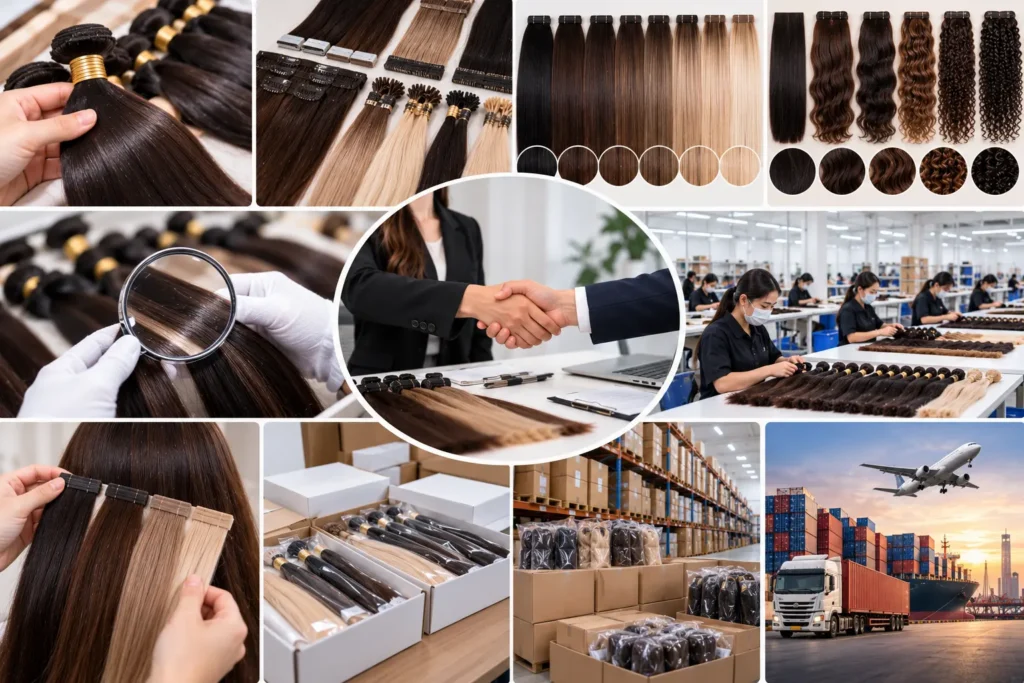
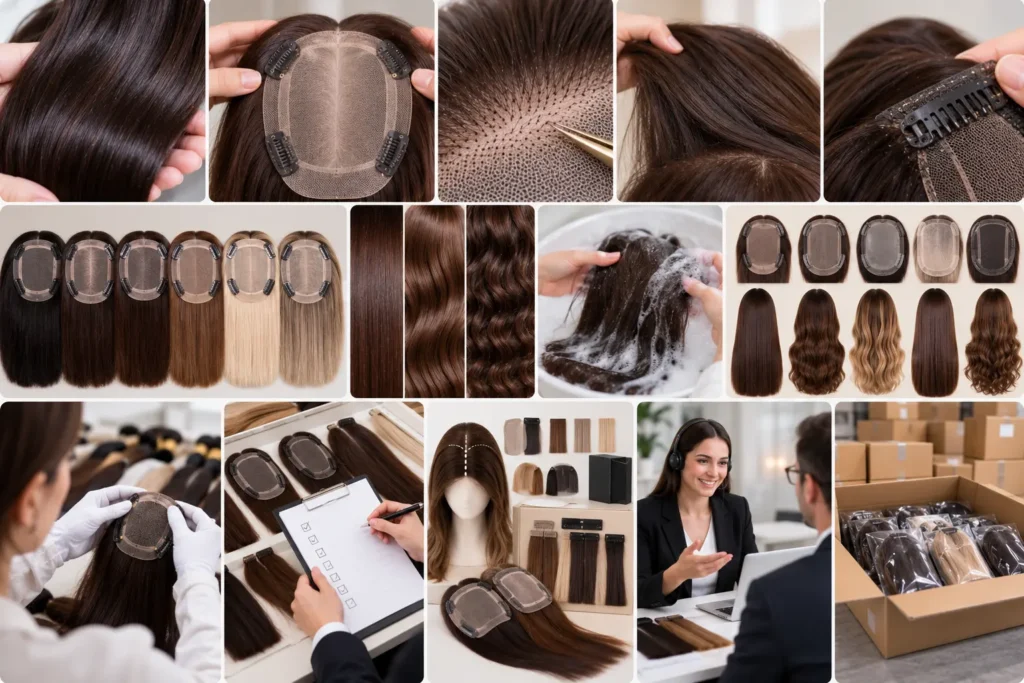
The best extension type for short hair depends on the client’s natural density and desired wear time. Options to consider include clip-in hair, tape-in hair, genius weft, machine weft, hand-tied weft, keratin bonds, or I-tip extensions. For temporary use, clip-ins work well. For salon wear, tape-ins and wefts often blend better.

Start with the client’s lifestyle
For occasional styling, discuss removable options such as clip-ins. For ongoing salon wear, discuss tape-ins, wefts, or strand-based systems with a trained stylist, including their maintenance and removal requirements.
Compare the main options as follows:
| Extension Type | Best For Short Hair? | Main Benefit | Key Buying Concern |
|---|---|---|---|
| Clip-in hair | Yes, for temporary styling | Easy to apply and remove | Clips may show on very fine short hair |
| Tape-in hair | Yes, if hair is long enough to cover tapes | Flat and lightweight | Adhesive quality and tape placement matter |
| Genius weft | Yes, for premium weft work | Thin, flexible, customizable | Requires professional installation |
| Machine weft | Sometimes | Strong and cost-effective | Can feel bulky on fine short hair |
| Hand-tied weft | Yes, with trained stylist | Soft and lightweight | Cannot be cut freely like some wefts |
| Keratin bonds / pre-bonded hair | Yes, for detailed placement | Good movement and natural distribution | Heat or bonding quality must be controlled |
| I-tip hair | Yes, for strand-by-strand work | No heat required | Bead placement needs skill |
Match the method to the short haircut
A blunt bob needs a different approach than a layered pixie grow-out. If the natural hair has a heavy line at the ends, discuss the density and a blending cut after installation with the stylist. If the hair is very fine, Avoid adding too much weight near the scalp because the attachments may show.
For short hair, pay close attention to three zones:
- The crown area — This area must hide clips, tapes, bonds, or beads.
- The side areas — These areas often expose short layers first.
- The nape area — This area can look bulky if the extensions start too low or too thick.
I recommend professional evaluation for permanent methods
Removable clip-ins and permanent or semi-permanent systems need different handling. Ask a trained stylist to assess density, hair condition, and attachment coverage before a major length change. For hair loss or scalp symptoms, consult a dermatologist about the cause before adding tension.
The plan may combine method selection with color matching and cutting. Ask the stylist to explain the reason for each component rather than assuming that mixing methods is necessary for every short haircut.
What length and weight help blend hair extensions with short hair?
Length and weight can make or break a short-hair transformation. If the extensions are too long, the natural short layers can stand out. If they are too heavy, the client may feel discomfort, and the natural hair may not cover the attachments well.
To blend hair extensions with short hair, I usually recommend a realistic length increase and a balanced gram weight. For many short styles, moving from chin length to shoulder length looks more natural than jumping immediately to waist length. Medium density often blends better than very heavy sets.

Avoid extreme length jumps
For short hair, aim for a believable result rather than the longest possible extension. A dramatic change can work, but it needs more hair, more layering, and more skill. If the natural hair is above the chin, very long extensions may create a visible step where the short hair ends.
A practical guide looks like this:
| Starting haircut | What to assess before selecting length |
|---|---|
| Pixie grow-out | Whether enough natural hair can conceal attachments; a professional assessment is essential |
| Chin-length bob | The blunt weight line and how a modest length change could be blended |
| Shoulder-length cut | Desired shape, density, and required finishing |
| Long bob / lob | Attachment coverage, movement, and a realistic final length |
Choose the final length with the stylist after checking the haircut, density, attachment coverage, and styling goal.
Check grams alongside inches
Consider weight alongside length when comparing extensions. A 20-inch set with too little hair can look thin at the ends. A very heavy set can feel uncomfortable and may be hard to hide in short hair.
Here are general guidelines for planning:
- Fine short hair: lighter sets, flatter attachments, soft density
- Medium short hair: moderate grams, layered cutting, flexible methods
- Thick short hair: higher grams, fuller wefts, more rows or pieces
- Blunt short hair: extra blending density around the mid-lengths
For B2B buyers, I recommend checking actual gram weight per pack, not only the marketing description. Two suppliers may both call a set “full head,” but one may include 100 grams and another may include 160 grams. That difference changes the final look.
Consider comfort and hair safety
Weight is not only a visual issue. It is also a comfort and safety issue. Short hair may not always have enough length to distribute tension well. If extensions pull too much, the client may experience discomfort or stress on natural hair.
I recommend that salons and brands evaluate:
- Attachment thickness
- Hair weight per piece
- Root tension after installation
- Client’s daily styling routine
- Removal and maintenance schedule
For B2B sourcing, compare available lengths, colors, textures, and attachment types with your intended service. Test samples before choosing a full product line, and record whether the weight and construction suit the target client group.
How do color and texture matching make short hair extensions look natural?
Color and texture matching matter even more on short hair because the natural hair sits directly on top of the extensions. If the shade is flat, too warm, too cool, or too shiny, the difference becomes clear. Treat color matching as a technical step, not a guess.
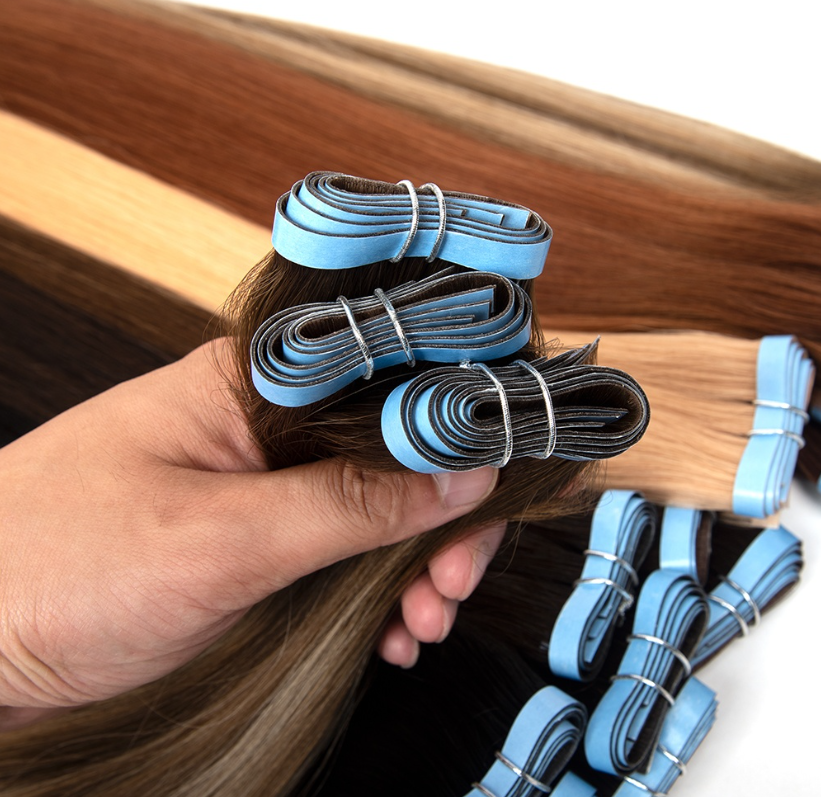
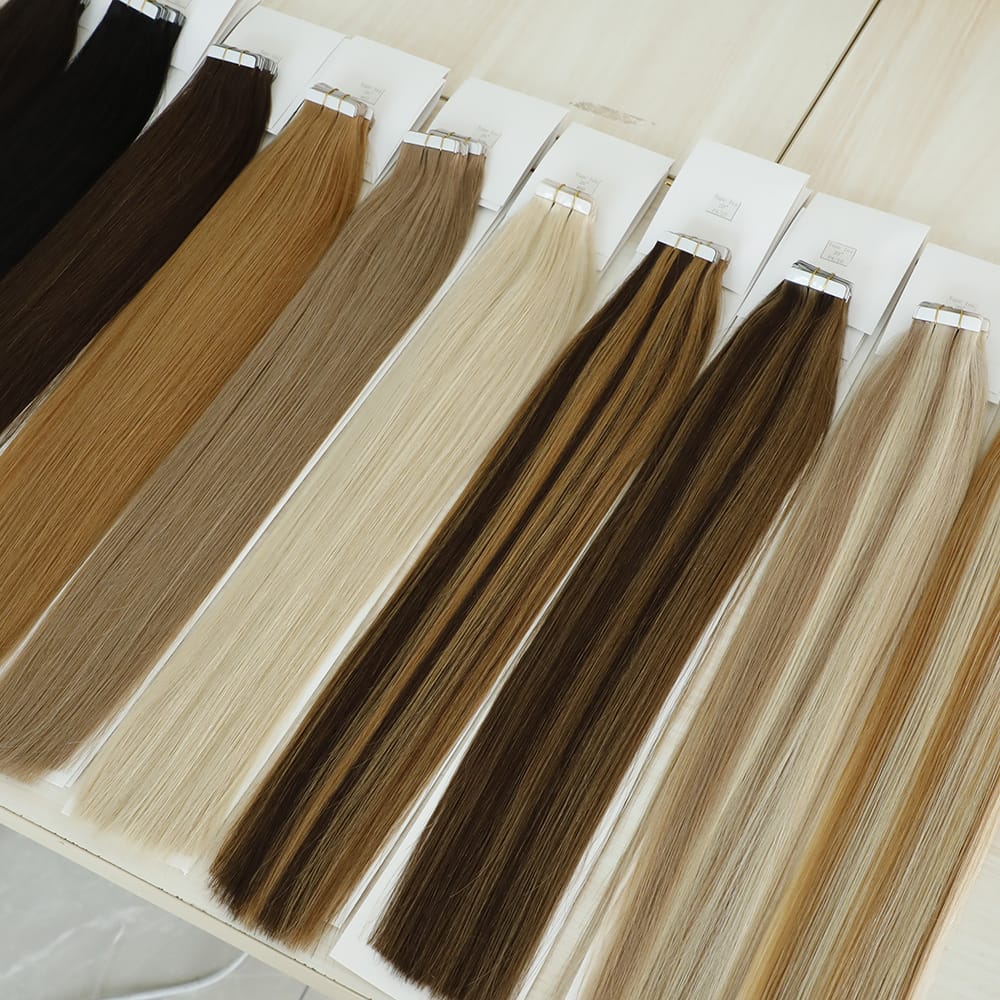
The most natural way to blend short hair extensions is to match the base color, undertone, texture, and finish. I also like multi-tonal shades, rooted colors, balayage tones, or custom coloring when needed. Compare single-color and multi-tonal samples against the actual hair rather than assuming one is always better.
Match undertone as well as shade level
Color has both level (lightness or darkness) and tone (warmth or coolness). Compare both on a physical sample before choosing an extension shade.
Check the following:
- Level: How light or dark the hair is
- Undertone: Ash, neutral, gold, copper, red, or violet
- Dimension: Highlights, lowlights, balayage, or rooted color
- Finish: Matte, silky, glossy, or coarse
- Lighting: Indoor light, daylight, and salon lighting
For short hair, I often prefer extensions with slight color dimension. Multi-tonal hair can hide the line between the natural hair and the extension hair better than a flat shade.
Use texture to create visual continuity
Compare the natural hair and extension sample after following their care instructions. Check whether the texture can be blended with the wearer’s normal styling routine.
Here is a simple comparison:
| Natural Hair Texture | Better Extension Choice | Styling Note |
|---|---|---|
| Straight | Straight or body wave | Use flat iron or blowout for smooth blending |
| Slight wave | Body wave or natural wave | Style both natural hair and extensions together |
| Loose curl | Loose curly texture | Define curls with matching products |
| Coarse or thick hair | Thicker human hair texture | Avoid overly silky hair that looks artificial |
I prefer human hair for flexible styling
Human hair may offer useful styling options, but do not assume every processed extension can be recolored or tolerate the same heat. Confirm washing, styling, and coloring permissions in the specific product’s instructions.
Ask suppliers to define “Remy,” “virgin,” and “cuticle intact” separately and explain processing history. Cuticle condition and orientation influence hair-surface friction, but a label alone does not verify a particular product’s tangle resistance or durability.
For brands, wholesalers, and salons, I recommend requesting:
- Color rings or color swatches
- Hair samples for wash testing
- Tangle and shedding checks
- Cuticle alignment information
- Care instructions for end users
Ask whether a physical color ring or shade sample is available and confirm its price and delivery terms. Screen colors alone are not a reliable basis for approving a wholesale shade.
Which installation method is best for short hair clients?
Installation can turn a good product into a beautiful result, but poor placement can make even expensive hair look unnatural. Short hair gives less coverage, so every attachment must be placed with care. Assess the client’s haircut before choosing the method.
The best installation method for short hair is the one that stays flat, hidden, and comfortable while supporting the desired style. Tape-ins, clip-ins, genius wefts, hand-tied wefts, keratin bonds, and I-tips can all work, but the best choice depends on hair density, length, lifestyle, and stylist skill.
Compare home use and salon use
Some extension methods are easier for users to apply at home. Others should be handled by a trained stylist. Distinguish between them because the risk level is different.
At-home friendly options:
- Clip-in hair extensions
- Halo hair extensions, if the haircut can cover the wire
- Some temporary ponytail pieces
Salon-focused options:
- Tape-in hair extensions
- Genius weft extensions
- Hand-tied weft extensions
- Machine weft extensions
- Keratin bond extensions
- I-tip extensions
Clip-ins can be a good entry product because the user can remove them at night. However, on very short hair, clip placement takes practice. The top layers must cover the clips, and the extensions often need trimming.
Place extensions below the shortest visible layers
Short hair usually has a visible outer layer. Avoid placing extension attachments where that layer will separate or lift. If the top section is too short, the attachments may show when the client moves.
A stylist may use these techniques:
- Backcomb lightly near the roots to help clip-ins grip better.
- Stack wefts carefully to add density without too much bulk.
- Leave enough natural hair on top to cover attachment points.
- Cut face-framing layers after installation.
- Blend the ends with point cutting or slide cutting.
The haircut after installation is often the hidden secret. Do not assume extensions will blend perfectly straight out of the package. Even high-quality human hair usually needs shaping to match the client’s natural cut.
Evaluate supplier consistency for salon results
For B2B buyers, installation success also depends on product consistency. If a salon orders tape-ins this month and reorders next month, the color, grams, adhesive quality, and hair texture should remain stable. Inconsistent products create more work for stylists and more complaints from clients.
I recommend that wholesale buyers check:
| Quality Point | Why It Matters for Short Hair |
|---|---|
| Tape adhesive strength | Weak tape may slip; overly aggressive tape may be hard to remove |
| Weft thickness | Thick seams may show under short layers |
| Hair direction | Mixed directions can increase tangling |
| Color consistency | Short hair exposes color mismatch quickly |
| End fullness | Thin ends make the blend look unfinished |
| Shedding control | Short styles need clean, stable pieces |
Ask the supplier for current product specifications, inspection procedures, complaint handling, and reorder terms. Evaluate the information alongside samples and your own trial orders.
How can I style and maintain extensions so the short hair blend lasts?
A fresh installation can look beautiful on day one, but poor styling and care can ruin the blend quickly. Short hair needs daily control because the natural layers can flip out, separate, or reveal the attachments. Provide aftercare instructions with the product recommendation.
To keep short hair extensions blended, style the natural hair and extensions together, use heat protection, brush gently, avoid heavy oils near attachment points, and follow the maintenance schedule. Regular trimming, proper washing, and professional adjustment help the blend stay soft and natural.
Style both the natural hair and extensions together
One common mistake is styling the extensions separately from the natural hair. If the natural short layer stays straight while the extensions are curled, the result looks disconnected. Curl or smooth both sections together so they move as one shape, following the product’s styling instructions.
For short hair, these styling techniques help:
- Use loose waves to hide layer differences.
- Curl away from the face for softer blending around the front.
- Straighten carefully if the natural haircut is blunt.
- Add texture spray lightly to reduce separation.
- Use a round brush blowout for volume and movement.
Loose waves are often the easiest style for blending because they break up the line where the natural hair ends. A sleek straight style can look beautiful, but it requires a more accurate cut, better density, and a closer color match.
Protect the hair during washing and brushing
Human hair extensions require product-specific care. Provide clear instructions for washing, brushing, drying, and protecting attachment points, and review the routine if the hair becomes difficult to manage.
A simple care routine includes:
- Brush before washing to reduce tangles.
- Use sulfate-free or extension-safe shampoo when recommended.
- Apply conditioner from mid-lengths to ends, not on tape or bonds.
- Dry attachment areas properly before sleeping.
- Sleep with hair in a loose braid or low ponytail.
- Avoid pulling, rough brushing, and excessive heat.
For tape-ins and bonded methods, avoid heavy oils or conditioners near the roots. Oils can weaken adhesive or make attachments slip. For clip-ins, remove them before sleeping to protect both the extensions and natural hair.
Schedule maintenance before problems appear
Maintenance should not start only after tangling, slipping, or matting happens. I prefer planned care because it protects the client’s natural hair and helps the extensions look better for longer.
Typical maintenance timing may include:
| Method | Maintenance question |
|---|---|
| Clip-ins | How should the pieces be removed, stored, and cleaned? |
| Tape-ins | When should this tape system be checked, removed, and re-taped? |
| Wefts | When should row position, tension, and regrowth be reviewed? |
| Keratin bonds | What removal and replacement schedule applies to this bond system? |
| I-tips | When should this bead system be adjusted or replaced? |
Set the schedule using the product instructions and a professional assessment of regrowth, attachment condition, scalp comfort, and care habits.
For salon and wholesale buyers, I recommend adding aftercare cards to every package. Good instructions reduce complaints and help clients protect the hair. If a buyer is building a private label extension line, aftercare education can become part of the brand experience.
Frequently Asked Questions
Can very short hair wear extensions?
Yes, very short hair can wear extensions, but the result depends on length, density, and method. I usually recommend a professional consultation if the natural hair is above chin length. The stylist may need strand-by-strand extensions, careful weft placement, or a custom cut to hide short layers.
Are clip-in extensions good for short hair?
Clip-in extensions can work well for short hair when the clips are hidden and the extensions are layered after application. I like clip-ins for temporary styling because users can remove them at night. However, very fine or very short hair may not cover the clips easily.
What type of hair extensions looks most natural on short hair?
Human hair extensions usually look most natural on short hair because they can be styled with the client’s own hair. I prefer Remy hair or cuticle intact hair when the buyer wants better movement and reduced tangling. Buyers should verify hair quality through samples and testing.
How do I hide short layers when wearing extensions?
Short layers can be concealed by selecting suitable density, placing extensions under the natural top layer, and having a stylist cut the extensions after installation. Loose waves also help blend the transition. A stylist can soften blunt ends with layering, point cutting, or face-framing work.
Should short hair extensions be installed by a stylist?
I recommend a stylist for most semi-permanent short hair extension applications. Short hair gives less coverage, so placement and cutting are important. Clip-ins can be used at home, but tape-ins, wefts, keratin bonds, and I-tips usually need professional evaluation and installation.
Conclusion
Choosing hair extensions for short hair starts with a suitable method, realistic length and weight, a close color and texture match, and a professional blending plan. Salons and distributors can compare our Genius Weft product page and tape-in category, then contact RENAI HAIR about current specifications and sample options.