
HOW MUCH IS TAPE IN HAIR EXTENSION
Tape in hair extension pricing can feel confusing when every salon, brand, and supplier gives a different number. That confusion gets worse when you compare synthetic hair, Remy human hair, and premium cuticle-intact options. The good news is that I can break the cost down clearly, so you know what you are really paying for.
A full head of tape in hair extension usually costs about $200 to $600 at a salon[^1], depending on hair quality, length, weight, location, and stylist experience. Premium 100% human hair tape-ins can cost more, especially when you choose longer lengths, thicker grams, custom colors, or professional reapplication services.
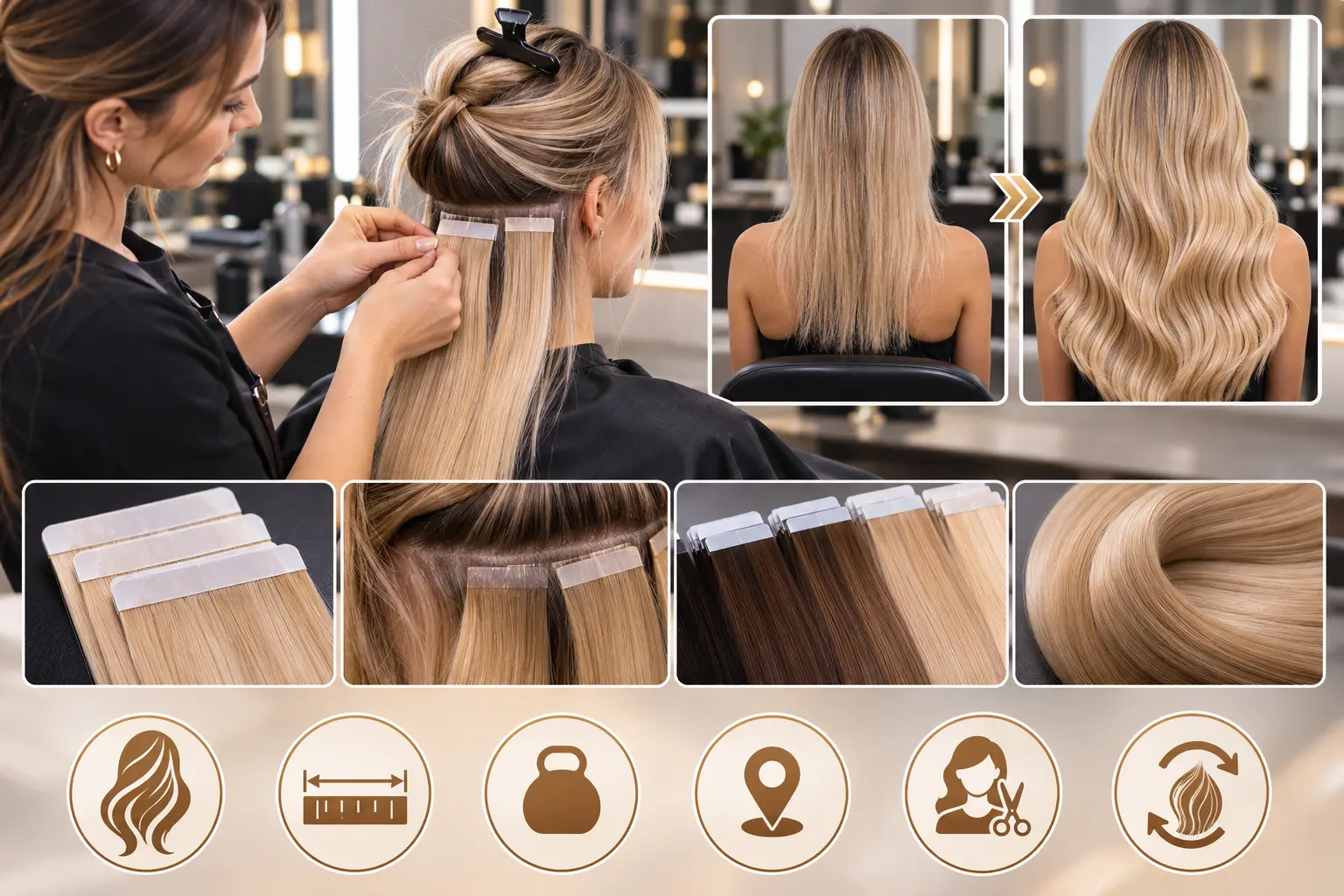
The price is not only about the hair itself. It also includes installation, blending, cutting, tape quality, maintenance, and replacement timing. If you are buying for personal use, salon pricing matters most. If you are buying for a brand or salon business, supplier quality matters even more.
How Much Is Tape In Hair Extension For A Full Head?
A full head of tape in hair extension can look affordable at first, but the final bill often changes after consultation. The problem is that many buyers only compare pack prices. Then they realize they also need enough pieces, professional installation, color matching, and maintenance.
A full head of tape in hair extension normally costs $200 to $600 in many salons. Budget options may sit near the lower end, while high-quality 100% human hair, longer lengths, and premium salon services can move the price higher. The total depends on both product cost and service cost.
What Usually Goes Into The Price?
When I look at tape-in pricing, I separate the total cost into four parts:
- Hair cost
- Installation cost
- Cutting and blending cost
- Maintenance and re-taping cost
That is why one salon may quote $250 while another quotes $800. They may not be quoting the same thing.
| Cost Item | Typical Range | What It Means |
|---|---|---|
| Hair only | $80–$400+ | Depends on length, grams, and hair quality |
| Installation | $100–$300+ | Depends on stylist skill and local market |
| Cutting/blending | $30–$100+ | Helps extensions look natural |
| Move-up/re-tape | $80–$250+ | Usually needed every 6–8 weeks |
Why Length And Weight Change The Cost
Longer hair costs more because longer raw human hair is harder to collect and process. A 14-inch set and a 24-inch set may look similar online, but the raw material cost is very different.
Thickness also matters. A client with fine hair may only need partial volume. A client with thick natural hair may need more packs to create a balanced look.
In my experience working with hair extension buyers, many first-time customers underestimate how many pieces they need[^2]. A few tape-ins can add highlights or side volume. A true full head usually needs more hair, better placement, and careful blending.
Common Full Head Scenarios
Here is a simple way to think about it:
- Volume only: lower cost, fewer packs
- Length and volume: medium to high cost
- Long, thick transformation: highest cost
- Color effects or highlights: depends on color selection and placement
If you are asking “how much is tape in hair extension?” I suggest asking the salon whether the quote includes hair, installation, trimming, and aftercare. That one question can prevent a surprise bill later.
What Factors Affect Tape In Hair Extension Cost?
Tape in hair extension cost can rise quickly when buyers focus only on the visible result. The stressful part is that two sets may look similar in photos but perform very differently after washing, heat styling, and daily wear.
The main factors that affect tape in hair extension cost are hair quality, length, weight, adhesive tape, color work, salon location, stylist skill, and maintenance needs. Human hair tape-ins cost more than synthetic options, but they usually offer better styling flexibility, softness, and a more natural finish.
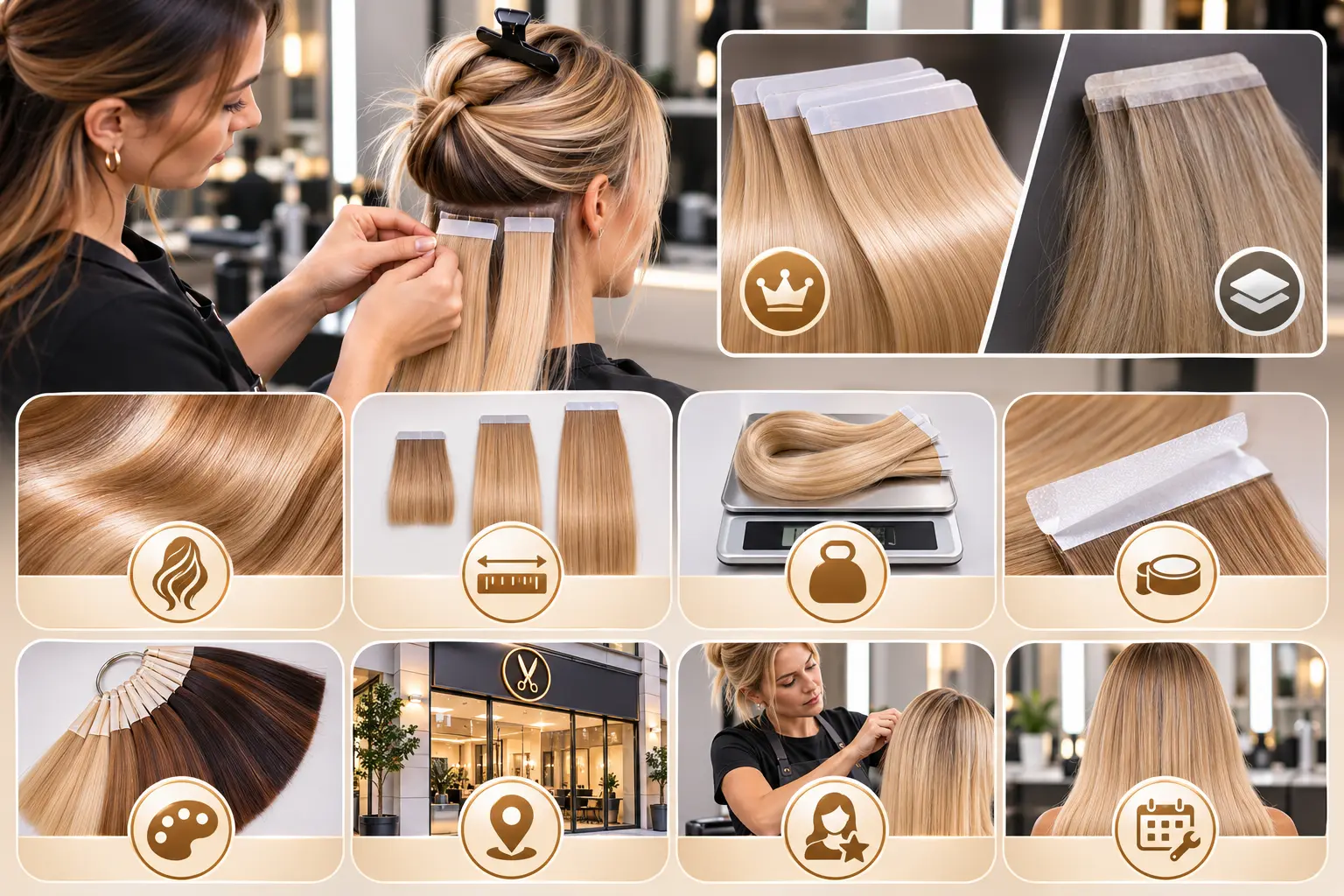
Hair Quality Comes First
Hair quality is the biggest factor. Buyers usually see options like:
- Synthetic hair
- Human hair
- Remy human hair
- Cuticle-intact hair
- Double drawn human hair
100% human hair tape-ins cost more, but they can look more natural. Remy hair is often preferred because the hair cuticles are aligned in one direction, which may reduce tangling[^4]. Cuticle-intact hair is often positioned as a higher-quality option, but buyers should still verify the supplier’s quality standards and inspect samples.
At RENAI HAIR, I see B2B customers ask about Remy Hair, Cuticle Intact Hair, and consistent quality control because they are not only buying one set. They are protecting their brand reputation.
Tape Quality Also Matters
The adhesive tape is easy to overlook. However, poor tape can cause slipping, residue, discomfort, or difficult removal[^5]. Many suppliers describe their tape as medical grade, but buyers should ask for supporting documents and test the tape under real salon conditions.
For salons and distributors, I recommend checking:
- Holding strength after washing
- Residue after removal
- Comfort on the scalp
- Replacement tape availability
- Performance in humid climates
Color And Customization Add Cost
Standard colors are usually more affordable. Custom colors, balayage effects, rooted shades, piano colors, and fashion shades usually cost more. The cost increase comes from extra processing, higher reject rates, and more quality control[^6].
Salon Location Changes The Final Price
A salon in a large city may charge more than a salon in a smaller town[^7]. This does not always mean the hair is better. It may simply reflect rent, labor cost, demand, and stylist reputation.
If you search for “tape in hair extensions near me,” compare more than the price. Look at photos, reviews, consultation quality, and whether the stylist explains maintenance clearly.
Are 100% Human Hair Tape In Hair Extensions Worth The Price?
Cheap extensions can seem tempting when you want a fast change. The problem is that low-quality hair may tangle, shed, dry out, or look unnatural after a few washes. Then the “cheap” choice becomes expensive because you replace it sooner.
100% human hair tape in hair extension products are often worth the higher price when you want natural movement, heat styling flexibility, longer wear, and better blending. The best value usually comes from matching the hair grade, length, and color to your actual needs instead of choosing only by price.
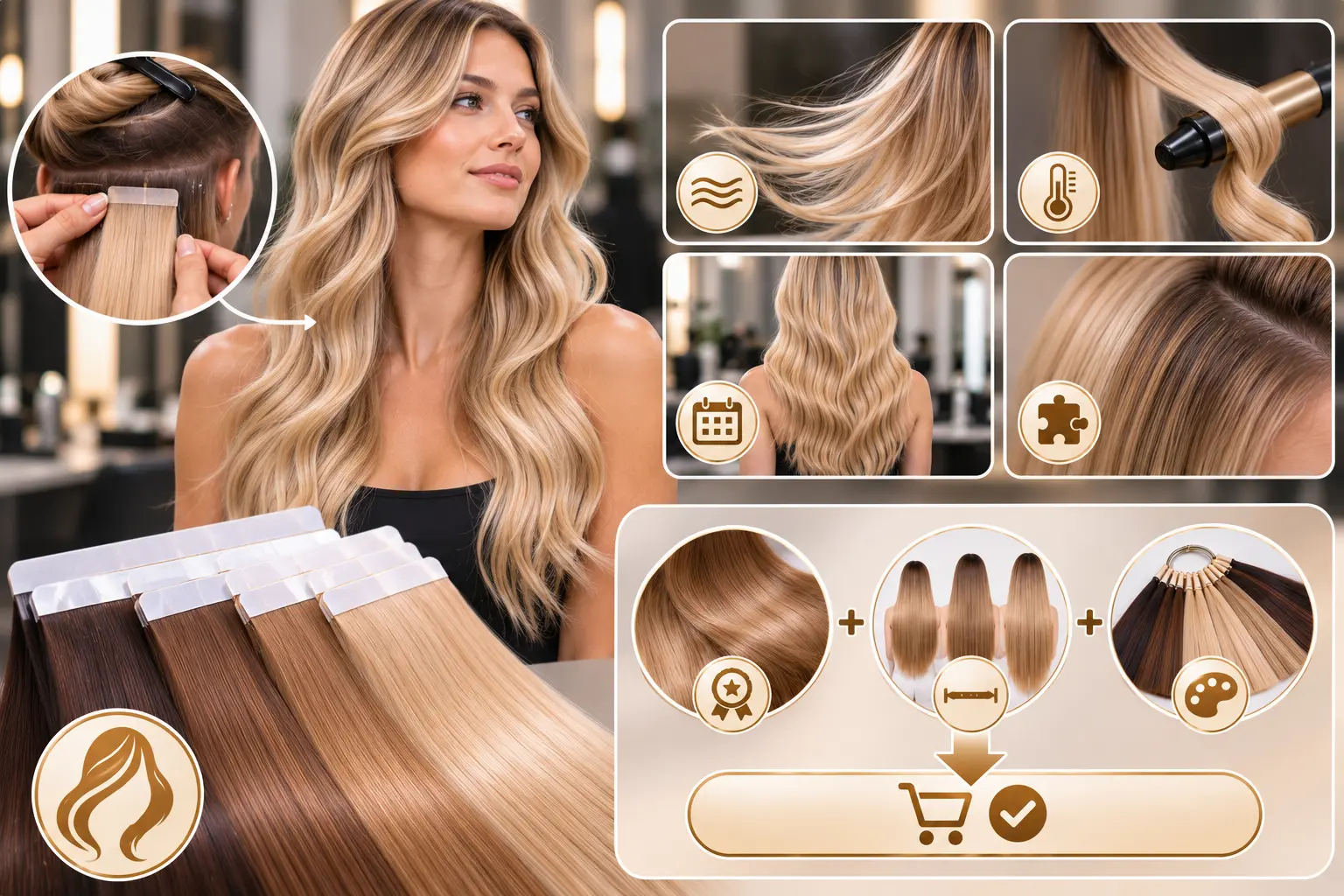
Human Hair Vs Synthetic Hair
Here is a simple comparison:
| Feature | Synthetic Tape-Ins | Human Hair Tape-Ins |
|---|---|---|
| Initial cost | Lower | Higher |
| Natural look | Medium | High |
| Heat styling | Limited | Better flexibility |
| Lifespan | Shorter | Longer with care |
| Color blending | Less natural | More natural |
| Best for | Temporary use | Regular wear and salon service |
Human hair is not automatically perfect. The quality still depends on sourcing, processing, cuticle direction, coloring, and final inspection. However, good human hair usually gives a softer and more realistic result.
Why B2B Buyers Care About Consistency
For individual customers, one bad set is frustrating. For a salon, wholesaler, or hair extension brand, inconsistent quality can damage customer trust.
That is why I always suggest B2B buyers evaluate suppliers with a practical checklist:
- Does the supplier offer stable color matching?
- Does the hair remain soft after washing?
- Does the tape hold well during normal wear?
- Does the supplier inspect shedding and tangling?
- Can the supplier support repeat orders?
- Can the supplier develop new colors or product lines?
At RENAI HAIR, our business focuses on products like Tape In Hair, Genius Weft, Flex Weft, Machine Weft, Hand Tied Weft, Keratin/Prebonded Hair, and other human hair extensions. From my side, I see that professional buyers often care less about the lowest price and more about stable supply, reliable inspection, and clear communication.
When Premium Hair Makes Sense
Premium tape-ins make sense when:
- You want daily wear
- You use heat tools
- You need natural blending
- You are a salon serving paying clients
- You are building a private label hair brand
- You want fewer complaints and returns
If you only need a one-time style for a short event, a lower-cost option may be enough. But if you want long-term wear, a better tape in hair extension product usually gives better value.
Which Brands Offer Tape In Hair Extensions?
Choosing a brand can feel overwhelming because many companies use similar words: Remy, premium, salon quality, professional grade, and luxury. The issue is that marketing language does not always tell you how the hair performs after real use.
Popular tape in hair extension brands include Bellami Hair, Beauty Works, Luxy Hair, and Renai Hair. Each brand may serve a different buyer type. Some focus on direct-to-consumer retail, while manufacturers like RENAI HAIR are more suitable for B2B buyers, wholesalers, salons, and private label brands.

Brand Options Buyers Often Compare
Here are some well-known names buyers may research:
| Brand | Common Buyer Type | Notes |
|---|---|---|
| Bellami Hair | Retail customers, salons | Well-known consumer brand |
| Beauty Works | Retail and salon market | Popular in beauty markets |
| Luxy Hair | Online retail customers | Strong consumer-facing presence |
| Renai Hair | B2B buyers, salons, wholesalers, brands | Manufacturer and supplier focus |
I do not think there is one “best” brand for everyone. A consumer may want easy online ordering and reviews. A salon may want consistent quality and professional support. A distributor may need private label packaging, stable supply, and flexible color options.
How I Suggest Comparing Brands
Instead of only asking, “Which brand is cheapest?” I suggest asking better questions:
-
What type of hair is used?
Ask whether it is 100% human hair, Remy hair, or cuticle-intact hair. -
How much hair is included?
Compare grams, number of pieces, and length. -
Can the hair be reused?
Reusability depends on hair quality, tape replacement, and maintenance. -
How stable are the colors?
For B2B buyers, shade consistency across repeat orders is very important. -
What quality checks are done before shipping?
Ask about inspection for shedding, tangling, color accuracy, length, and tape bonding.
Why Supplier Selection Matters For Businesses
If you are a brand owner, importer, beauty supply company, or salon chain, your tape in hair extension supplier affects your profit and reputation. A low unit price may look attractive, but hidden costs can appear later through customer complaints, returns, slow delivery, or inconsistent batches.
For professional purchasing, I recommend ordering samples first. Test them like a stylist would:
- Wash the hair several times
- Blow-dry and flat iron it
- Check shedding after brushing
- Test tape hold and removal
- Compare color in natural light
- Record feedback from stylists
This approach is simple, but it helps buyers avoid emotional decisions based only on photos.
How Can You Save Money On Tape In Hair Extension Without Losing Quality?
Saving money sounds easy until the lowest-priced hair starts tangling or slipping. Then you spend more on replacement, removal, and repair. The better goal is not to buy the cheapest set. The better goal is to control the total cost of wear.
You can save money on tape in hair extension by choosing the right length, buying the correct amount of hair, working with an experienced stylist, following aftercare rules, and selecting a reliable supplier. For businesses, sample testing and consistent supplier evaluation reduce costly complaints and returns.
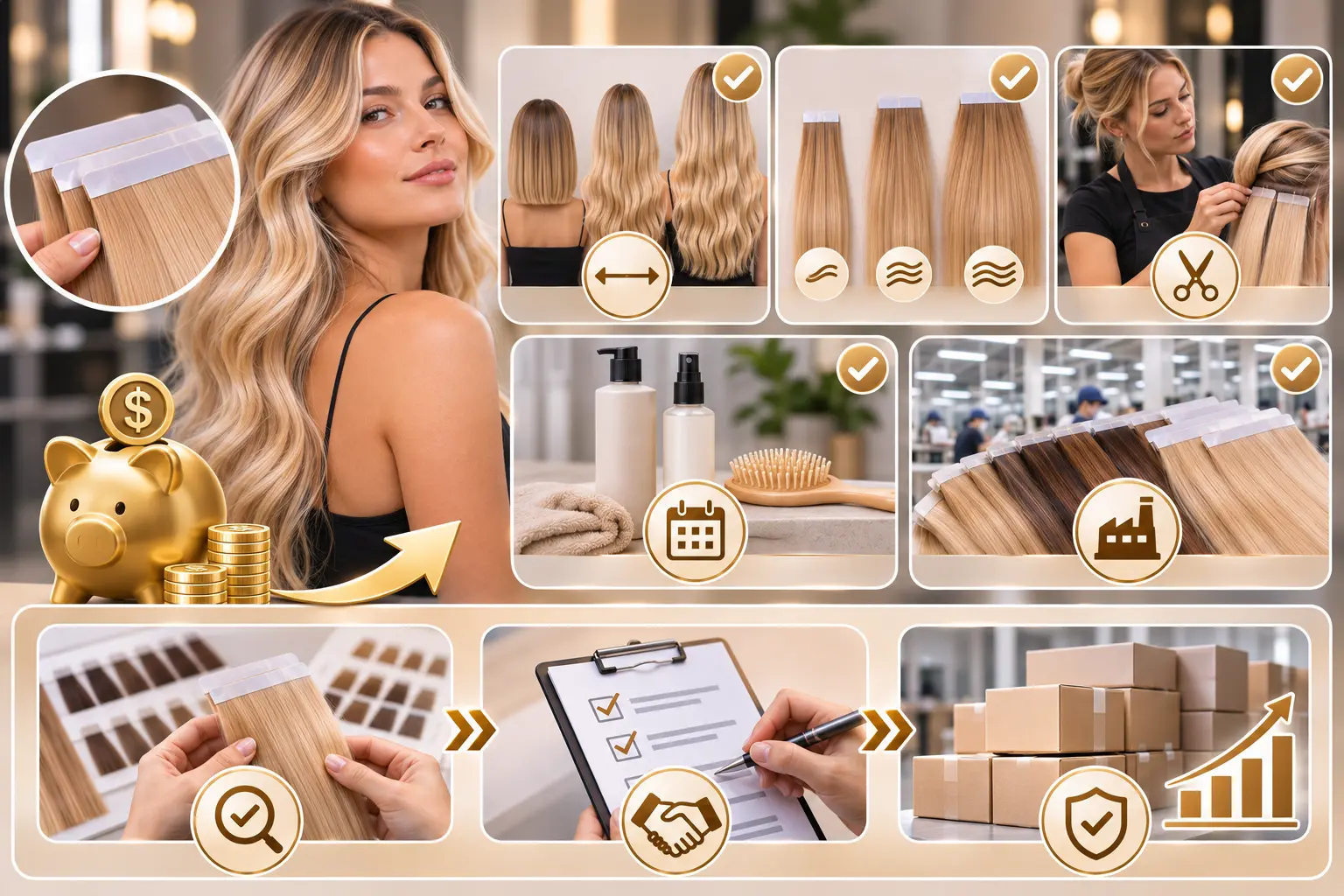
Choose The Right Length
Longer is not always better. If your natural hair is shoulder length, jumping to very long extensions may require more packs and more blending. A moderate length can look more natural and cost less.
For example:
- 14–16 inches: good for natural volume and moderate length
- 18–20 inches: popular for fuller transformation
- 22–24 inches: higher cost and more maintenance
Do Not Underbuy Hair
This sounds strange, but buying too little can waste money. If you do not have enough hair, the result may look thin or uneven. Then you may need another appointment and another pack.
A good stylist can estimate the correct amount based on your natural density, haircut, and target look.
Take Maintenance Seriously
Tape-ins usually need move-up appointments every 6–8 weeks, depending on hair growth, oil level, lifestyle, and care routine. If you wait too long, the tapes can twist, pull, or become harder to remove.
Basic care habits include:
- Use sulfate-free shampoo when recommended by your stylist[^8]
- Avoid conditioner near the tape bonds
- Brush gently from ends upward
- Sleep with hair loosely tied or braided
- Avoid excessive oil near the roots
- Use heat protectant before styling
For B2B Buyers, Think In Cost Per Wear
A wholesaler or salon should not judge only by unit price. A better measurement is cost per wear and complaint rate.
For example, one supplier may offer a lower price, but the hair may only last a short time. Another supplier may cost more, but the hair may be reusable and receive better customer feedback.
Professional buyers should compare:
| Evaluation Point | Why It Matters |
|---|---|
| Hair softness after washing | Shows processing quality |
| Tape bonding stability | Affects salon satisfaction |
| Color consistency | Reduces customer complaints |
| Shedding and tangling | Impacts reviews and returns |
| Supplier communication | Supports repeat business |
| Delivery reliability | Protects inventory planning |
I always believe a good purchase is not just a low invoice. A good purchase is a product that sells well, wears well, and keeps customers coming back.
Frequently Asked Questions
How long do tape in hair extensions last?
Tape in hair extensions usually last 6–8 weeks before a move-up appointment. The hair itself may last longer if it is high-quality human hair and cared for properly. Longevity depends on washing habits, styling, tape quality, hair growth, and professional installation.
Are tape in hair extensions bad for natural hair?
Tape-ins should not damage natural hair when they are applied, maintained, and removed correctly by a trained stylist[^9]. Damage usually happens when extensions are too heavy, placed incorrectly, removed roughly, or worn too long without maintenance[^10].
How many packs do I need for a full head?
Most full-head applications need multiple packs, but the exact amount depends on your natural hair density, head size, length goal, and desired volume. Fine hair may need less, while thick hair usually needs more for a balanced blend.
Can I install tape in hair extensions at home?
I do not recommend DIY installation for most people. Tape placement affects comfort, blending, and natural hair safety. A professional stylist can section the hair correctly, avoid scalp tension, and create a cleaner result.
What is the best tape in hair extension for salons?
The best tape in hair extension for salons is usually 100% human hair with stable tape, consistent color, low shedding, and reliable supplier support. Salons should test samples before bulk orders and choose products that match their clients’ needs and price range.
Conclusion
Tape in hair extension cost usually ranges from $200 to $600 for a full head, but the real price depends on hair quality, length, grams, installation, salon location, and maintenance. I suggest looking beyond the cheapest quote and focusing on natural appearance, tape performance, and long-term value. If you are a salon, wholesaler, distributor, or hair brand looking for stable human hair tape-ins, contact RENAI HAIR to discuss samples, colors, lengths, and B2B supply options.
[^1]: "How Much Are Hair Extensions?", https://www.styleseat.com/blog/how-much-hair-extensions/. Industry pricing surveys and beauty market reports document the typical range for professional tape-in hair extension services, including both product and installation costs, though figures vary by region and salon tier. Evidence role: statistic; source type: research. Supports: The typical price range for a full-head tape-in hair extension service at a professional salon. Scope note: No single authoritative source publishes a standardized national average; figures are aggregated from salon pricing directories and consumer surveys. [^2]: "A Study On Hair Extension Consumption Among Black ...", https://www.academia.edu/38311343/A_Study_On_Hair_Extension_Consumption_Among_Black_Women. Consumer education resources from professional hair extension training organizations and stylist associations document that quantity miscalculation is among the most common errors made by first-time extension buyers, often resulting in insufficient coverage or uneven blending. Evidence role: general_support; source type: research. Supports: That consumers frequently misjudge the quantity of hair extension pieces needed for a full-head application. Scope note: This claim is primarily supported by practitioner experience and industry education materials rather than formal consumer behavior research. [^3]: "Synthetic vs Human Hair Wigs: Which Fiber Type Is Right ...", https://www.breastcancer.org/treatment-side-effects/hair-loss/wigs/fiber-type-synthetic-vs-human. Materials science literature on textile fibers documents that synthetic hair extensions, commonly composed of modacrylic or polyester polymers, exhibit lower heat deflection temperatures and different surface friction properties than human hair keratin, limiting their compatibility with thermal styling tools. Evidence role: mechanism; source type: research. Supports: That synthetic hair fibers, typically made from acrylic or modacrylic polymers, have lower thermal tolerance and different wear characteristics than natural human hair keratin fibers. Scope note: Performance characteristics vary by specific synthetic fiber formulation; some high-temperature synthetic fibers are engineered to partially mimic human hair behavior. [^4]: "What Is Remy Hair? A Professional Guide to Cuticle ...", https://www.verahairco.com/blogs/the-journal/the-science-behind-remy-hair-what-makes-it-the-gold-standard-for-extensions. Trichological and cosmetic science literature defines Remy hair by the preservation of the cuticle layer with all strands oriented root-to-tip, a property associated with reduced inter-fiber friction and tangling compared to non-Remy processed hair. Evidence role: definition; source type: encyclopedia. Supports: That Remy hair is defined by unidirectional cuticle alignment and that this structural property reduces friction-related tangling. Scope note: Peer-reviewed studies specifically quantifying tangling reduction in Remy versus non-Remy extensions are limited; most support is drawn from cosmetic chemistry and hair fiber science literature. [^5]: "The Physical Testing of Pressure-Sensitive Adhesive ...", https://ptacts.uspto.gov/ptacts/public-informations/petitions/1460368/download-documents?artifactId=ZKFKOxDOnBUDYm76URZPJn23o5dlXjmvgA1ndkp9bHF_nyOoRPWz3ro. Pressure-sensitive adhesive science literature establishes that adhesive formulation, coating weight, and backing material determine peel strength, cohesive failure characteristics, and residue behavior—properties directly relevant to the performance and removability of tape-in hair extension bonds. Evidence role: mechanism; source type: research. Supports: That adhesive quality in tape-in extensions directly affects bond strength, residue upon removal, and wearer comfort. Scope note: Published testing data specific to hair extension tape adhesives are limited; the mechanistic support is drawn from broader pressure-sensitive adhesive engineering literature. [^6]: "Effects of excessive bleaching on hair: comparative analysis of ...", https://pmc.ncbi.nlm.nih.gov/articles/PMC11652465/. Cosmetic chemistry literature on oxidative hair coloring documents that achieving multi-tonal effects such as balayage or rooted shades requires sequential bleaching and toning steps that increase processing time, chemical consumption, and the probability of fiber damage, contributing to higher production costs and reject rates in manufactured hair extensions. Evidence role: mechanism; source type: research. Supports: That custom and multi-tonal hair coloring processes involve additional chemical processing steps that increase production complexity, material waste, and quality control requirements. Scope note: Published cost accounting data specific to hair extension manufacturing are not widely available in academic literature; the cost mechanism is inferred from cosmetic chemistry and textile processing research. [^7]: "Hairdressers, Hairstylists, and Cosmetologists", https://www.bls.gov/oes/2023/may/oes395012.htm. Bureau of Labor Statistics data on occupational wages and consumer price indices for personal care services document significant geographic variation in service pricing, with metropolitan areas consistently showing higher average prices than non-metropolitan areas, reflecting differences in rent, labor costs, and consumer demand. Evidence role: general_support; source type: government. Supports: That personal care service prices, including salon services, vary systematically with geographic location and local cost of living. Scope note: Government wage and price data cover personal care services broadly and are not specific to hair extension services; the geographic pricing pattern is inferred from general salon service cost data. [^8]: "Polyphenol–Inorganic Sulfate Complex-Enriched ... - PMC", https://pmc.ncbi.nlm.nih.gov/articles/PMC11939901/. Cosmetic chemistry literature on surfactant behavior indicates that anionic sulfate surfactants, such as sodium lauryl sulfate, can penetrate and weaken pressure-sensitive adhesive bonds through emulsification, providing a chemical rationale for sulfate-free shampoo recommendations in tape-in extension care. Evidence role: mechanism; source type: research. Supports: That sulfate-based surfactants can degrade the adhesive bond of tape-in extensions, supporting the recommendation for sulfate-free cleansers. Scope note: Direct peer-reviewed studies on sulfate surfactant effects on hair extension tape adhesives specifically are limited; the mechanism is inferred from broader adhesive and surfactant chemistry research. [^9]: "Tape-In Hair Extensions in the USA A Comprehensive Guide", https://www.academia.edu/143926488/Tape_In_Hair_Extensions_in_the_USA_A_Comprehensive_Guide. Professional cosmetology and trichology organizations note that tape-in extensions applied with appropriate weight distribution, correct sectioning, and proper adhesive removal techniques are associated with low rates of mechanical hair damage, provided maintenance intervals are observed and removal is performed by a trained practitioner. Evidence role: expert_consensus; source type: institution. Supports: That professionally applied and maintained tape-in extensions, when used according to established guidelines, present minimal risk of damage to natural hair. Scope note: Formal clinical trials on tape-in extension safety with standardized professional protocols are limited; the consensus is primarily based on practitioner guidelines and case-based dermatological literature rather than randomized controlled studies. [^10]: "Traction alopecia: the root of the problem - PMC", https://pmc.ncbi.nlm.nih.gov/articles/PMC5896661/. Dermatological literature on traction alopecia identifies sustained mechanical tension on hair follicles—such as that produced by heavy or improperly applied extensions—as a cause of follicular inflammation and, in chronic cases, permanent hair loss. Evidence role: mechanism; source type: paper. Supports: That excessive weight, improper placement, and prolonged wear of hair extensions are recognized risk factors for traction-related hair and scalp damage. Scope note: Most clinical studies focus on traction alopecia from braids and weaves; peer-reviewed data specific to tape-in extension damage mechanisms are less extensive.