Premium Remy vs Cuticle Remy vs Fully Cuticle-Intact Remy: A Buyer’s Comparison
You're evaluating hair extension suppliers, and suddenly three terms appear: Premium Remy, Cuticle Remy, and Fully Cuticle-Intact Remy. Each claims superior quality, but what do these distinctions mean for inventory performance, customer satisfaction, and profit margins? For B2B buyers in the human hair extension market, understanding these classifications directly impacts return rates, repeat purchases, and brand reputation.
Premium Remy refers to virgin hair sorted by root-to-tip direction with natural color verification at sourcing. Cuticle Remy indicates hair where cuticle layers are intentionally preserved, though often partially removed to prevent tangling, tested by running fingers from tip to root. Fully Cuticle-Intact Remy represents hair maintaining 100% cuticle coverage in correct directional alignment—the highest grade but requiring customer education about temporary "false tangling" after washing. These categories reflect different processing approaches, quality standards, and end-user care requirements rather than arbitrary marketing terms.
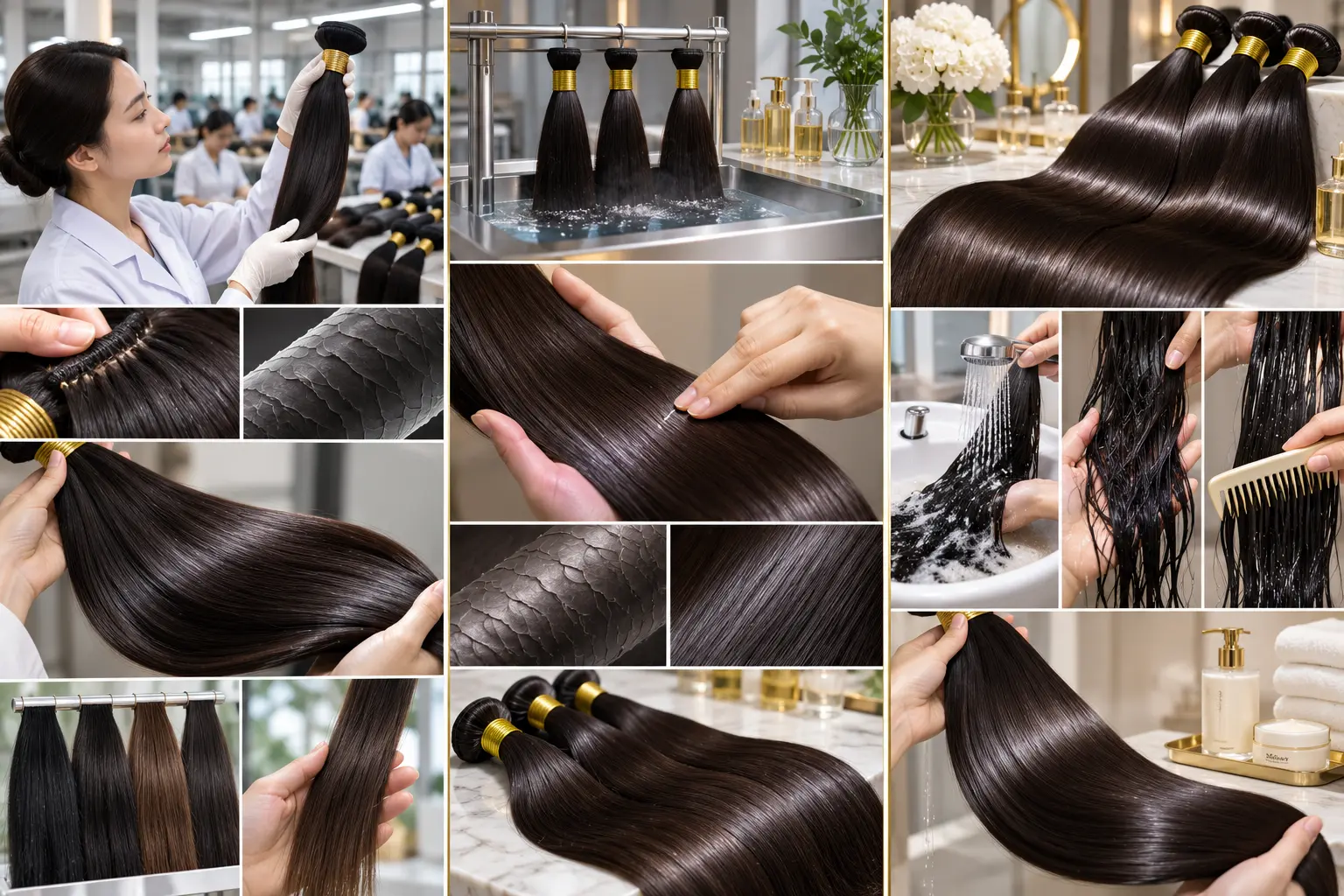
The hair extension market contains substantial terminology confusion because "Remy" has become diluted through inconsistent industry usage. When you're placing large orders, understanding the physical differences between these categories—and their practical implications—becomes a critical procurement competency.
What Defines Premium Remy Hair Quality Standards?
Premium Remy hair quality begins at the sourcing stage, before factory processing.
Premium Remy hair is sourced from donors providing virgin, chemically untreated hair that suppliers verify through blade scraping tests at collection points. When scraped with a blade, genuinely natural hair reveals pure white inner cortex, while chemically treated hair shows discoloration. This verification ensures the raw material foundation meets natural color standards before entering production workflows.
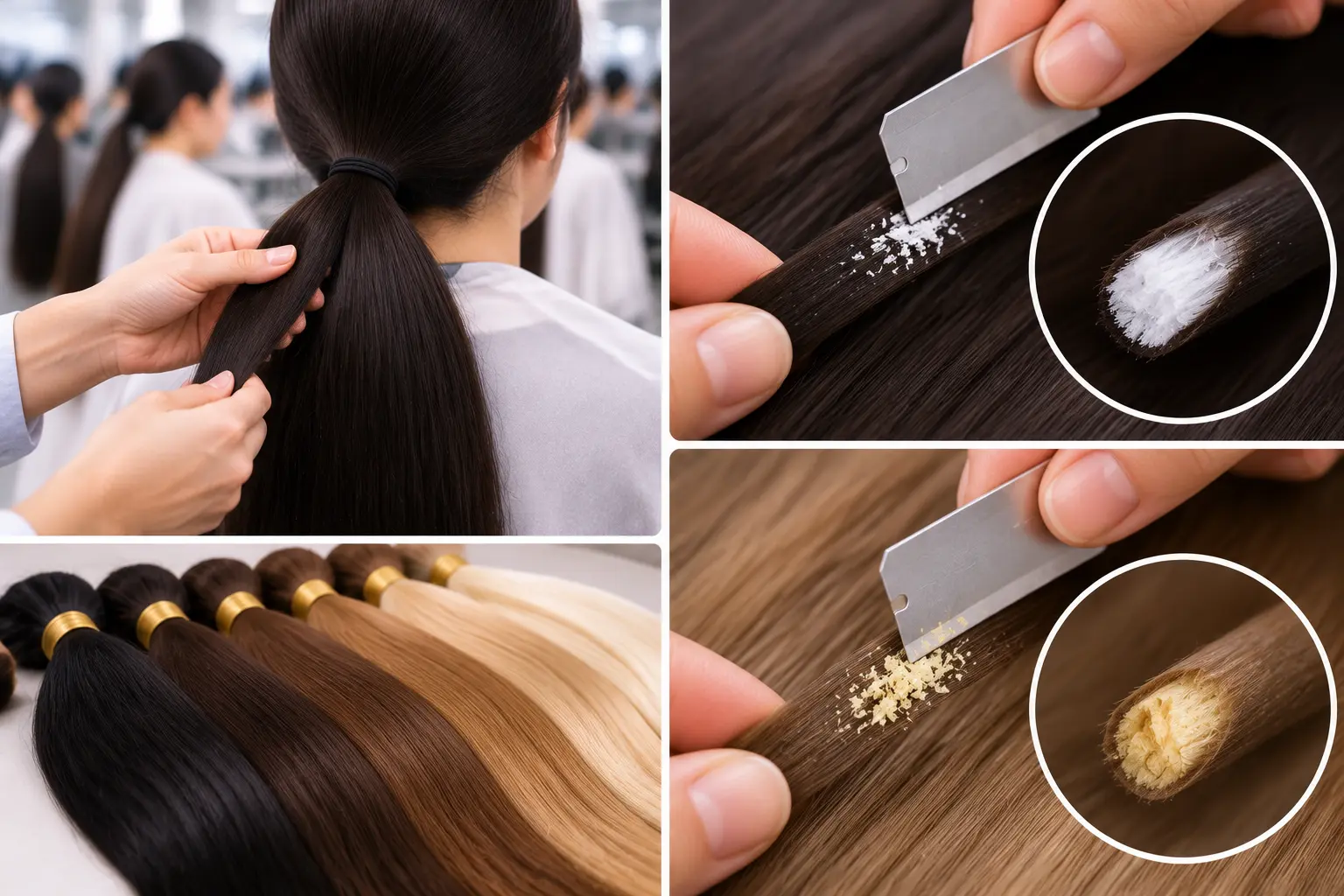
The blade scraping test is a practical field verification method. Chemical treatments—especially permanent dyes containing metallic salts or peroxide—alter the hair's internal structure[^1]. When treated hair is scraped, the exposed cortex displays yellowish, grayish, or uneven coloration rather than the consistent white appearance of virgin hair.
Sourcing Geography and Collection Methods
Premium Remy sourcing typically concentrates in regions where cultural practices support long hair donation or sale. Southern and Eastern Asian markets, particularly rural areas in China, India, and Southeast Asia, provide much of the premium raw material[^2]. Collection methods include:
- Temple donations: Hair collected during religious ceremonies, though volumes have declined as this practice becomes less common among younger generations
- Direct purchase from individuals: Collectors traveling to villages to buy hair directly from women growing hair for sale
- Salon collection networks: Partnerships with barbershops and salons where customers sell cut hair
The directional integrity—keeping all strands aligned root-to-tip throughout collection—is what fundamentally defines Remy processing. Non-Remy hair is collected without directional attention, causing mixed orientation and severe tangling regardless of cuticle treatment[^3].
Chemical History and Color Authenticity
Premium Remy emphasizes chemical virginity because prior chemical exposure limits what colors and processes the hair can successfully undergo during manufacturing. Hair previously treated with permanent dyes, bleach, or strong chemical straighteners cannot achieve the same consistency, integrity, or longevity as virgin material.
For buyers, this matters because:
- Color consistency: Virgin hair accepts dye formulations uniformly across batches
- Processing tolerance: Manufacturers can apply bleaching, toning, and coloring with less damage
- Longevity: Chemically virgin hair maintains integrity through repeated wash and style cycles
Premium Remy verification at sourcing creates the foundation for all subsequent processing. Without this quality gate, even strong cuticle retention and directional alignment cannot compensate for compromised raw material.
How Does Cuticle Remy Differ in Processing and Performance?
Cuticle Remy hair specifically addresses cuticle layer retention through manufacturing.
Cuticle Remy processing maintains intentional cuticle preservation on hair strands to extend product lifespan and improve natural appearance. However, many manufacturers apply controlled partial cuticle removal—typically removing 20-40% of outer cuticle layers—to balance longevity benefits against tangling risks. The simplest cuticle verification test involves pinching several strands and running fingers from tip to root; intact cuticles produce distinctive "zhi-zhi-zhi" friction sounds.
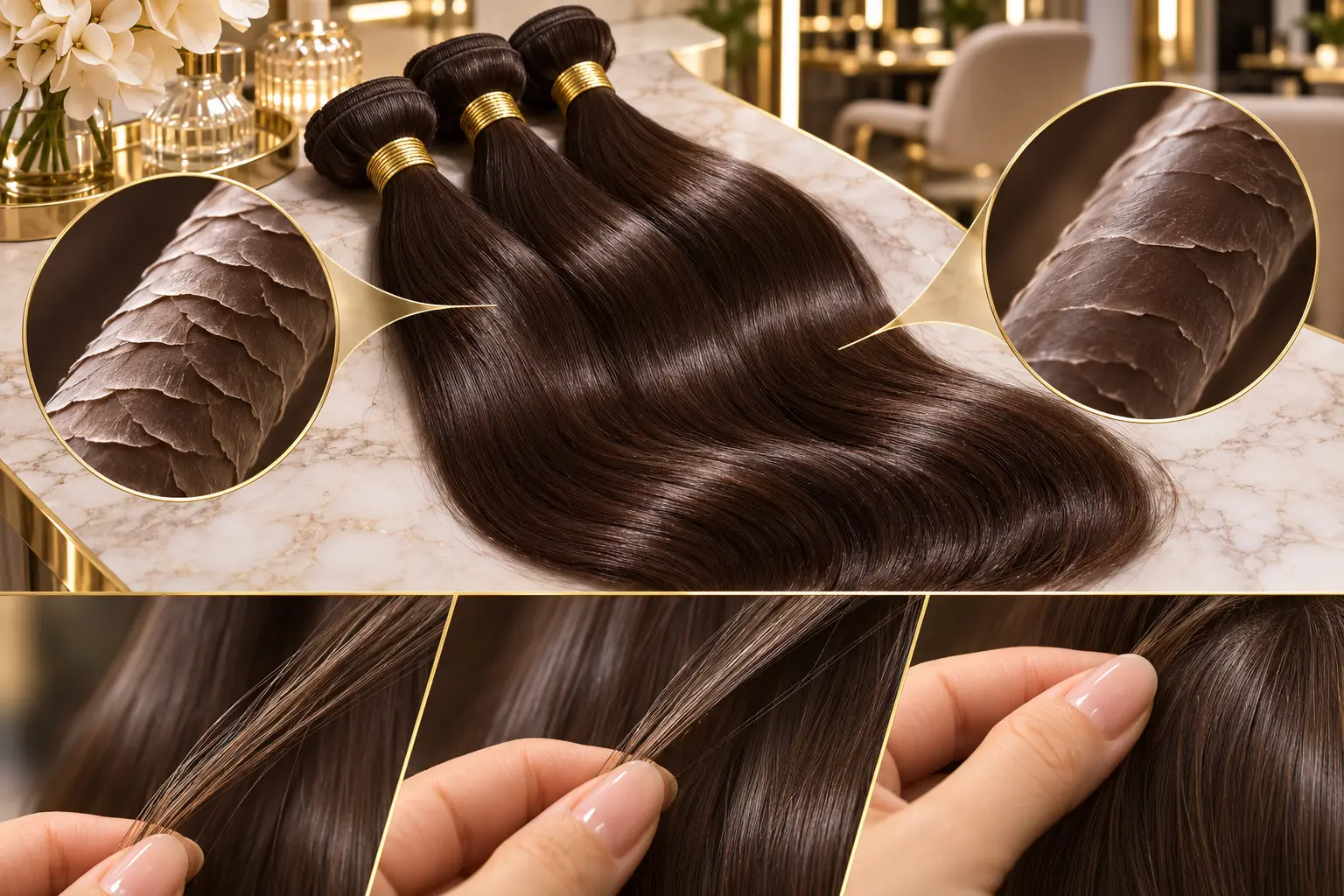
The cuticle layer consists of overlapping scale-like cells—like roof shingles or fish scales—pointing from root toward tip.[^4] In extension manufacturing, cuticle retention directly influences how hair behaves during use.
Why Manufacturers Remove Partial Cuticles
Deliberate partial removal in Cuticle Remy products reflects a practical trade-off. Fully intact cuticles on all strands in a weft or bundle create friction between adjacent hairs, especially when wet. This friction causes temporary tangling that frustrates end users without professional hair care knowledge.
Controlled partial removal techniques include:
- Acid bathing with monitored timing: Mild acidic solutions soften and partially dissolve outer cuticle layers[^5]
- Mechanical abrading: Gentle brushing or tumbling processes wear down cuticle tips
- Enzymatic treatment: Biological agents selectively degrade cuticle proteins while preserving cortex structure
The goal is retaining 60-80% cuticle coverage—enough to maintain shine, reduce moisture loss, and extend lifespan, while removing enough to prevent tangling that drives negative reviews and returns.
The Friction Test: Verification at Inspection
The finger-sliding friction test gives buyers immediate verification without laboratory equipment:
- Take 3-5 strands from different locations in a sample
- Hold the bundle near the tips
- With your other hand, pinch the hair near the root end
- Slide your fingers from tip toward root with moderate pressure
- Listen and feel for resistance
Positive result: Distinct friction sound (zhi-zhi-zhi) and tactile resistance indicate cuticle presence. The hair should feel rougher moving against the cuticle direction than with it.
Negative result: Smooth, silent glide in both directions suggests cuticles were stripped during processing.
This works because intact cuticles create directional resistance, similar to running your hand along a cat's fur forward versus backward.
Performance Characteristics in Salon Use
Cuticle Remy hair outperforms non-cuticle hair in several measurable ways:
| Performance Factor | Cuticle Remy Hair | Non-Cuticle (Silicone-Coated) Hair |
|---|---|---|
| Initial appearance out of package | Natural shine, slight texture variation | Uniform shine, smooth appearance |
| Shine retention after 2-3 washes | Maintains natural luster | Becomes dull as coating washes out |
| Tangling resistance | Moderate tangling, manageable with proper care | Initially minimal, increases after coating loss |
| Color processing response | Accepts dye evenly, predictable results | Uneven uptake, unpredictable outcomes |
| Average usable lifespan | 6-12 months | 2-4 months |
For B2B buyers, the extended lifespan of Cuticle Remy translates to higher customer satisfaction and reduced complaint handling costs. The initial price premium—typically 30-50% above non-cuticle alternatives—often proves cost-effective when calculated per month of use rather than per unit purchased.
What Makes Fully Cuticle-Intact Remy the Highest Grade?
Fully Cuticle-Intact Remy represents the premium tier with specific handling requirements.
Fully Cuticle-Intact Remy maintains 100% cuticle coverage across all hair strands while preserving complete root-to-tip directional alignment. This grade offers maximum longevity and most natural appearance but exhibits temporary "false tangling" when wet—a characteristic requiring customer education and proper conditioning protocols. Despite representing the highest quality standard, this category demands buyer investment in customer training materials and care instructions to prevent misunderstanding and returns.
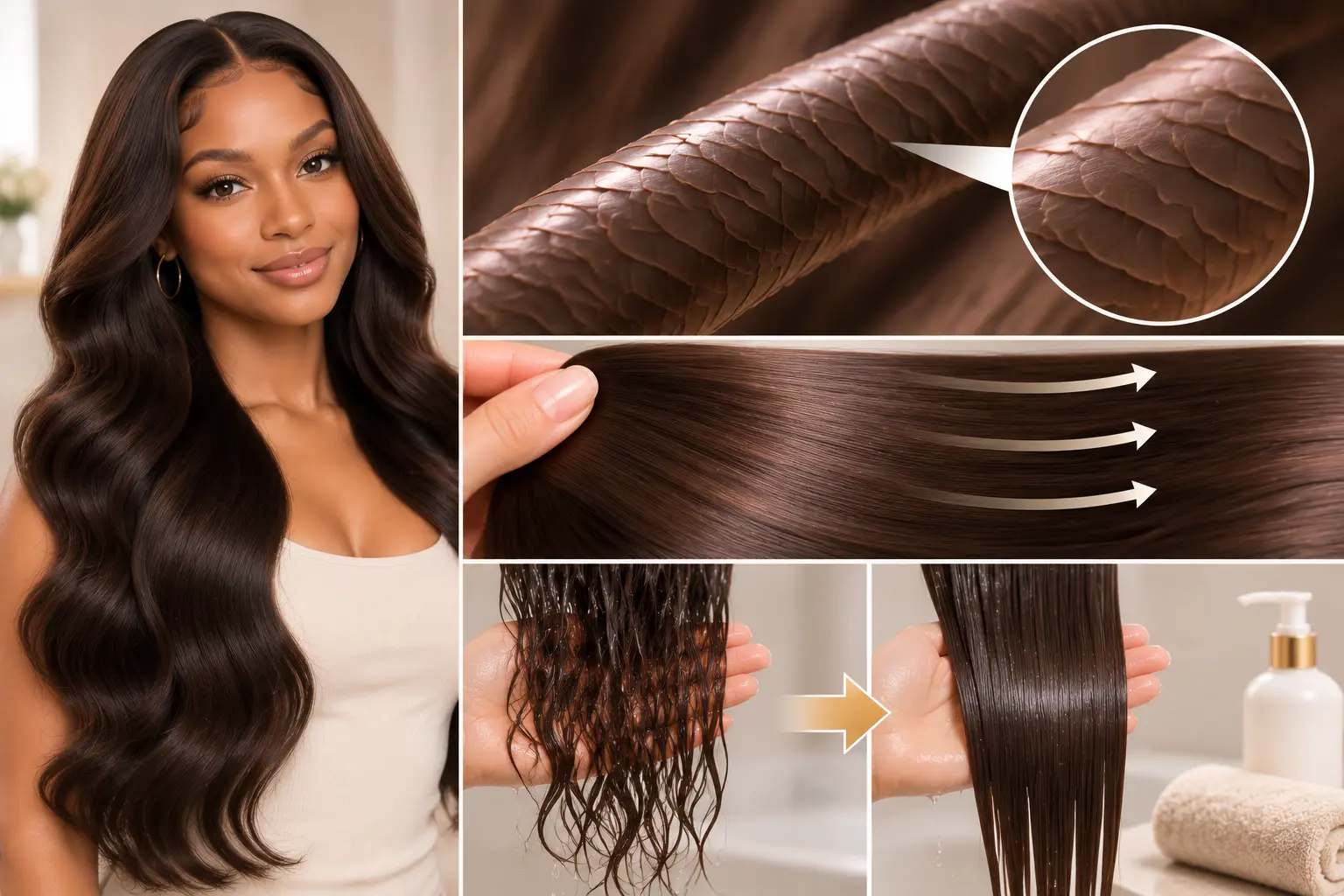
The distinction between "Cuticle Remy" and "Fully Cuticle-Intact Remy" reflects different manufacturing philosophies. Standard Cuticle Remy accepts controlled cuticle reduction as a practical compromise. Fully Cuticle-Intact Remy preserves maximum cuticle coverage regardless of care requirements.
The False Tangling Phenomenon
When customers first wash Fully Cuticle-Intact hair extensions, they may experience alarming tangling that resolves once hair dries. This "false tangling" confuses end users unfamiliar with the phenomenon and can drive return requests if not explained upfront.
Why false tangling occurs:
Water causes hair shafts to swell slightly, increasing the surface area of cuticle scales[^6]. With 100% cuticle coverage, adjacent wet hairs develop significant friction as overlapping scales interlock temporarily. This creates tangles that reflect normal fully intact cuticle behavior rather than defects.
Proper customer handling protocol:
- Apply generous conditioner immediately when hair becomes wet
- Use wide-tooth comb or fingers, never a brush, to gently separate strands while conditioner provides lubrication
- Rinse thoroughly with cool water to close cuticles
- Apply leave-in conditioning product before air-drying or heat styling
- Never brush or aggressively comb wet hair
For B2B buyers, this means you're not just purchasing hair—you're taking on customer education. Successful Fully Cuticle-Intact sales require clear care cards, handling tutorials, customer service training, and product descriptions that set accurate expectations.
Longevity and Investment Value
Despite higher upfront costs, typically 60-100% over standard Cuticle Remy, Fully Cuticle-Intact hair delivers measurable long-term value:
Expected lifespan with proper care: 12-18 months of regular use, with some customers reporting 24+ months for clip-in extensions worn occasionally.
Cost per month of use:
- Standard Cuticle Remy at $200/set lasting 8 months: $25/month
- Fully Cuticle-Intact at $350/set lasting 15 months: $23.33/month
The cost advantage appears when customers properly maintain the hair. This calculation depends on compliance with care instructions—a major real-world variable.
Target Customer Segments
This grade performs best with specific customer segments:
Professional stylists: Understand hair structure, follow care protocols precisely, and can justify price premiums to clients.
Experienced extension users: Have tried multiple quality levels, understand maintenance, and are willing to invest in premium products.
High-end salon clients: Seek maximum longevity and natural appearance, are less price-sensitive, and value exclusivity.
Poor fit segments:
- First-time extension users lacking care knowledge
- Price-focused buyers seeking maximum affordability
- Customers wanting "wash and go" convenience
- Markets where care instructions create language barriers
Understanding Cuticle Retention vs. Directional Alignment?
Cuticle retention and directional alignment are distinct quality factors requiring separate evaluation.
Cuticle retention (cuticle preservation state) measures what percentage of natural cuticle layers remain on processed hair strands after manufacturing. Directional alignment (cuticle orientation) measures whether all hair strands maintain consistent root-to-tip orientation throughout a weft, bundle, or extension piece. High-quality Remy hair requires excellence in both parameters—you can have perfectly aligned hair with stripped cuticles, or intact cuticles on mixed-direction hair. Neither scenario delivers premium performance.
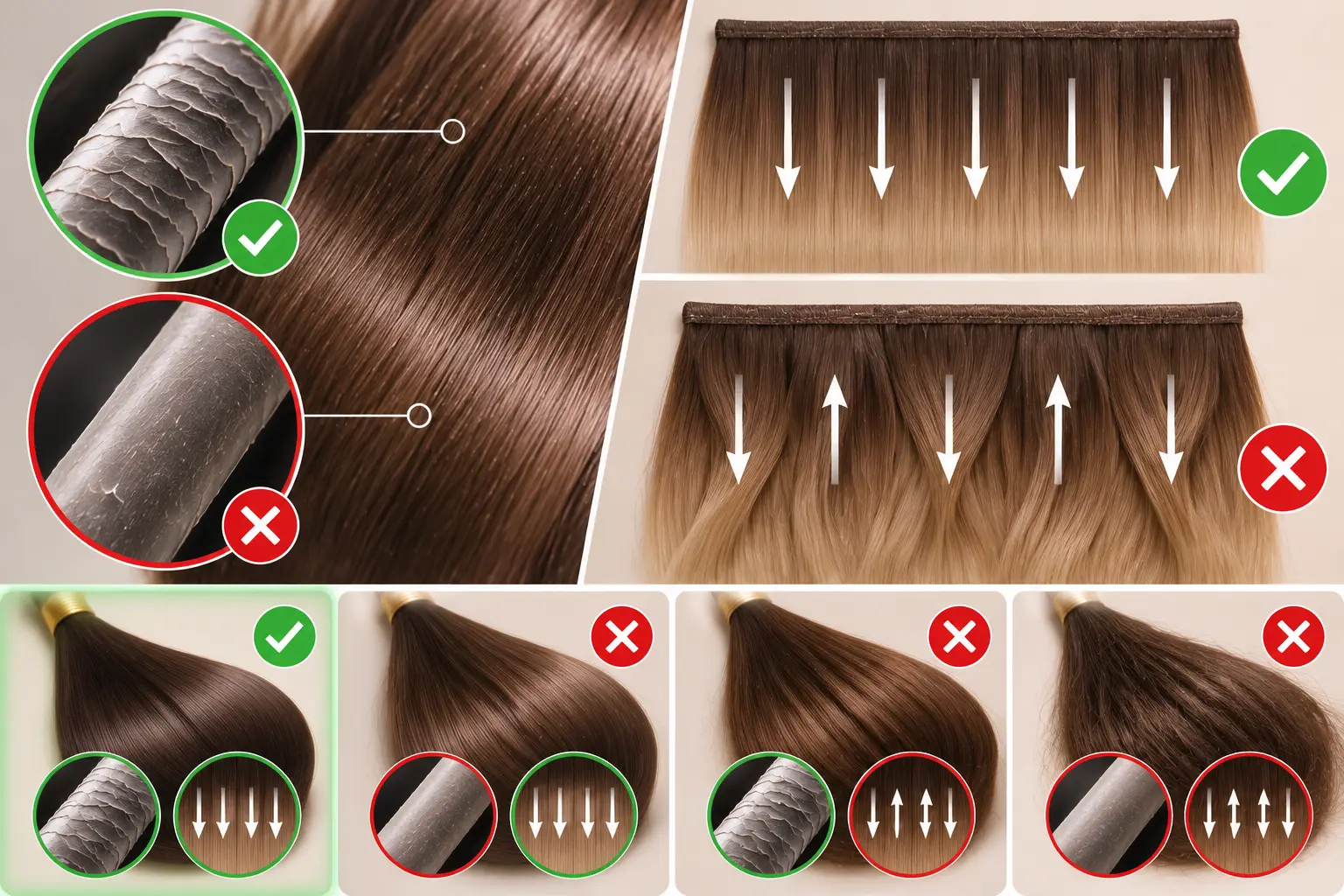
This distinction matters because some suppliers use ambiguous language that conflates these characteristics. A product described simply as "Remy hair" might have perfect directional alignment but acid-stripped cuticles. Conversely, some "cuticle hair" offerings preserve cuticles but contain mixed root-to-tip orientation that causes tangling.
Testing Directional Alignment
While the friction test verifies cuticle presence, directional alignment requires different methods:
Visual inspection method: Under 10x magnification or strong light, cuticle scales on properly aligned hair should all "point" the same direction, creating uniform reflection patterns. Mixed-direction hair shows irregular shine.
Wash and comb test: Take a small sample, shampoo it thoroughly, let it air dry without product, then comb. Properly aligned hair combs smoothly with minimal shedding. Mixed-direction hair tangles severely despite gentle handling.
Extended wear simulation: Install a small test section and wear it for 1-2 weeks with normal styling. Well-aligned hair maintains smooth texture. Poor alignment develops progressive tangling.
Why Both Factors Matter Independently
Both parameters need evaluation:
| Cuticle Retention | Directional Alignment | Result |
|---|---|---|
| High (80-100%) | Perfect | Excellent performance, natural shine, maximum longevity |
| High (80-100%) | Poor | Severe tangling despite cuticle presence |
| Low (0-20%) | Perfect | Initially smooth but loses shine quickly, shorter lifespan |
| Low (0-20%) | Poor | Worst case: tangles and deteriorates rapidly |
This matrix explains why some "cuticle hair" products perform poorly—the cuticles are present, but directional chaos creates tangling that cuticle retention alone cannot prevent.
Factory Processing and Quality Control
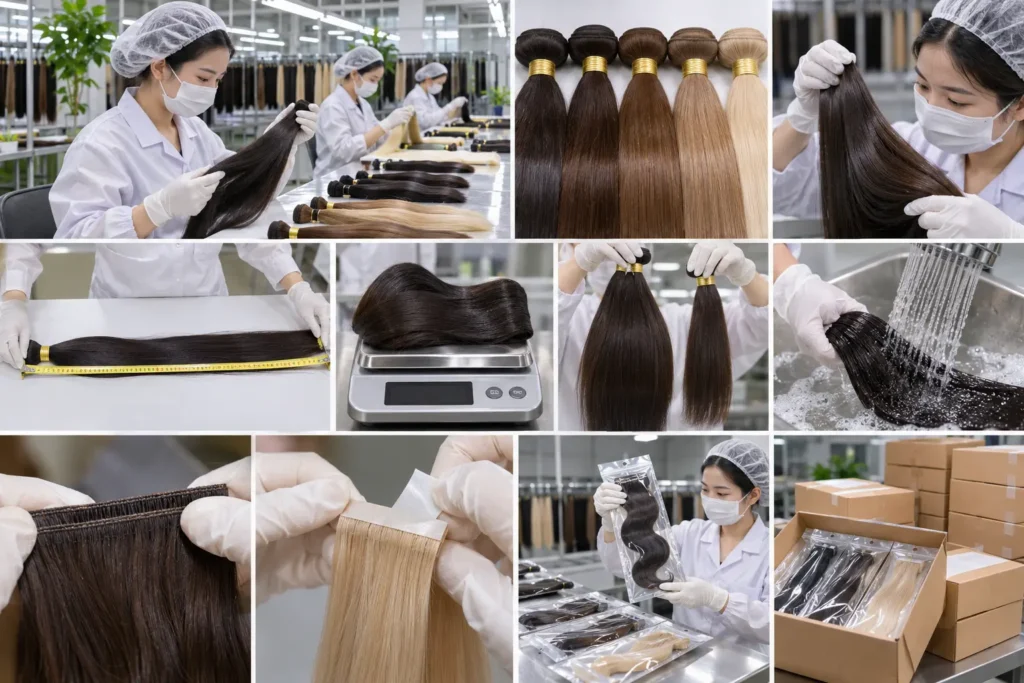
Maintaining both cuticle integrity and directional alignment requires careful handling throughout manufacturing:
Collection stage: Workers keep hair bundled with consistent orientation from the moment cutting occurs, often tying the root end immediately after collection.
Sorting stage: Factory workers examine bundles under strong lighting to verify consistent direction. Mixed bundles get separated or rejected.
Weft construction: Whether machine wefting or hand-tying, maintaining orientation throughout sewing or knotting requires trained workers and monitoring.
Final inspection: Random sampling with microscopic examination and friction testing ensures batch consistency.
For buyers auditing suppliers, observing these quality control steps helps verify whether the factory actually maintains the standards claimed in marketing materials.
How to Test and Compare Quality Grades Effectively?
Practical testing methods reveal actual quality differences beyond supplier claims.
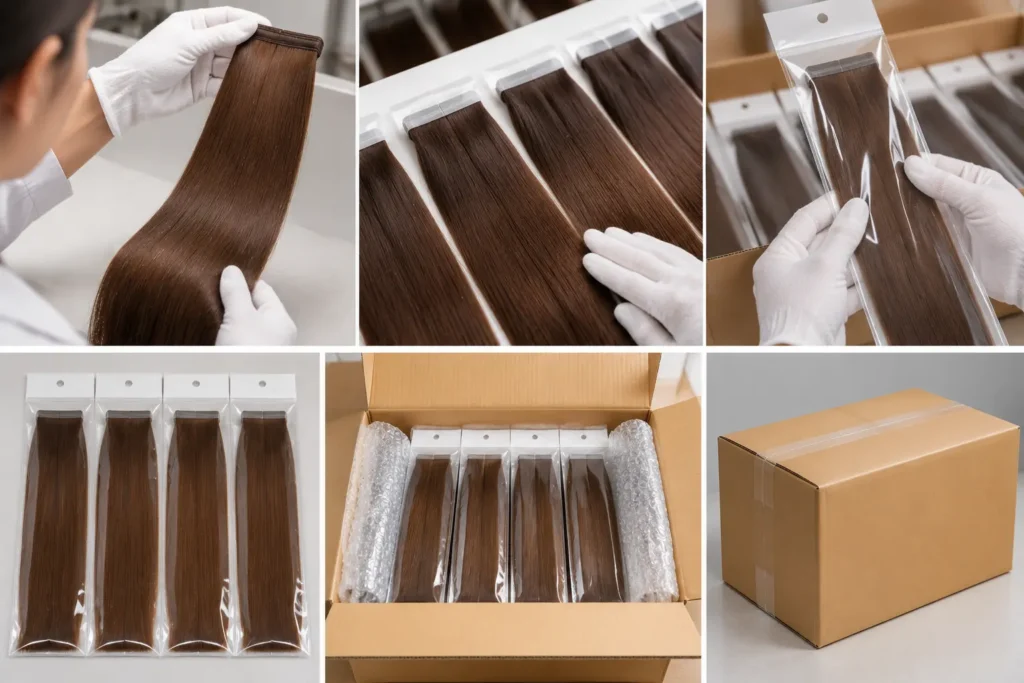
Effective quality comparison requires physical sample testing through controlled washing, drying, and styling cycles that simulate actual customer use. Test protocols should include: shampooing without conditioner to remove any coating, air-drying to observe natural texture, combing dry hair to assess tangling, checking tip fullness to verify minimal breakage, and evaluating construction integrity at weft or bond points. Document results with photos and notes for objective comparison across multiple supplier samples.
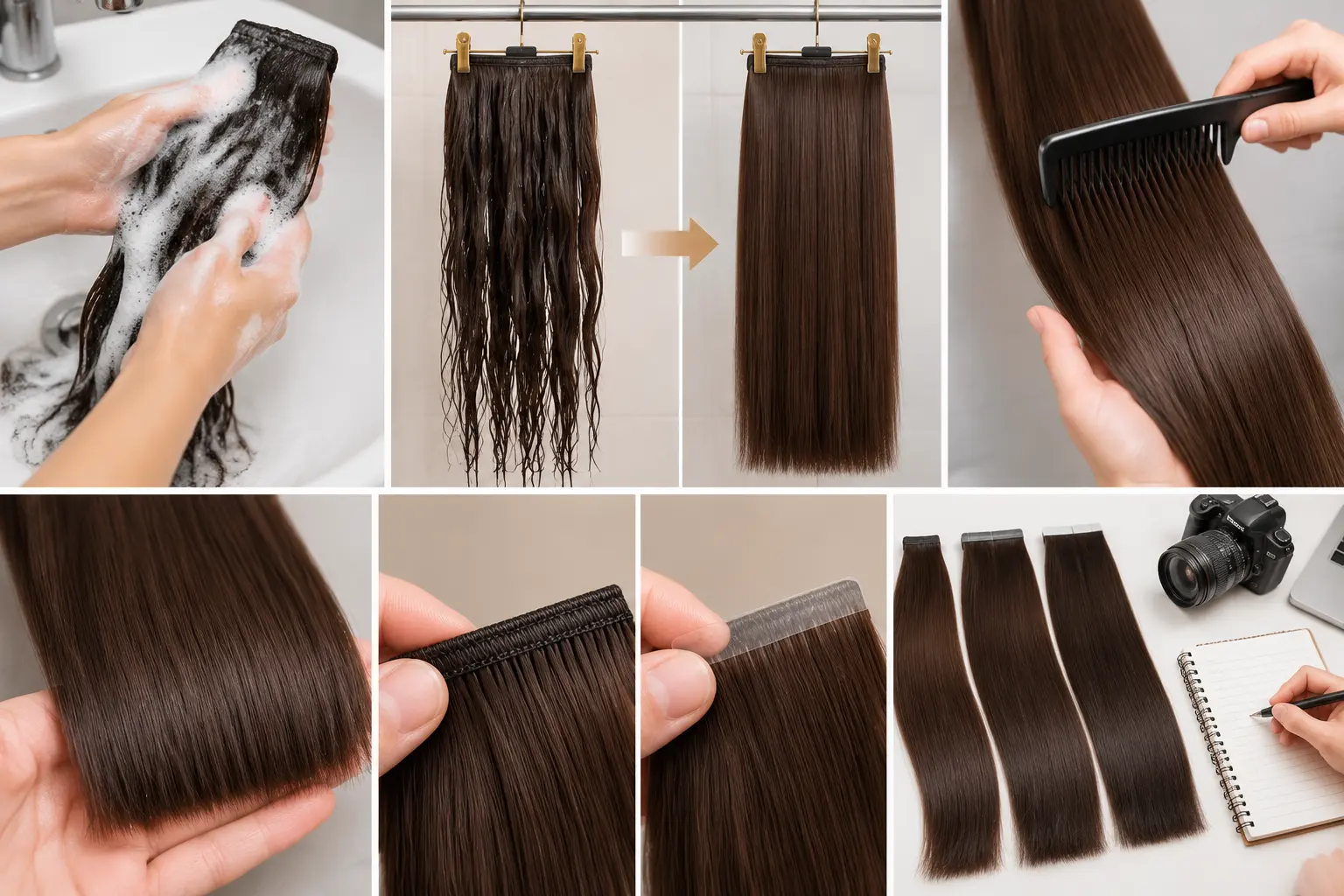
Supplier descriptions and marketing materials rarely correlate perfectly with actual quality. Even certifications and test reports can be misleading if they test limited samples. Direct testing puts you in control of quality verification using methods that predict real-world performance.
Comprehensive Testing Protocol
Phase 1: Initial Assessment (Day 1)
- Document as received: Photograph samples in packaging, note any chemical odor, examine uniform color and shine
- Physical characteristics: Measure actual length, weigh samples, count weft rows or strand count
- Cuticle friction test: Test 10 locations per sample using the tip-to-root method
- Texture evaluation: Run fingers through hair in both directions, noting smoothness, shedding, and movement
Phase 2: Wash Cycle Testing (Day 1-2)
- First wash: Use clarifying shampoo, no conditioner, with lukewarm water and gentle massage
- Document wet state: Photograph wet hair, note tangling level, and attempt gentle wide-tooth combing
- Drying observation: Air dry completely, noting drying time, clumping, and final texture
- Post-wash assessment: Photograph dry hair, test shine under consistent lighting, comb and document shedding
Phase 3: Stress Testing (Day 3-7)
- Heat styling: Apply 350°F flat iron to small sections, noting burning smell, texture changes, or damage[^7]
- Second wash cycle: Repeat washing protocol, comparing tangling and shedding
- Tip examination: Inspect ends under magnification for splitting, breakage, or thinning
- Extended wear simulation: If possible, install small test sections and wear for one week
Creating Comparison Documentation
Objective documentation enables better decisions and provides evidence for supplier discussions:
| Test Parameter | Supplier A (Premium Remy) | Supplier B (Cuticle Remy) | Supplier C (Fully Intact) |
|---|---|---|---|
| Cuticle friction test result | Minimal friction, smooth glide | Moderate friction both directions | Strong directional friction |
| First wash tangling (1-10 scale) | 2 | 4 | 7 (resolved with conditioning) |
| Shedding after combing | 3-5 strands | 2-3 strands | 1-2 strands |
| Shine retention after 2 washes | Good, slightly dulled | Excellent, minimal change | Excellent, enhanced after washing |
| Tip fullness maintained | Moderate thinning at tips | Good density maintained | Excellent, virtually no tip loss |
| Heat styling response | Slight texture coarsening | Smooth result, holds well | Excellent, improved texture |
Photographic documentation standards:
- Use identical lighting for all comparison photos
- Include color reference card for accurate color assessment
- Take photos at the same distance and angle
- Document before wash, wet state, dry state, and after styling
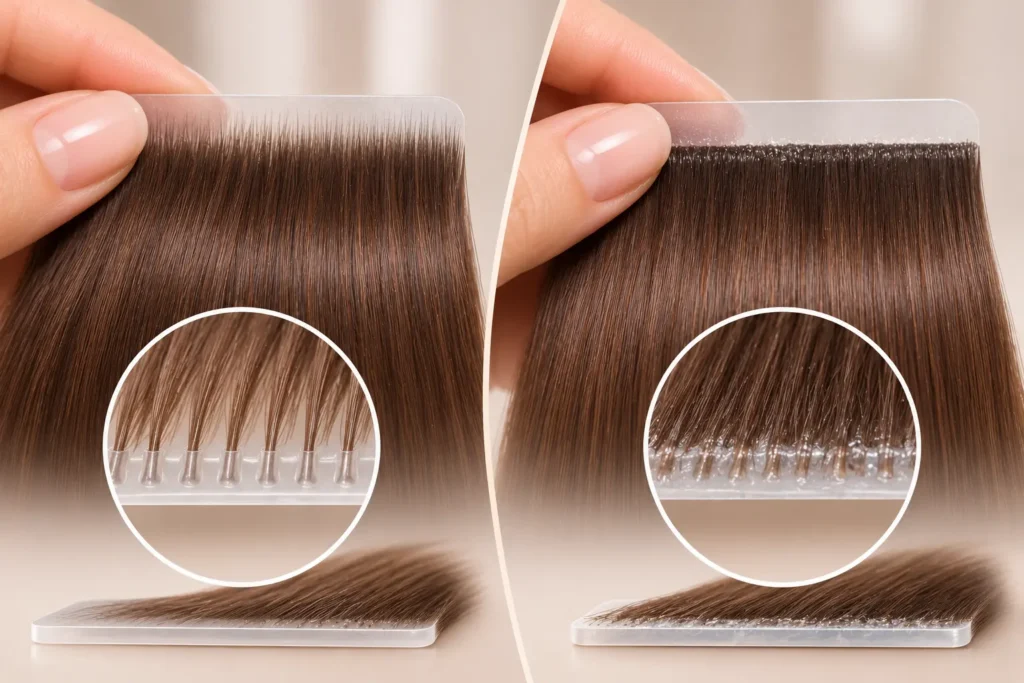
- Capture close-ups of weft construction and tip condition
Interpreting Results and Making Decisions
Test results should inform purchasing decisions within your business context:
If testing reveals:
- Supplier claims don't match performance: Request explanation, consider alternatives, or adjust pricing expectations downward
- Quality consistency between samples: Verify consistency through initial small production orders
- Unexpected superior performance from lower-priced supplier: Investigate whether samples are representative
- All samples show deficiencies: Reassess your supplier pool or adjust product grade expectations
"Perfect" test results aren't always necessary. The key question is whether quality matches your target market and price point. A moderate-performing Cuticle Remy product priced appropriately may serve your business better than exceptional Fully Cuticle-Intact hair that your customers won't pay premium prices for.
Frequently Asked Questions
Can you restore cuticles to stripped hair?
No. Once manufacturers remove cuticle layers through chemical or mechanical processes, those structures cannot be restored. Some products claim to "repair" cuticles, but they only coat hair with silicones or proteins that temporarily mimic cuticle properties[^8]. These coatings wash out, eventually revealing the stripped hair.
Does higher cuticle retention always mean better quality?
Not necessarily for all customers. Fully Cuticle-Intact hair offers maximum longevity but requires careful maintenance that some end users won't perform correctly. For customers seeking convenient, lower-maintenance extensions, partially processed Cuticle Remy may deliver better satisfaction despite technically lower cuticle retention.
How do I verify supplier claims about cuticle retention?
Conduct the friction test on multiple samples from different batches, not just sales samples. Request unprocessed raw hair samples if possible. For important supplier relationships, consider third-party laboratory testing, microscopic analysis, and cuticle retention percentage measurement. Most importantly, test through washing and wearing rather than relying only on visual inspection.
What's a reasonable price difference between these grades?
Market pricing typically shows Premium Remy as the baseline, with Cuticle Remy commanding 30-50% premiums and Fully Cuticle-Intact Remy adding 60-100% over Premium Remy costs[^9]. Pricing varies by origin, length, color, and construction method. Focus on cost-per-month-of-use rather than upfront cost.
Can mixed-quality hair be identified in finished products?
Sometimes, particularly in machine wefts where cost pressure encourages blending grades. Test multiple sections of a single weft. If friction test results vary substantially between top, middle, and bottom sections, the weft likely contains mixed quality hair. Reputable manufacturers maintain consistency throughout each piece, though natural variation exists even in premium products.
Conclusion
The distinctions between Premium Remy, Cuticle Remy, and Fully Cuticle-Intact Remy hair reflect genuine differences in sourcing standards, processing methods, and performance. Premium Remy establishes virgin hair foundations through collection-stage verification, Cuticle Remy balances longevity with practical tangling prevention through controlled partial cuticle retention, and Fully Cuticle-Intact Remy preserves maximum quality while requiring customer education. Understanding cuticle retention and directional alignment as independent factors enables more accurate evaluation.
For B2B buyers, these distinctions should inform procurement based on customer segments, price positioning, and service capabilities. Products requiring extensive education suit professional salon channels better than direct-to-consumer retail. Systematic sample testing provides objective verification beyond supplier claims. The highest technical quality grade is not automatically the best business decision—match quality level to customer capabilities and market positioning.
As you evaluate suppliers and product lines, remember that RENAI HAIR specializes in manufacturing across all these quality tiers with consistent production standards and customization capabilities. We work with brands, wholesalers, and distributors to match product specifications to market requirements—whether that means Premium Remy foundations for cost-effective volume products, Cuticle Remy balancing quality and practicality, or Fully Cuticle-Intact premium lines for discerning professional customers. Contact our team to discuss sample testing, quality verification, and finding the optimal grade match for your market needs.
[^1]: "Effects of chemical straighteners on the hair shaft and scalp - PMC - NIH", https://pmc.ncbi.nlm.nih.gov/articles/PMC9073307/. Research in cosmetic science has demonstrated that oxidative hair dyes penetrate the cuticle and alter the disulfide bonds and melanin granules within the cortex, resulting in permanent structural modification detectable through microscopic and mechanical testing methods. Evidence role: mechanism; source type: research. Supports: That oxidative dyes and metallic salt-based colorants cause measurable structural changes to the hair cortex. Scope note: Most studies focus on tensile strength and protein loss rather than the specific blade-scraping discoloration test described in the article. [^2]: "India's Human Hair Trade: Buyers, Markets and Export Rules", https://www.welexo.com/blog/human-hair-export-india. India is the world's largest exporter of human hair, with significant additional supply from China and Myanmar; the global human hair trade has been valued in the hundreds of millions of dollars annually, with Asian countries dominating raw material supply. Evidence role: general_support; source type: research. Supports: That India, China, and Southeast Asian countries are major sources of raw human hair for the global extension market. Scope note: Precise market share figures vary by source and year, and informal collection networks make comprehensive data difficult to verify. [^3]: "What Is Cuticle-Aligned Hair? Wig Quality Explained", https://shop.luvmehair.com/blogs/wigs-101/cuticle-aligned-hair-wig-quality?srsltid=AYCX9vLhL3U8RSJvw1xhAYwpO91nDAZ3BrkKlJSIE_XAt0pDoP0lZko6. The directional ratchet effect of overlapping cuticle scales means that fibers oriented in opposing directions experience significantly higher inter-fiber friction, leading to mechanical interlocking and tangling, a principle well-established in textile and fiber science. Evidence role: mechanism; source type: research. Supports: That opposing cuticle orientations between adjacent hair fibers create interlocking friction that causes tangling. Scope note: Most formal research addresses this in the context of wool fiber processing rather than human hair extensions specifically. [^4]: "The structure of people's hair - PMC - NIH", https://pmc.ncbi.nlm.nih.gov/articles/PMC4201279/. The human hair cuticle consists of flat, overlapping cells arranged in a shingle-like pattern from root to tip, forming the outermost protective layer of the hair shaft (see, e.g., Robbins, C.R., 'Chemical and Physical Behavior of Human Hair,' Springer). Evidence role: definition; source type: encyclopedia. Supports: The structural anatomy of the human hair cuticle as overlapping scale-like cells oriented from root to tip. [^5]: "On Hair Care Physicochemistry: From Structure and Degradation to Novel Biobased Conditioning Agents - PMC", https://pmc.ncbi.nlm.nih.gov/articles/PMC9921463/. Cosmetic chemistry research has documented that controlled exposure to acidic or alkaline solutions can degrade cuticle proteins, with the degree of removal dependent on concentration, pH, temperature, and exposure duration. Evidence role: mechanism; source type: paper. Supports: That acidic chemical treatments can selectively degrade or remove cuticle layers from human hair fibers. Scope note: Published research typically addresses hair damage mechanisms rather than intentional industrial cuticle removal for extension manufacturing specifically. [^6]: "New insights into hair compartments swelling via atomic force microscopy and dynamic vapour sorption", https://pubmed.ncbi.nlm.nih.gov/40070297/. Studies on hair fiber mechanics have shown that human hair absorbs water and swells radially by approximately 14–16%, with cuticle scales lifting away from the shaft surface, increasing inter-fiber friction (Feughelman, M., 'Mechanical Properties and Structure of Alpha-Keratin Fibres'). Evidence role: mechanism; source type: paper. Supports: That water absorption causes measurable radial swelling of the hair shaft and lifting of cuticle scales. [^7]: "Heat-damaged evaluation of virgin hair", https://pubmed.ncbi.nlm.nih.gov/30861299/. Research on thermal degradation of hair keratin indicates that significant protein denaturation and structural damage begin occurring at temperatures above 150–180°C, making this range relevant for assessing hair quality under heat-styling conditions. Evidence role: general_support; source type: paper. Supports: That temperatures around 350°F (approximately 177°C) represent a meaningful stress threshold for evaluating human hair integrity. Scope note: Exact damage thresholds vary with exposure duration, moisture content, and prior chemical treatment history of the hair. [^8]: "With or without Silicones? A Comprehensive Review of Their ...", https://pmc.ncbi.nlm.nih.gov/articles/PMC12240587. Trichology and cosmetic science consensus holds that once the cuticle layer is physically removed or chemically degraded, it cannot regenerate; conditioning agents such as silicones and hydrolyzed proteins adsorb to the hair surface to temporarily smooth and protect but do not reconstitute cuticle architecture. Evidence role: expert_consensus; source type: research. Supports: That hair cuticle damage is irreversible and that conditioning products provide temporary surface coating rather than structural repair. [^9]: "What hair extension brands or wholesalers are recommended?", https://www.facebook.com/groups/HairExtensionInfo/posts/26704057335874180/. Trade sources indicate that virgin and cuticle-intact human hair extensions carry substantial price premiums over processed alternatives, though exact differentials vary by origin, length, and market conditions. Evidence role: statistic; source type: other. Supports: That higher cuticle retention grades of human hair extensions command significant wholesale price premiums. Scope note: The specific percentage ranges cited (30–50% and 60–100%) appear to reflect general industry experience rather than published market research, and pricing varies significantly by supplier, region, and order volume.